Executive Overview
Apple’s recent foray into the smart home ecosystem with the launch of the $299 HomeView display marks a significant milestone for the Cupertino tech giant. After years of speculation, internal restructuring, and repeated developmental delays largely tied to the evolution of a vastly smarter, AI-driven Siri powered by Apple Intelligence, the entry-level HomeView is finally in the hands of consumers. However, while the device has been generally well-received for its clean interface, tight ecosystem integration, and accessible price point, it has also brought to light a fundamental ergonomic limitation inherent to stationary smart displays.
Placed centrally on a kitchen island, a family dining table, or a shared living room counter, a static display is inherently restricted by fixed viewing angles. When multiple users surround the device, interacting with it requires manual adjustment—a distinct friction point in an era where ambient computing is expected to be entirely seamless.
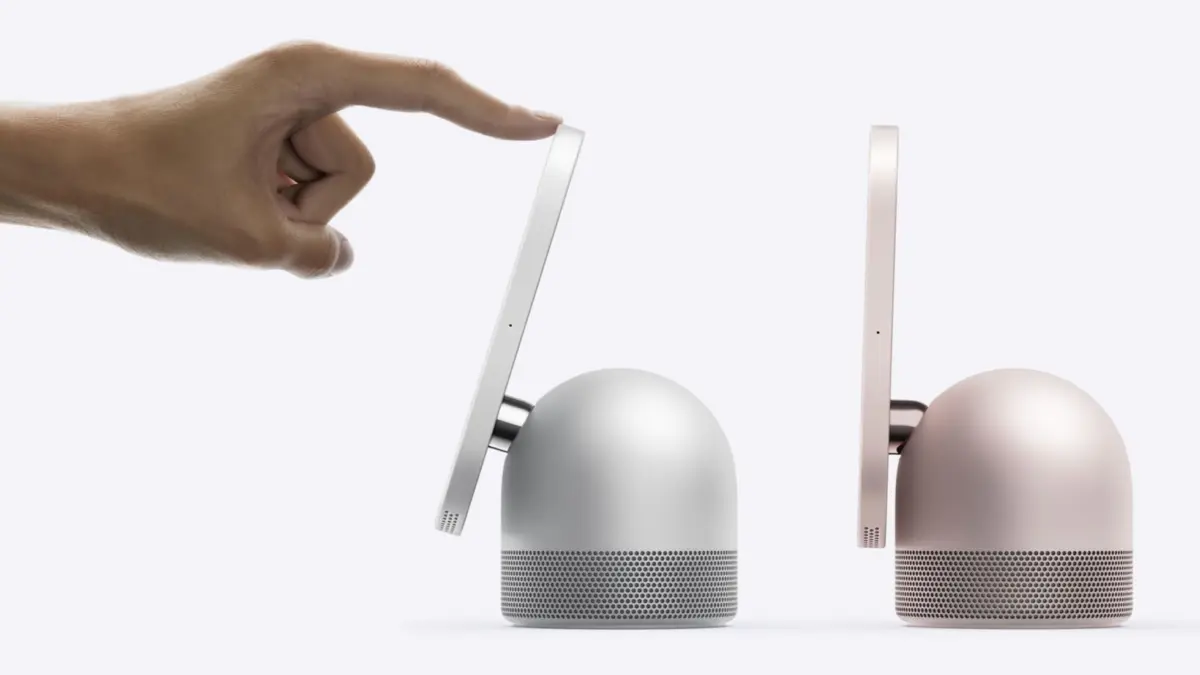
Fortunately, internal leaks and recent supply chain intelligence indicate that Apple is already preparing a definitive hardware remedy. According to industry reports, including insights from Bloomberg’s Power On newsletter, Apple is actively developing a high-end variant—provisionally dubbed the HomeView Pro—featuring an integrated motorized robotic arm. Codenamed J595 and slated for a tentative commercial release between 2027 and 2028, this upcoming flagship device aims to redefine interactive spatial computing in the home.
By combining a larger display, advanced spatial audio, and intelligent voice recognition capable of identifying and tracking active speakers through a full 360-degree rotation, Apple is moving beyond static interfaces. This comprehensive report explores the genesis of the HomeView lineup, the technological hurdles overcome during its development, the mechanics of the forthcoming robotic variant, and what this ambitious hardware pivot means for the broader smart home market.
Detailed Chronology: From Concept to Commercialization
The Long and Tortuous Road to the Smart Home
Apple’s ambitions in the smart home space date back nearly a decade, beginning with the modest introduction of the original HomePod in 2018. While the original smart speaker laid the groundwork for high-fidelity audio integration within the HomeKit ecosystem, it lacked a visual interface—a critical shortcoming as competitors like Amazon and Google aggressively captured market share with devices like the Echo Show and Nest Hub.
Rumors regarding a dedicated Apple smart display began circulating in earnest around 2021. Industry analysts initially anticipated a product launch as early as 2023 or 2024. However, internal roadblocks continually pushed back development timetables. The primary bottleneck was not hardware engineering, but software capability: Apple executives made the strategic decision that a smart display without an advanced, context-aware digital assistant would simply be uncompetitive.
[2018: HomePod Launch]
       │
       ▼
[2021–2023: Early Smart Display Rumors & Prototyping]
       │
       ▼
[2024–2025: Internal Delays & Apple Intelligence Integration]
       │
       ▼
[Late 2026: Base HomeView Debut ($299)]
       │
       ▼
[2027–2028 (Expected): HomeView Pro / Codename J595 (Robotic Arm)]
As the generative AI boom accelerated, Apple redirected significant engineering capital toward overhauling Siri under the umbrella of Apple Intelligence. Because the smart home hub relies entirely on natural language processing, localized device control, and predictive automation, the hardware launch was deliberately stalled until the software infrastructure reached operational maturity.
By mid-2025, supply chain indicators confirmed that the foundational smart home hub—now christened the HomeView—was finally moving toward mass production, culminating in its late 2026 debut at a competitive $299 price point.

Addressing the Ergonomic Gap
The standard HomeView utilizes a compact 7-inch display optimized for desktop surfaces and wall-mounted brackets. While adequate for individual use or static viewing, early user feedback highlighted a recurring ergonomic complaint: multi-user environments.
In shared spaces, a stationary screen creates an immediate usability barrier. If a user sitting to the left or right of the HomeView wishes to view contextual media, check calendar alerts, or review smart home security feeds, they are forced to physically rotate the unit or lean across the table. Recognizing that physical intervention contradicts the core ethos of ambient smart home automation, Apple’s advanced hardware engineering teams immediately pivoted focus to mechanical integration, reviving secretive robotics research that had been percolating within the company’s advanced development labs for years.
Supporting Context & Metrics: The Mechanics of Codename J595
The forthcoming high-end smart display, internally designated as Project J595 and widely expected to be marketed as the HomeView Pro, represents a convergence of consumer electronics and advanced robotics.
Key Hardware Specifications & Projected Metrics
| Feature | Standard HomeView (Current) | HomeView Pro (Projected J595) |
|---|---|---|
| Estimated Release Window | Available Now (Late 2026) | 2027 – 2028 |
| Price Point | $299 | Premium (Significantly higher than base model) |
| Screen Size | ~7 inches | ~9 inches |
| Range of Motion | Limited manual tilt | Motorized 360-degree full rotation |
| Navigation Mechanism | Static placement | Voice-activated spatial tracking via robotic arm |
| Primary Identifier | Standard Siri integration | Advanced Apple Intelligence + Voice Source Tracking |
The Robotic Arm and Spatial Awareness
The standout engineering achievement of the J595 project is its motorized robotic arm. Unlike traditional motorized mounts that offer limited panning angles (typically 90 to 180 degrees), the J595 is designed for a full 360-degree rotation. This allows the device to dynamically orient itself toward any point in a room.
How does the device know where to turn? Rather than relying purely on computer vision algorithms that might raise privacy concerns or consume excessive processing power, Apple is leveraging an advanced evolution of its existing acoustic and spatial intelligence technologies.
[User Speaks Command]
       │
       ▼
[Array Microphones Triangulate Audio Source]
       │
       ▼
[On-Device Apple Intelligence Processes Speaker Identity]
       │
       ▼
[J595 Motorized Arm Pivots Smoothly to Target Angle (360° Capability)]- Acoustic Beamforming: The device utilizes a sophisticated multi-microphone array—similar to the hardware found in high-end HomePod models—to capture and triangulate audio sources with pinpoint accuracy.
- Voice Recognition & Biometrics: Leveraging Siri’s local voice profile identification, the device not only detects where a voice is coming from, but who is speaking, ensuring it responds exclusively to authorized household members.
- Fluid Mechanical Actuation: Brushless, ultra-quiet micro-motors ensure that the physical rotation of the robotic arm is smooth, silent, and devoid of the mechanical whining typically associated with consumer robotics.
This technology can be conceptualized as a natural evolution of Center Stage—Apple’s machine learning-driven camera framing feature found on iPads and Mac displays—scaled upward from digital software panning to physical, spatial hardware movement.
Official Statements and Industry Intelligence
While Apple has maintained its traditional corporate reticence regarding unannounced future hardware, credible leaks corroborated by industry insiders have provided a transparent window into the company’s roadmap.
In his recent Power On newsletter, prominent Bloomberg technology journalist Mark Gurman outlined Apple’s strategic intent behind the bifurcated product lineup:

"The good news is that Apple is on track to solve that problem with a souped-up version of the HomeView planned for release in 2027 or 2028. Code-named J595, this version looks like the current HomeView but has a roughly 9-inch screen (up from 7 inches) and a motorized robotic arm that lets the display swivel a full 360 degrees. Using voice recognition, the machine is designed to identify who’s speaking and automatically turn toward that person."
This segmentation underscores Apple’s classic product strategy: establish a beachhead in a new category with an accessible, feature-complete entry-level device ($299 HomeView), and subsequently capture the premium tier with an over-engineered, high-performance variant (HomeView Pro) designed for power users, tech enthusiasts, and luxury smart home installations.
Furthermore, industry analysts note that the introduction of robotics into the home ecosystem serves as a crucial testing ground for Apple’s long-term hardware initiatives. Technologies perfected for the J595 robotic arm—such as low-power spatial motors, micro-actuators, and advanced spatial audio triangulation—directly inform parallel R&D efforts within Apple’s autonomous systems and personal robotics divisions.
Future Outlook: Implications for the Smart Home Market
The arrival of the HomeView and the horizon of the robotic HomeView Pro signal a paradigm shift in how consumers interact with ambient computing hardware. For years, the smart home display market has been stagnant, dominated by static screens that serve primarily as digital photo frames or rudimentary control panels.
Apple’s entry threatens to disrupt this status quo by injecting genuine technological innovation into the category. By solving the multi-user ergonomic dilemma through robotics, Apple transforms the smart home hub from a static appliance into a dynamic, interactive household companion.
Challenges on the Horizon
Despite the undeniable promise of the J595 architecture, Apple will need to navigate several critical challenges prior to commercial release:
- Price Sensitivity: With the base HomeView anchored at $299, a motorized robotic variant will inevitably command a substantially higher price point. Positioning a premium smart display in an era of cautious consumer spending will require clear differentiation.
- Privacy Considerations: Putting a motorized, voice-tracking camera and microphone array in the center of a home will inevitably raise valid consumer privacy concerns. Apple’s steadfast commitment to on-device processing via Apple Intelligence will be central to assuaging these anxieties.
- Durability and Reliability: Mechanical moving parts introduce potential points of failure that do not exist in traditional, solid-state consumer electronics. Ensuring that the motorized arm can withstand years of continuous rotation, accidental bumps, and everyday household wear and tear will be a rigorous engineering hurdle.
Conclusion
Apple’s long-term vision for the smart home is rapidly crystallizing. While the $299 HomeView successfully establishes the company’s baseline presence in the market today, the upcoming J595 robotic variant represents the true realization of Apple’s ambient computing philosophy. By bridging the gap between artificial intelligence, spatial awareness, and physical robotics, the upcoming HomeView Pro promises to transform our living spaces—turning static screens into responsive, intelligent participants in the modern household.