Executive Overview
Adapting British television for American audiences has historically been a perilous endeavor for network executives. For every transatlantic success story, there is a graveyard of critically maligned misfires—projects where dry, understated British wit failed to survive the translation, or conversely, where the adaptation felt so slavishly uninspired that it begged the question of why it was produced in the first place. Think of the critically panned U.S. attempt at Gavin & Stacey, a cringe-worthy reminder that some cultural specificities do not easily cross the Atlantic.
Yet, against these daunting odds, CBS’s Ghosts—developed by showrunners Joe Port and Wiseman—has not only survived the transition; it has thrived. Premiering in 2021, the American adaptation of the beloved BBC sitcom of the same name has cultivated a massive, devoted following, earning rapid renewals and cementing itself as a pillar of modern network television. With its sixth season scheduled to debut in early 2027, the series has proven that a remake can honor its source material while charting a bold, distinct comedic path of its own.
For audiences looking to catch up on the phenomenon, the series is currently accessible to stream for free on Pluto TV, offering a timely entry point to one of the most successful international television transfers of the decade.
Detailed Chronology of the Franchise
To understand how the U.S. version of Ghosts achieved its current cultural footprint, it is necessary to trace the developmental timeline of the property from its British origins to its ongoing American evolution.
The British Genesis (2019–2023)
The phenomenon began on the BBC, created and performed by the celebrated British comedy troupe comprising Mathew Baynton, Simon Farnaby, Martha Howe-Douglas, Jim Howick, Laurence Rickard, and Ben Willbond. Best known for their stellar educational comedy series Horrible Histories, this ensemble brought a rare, organic chemistry built on over a decade of performing together.

The premise was deceptively simple: a young, financially struggling couple—Alison and Mike—inherit a sprawling, dilapidated country estate (Button House) from a distant, recently deceased relative. Believing they have caught a lucky break, they plan to turn the mansion into a luxury hotel. Their dreams are abruptly complicated when Alison suffers a near-death experience that leaves her with the supernatural ability to see and hear the estate’s eclectic roster of ghosts, who span centuries of British history.
The BBC series ran for five critically acclaimed seasons, concluding its run in late 2023. However, its distinctively British humor—featuring characters like a stuck-up Regency-era lady (Lady Fanny Button) and a corrupt, trouserless Tory MP (Julian Fawcett)—established a high-concept template ripe for international adaptation.
The American Transition and Expansion (2021–Present)
Recognizing the universal appeal of the premise, CBS greenlit a U.S. adaptation developed by Joe Port and Joe Wiseman. Premiering in the fall of 2021, the American version immediately established its own identity while nodding respectfully to the BBC original.
Rather than sticking to the limited six-episode structure typical of British television, the CBS production order demanded an 18-episode first season. This numerical reality forced the writers’ room to expand the narrative scope rapidly, pushing the series to innovate far beyond the safety net of the British scripts.
The show quickly became a ratings juggernaut for CBS. Earning a second-season renewal by January 2022, it has continued its upward trajectory with steady multi-season pickups. As the television landscape looks toward early 2027 for the debut of Season 6, Ghosts has firmly established itself as a rare broadcast television anchor in the streaming era.

Supporting Context & Metrics: Crafting a Unique American Identity
The success of Ghosts (US) lies in how it balances structural fidelity with distinct cultural localization. A comparative analysis of the British and American versions highlights the deliberate creative choices that prevented the remake from becoming a hollow carbon copy.
Shifting the Human Dynamic
In the BBC original, Alison and Mike are desperate, working-class hopefuls scraping by in London, viewing Button House as their ticket to financial stability. Their desperation underpins much of the early physical and economic comedy.
In contrast, the U.S. iteration centers on Samantha "Sam" (Rose McIver) and Jay Arondekar (Utkarsh Ambudkar). While still facing financial hurdles, Sam and Jay are portrayed as urbanites more motivated by an aspirational desire to escape the cramped confines of city life than pure financial desperation. Furthermore, Jay’s role is significantly expanded compared to his British counterpart, Mike. Because Jay cannot see the ghosts, the writers cleverly incorporate his reactions to Sam’s one-sided conversations and his deep, culinary-driven passion for the estate, making him an active, integral part of the ghostly household dynamic.
Rewriting History: The Undead Ensemble
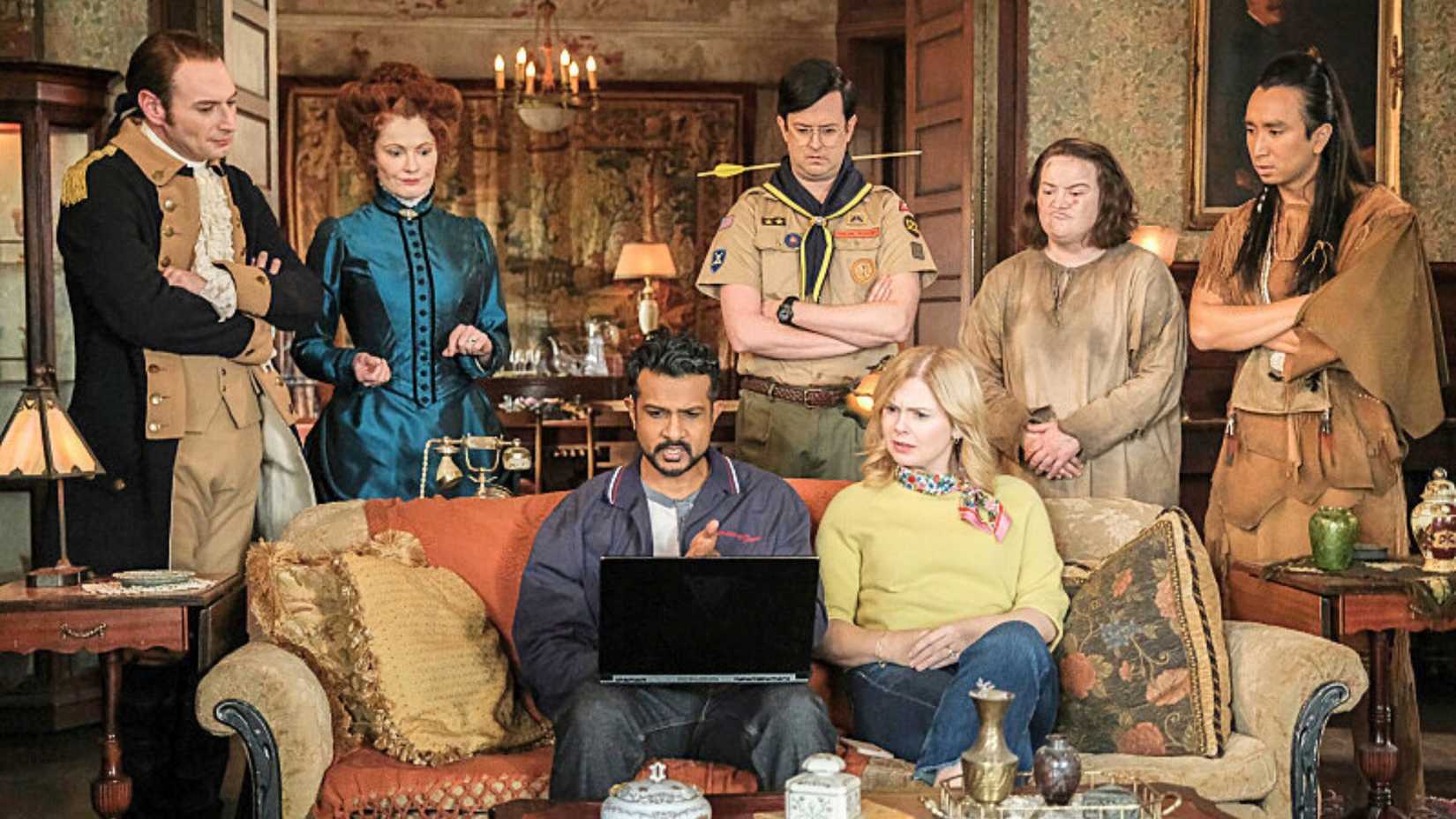
The spectral residents of the Woodstone Mansion (the American estate) mirror the archetypes of Button House while injecting distinct American historical eras into the mix:
- The Aristocrat: Rebecca Wisocky stars as Lady Henrietta Woodstone, the uptight lady of the manor. While clearly drawing inspiration from the BBC’s Lady Fanny Button, Henrietta’s backstory explores the nuanced socioeconomic realities of early American history, revealing a surprisingly humbler upbringing than her British counterpart.
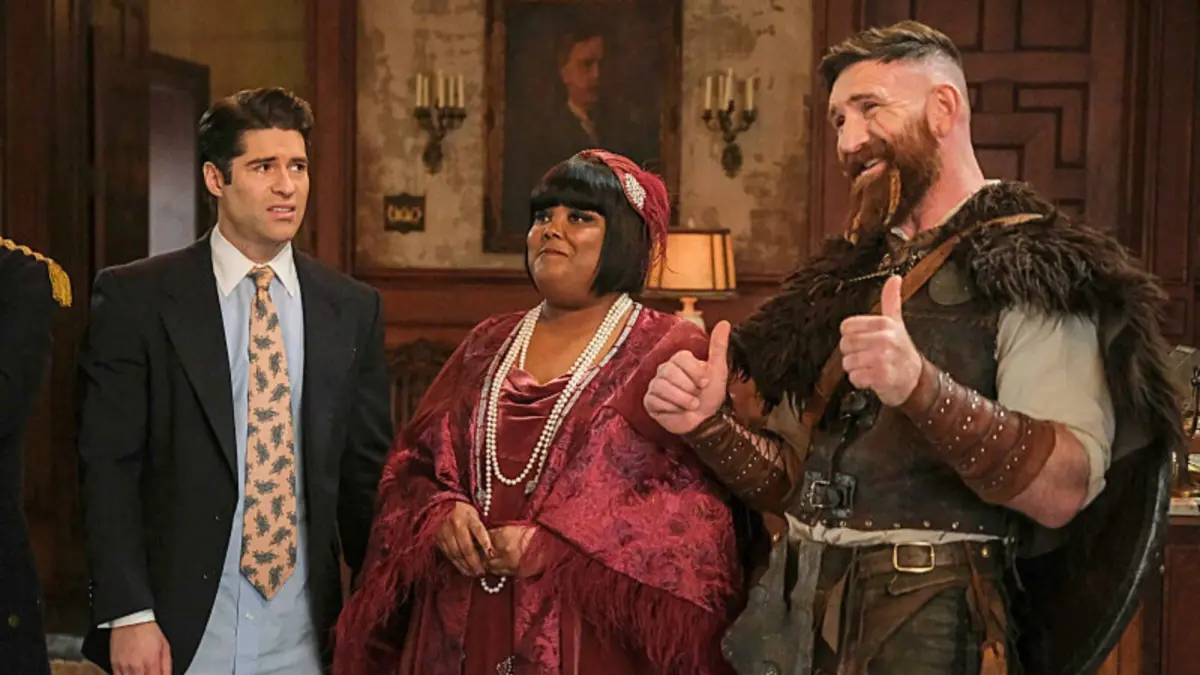
- The Viking: Devan Chandler Long plays Thorfinn, a tenth-century Viking. Unlike the BBC’s prehistoric caveman Robin—whose humor relies on primitive literalism—Thorfinn brings a booming, bombastic Norse energy that blends ancient warrior tropes with modern domestic anxieties.
- Expanding Eras: Rather than focusing solely on British milestones, the U.S. show casts a wider historical net across American history, pulling characters from the Prohibition era, the American Revolutionary War, and even 1960s counterculture and cult communities.
Production Scale and Pacing
The structural shift from a tight, six-episode British run to a sprawling 18-episode network broadcast model fundamentally changed the storytelling rhythm. While British comedies often rely on serialized narrative arcs and cinematic pacing, the American adaptation utilizes the procedural rhythm of network TV to dive deep into character-of-the-week flashbacks, holiday specials, and expansive world-building that explores the mechanics of the afterlife in greater depth.
Official Statements and Creative Insights
The transition from a beloved British indie-comedy troupe to a mainstream CBS broadcast hit required careful navigation from the creative leadership behind the scenes.
Showrunners Joe Port and Joe Wiseman have frequently spoken about the challenge of honoring the BBC series while carving out an independent identity for the American cast. Speaking on the adaptation process, the creative team noted that the primary goal was never to replicate every punchline, but rather to translate the heart of the premise.
"The magic of the original series isn’t just the jokes—it’s the fundamental warmth of the human-ghost dynamic," the production team has emphasized in prior interviews regarding the show’s conceptual translation. "When you take supernatural pests and slowly transform them into a makeshift family, you touch on a universal human experience. That was the core we had to protect at all costs."
Critics and early skeptics—including prominent culture writers who grew up with the British cast’s decades-long body of work—initially approached the CBS remake with caution. However, the show’s ability to ground the supernatural chaos through the emotional vulnerability of McIver and Ambudkar’s performances won over even the most ardent purists. By anchoring the wackiness of the ghosts in genuine relational growth, the creative team transformed what could have been a cheap gimmick into an emotionally resonant family sitcom.
Future Outlook
As Ghosts looks ahead to its sixth season slated for early 2027, the trajectory of the franchise points toward long-term syndication health and sustained cultural relevance. In an era where broadcast television struggles to launch new live-action comedies that capture both linear audiences and streaming demographics, Ghosts stands as a rare outlier.
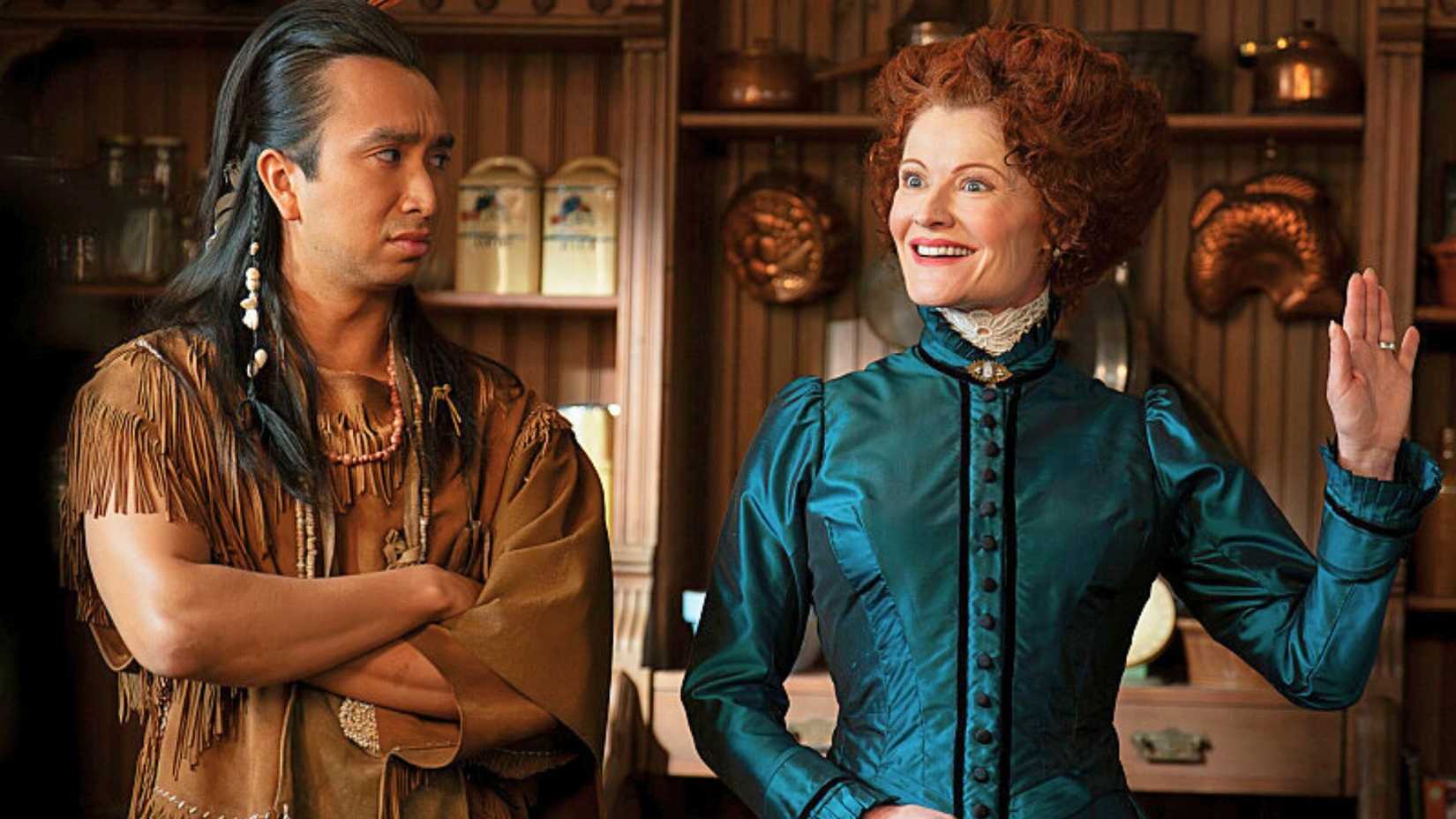
The show’s availability on platforms like Pluto TV ensures that new cohorts of viewers continue to discover the foundational episodes, fueling a compounding growth in fanbase engagement. Furthermore, the expansive nature of the Woodstone Mansion’s ghost population leaves ample room for future historical eras and guest stars to be introduced, ensuring the writers’ room never runs out of temporal material.
Ultimately, Ghosts has rewritten the rulebook on how to adapt British television for the U.S. market. By respecting the emotional architecture of the original source material while fearlessly embracing its own American historical context, the series has secured its legacy not just as a successful remake, but as a modern classic in its own right.