Executive Overview
In the ongoing corporate scramble to integrate generative artificial intelligence into every facet of digital media, tech giants are increasingly relying on grand narratives of artistic revolution. Recently, Google published a sweeping promotional initiative through its Cloud division, boldly declaring that artificial intelligence is unlocking a "new golden age of games."
The campaign, featuring forward-looking essays and ambitious conceptual collaborations, aims to convince both consumers and industry stakeholders that generative AI will fundamentally reshape interactive entertainment. Yet, the rollout has been met with a mixture of amusement, eye-rolling, and deep skepticism from gamers and critics alike.
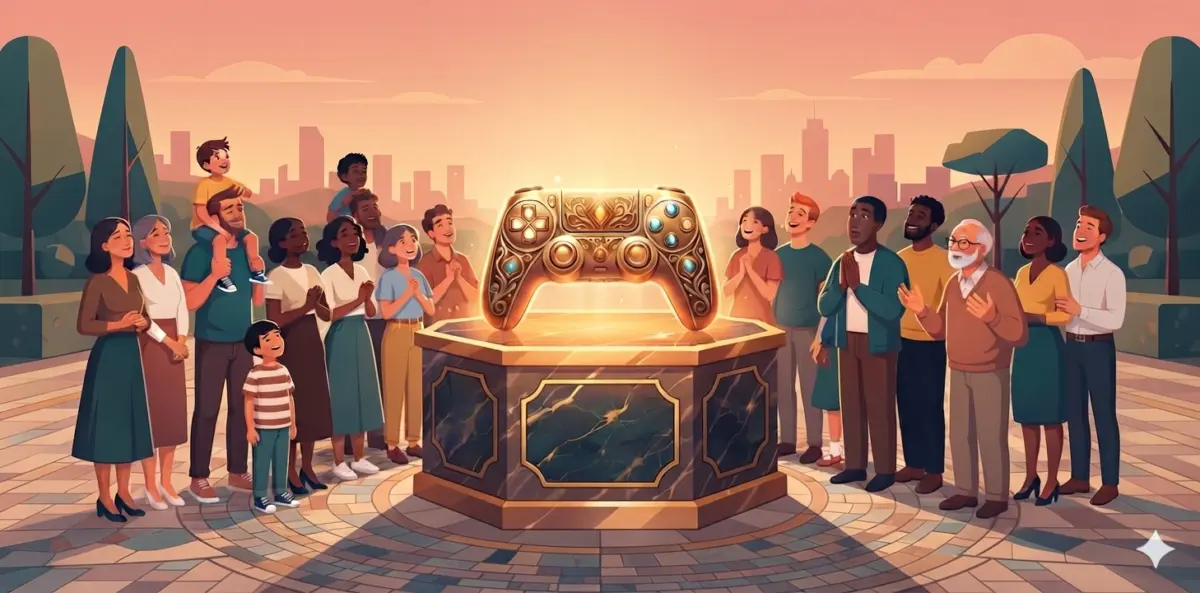
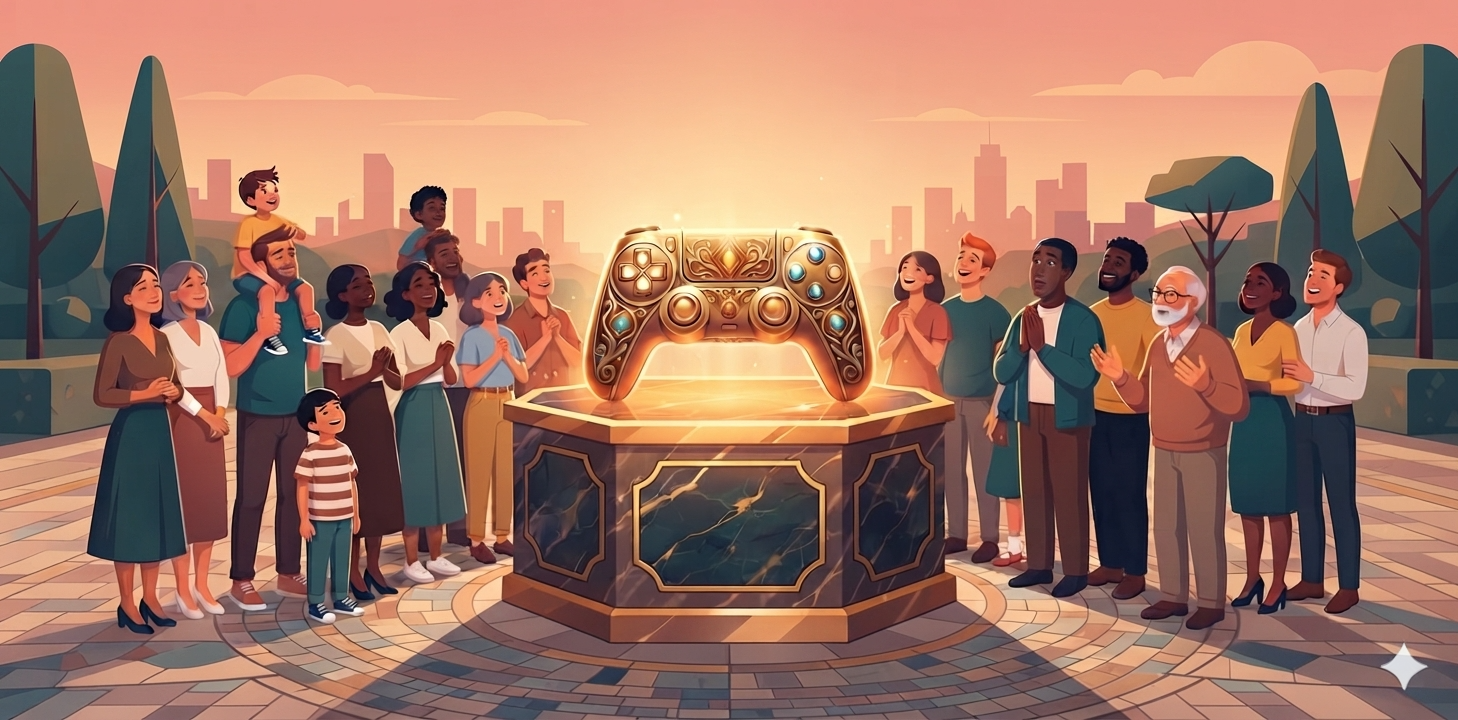
At the center of this pushback is a striking artistic miscalculation: a featured header image depicting a dystopian-esque crowd of disfigured humans bowing before a giant, glowing golden video game controller. Far from projecting a utopian future of boundless creativity, the image inadvertently captured the uncanny, unsettling aesthetic that many critics associate with generative AI tools.
Compounding this visual irony is Google’s choice of flagship projects to prove its thesis. In a follow-up post, the tech titan highlighted a collaborative venture involving sci-fi luminary Neal Stephenson and designer Karen Laur, utilizing Google’s Gemini AI to inject Jane Austen’s literary world into the sprawling, battle-royale ecosystem of Fortnite.
While tech executives herald these experiments as breakthroughs in interactive storytelling, the gaming community remains largely unpersuaded. This report examines Google’s campaign, the intersection of generative AI and traditional game development, and the widening chasm between Silicon Valley’s utopian PR messaging and the realities of game design.
Detailed Chronology
August: The Grand Declaration of a "Golden Age"
The narrative arc began in late summer when Google Cloud published an essay titled “Gamer Golden Age with AI: New Genres, Living Games.” The piece argued that traditional boundaries of game development—defined by linear scripting, finite dialogue trees, and massive asset-production budgets—are on the verge of being obliterated by machine learning models.
Google’s positioning was clear: artificial intelligence would not merely assist developers; it would democratize creation, allowing anyone to conjure complex, living, breathing virtual worlds on demand. To illustrate this paradigm shift, the article was accompanied by an AI-generated hero image. Rather than inspiring confidence in machine-crafted artistry, however, the image immediately drew scrutiny for its classic generative artifacts: misshapen human anatomy, vacant and asymmetrical facial features, and an unsettling, cult-like devotion to a corporate tech symbol.
Fall: Bringing Austen to the Battle Bus
The conversation evolved when Google linked back to its August manifesto in a subsequent promotional piece detailing a high-profile project. This new initiative showcased author Neal Stephenson and designer Karen Laur experimenting with Google’s Gemini AI architecture.
The core premise? Using large language models to transplant the refined, Regency-era social dynamics of Jane Austen’s novels directly into Fortnite. The experiment attempted to merge the high-society drama of Pride and Prejudice with the frantic, builder-shooter mechanics of Epic Games’ juggernaut.
Rather than generating widespread anticipation, the announcement highlighted the persistent disconnect between big tech’s theoretical use-cases and what players actually want from interactive media. Social media reactions quickly seized on the absurdity of marrying 19th-century epistolary romance with a title famous for pop-culture crossovers, dance emotes, and intense PvP combat.
Supporting Context & Metrics
The Generative AI Gold Rush in Gaming
Google is far from alone in its pursuit of AI-driven gaming experiences. Across the technology sector, venture capitalists and enterprise cloud providers are pouring billions of dollars into generative tools designed to lower the cost of game development. According to recent market intelligence reports from platforms like Newzoo and PitchBook, investments in gaming-focused AI startups surged by over 40% year-over-year.
Major publishers—including Electronic Arts, Ubisoft, and Square Enix—have expressed varying degrees of enthusiasm for implementing machine learning. Use cases generally fall into three categories:
- Procedural Asset Generation: Automating the creation of background textures, foliage, and non-critical environmental geometry.
- Dynamic NPC Dialogue: Moving beyond hard-coded scripts to allow players to hold open-ended conversations with non-player characters using LLMs.
- QA and Playtesting: Deploying algorithmic bots to rapidly stress-test level geometry and identify balance issues.
The Valley-vs-Player Divide
Despite the corporate enthusiasm, internal industry sentiment tells a more complex story. Independent developers and veteran designers frequently voice concerns regarding copyright, the devaluation of human artistry, and the homogenization of creative styles.
Furthermore, consumer sentiment surveys—such as those conducted by various gaming outlets and research groups—reveal that a significant majority of core gamers view AI-generated assets and writing with skepticism or outright hostility. Concerns center on the loss of intentional artistic direction, the risk of narrative blandness, and the ethical implications of training foundational models on copyrighted works without compensation or consent.
When Google showcases projects that feel more like tech demos than cohesive artistic visions—such as the aforementioned Jane Austen Fortnite integration—it tends to alienate the very audience it hopes to court. Players prioritize responsiveness, mechanical depth, artistic soul, and compelling gameplay loops over algorithmic novelties.
Official Statements and Industry Perspectives
While Google’s marketing materials frame these developments as an inevitable and glorious evolution, independent industry voices urge caution.
"There is a fundamental misunderstanding in the tech sector about what makes video games compelling," notes veteran game design consultant Marcus Vance. "Games aren’t just content delivery systems waiting to be optimized by a larger language model. They are carefully engineered experiences built on pacing, mechanics, and human empathy. When you try to force incompatible cultural artifacts together just because the technology makes it technically possible, you end up with a novelty that wears off in five minutes."
Conversely, proponents within the tech sector maintain that early friction is a natural part of any technological revolution. During recent cloud computing conferences, Google representatives emphasized that tools like Gemini are designed to empower creators, acting as a collaborative muse rather than a replacement for human talent.
Google’s published literature frequently emphasizes the concept of "living games"—worlds that adapt in real-time to player input, creating infinite replayability. Yet, critics point out that infinite content does not equate to meaningful content. Without human curation, structural narrative arcs, and emotional resonance, procedurally generated or AI-driven narratives risk descending into a swamp of digital noise.
Future Outlook
As the dust settles on Google’s latest AI marketing push, the trajectory of artificial intelligence in video games remains heavily contested.
On the corporate front, cloud providers and software conglomerates will undoubtedly continue pushing generative tools into development pipelines. As development costs for AAA titles skyrocket—frequently exceeding hundreds of millions of dollars per game—executives will face mounting pressure to find efficiencies wherever possible. AI promises cheaper voice acting, faster coding loops, and automated asset generation.
However, the consumer-facing side of the industry will likely demand a higher standard of transparency and quality. The backlash to Google’s AI-generated worship scene and its mismatched literary experiments serves as a cautionary tale: players can easily distinguish between genuine creative vision and corporate techno-optimism.
In the near term, the most successful implementations of AI in gaming are likely to happen quietly under the hood—optimizing rendering pipelines, assisting developers with repetitive administrative coding tasks, and helping QA teams catch bugs—rather than through jarring, high-profile publicity stunts attempting to force classical literature into battle-royale arenas.
Until tech giants can demonstrate that artificial intelligence enhances human creativity rather than diluting it with uncanny pastiches, the "new golden age of games" will remain little more than a marketing slogan—neatly illustrated, perhaps, by a crowd of faceless worshippers bowing before a golden controller.