Executive Overview
The intersection of beloved science-fiction franchises and tabletop gaming has reached a fascinating new zenith with the release of the Magic: The Gathering Star Trek set. As part of Wizards of the Coast’s ongoing Universes Beyond initiative—a product line designed to inject pop-culture heavyweights like Doctor Who, The Lord of the Rings, and Fallout into the world’s premier trading card game—this latest crossover carries immense expectations. Skeptics often view such collaborations as cynical corporate synergy, a mere churning of the content machine meant to appeal to the lowest common denominator via superficial references.
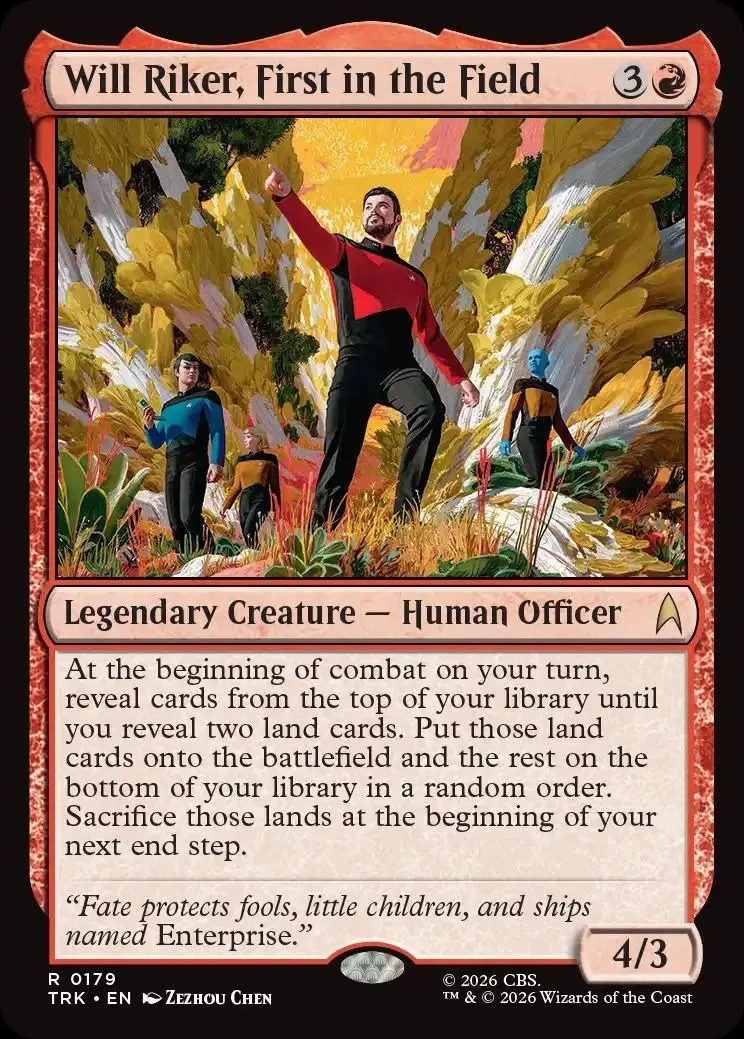
However, early playtests and deep dives into the mechanics reveal something entirely different. Rather than relying solely on nostalgic easter eggs—though deep-cut references to Star Trek: Prodigy and the Kelvin Timeline film Star Trek Beyond are certainly present—the Star Trek expansion succeeds because its mechanics fundamentally mirror the thematic soul of Gene Roddenberry’s universe.
By translating exploration, cultural diversity, technological collaboration, and utopian optimism into game rules, Wizards of the Coast has crafted a set that feels like a genuine homage. From the land-exploring Strange New Worlds mechanic to the teamwork-driven combat styles, this crossover proves that when mechanics faithfully serve theme, Universes Beyond can elevate both the game and the source material. Available now for both tabletop formats and Magic: The Gathering Arena, the set invites players to assemble their ultimate Starfleet crews and boldly venture into uncharted territory.
Detailed Chronology: From Concept to the Final Frontier
The journey toward bringing the United Federation of Planets into the Multiverse of Magic: The Gathering did not happen overnight. It represents the logical maturation of Wizards of the Coast’s experimental crossover strategy, a multi-year evolutionary timeline that has reshaped how the trading card game industry approaches intellectual property.
The Evolution of Universes Beyond
When the Universes Beyond program was first announced, it sparked fierce debate within the Magic community. Purists worried about the dilution of traditional lore, while collectors and casual fans anticipated the thrill of seeing their favorite non-Magic universes collide with the game’s deep strategic framework. Early releases varied in reception; while high-fantasy properties like The Lord of the Rings: Tales of Middle-earth slotted naturally into the game’s existing structural paradigms, other adaptations faced criticism for feeling disconnected from the core gameplay experience.
When Wizards of the Coast turned its sights toward Star Trek, the design team faced a monumental design challenge: How do you translate a franchise built on diplomacy, space exploration, and scientific inquiry into a game traditionally defined by combat, resource burn, and magical warfare?
Playtesting the Final Frontier
The development process involved rigorous playtesting, often enlisting dedicated franchise historians alongside veteran Magic players to ensure both mechanical balance and thematic accuracy. The goal was to avoid empty fan service. While the inclusion of deep cuts—such as nods to the animated series Prodigy and the alternate-reality films—pleased die-hard Trekkies, the mechanics had to stand on their own merit.
During initial road tests, deck-builders discovered that pigeonholing the franchise into standard archetypes failed to capture the spirit of Starfleet. Instead, designers introduced specialized mechanics that rewarded players for stepping outside conventional strategies. The introduction of the Strange New Worlds mechanic shifted the focus away from basic resource stacking, while the Federation mechanic incentivized the inclusion of disparate species working in tandem. By integrating spacecraft rules previously seen in Edge of Eternities and coupling them with clever nods to classic tropes—such as disposable security officers acting as chump-blockers—the set evolved into a cohesive, highly thematic expansion that bridges half a century of science-fiction history with modern card design.
Supporting Context & Metrics: Mechanics and Synergy
To understand why the Star Trek set resonates so deeply with players, one must examine the specific mechanics that bring the universe to life on the cardboard grid. The set relies on a synergy of exploration, crew management, and cooperative combat.
1. Strange New Worlds and Resource Exploration
Traditional Magic deck-building often encourages efficiency through homogenization: stacking identical basic lands like Islands and Forests to ensure steady, predictable mana generation. The Star Trek set upends this paradigm with the Strange New Worlds mechanic.
- Mechanic Function: Players are rewarded for maintaining a diverse portfolio of differently named lands.
- Gameplay Impact: Cards like Deep Scan scale dynamically, drawing a card for each uniquely named land under the player’s control. Concurrently, cards like the Astute Terraformer see their power requirements reduced as the player explores a wider variety of planetary biomes. This mechanic brilliantly mirrors Starfleet’s primary directive: seeking out new worlds and charting the unknown.
2. The Federation Mechanic and Cultural Diversity
Star Trek has always championed the strength found in diversity, encapsulated by the philosophy of Infinite Diversity in Infinite Combinations (IDIC). The game translates this directly onto the battlefield.
- Mechanic Function: The Federation mechanic grants passive and active bonuses when a player controls multiple distinct creature types simultaneously—such as Vulcans, Klingons, and Romulans fighting side-by-side (though notable exceptions like the Borg operate under entirely different, parasitic rules).
- Gameplay Impact: Rather than hyper-focusing on a single creature tribe, successful deck-builders must curate a multicultural crew, reinforcing the utopian ideal that unity breeds strength.
3. Spacecraft Management and the Stationed Keyword
Starships are as much characters in Star Trek as the officers who pilot them. Building upon spacecraft rules introduced in Edge of Eternities, the set treats vessels not as instant-win assets, but as systems requiring active management.
- Mechanic Function: Ships enter the battlefield with limited operational capabilities. Players must station these vessels by tapping available creatures to add charge counters, gradually unlocking flight, shielding, and offensive capabilities.
- Synergies: Characters like Lt. Cmdr. Geordi La Forge act as force multipliers, doubling incoming charge counters to get iconic flagships—such as the U.S.S. Enterprise-A, Free Spirit—spaceborne twice as fast. The Enterprise-A itself cleverly rewards the player with three red 1/1 officer tokens upon deployment. In a delicious nod to television history, these disposable "redshirts" are perfectly positioned to serve as chump-blockers in combat.
4. Tactical Operations: Beam Me Up and Cooperative Combat
Rounding out the mechanical suite are systems designed to emphasize emergency extraction and coordinated teamwork:
- Beam Me Up: A graveyard-recursion mechanic allowing players to retrieve a card from the discard pile at the cost of returning a permanent from the battlefield back to their hand.
- Assimilate: Tailored for Borg-themed decks, this mechanic strips away a creature’s existing types and converts them into artifacts under the control of the Borg player.
- Teamwork Mechanics: Cards like Common Goal enable two creatures to pool their damage output, while high-threshold attacks reward players for committing a total power of 8 or more to the offensive line. Iconic warriors like Worf, Honor-Bound Warrior, capitalize on these cooperative surges, frequently turning the tide of a match.
Official Statements and Design Philosophy
The creative philosophy behind the Star Trek set highlights Wizards of the Coast’s growing sophistication in handling external intellectual properties. Industry insiders and lead designers have increasingly emphasized that a crossover must respect the source material’s foundational ethos rather than treating it as a skin applied over generic rules.
"When you bring a universe as storied as Star Trek into Magic: The Gathering, you cannot simply paint a starship over a dragon and call it a day," noted a lead developer during the set’s unveiling. "The mechanics have to tell a story. When a player builds a deck with the Strange New Worlds mechanic, they aren’t just drawing cards—they are literally charting a course across the galaxy. They feel the spirit of discovery."
Furthermore, representatives from licensing partners have praised the collaborative effort to balance fan-service easter eggs with robust, competitive gameplay. By ensuring that cards appeal both to casual viewers who appreciate a clever nod to television lore and to competitive tournament grinders who look for deep synergistic combos, the set achieves a rare balance in modern trading card design.
Future Outlook: The Trajectory of Universes Beyond
The launch of the Star Trek set—available now across both physical tabletop formats and digital via Magic: The Gathering Arena—marks a significant milestone for the Universes Beyond portfolio. As these crossovers become an increasingly permanent fixture of the Magic ecosystem, the success of this set establishes a high benchmark for future collaborations.
What This Means for the Future of Tabletop Gaming
- Thematic Integration Over Skinning: Future cross-promotional sets will likely face heightened scrutiny from fans who now expect mechanics to deeply reflect the source material’s philosophical and narrative underpinnings. Shallow adaptations will no longer suffice.
- Digital-Physical Parity: The simultaneous release on tabletop and MTG Arena ensures that digital communities can immediately test, iterate, and meta-game these cross-universe mechanics, broadening the accessibility of niche thematic decks.
- Expanding Horizons: The successful translation of a science-fiction diplomatic utopia into a historically fantasy-combat game opens the door for virtually any intellectual property to find a home within the Multiverse, provided the design team approaches the adaptation with intellectual rigor and creative empathy.
Ultimately, the Star Trek set proves that even in a grim, competitive trading card game, there is always room for a little optimism, a reverence for exploration, and the reminder that disparate forces—when working together—are invariably greater than the sum of their parts.