Executive Overview
For decades, the video game industry has relied on a tried-and-true formula for role-playing games (RPGs): you wake up as a nobody, discover you are the prophesied "Chosen One," and set off on a grandiose quest to vanquish a primordial darkness, save the universe, and perhaps romance a companion or two along the way. While this power-fantasy loop has fueled billions of dollars in revenue and entertained generations of players, it has also sparked a quiet rebellion among developers seeking deeper, more grounded storytelling.
Chief among these dissidents is Martin Klíma, co-founder of Warhorse Studios. In a recent, candid interview with PC Gamer, Klíma detailed the foundational philosophies that led to the creation of the critically acclaimed Kingdom Come: Deliverance. Tracing the game’s roots back to a profound fatigue with the conventional, assembly-line RPG tropes, Klíma argued that the gaming landscape has spent too long catering strictly to adolescent power fantasies.
By stripping away magic, dragons, and cosmic stakes in favor of a gritty, historically accurate 15th-century Bohemia, Warhorse Studios proved that players were hungry for something vastly different. However, as Klíma notes, the industry at large remains trapped in a cycle of risk-averse iteration. This deep dive explores Klíma’s criticisms of modern game design, the psychological appeal of traditional power fantasies versus systemic realism, the financial pressures facing AAA publishers, and what the future holds for developers willing to step off the well-trodden path.
Detailed Chronology: The Genesis of an Anti-Epic
To understand why Kingdom Come: Deliverance feels so radically distinct from its contemporaries, one must look back at the frustrations that birthed the project over a decade ago.
The Seed of Discontent
Long before Warhorse Studios officially conceptualized Henry of Skalitz—a humble blacksmith’s son who cannot read, starts the game knowing nothing of swordplay, and gets caught up in a localized political conflict—Martin Klíma was growing weary of the genre he loved. As an avid player of RPGs, Klíma found himself increasingly alienated by the predictable narrative arcs dominating the market.
"I play a lot of RPGs, it’s a genre I really like," Klíma reflected during his interview. "I was really and I still am bored and tired of all the RPGs when you are this chosen one, when you have this grand task of saving the universe… The games that are these really straightforward power fantasies. It’s not that I think it’s somehow wrong in principle. There is nothing bad about a good power fantasy. It’s just, it’s so repetitive."
Satirizing the Skinner Box
To illustrate the mechanical emptiness of these repetitive loops, Klíma drew a sharp comparison to Progress Quest, the legendary 2002 zero-player satirical computer game. Designed to lampoon MMORPGs like EverQuest, Progress Quest automated every aspect of leveling, looting, and questing, reducing the traditional RPG experience down to raw, Skinner-box mechanics of upward numbers and dopamine hits.
Klíma saw Progress Quest not just as a joke, but as a mirror reflecting the stagnant reality of mainstream game design. "It’s really a distillation of what the common RPG is," he noted. This realization served as the foundational seed for Warhorse Studios: if the industry’s veterans were tired of playing the same manufactured hero’s journey, there had to be a sizable audience of mature gamers yearning for authenticity, friction, and narrative weight.
Bringing Medieval Bohemia to Life
When Kingdom Come: Deliverance finally launched in 2018, it discarded every single pillar of high-fantasy convention. There was no dark lord to slay, no mystical prophecies to fulfill, and no magic spells to cast. Instead, players inhabited a meticulously researched, historically authentic depiction of 1403 Bohemia during a period of civil war and foreign invasion.
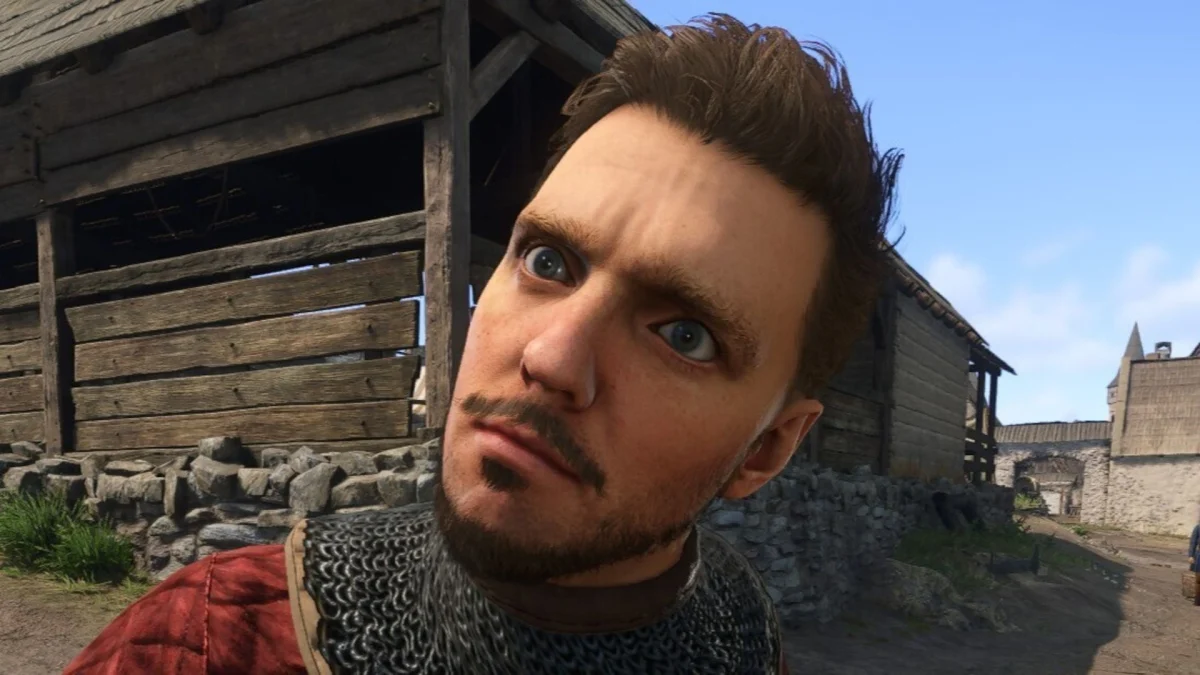
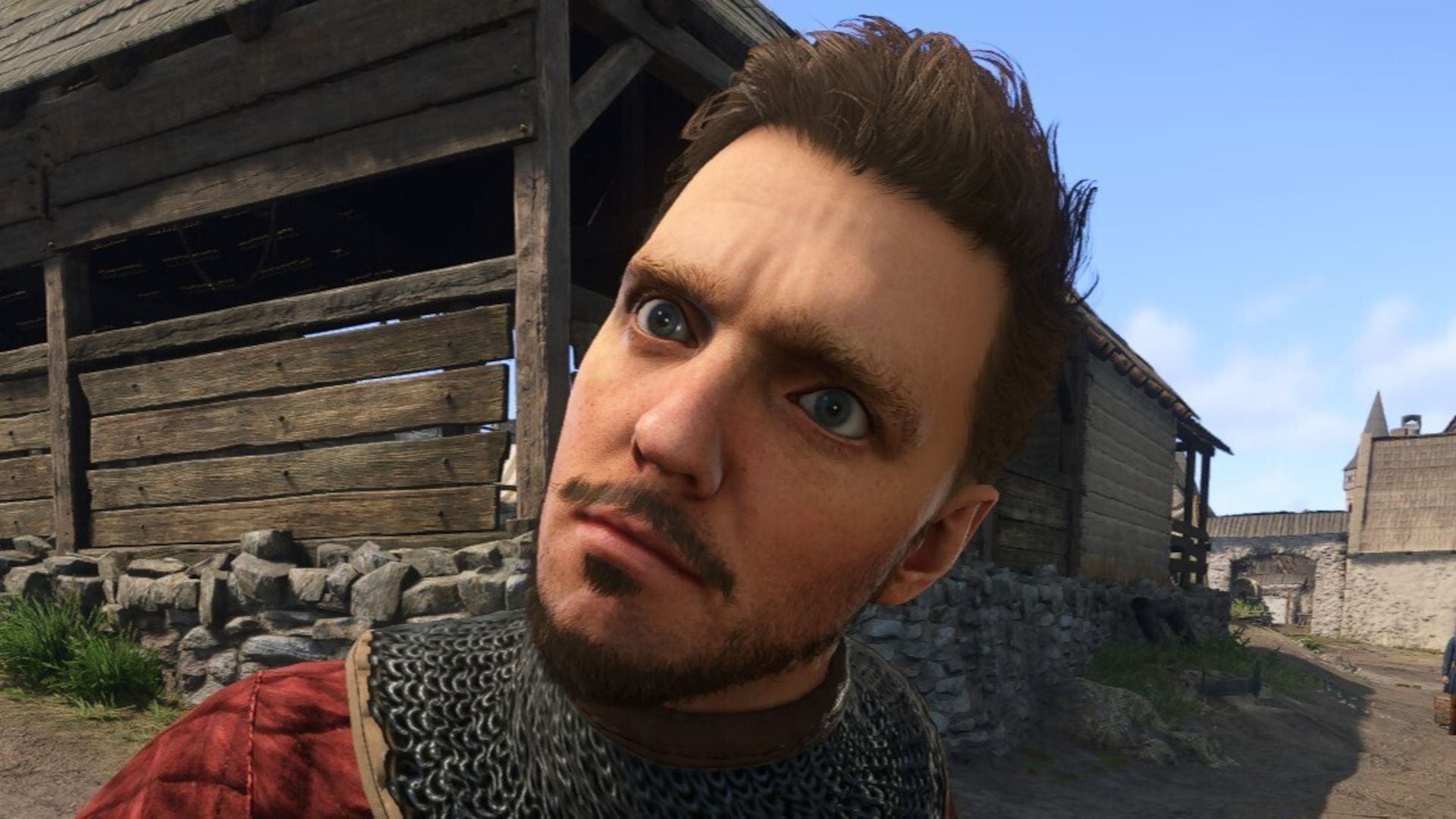
Henry’s struggles were mundane yet deeply compelling: learning how to read from a local scribe, figuring out how to maintain blood-stained armor, eating to survive, and struggling to swing a sword effectively without proper training. This radical dedication to systemic realism struck a chord with millions, proving that historical grounding could be just as captivating—if not more so—than saving a fantasy realm.
Supporting Context & Metrics: Growing Pains of an Aging Demographic
Klíma’s critique touches upon a broader demographic shift within the gaming community that major publishers have been slow to address: the audience has grown up, but the games have largely stayed the same.
The Teenager Paradox in Modern Game Design
Reflecting on the persistence of the "Chosen One" trope, Klíma pointed out a fundamental disconnect between the age of modern players and the themes targeted by big-budget studios.
"The games that were and sort of are being made are still the games for teenagers," Klíma observed. "If you are 16, 17, you love playing these power fantasy games because it’s something that you need. But the audience is much older today…"
The average age of gamers has steadily climbed over the past two decades, with industry data consistently placing the core demographic well into their late 20s, 30s, and beyond. Yet, AAA studios continue to pump out adolescent power fantasies centered around absolute control, unstoppable protagonists, and world-ending stakes. While developers like Game Science (Black Myth: Wukong) or upcoming titles like Clair Obscur: Expedition 33 continue to find massive commercial success with traditional aesthetic and narrative structures—prompting Klíma to quickly clarify, "everybody’s going to think that I am hating on Expedition 33 right now, but that’s definitely not the case"—the underlying structural fatigue remains palpable.
The Cycle of Safe Iteration
Why do publishers stubbornly cling to formulas that older gamers may have outgrown? According to Klíma, the answer lies in corporate risk aversion and the comfort of predictable economics.
Publishers, he argues, are fundamentally designed to recycle what has proven to be financially viable in the past. To illustrate this point, Klíma highlighted the output of industry giants like Ubisoft, whose blockbuster franchises have come to epitomize the open-world iterative loop.
"I played the original Assassin’s Creed, and the original Far Cry, and the original Watch Dogs, and most of these games in the first iterations, and it was fun. But once you play the same game for the 10th time, it sort of becomes stale."
While series like Far Cry and Watch Dogs occupy the action-adventure space rather than traditional RPGs, the critique applies doubly to the role-playing genre. Over the last decade, even historically action-oriented franchises—most notably Assassin’s Creed with entries like Origins, Odyssey, and Valhalla—pivoted hard to adopt sprawling, Witcher-esque RPG mechanics, complete with loot rarities, level scaling, and dialogue trees, doubling down on the very formulas Klíma views as over-rehearsed.
Official Statements & Industry Perspectives
Klíma’s critique is not born out of bitterness toward big-budget developers, but rather out of an appreciation for technical mastery weighed against creative stagnation. He is quick to praise the incredible talent working within major studios, even as he laments how that talent is directed.
"Craftsmanship-wise, [Ubisoft’s] games are excellent," Klíma admitted. "I mean, the beautiful animations, beautiful models. They are pretty much bug-free. It’s a very polished experience. But I can’t help but feel that this craftsmanship would be better served by creating a game that’s a little bit more innovative."
At the same time, Klíma displays a pragmatic understanding of the financial realities governing the AAA games industry. Pumping hundreds of millions of dollars into development budgets creates a high-stakes environment where experimentation is treated as a dangerous liability rather than a creative necessity.
"I appreciate the dilemma that they have," Klíma acknowledged, conceding that "I don’t have any easy answers for it."
When hundreds of jobs and corporate survival hang in the balance, relying on established blueprints—such as towers to climb, map markers to clear, and chosen-one narratives to fulfill—becomes the path of least resistance for risk-averse executives.
Future Outlook: Where Do RPGs Go From Here?
As the industry looks toward the horizon, the tension between safe, iterative blockbuster design and daring, systemic innovation has never been more pronounced.
The success of Kingdom Come: Deliverance—and the immense anticipation surrounding its sequel, Kingdom Come: Deliverance II—proves that a viable commercial market exists for games that treat players as ordinary people navigating extraordinary, grounded historical circumstances. Gamers are showing an increasing appetite for consequence, friction, and narrative depth over mindless progression loops and glowing map objectives.
However, shaking up the broader AAA ecosystem will require a paradigm shift. As development costs soar and hardware capabilities expand, publishers are incentivized to play it even safer. Yet, as indie and mid-tier studios continue to carve out lucrative niches by subverting tired tropes, the pressure on major publishers to innovate may eventually reach a breaking point.
Martin Klíma and Warhorse Studios took a massive gamble on a mud-splattered, illiterate blacksmith in 2018, and it paid off. As the industry matures alongside its audience, the real question is whether other major studios will find the courage to follow suit—or if they will continue to recycle the same tired power fantasies until the well runs completely dry.