Executive Overview
In the digital landscape of the 21st century, internet culture is frequently characterized by fleeting ephemera—disposable moments of collective amusement that burn bright before fading into digital obscurity. Looking back at the historical catalog of viral phenomena, each year has left its distinct, albeit transient, cultural footprint: the kinetic absurdity of the Harlem Shake in 2013; the ubiquitous choreography of the Watch Me (Whip/Nae Nae) in 2015; and the eerie, frozen-in-time stillness of the Mannequin Challenge in 2016.
However, the year 2026 introduced a social media dance trend of unprecedented scope, depth, and cultural resonance. Eschewing the Western-centric, novelty-driven choreography of its predecessors, this contemporary phenomenon has seen ethnic groups across Eurasia and beyond showcase their centuries-old regional traditions. The backdrop to these ancestral displays? The futuristic, heavily synthesized Atlanta trap soundscapes of Future’s 2017 hit single, “Mask Off.”
The geographical scope and sheer variety of this trend are staggering. In one viral video, residents of the remote Altay Republic in southern Siberia perform ancient shamanic rituals against a vast, sweeping backdrop of rocky plains. Another features a galloping Kazakh horseman releasing a hunting eagle directly into the camera lens. Others transport viewers to the verdant highlands of Armenia or highlight the traditional grace of Bashkortostan in Eastern Europe. Accumulating tens of millions of views, these videos represent an unlikely synthesis: the visceral, bass-heavy aesthetic of modern American hip-hop colliding with the sacred, rigorously preserved movement vocabularies of indigenous and regional cultures.
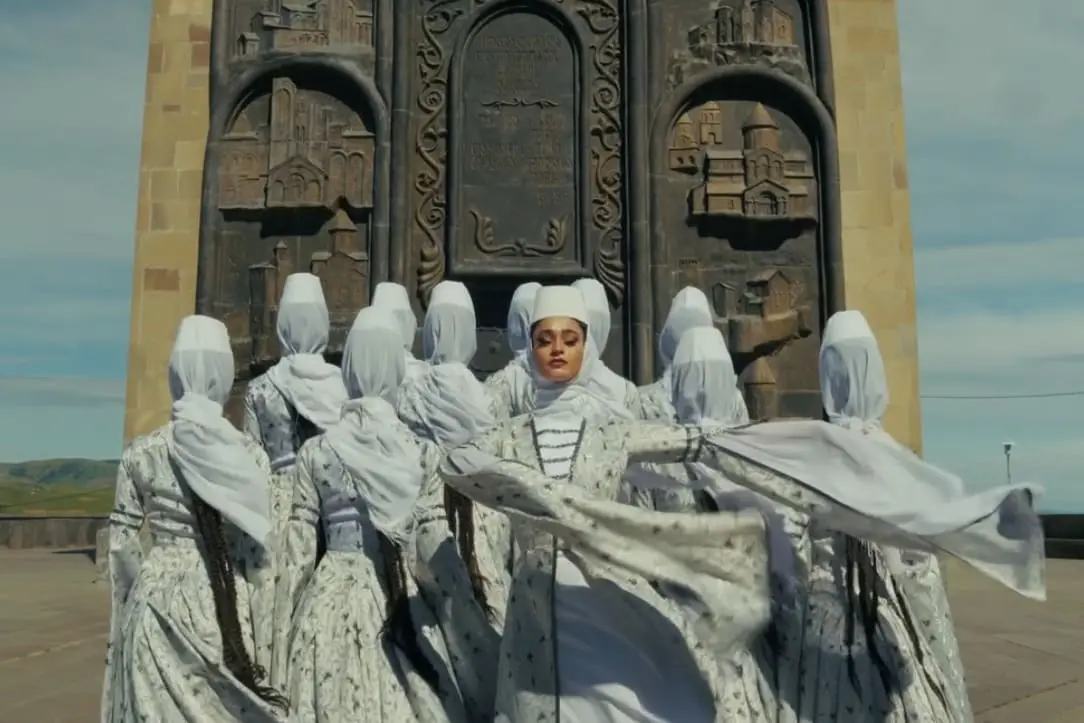
Yet, despite the decentralized explosion of user-generated content populating Instagram Reels, TikTok, and YouTube Shorts, this global movement traces its lineage to a single catalyst. On June 2, Melbourne-born, Paris-based director and choreographer James Fenwick uploaded a polished, highly stylized spotlight on traditional Georgian dance culture to his Instagram account. Part of his broader ongoing documentary and short-form video initiative, Born From Culture, that single post did not merely perform well—it fundamentally reshaped how traditional heritage is communicated, consumed, and celebrated in the digital age.
Detailed Chronology: From Parisian Epiphanies to a Global Movement
To understand the scale of the Born From Culture phenomenon, one must trace its evolution from a localized creative experiment to a transnational digital movement. The trajectory is defined by a series of deliberate artistic choices, unexpected viral milestones, and an organic cultural ripple effect that caught even its creator by surprise.
The Genesis: A Wedding in Paris
The intellectual foundation of Born From Culture was laid not in a high-tech studio or an academic institution, but at a wedding. James Fenwick, drawing upon a rich professional background as a dancer and choreographer in Paris—where he absorbed the theatricality and movement-focused disciplines of legends like Charlie Chaplin and Fred Astaire—experienced a profound epiphany.
Watching the wedding guests move on the dance floor, Fenwick observed two friends: one of Nigerian descent, the other of Samoan heritage. Despite originating from geographical and cultural spheres separated by thousands of miles—cultures that had historically experienced zero direct contact for millennia—they were communicating through the exact same visceral, universal lexicon: the language of human movement.
This realization planted a creative seed. Fenwick recognized that while contemporary globalization often threatens to homogenize local traditions, it also offers a powerful vernacular—contemporary music—that can act as a bridge, translating ancient movement into a medium digestible for a hyper-connected, digital-first global audience.
The First Iteration: The Samoan Pilot
Eager to test his hypothesis, Fenwick produced his inaugural Born From Culture short-form video in early 2025, collaborating with a traditional Samoan dance group. He juxtaposed their fierce tribal choreography with Kanye West’s spiritual, driving track “Follow God,” filming the sequence with the polished, dynamic framing typical of high-budget commercial music videos.
While modest by subsequent standards, the video performed well, pulling in a couple of million views. More importantly, it yielded a critical qualitative result: immense community pride. The participants felt they were being represented not through a reductive, ethnographic lens, but with contemporary dignity, aesthetic power, and cinematic flair. The blueprint for the series was established: pair deeply rooted traditional choreography with contemporary, high-energy soundtracks, and execute it with uncompromising directorial precision.
The Georgian Catalyst (June 2025)
With the concept crystallized, Fenwick turned his attention to a culture he had long admired for its athletic prowess and storytelling capabilities: Georgia. Spending his own funds, Fenwick traveled to the Caucasus nation, establishing direct lines of communication with local cultural leaders, historians, and dance troupes. His goal was not merely to aestheticize Georgian movement, but to honor its historical context—specifically, the narratives of war, resilience, and survival embedded in the region’s high-velocity, precision-heavy folk dances.
Released on June 2, 2025, the resulting video was accompanied by a stroke of ironic linguistic coincidence. As Fenwick later noted with amusement, while some internet commentators playfully pointed out that rapper Future hails from Atlanta, Georgia, the geographic cross-pollination was entirely coincidental.
The reaction, however, was explosive. "It just went bonkers," Fenwick recalls of the immediate aftermath. Within 14 hours of uploading, the video had amassed five million views. By the end of its initial wave, that number climbed past ten, fifteen, and thirty million. Born From Culture had officially broken through the noise of the algorithm.
The Viral Tsunami and the "Mask Off" Formula
Following the Georgian video’s historic run, the project triggered an unexpected cultural offshoot: widespread imitation. While Fenwick continued traveling to document other global communities using diverse musical pairings, the specific formula utilized in the Georgian spotlight—synchronized traditional choreography set to the narcotic, flute-driven trap beats of Future’s “Mask Off”—captured the public imagination.
Across Eurasia and beyond, creators, regional dance ensembles, and cultural advocates began producing their own versions of the trend. The formula was frequently replicated: a lead performer breaking through a static crowd just as Future’s iconic vocals drop, transitioning into explosive, region-specific footwork, acrobatics, or ritualistic movement. Some creators expanded on the template, fusing the Atlanta trap instrumentation with live regional instrumentation and indigenous vocal chants. What began as a directorial experiment transformed into an open-source global celebration of heritage.
Supporting Context & Metrics: The Mechanics of Modern Cultural Preservation
The phenomenal metrics of the Born From Culture series—garnering tens of millions of cumulative views across multiple platforms—raise critical questions about the intersection of digital algorithms and intangible cultural heritage.
The Psychology of the Juxtaposition
At first glance, the pairing of indigenous folk dance with contemporary American trap music appears jarring. Traditional folk dances are institutional repositories of history, spirituality, and social codes, often guarded by strict generational protocols. Conversely, commercial trap music is often associated with hyper-modernity, urban hedonism, and Western youth culture.
Yet, this friction is precisely why the format succeeds. In an era where attention spans are commodified, traditional ethnographic documentaries can struggle to capture the imaginations of digital natives. By injecting high-octane contemporary production values into ancestral traditions, Fenwick and subsequent creators subvert expectations.
As media analysts and cultural commentators have observed, the videos force viewers to confront a profound reality: these remote communities are not frozen relics of a bygone era existing in a historical vacuum. Long before digital directors arrived with camera crews, nomadic horsemen, Siberian shamans, and Caucasian dancers were part of a globalized cultural ecosystem. The trend did not introduce these regions to the modern world; it provided them with an optimized vehicle to demonstrate how they were already thriving within it.
Collaborative Ethics in Digital Anthropology
The commercialization of indigenous culture online has long carried ethical risks, frequently resulting in digital extraction, cultural tourism, or exploitative appropriation. Recognizing these pitfalls, Fenwick has been vocal about maintaining a strictly collaborative framework for Born From Culture.
The production methodology relies heavily on community consultation:
- Direct Leadership Engagement: Projects are initiated only after building trust with local elders, historians, and dance masters.
- Veto Power and Cultural Consent: No footage is released without explicit, formal approval from the participating communities.
- Respect for Sacred Protocols: Recognizing that certain movements, rituals, and performance spaces carry spiritual prohibitions, production workflows are adapted to respect indigenous boundaries rather than overriding them for the sake of viral engagement.
By treating the participants as co-authors and directors of their own representation rather than passive subjects of study, Born From Culture establishes a benchmark for ethical digital anthropology.
Official Statements & Perspectives
The phenomenon surrounding James Fenwick’s work has generated significant dialogue among artists, cultural guardians, and digital creators regarding the responsibilities and rewards of hyper-visibility.
Reflecting on the unexpected global wave of imitation sparked by his work, Fenwick expresses a mixture of humility and protective pride:
"It’s flattering. What we’re trying to do is get people excited about culture, so inspiring people to represent theirs is a beautiful thing."
Fenwick suggests that the underlying resonance of the "Mask Off" track—with its thematic undercurrents of stripping away artifice, shedding societal expectations, and returning to one’s roots—may subconsciously mirror the motivations of disparate ethnic groups eager to reclaim visibility in a globalized media ecosystem.
At the same time, Fenwick remains deliberate about distancing the core artistic mission of his project from the runaway meme it inadvertently spawned:
"I want people to know that Born From Culture is not just a ‘Mask Off’ trend. It’s an in-depth cultural series that gives underrepresented people a voice to tell their stories, and the heart of the series is our documentaries."
This sentiment underscores the tension between virality and substance. While short-form video algorithms favor catchy, repeatable formulas, the long-term viability of cultural preservation relies on contextual depth—a balance Fenwick continues to navigate as the project expands.
Future Outlook: Beyond the Algorithm
As Born From Culture looks toward the horizon, the initiative is poised to transition from a viral social media sensation into a formalized, multi-platform media enterprise.
Upcoming Projects and Expansion
The immediate roadmap for the series includes the release of a highly anticipated deep-dive spotlight on Native American dance culture, focusing on the preservation and contemporary expression of indigenous North American movement traditions. Furthermore, industry whispers and early-stage strategic discussions point toward potential partnerships with major streaming giants, including preliminary talks with Netflix to adapt the short-form documentary ethos into a long-form episodic format.
The Enduring Legacy of a Digital Paradigm Shift
Despite these institutional expansions, the daily cadence of user-generated videos utilizing the foundational formulas established in mid-2025 shows no sign of slowing down. Across Instagram, TikTok, and emerging platforms, new communities continue to upload their own interpretations, proving that the appetite for authentic, localized cultural expression within a globalized framework is bottomless.
Ultimately, Born From Culture has proven that the digital algorithm is not exclusively an engine for homogenization. When harnessed with artistic rigor, respect for tradition, and deep cross-cultural empathy, the tools of the modern internet can become a megaphone for the world’s oldest and most resilient voices—proving that the future of global culture has always belonged to those brave enough to honor their past.