Across the United States, a massive infrastructural transformation is quietly unfolding hundreds of feet in the air, propelled by government mandates, multi-million-dollar lobbying efforts, and an insatiable public demand for faster wireless connectivity and expanded broadband access. Driven by a sweeping Federal Communications Commission (FCC) initiative known as the post-auction "repack," nearly 1,000 television stations are legally required to transition to new broadcast frequencies. Simultaneously, the telecommunications sector is racing to deploy next-generation wireless networks to reach underserved rural communities.
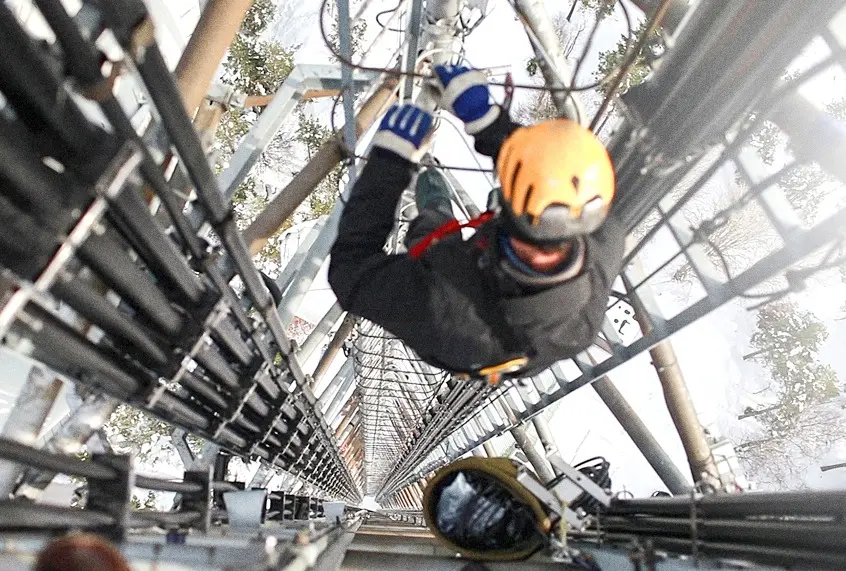
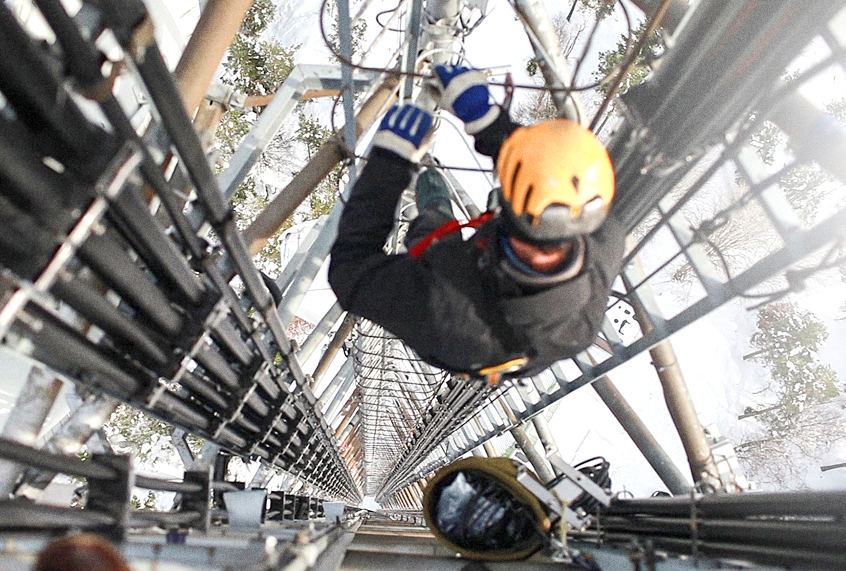
However, this high-stakes race against the clock is exacting a devastating human toll. Tower climbers—the specialized, highly vulnerable workforce tasked with scaling structures that routinely surpass heights of 1,000 to 2,000 feet—are facing an alarming surge in fatal accidents. Operating in a largely underregulated environment with limited federal oversight, these workers are routinely exposed to extreme heights, severe weather, catastrophic structural collapses, and electrical hazards.
While industry leaders and safety advocates warn that the federal government’s accelerated timeline is forcing companies to cut corners and deploy underqualified crews, powerful political factions and commercial broadcasting lobbies continue to push for an unyielding deadline. With regulatory safety standards lagging behind technological demands, the dangerous intersection of corporate ambition, rigid federal timelines, and regulatory neglect has transformed America’s communication towers into some of the most perilous workplaces in the modern economy.
Detailed Chronology: Recent Tragedies and Structural Collapses
The dangers inherent in the nation’s rapid tower expansion are not abstract statistical projections; they are written in the lives of workers lost on the job. The physical risks of scaling infrastructure far taller than iconic landmarks—such as One World Trade Center, which stands at 1,776 feet—have been starkly illustrated by a string of high-profile accidents that have devastated families and alarmed safety experts.
In September, a routine maintenance operation turned fatal in Miami Gardens, Florida. A crew working to replace an antenna for WSVN-Channel 7 suffered a catastrophic failure, resulting in the deaths of three young workers: 23-year-old Brachton Barber of Longwood, Florida; 35-year-old Benito Rodriguez of Tampa, Florida; and 31-year-old Marcus Goffena of Sidney, Ohio. The incident sent shockwaves through the local community and drew intense scrutiny to the safety protocols governing commercial broadcast upgrades.
Just months later, in April, the hazards of aging and heavily loaded infrastructure were underscored by a catastrophic structural failure in Fordland, Missouri. A massive 1,980-foot broadcast tower utilized by Ozarks Public Television completely collapsed, claiming the life of 56-year-old Stephen Lemay of Blaine, Washington. The sudden collapse not only ended the life of a veteran worker and devoted father but also severed vital public broadcasting services to the region, triggering protracted investigations into structural integrity, maintenance oversight, and the compounding weight of aging antennae.
These incidents are emblematic of a broader, systemic crisis. According to tracking data compiled by industry watchdogs, at least three tower climbers had already lost their lives within the first four months of a single calendar year, signaling that the pressure to meet aggressive federal deadlines was directly translating into heightened workplace mortality.
Supporting Context & Metrics: The FCC Repack and Regulatory Voids
To understand the root causes of these fatalities, one must examine the sweeping regulatory mechanics driving the current construction boom. The FCC’s incentive auction and subsequent television "repack" process represent one of the most complex spectrum management undertakings in regulatory history. Nearly 1,000 television stations are scheduled to relocate to new channels to clear spectrum for mobile broadband use. The statutory deadline for this massive logistical shuffle has been locked in by federal officials for July 3, 2020.
Commercial TV and radio stations have invested heavily to influence this legislative and regulatory environment, spending nearly $29 million in federal lobbying efforts during 2017 alone to protect their interests, navigate spectrum shifts, and manage compliance costs. Yet, while billions of dollars move through telecommunications markets, the human infrastructure required to support these changes remains precariously protected.
The occupational hazards faced by tower workers are uniquely extreme. Climbing operations regularly require technicians to ascend vertically from 100 to 2,000 feet, carrying heavy equipment while exposed to high winds, ice, extreme temperatures, and radio frequency (RF) radiation.
Compounding these physical dangers is a glaring regulatory vacuum. The Occupational Safety and Health Administration (OSHA) has historically lacked safety standards specifically tailored to the unique hazards of communication tower construction and maintenance. Although federal regulators began drafting dedicated communication tower safety rules during the Obama administration—prompted by a grim milestone in 2013 when 13 tower workers were killed, surpassing the total fatalities of the previous two years combined—comprehensive, enforceable rules remain chronically slow to materialize.
Dr. David Michaels, who served as assistant secretary of labor for OSHA, did not mince words regarding the severity of the crisis during his tenure:
"Tower workers have a risk of fatal injury perhaps 25 to 30 times higher than the risk for the average American worker. This is clearly unacceptable."
Furthermore, Thomas Fuller, an occupational safety expert at Illinois State University, testified before OSHA regarding the systemic vulnerabilities of the trade. Fuller pointed out that tower climbing remains a loosely supervised industry with minimal independent oversight. As communication towers age and operators continually bolt additional antennae onto aging steel frameworks, the structures grow increasingly hazardous. Compounding the physical deterioration of the towers is an industry culture of silence: workers and climbing companies frequently hesitate to report structural deficiencies or safety violations out of fear of losing lucrative contracts, knowing there is no dedicated federal agency equipped to respond to unsafe structural conditions in a timely manner.
Official Statements and Industry Disconnect
The clash between federal scheduling demands and operational reality has created a deep schism between government policymakers, broadcast engineers, and labor advocates.
Jim Tracy, chairman of the National Association of Tower Erectors (NATE), emerged as a vocal critic of the government’s uncompromising timeline. Testifying before lawmakers, Tracy warned that the aggressive push to clear the television spectrum ignored fundamental supply-and-demand realities within the labor market.
"There is one inescapable fact," Tracy stated. "There are not, at present, enough qualified workers to perform all the tower work we will be required to complete."
This sentiment is echoed by technical experts on the ground who oversee station operations. Bill Hayes, director of engineering for Iowa Public Television, highlighted the dangerous gamble stations are forced to make under current federal pressures:
"You can be gambling at best with the reliability of your station’s service, and at worst you’re gambling with people’s lives."
Despite these explicit warnings from industry veterans and safety associations, political momentum has heavily favored rapid execution. A bloc of 56 members of Congress—including prominent figures such as Rep. Steve Scalise (R-La.) and Rep. Darrell Issa (R-Calif.)—sent a formal letter to FCC Chairman Ajit Pai demanding strict adherence to the July 3, 2020, completion deadline. Proponents of the fast-track schedule argue that expediting the tower work is an absolute economic necessity in a globally connected world, pointing to the critical need to expand broadband access to rural residents and maintain U.S. competitiveness in wireless technology.
In their joint correspondence, lawmakers defended the urgency of the project:
"Ultimately, it’s a matter of economic necessity in today’s globally-connected world."
This direct lobbying pressure from Capitol Hill leaves federal regulators caught between the political imperative to roll out high-speed broadband and the ethical obligation to protect the lives of the technicians who build and maintain the physical network.
Future Outlook: A Race Against Time and Safety
As the July 2020 deadline approaches, the telecommunications and broadcasting sectors face a sobering reckoning. The convergence of aging infrastructure, an accelerated construction schedule, and a chronic shortage of certified tower technicians creates a volatile environment where safety margins are continually compressed.
Industry experts argue that avoiding future fatalities will require a fundamental overhaul of how structural work is commissioned, regulated, and monitored. Key structural reforms demanded by labor advocates include:
Enforceable Federal Standards: The swift finalization and rigorous enforcement of OSHA standards specifically designed for communication tower erection and maintenance, moving beyond generalized construction guidelines.
Mandatory Structural Audits: Independent, third-party engineering assessments of all legacy towers prior to the mounting of new equipment to prevent catastrophic collapses like the one witnessed in Fordland, Missouri.
Whistleblower Protections: Robust legal safeguards for tower climbers who halt work due to unsafe weather, compromised structural integrity, or missing safety gear, shielding them from economic retaliation by contractors.
Flexible Regulatory Timelines: A willingness by the FCC and congressional leaders to grant realistic timeline extensions where qualified labor shortages or complex engineering challenges threaten worker safety.
Without these structural interventions, the expansion of America’s digital superhighway risks being paved with preventable tragedies. As long as the economic and political incentives favor speed over safety, the men and women scaling the heights of America’s communication towers will continue to bear the ultimate cost of the nation’s wireless revolution.