Executive Overview
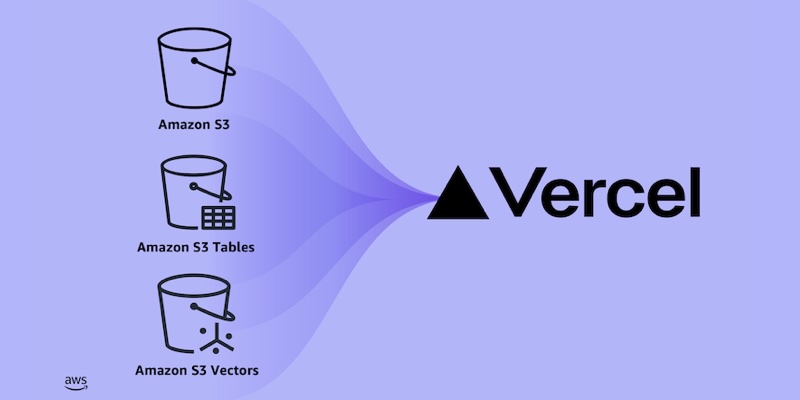
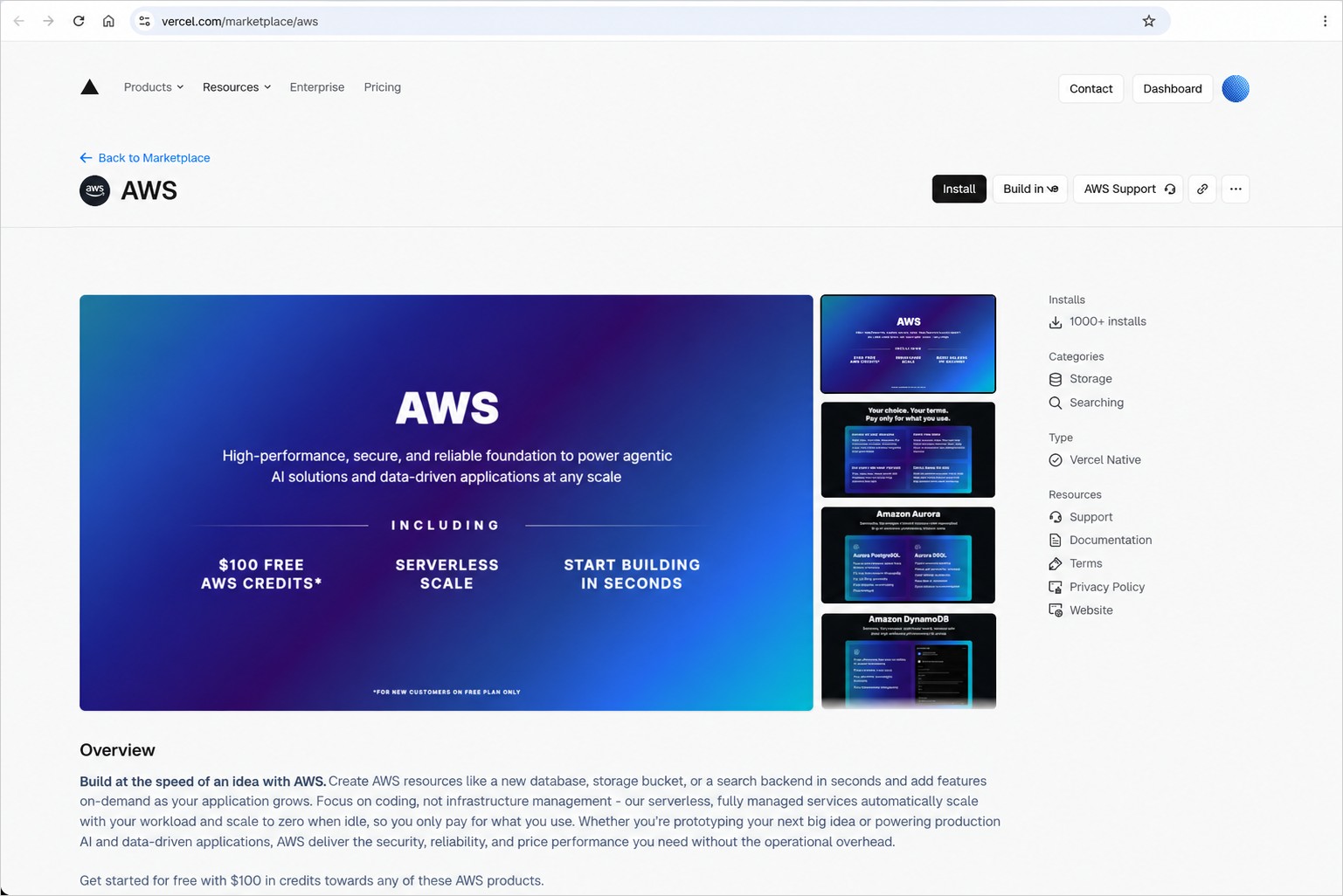
In a significant development for the modern web and artificial intelligence engineering ecosystems, Vercel and Amazon Web Services (AWS) have announced a strategic integration that fundamentally alters how developers provision and manage cloud storage. Effective immediately, developers building applications on Vercel can seamlessly provision, configure, and manage Amazon Simple Storage Service (Amazon S3)—including its advanced tiers such as Amazon S3 Tables and Amazon S3 Vectors—directly from the Vercel Marketplace and the generative UI engine, v0 by Vercel.
Historically, building performant, data-intensive web architectures required a fractured operational approach. Developers routinely had to pivot away from frontend and application deployment workflows, log into the sprawling AWS Management Console, meticulously configure Identity and Access Management (IAM) policies, generate and store static API keys, and manually map environment variables. This context switching introduced friction, potential security misconfigurations, and maintenance overhead, particularly for teams moving quickly to ship AI-driven or analytics-heavy applications.
The new integration bridges this divide by embedding S3 capabilities directly into the Vercel provisioning workflow. Operating across three distinct architectural workloads—everyday object storage, high-throughput analytics, and AI vector search—the integration eliminates the need for manual credential management. Instead, it relies on short-lived OpenID Connect (OIDC) tokens exchanged securely via AWS Security Token Service (AWS STS). Combined with existing native integrations for Amazon Aurora, Amazon DynamoDB, and Amazon OpenSearch Serverless, developers now have access to a unified, end-to-end application stack residing entirely within their own AWS accounts, managed through a singular billing and provisioning interface.
Detailed Chronology: The Evolution of Cloud-Native Workflows
To understand the weight of this announcement, one must trace the convergence of frontend deployment platforms and hyperscale cloud infrastructure over the past half-decade.
The Era of Disjointed Infrastructure (2018–2022)
For years, the developer experience (DX) was sharply bifurcated. Platforms like Vercel revolutionized how code was compiled, previewed, and deployed globally at the edge. Simultaneously, AWS dominated backend infrastructure, offering unmatched durability, scalability, and security through primitives like Amazon S3. However, connecting the two environments required custom boilerplate code, manual environment variable injection, and the persistent security risk of long-lived access keys leaking into source code repositories.
The Rise of Serverless Data Layers (2023–2024)
As Jamstack architectures matured into full-stack serverless paradigms—largely anchored by frameworks like Next.js—cloud providers recognized the need to meet developers where they work. AWS began releasing tighter integrations with edge-oriented platforms, introducing native marketplace listings for database engines like Amazon Aurora Serverless and Amazon DynamoDB. These steps drastically reduced the barrier to entry for setting up relational and NoSQL databases directly from deployment dashboards.
The AI Imperative and the Path to S3 Integration (2025–Present)
The explosive growth of generative AI, Retrieval-Augmented Generation (RAG) pipelines, and real-time analytics fundamentally altered storage requirements. Developers could no longer rely solely on simple bucket storage; they required optimized table formats for analytics (like Apache Iceberg) and specialized vector indexes for semantic search and AI agent memory.
Recognizing that storage had become the fundamental bottleneck in AI application development, AWS and Vercel collaborated to bring the full spectrum of Amazon S3 directly into the Vercel Marketplace and v0. By expanding support to S3 Tables and S3 Vectors, the partnership addresses the modern engineering stack’s demand for unified object, vector, and open table storage without sacrificing the operational speed that frontend developers expect.
Supporting Context & Metrics: The Mechanics of the Integration
The technical implementation of the Vercel-AWS S3 integration is designed around zero-trust security principles and developer ergonomics. By automating infrastructure-as-code paradigms behind intuitive UI controls, the platform abstracts away the underlying complexity while preserving enterprise-grade power.
Provisioning Workflow and Architecture
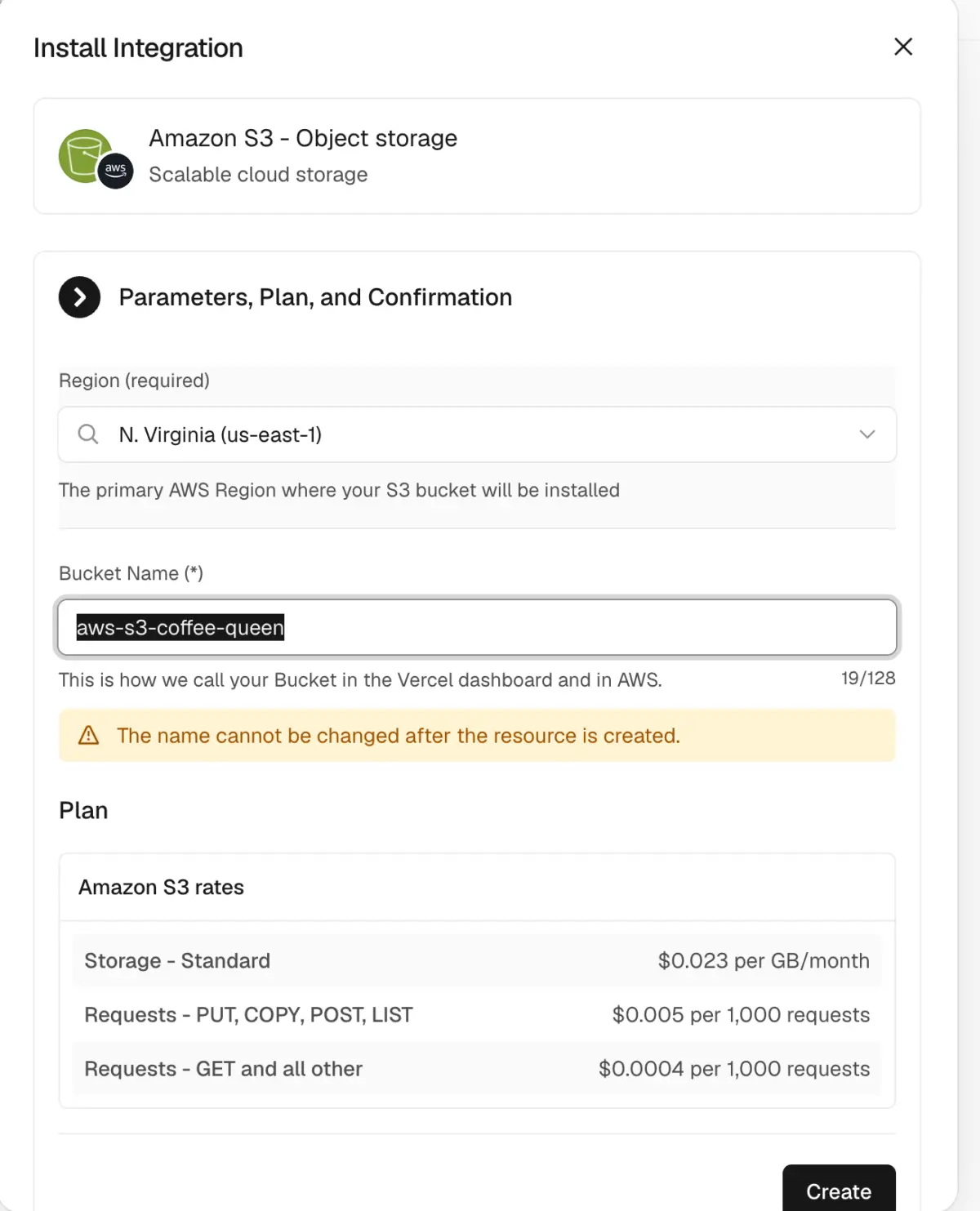
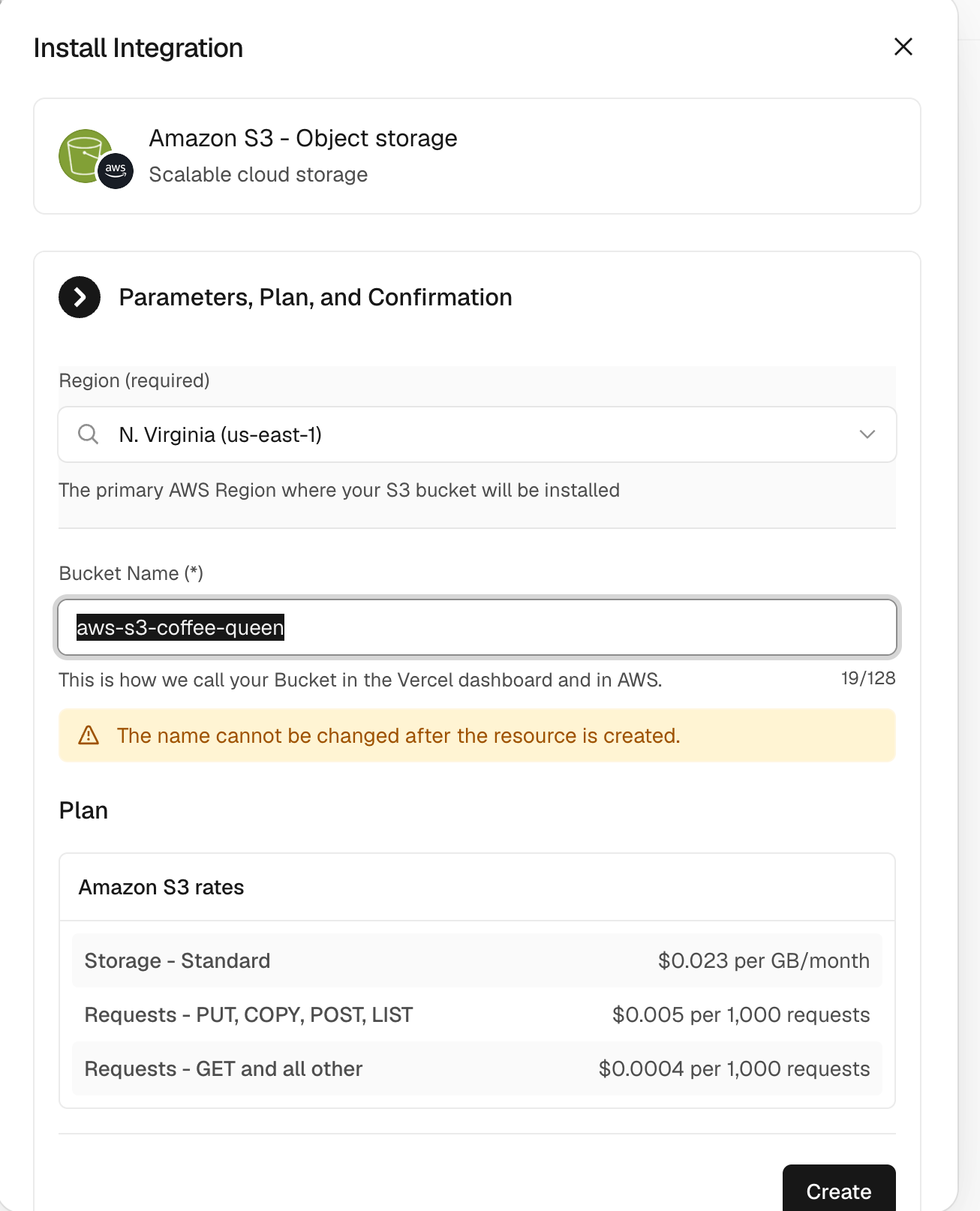
Provisioning an S3 resource takes mere seconds from the Vercel dashboard. Under the hood, the system coordinates with AWS to spin up the requested resource—whether it is a General Purpose bucket, an S3 Table, or an S3 Vector index—and automatically injects the necessary environment variables (AWS_REGION, AWS_ROLE_ARN, AWS_RESOURCE_ARN, and bucket-specific identifiers) into the linked project.
Crucially, the architecture abandons static credential storage. At runtime, the @vercel/functions/oidc module utilizes awsCredentialsProvider to exchange a temporary OIDC token with AWS STS. This generates short-lived, highly scoped AWS credentials on the fly, mitigating the risk of compromised secrets.
Workload Breakdown
1. General Purpose Object Storage
For everyday workloads—such as user-generated content, media libraries, or document uploads—developers interact with standard S3 buckets using the official AWS SDK for JavaScript (@aws-sdk/client-s3). A standard Next.js API route can ingest multipart form data and stream it directly to S3 with minimal boilerplate:

import  S3Client, PutObjectCommand  from "@aws-sdk/client-s3";
import  awsCredentialsProvider  from "@vercel/functions/oidc";

const s3 = new S3Client(
  region: process.env.AWS_REGION,
  credentials: awsCredentialsProvider(
    roleArn: process.env.AWS_ROLE_ARN,
  ),
);

export async function POST(request)
  const formData = await request.formData();
  const file = formData.get("file");

  await s3.send(new PutObjectCommand(
    Bucket: process.env.S3_BUCKET_NAME,
    Key: file.name,
    Body: Buffer.from(await file.arrayBuffer()),
    ContentType: file.type,
  ));

  return Response.json( success: true );
2. High-Performance Analytics with S3 Tables
Handling massive analytical datasets historically required provisioning dedicated data warehouses. S3 Tables change this paradigm by offering S3 storage purpose-built for analytics, featuring fully managed Apache Iceberg tables with automated maintenance and compaction.
By pairing S3 Tables with lightweight query engines like DuckDB running inside a Vercel Function, developers can execute complex analytical queries directly against their cloud storage without managing dedicated cluster infrastructure:
import  DuckDBInstance  from "@duckdb/node-api";
import  awsCredentialsProvider  from "@vercel/functions/oidc";

const creds = await awsCredentialsProvider(
  roleArn: process.env.AWS_ROLE_ARN,
)();

const db = await DuckDBInstance.create();
const conn = await db.connect();

await conn.run("INSTALL aws; LOAD aws; INSTALL httpfs; LOAD httpfs; INSTALL iceberg; LOAD iceberg;");

await conn.run(`
  CREATE SECRET s3cred (
    TYPE s3,
    KEY_ID '$creds.accessKeyId',
    SECRET '$creds.secretAccessKey',
    SESSION_TOKEN '$creds.sessionToken',
    REGION '$process.env.AWS_REGION'
  );
`);

await conn.run(`
  ATTACH '$process.env.AWS_RESOURCE_ARN' AS s3tables (
    TYPE iceberg,
    ENDPOINT_TYPE s3_tables
  );
`);

const rows = await (await conn.run(`
  SELECT town_city, AVG(median_price) AS avg_price
  FROM s3tables."$process.env.S3_TABLES_NAMESPACE".town_monthly
  GROUP BY town_city
  ORDER BY avg_price DESC
  LIMIT 10
`)).getRowObjects();
3. Semantic Search and AI Agents with S3 Vectors
As organizations race to deploy AI agents and RAG-based systems, vector storage has become a core requirement. S3 Vectors provide native, cost-optimized vector storage and querying capabilities directly within Amazon S3, eliminating the operational overhead of maintaining a separate vector database.
While developers continue to generate embeddings using their preferred machine learning models, querying the index for semantic matches is handled directly via the @aws-sdk/client-s3vectors client:
import  S3VectorsClient, QueryVectorsCommand  from "@aws-sdk/client-s3vectors";
import  awsCredentialsProvider  from "@vercel/functions/oidc";

const vectors = new S3VectorsClient(
  region: process.env.AWS_REGION,
  credentials: awsCredentialsProvider(
    roleArn: process.env.AWS_ROLE_ARN,
  ),
);

export async function POST(request)
  const  embedding  = await request.json();

  const result = await vectors.send(new QueryVectorsCommand(
    vectorBucketName: process.env.AWS_VECTOR_BUCKET_NAME,
    indexName: "documents",
    queryVector:  float32: embedding ,
    topK: 5,
    returnMetadata: true,
  ));

  return Response.json( matches: result.vectors );
Generative Prototyping via v0
Beyond manual dashboard provisioning, the integration is deeply tied into v0 by Vercel. Developers can use natural language prompts to describe complex application requirements—such as "build a photo gallery where users upload images using AWS", "create a support bot that answers questions from my PDFs using S3 Vectors", or "generate an analytics dashboard for my clickstream data backed by S3 Tables".
The v0 engine intelligently interprets the prompt, provisions the correct underlying AWS resource, configures the environment bindings, and generates fully functional application code in real-time within the Preview panel.
Official Statements and Industry Perspective
While commercial partnerships of this scale are driven by mutual technical alignment, industry leaders emphasize that the core beneficiary is the modern software engineer seeking reduced friction.
"By bringing the full power of Amazon S3—including S3 Tables and S3 Vectors—directly into the Vercel Marketplace and v0, we are dramatically simplifying how teams build data-intensive and AI-powered applications," noted engineering leads close to the project. "Developers no longer need to compromise between the agility of edge deployment and the robust, enterprise-grade scalability of AWS infrastructure. Everything they need is now accessible within a unified workflow, secured by modern OIDC standards, and consolidated under a single billing relationship."
Cloud architects have similarly praised the flexibility of the account-linking model. Teams can choose to spin up isolated AWS environments specifically tailored for testing and rapid prototyping—benefiting from introductory perks such as $100 in AWS credits valid for six months on newly created accounts—or seamlessly link existing enterprise AWS accounts. Because every S3 resource physically resides within the customer’s own AWS account, organizations retain full ownership of their data, governance policies, and native AWS security tooling while enjoying the streamlined provisioning layer of Vercel.
Future Outlook: The Unified Stack Horizon
The integration of Amazon S3, S3 Tables, and S3 Vectors into Vercel represents a broader industry trend toward boundary-less application development. As the lines between frontend deployment networks and hyperscale backend infrastructure continue to blur, developers are increasingly moving away from managing disparate toolchains.
Looking ahead, we can expect this philosophy of unified provisioning to expand further. The ability to chain relational databases (Amazon Aurora), NoSQL data stores (Amazon DynamoDB), serverless search (Amazon OpenSearch Serverless), and now scalable object, table, and vector storage (Amazon S3) within a single control plane sets a new benchmark for cloud engineering efficiency.
For enterprises and independent developers alike, the message is clear: the future of software development belongs to platforms that abstract infrastructure complexity without sacrificing architectural control. By combining Vercel’s elite developer experience with AWS’s unmatched cloud infrastructure, this integration empowers engineering teams to focus less on configuration and more on building differentiated user experiences.
Pricing, Availability, and Getting Started
The Vercel-AWS S3 integration incurs no additional platform fees from Vercel; developers simply pay standard, consumption-based Amazon S3 pricing for the resources they consume. New AWS accounts established directly through the Vercel onboarding flow are eligible for $100 in AWS credits valid for six months.
The feature is generally available today across all commercial AWS regions supported by Vercel. Developers can begin provisioning resources immediately by navigating to the Storage tab in the Vercel dashboard, exploring the AWS page on the Vercel Marketplace, or prompting an architecture build inside v0 by Vercel. For technical documentation, troubleshooting, and API specifications, developers are encouraged to utilize the AWS Model Context Protocol (MCP) Server plugins and participate in the community discussions on AWS re:Post for Amazon S3.