Executive Overview
For the past several years, the photographic and videographic landscape has been thoroughly dominated by a relentless industry-wide pivot toward content creation, vlogging, and hybrid multimedia capture. Amidst this sweeping trend, legacy manufacturers have occasionally faced criticism from traditional purists who felt that the soul of pure photography was being sidelined in favor of social media-friendly features. However, Canon’s latest announcement emphatically proves that the company has not forgotten its core photography market.
With the unveiling of the 24-megapixel Canon EOS R8 II, the Japanese imaging giant has delivered a sophisticated, entry-level full-frame mirrorless camera that marries cutting-edge internal architecture with a surprising, highly welcome dose of vintage aesthetic charm.
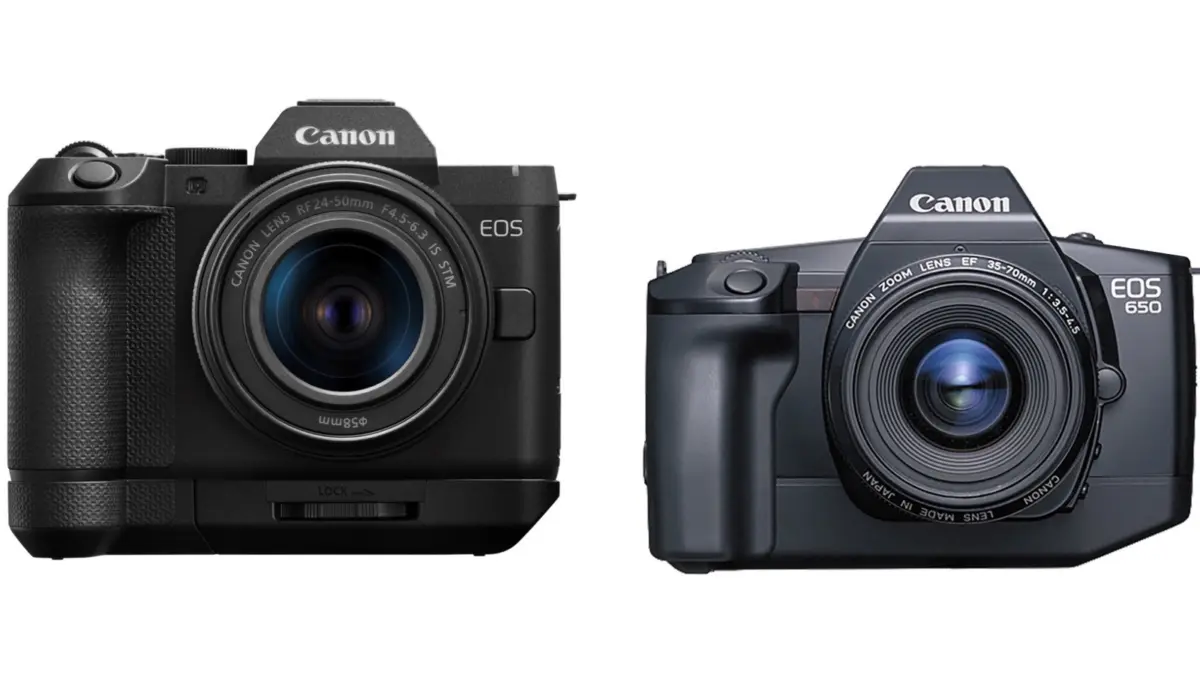
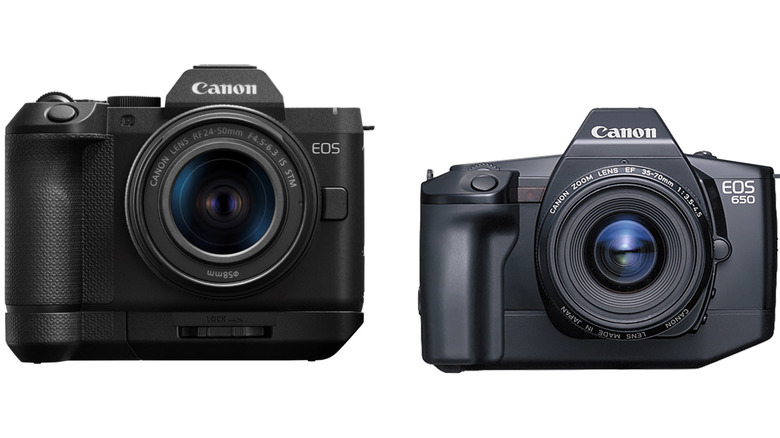
Borrowing its styling cues from the legendary EOS 650—Canon’s very first autofocus SLR film camera launched back in 1987—the EOS R8 II steps away from the homogenous, smooth, and often uninspired contours of its predecessor, the original EOS R8. Instead, it introduces a squared-off, retro-chic silhouette complete with an angled right corner (when paired with the optional battery grip) and a more deliberate, horizontal shutter-button area.
Yet, beneath this nostalgic exterior lies a thoroughly modern powerhouse. Addressing virtually all the primary pain points levied by critics and users against the first-generation model, the EOS R8 II brings a formidable spec sheet to the entry-level tier. It introduces highly anticipated features such as 5-axis in-body image stabilization (IBIS)—making it the lightest full-frame camera on the market to boast this capability—blistering 40 frames-per-second (fps) continuous electronic shooting, a dedicated autofocus joystick, and advanced subject-tracking algorithms previously reserved for high-end professional flagships like the EOS R6 III.
Priced at $1,899 for the body only, the EOS R8 II challenges traditional definitions of an "entry-level" camera. However, when weighed against its vast array of professional-grade features, it represents a compelling, highly versatile option for enthusiasts and semi-professional creators stepping up to full-frame performance without breaking their backs or their bank accounts.
Detailed Chronology & Design Evolution
To truly appreciate the engineering leap of the EOS R8 II, one must examine the lineage of Canon’s full-frame mirrorless strategy. When the original EOS R8 debuted, it was praised for bringing a lightweight, accessible full-frame sensor to the masses, but it was concurrently chastised for certain omissions: the lack of physical in-body image stabilization, a sluggish continuous buffer, a utilitarian and somewhat uninspired body design, and the glaring absence of an autofocus joystick.
Canon’s engineering and design teams went back to the drawing board to rectify these shortcomings, resulting in a meticulously calculated overhaul that began rolling out in product development pipelines months ago.
The Retro Renaissance: Borrowing from the EOS 650
The most immediately striking aspect of the EOS R8 II is its physical aesthetic. While modern mirrorless bodies have trended toward minimalist, rounded slabs of magnesium alloy and polycarbonate, Canon decided to look backward to move forward.
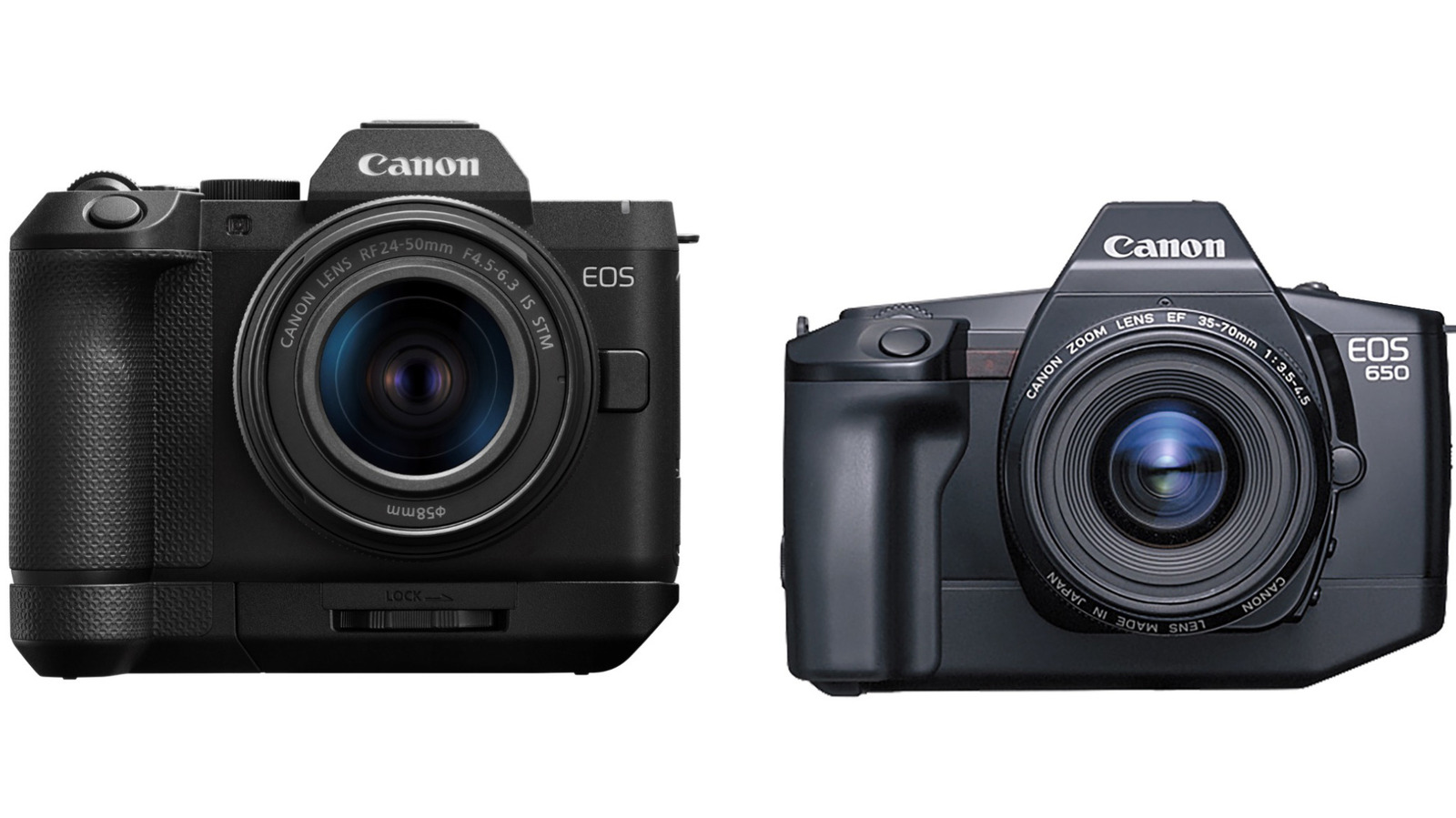
The EOS R8 II draws direct inspiration from the classic EOS 650 film SLR. While significantly scaled down compared to vintage film cameras and built with modern composites, the camera features sharper, more squared-off angles. When outfitted with the optional EG-E2 Extension Grip ($100), the camera mirrors the distinct angled right-hand corner and structured top plate of its historical muse.
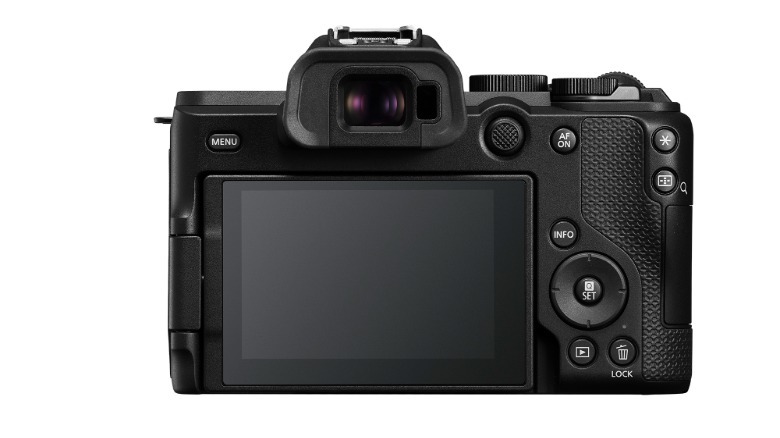
Beyond aesthetics, this redesign serves a functional purpose. The modified ergonomics offer a deeper, more secure handhold, improving stability during extended shooting sessions. Furthermore, Canon listened closely to user feedback by finally integrating a dedicated autofocus control joystick onto the rear chassis—a critical omission on the original R8 that had frustrated field photographers accustomed to rapid point selection.
Performance and Ergonomics in the Field
Beyond its physical shell, the internal chronometry and speed of the camera have been radically accelerated. The EOS R8 II is built to capture fleeting moments with instantaneous precision.
The camera features an overhauled electronic shutter system capable of continuous shooting at an astonishing 40 fps with full continuous autofocus (AF) and auto-exposure (AE) tracking. Crucially, Canon did not just increase the frame rate; they dramatically expanded the buffer capacity. Users can now capture roughly 58 percent more JPEG images and 30 percent more RAW files in a single continuous burst before the buffer fills, ensuring that sports, wildlife, and action photographers rarely miss the decisive moment.
Additionally, the incorporation of pre-continuous shooting allows the camera to continuously buffer up to 20 frames (representing half a second of action) the moment the shutter button is half-pressed. When the photographer fully depresses the button, those preceding frames are permanently written to the memory card, effectively enabling shooters to capture action that occurred before their finger completed the press.
Supporting Context & Technical Metrics
A deeper dive into the technical architecture of the Canon EOS R8 II reveals a remarkably well-rounded hybrid tool. Despite its lightweight classification, the camera punches well above its weight class in stabilization, autofocus, and video capabilities.
5-Axis In-Body Image Stabilization (IBIS)
Perhaps the single most significant engineering addition to the EOS R8 II is the inclusion of 5-axis in-body image stabilization. In previous iterations, Canon relied heavily on optical stabilization (IS) within RF lenses or digital movie stabilization, which often resulted in cropped video fields of view or compromised handheld low-light photography when using non-stabilized prime lenses.
The EOS R8 II changes the game by packing a newly miniaturized IBIS system into a chassis that weighs a mere 1.2 pounds (546 grams) with battery and card inserted. This makes it the absolute lightest full-frame interchangeable-lens camera on the market to feature full 5-axis sensor-shift stabilization. When paired with supported RF lenses featuring coordinated control, the system compensates for camera shake by up to an impressive 7.5 stops, opening up unprecedented possibilities for handheld long-exposure photography and rock-steady low-light shooting.
Next-Generation Dual Pixel CMOS AF II
Autofocus performance has long been a hallmark of modern Canon mirrorless systems, but the EOS R8 II elevates the technology further down the price ladder. Powered by Canon’s Dual Pixel CMOS AF II, the camera boasts 100 percent sensor coverage and sophisticated deep-learning subject-detection algorithms.
The system tracks humans, animals (dogs, cats, birds, and horses), and vehicles (cars, motorcycles, trains, and aircraft) with tenacious reliability. Notably, the EOS R8 II inherits a high-end capability previously exclusive to flagship models like the EOS R6 III: Registered Person Priority. Users can pre-register specific faces in the camera’s memory, instructing the autofocus system to prioritize tracking those individuals even in crowded environments or team sports settings.
Video Specifications and Cinematic Tools
While photography receives the lion’s share of hardware upgrades, the EOS R8 II retains and refines the robust video pedigree established by its predecessor.
- Resolution and Frame Rates: Creators can capture pristine 4K video at up to 60p, beautifully oversampled from the full 6K sensor width to ensure maximum sharpness and minimal moiré. For slow-motion enthusiasts, the camera supports uncropped 1080p recording at up to 180 fps.
- Color Science and Bitrates: The camera supports professional-grade 10-bit 4:2:2 internal capture utilizing Canon Log 3. Recordings can be encoded in HEVC or AVC codecs at robust bitrates reaching up to 250 Mbps, providing color graders with ample dynamic range and flexibility in post-production.
- Cinematic Profiles: Canon has integrated new creative looks directly into the camera profile settings, including Positive Filmtone, Negative Filmtone, and Night Scene, allowing content creators to achieve distinct cinematic color grades straight out of the camera without immediate recourse to a LUT.
Physical Limitations and Power Management
To achieve its featherweight status and aggressive pricing tier, certain design compromises were inevitable. The EOS R8 II relies on a single UHS-II SD card slot rather than dual card slots, which may deter professional event and wedding shooters who require instant redundancy.
Furthermore, the camera utilizes the compact LP-E17 battery pack. While efficient, its physical capacity limits the camera to approximately 340 shots per charge when operating in power-saving mode. Hybrid shooters and heavy field users will undoubtedly need to invest in spare batteries or power banks for extended shooting days. The electronic viewfinder (EVF) features a standard 2.36-million-dot resolution, paired with a 3-inch 1.62-million-dot vari-angle touchscreen display, which, while entirely functional, represents a baseline specification for this market segment.
Official Statements & Industry Perspectives
In statements provided exclusively to technology and photography outlets during the product launch, Canon executives emphasized that the EOS R8 II was designed as a direct response to consumer and critical feedback regarding the limitations of the original entry-level full-frame tier.
"When we introduced the original EOS R8, our goal was to democratize full-frame sensor performance by packaging it into an ultra-portable form factor," noted a senior Canon product planning representative. "However, through extensive dialogue with our community—ranging from travel journalists to street photographers and hybrid creators—we heard clear demands for greater mechanical stability, enhanced buffer depths, and more tactile, responsive handling. With the EOS R8 II, we have listened directly to that feedback. We have integrated advanced IBIS technology into our lightest full-frame chassis, brought down professional autofocus tracking tools to a wider audience, and wrapped it all in an aesthetic that honors our rich photographic heritage."
Industry analysts have responded positively to the announcement, noting that while the $1,899 body-only price point may initially startle consumers looking for traditional budget gear, it accurately reflects the macroeconomic realities of global supply chains, inflation, and currency fluctuations.
Photography gear experts point out that getting a 5-axis stabilized, 40-fps full-frame camera with advanced deep-learning autofocus for under $2,000 represents a formidable value proposition in the modern market, effectively undercutting heavier and more expensive professional bodies while delivering 90% of the practical imaging performance.
Future Outlook & Market Impact
The launch of the Canon EOS R8 II signals a fascinating shift in how manufacturers are segmenting their mirrorless lineups. As smartphones continue to cannibalize the low-end point-and-shoot market, dedicated camera manufacturers are increasingly focusing their energies on high-value, feature-rich hybrid systems that offer a distinct tactile and optical advantage over mobile devices.
By blending the nostalgic, rugged charm of classic 35mm film SLRs with state-of-the-art sensor stabilization, blazing fast electronic shutters, and artificial intelligence-driven autofocus, Canon has positioned the EOS R8 II as a bridge between generations. It appeals equally to seasoned photographers nostalgic for the mechanical soul of cameras like the EOS 650 and younger, content-driven creators who demand high-end 4K video, seamless subject tracking, and lightweight portability.
As shipments commence in late October—with pre-orders already live at $1,899 for the body, $2,099 for the RF24-50mm F/4.5-6.3 IS STM kit, and various accessories like the $100 EG-E2 Extension Grip and the $379 Speedlite EL-5 Ver.2 flash—the EOS R8 II is poised to become a dominant force in the enthusiast market.
Ultimately, the EOS R8 II demonstrates that entry-level no longer has to mean entry-level performance. By taking bold risks with its design and refusing to compromise on core imaging technology, Canon has set a high bar for what photographers can expect from an affordable full-frame camera in the years to come.