
Executive Overview
For billions of people around the globe, the phrase “unprecedented times” instantly conjures a specific, jarring epoch of modern history. Initially deployed as a sincere lexical acknowledgment of a radically altered reality, the phrase rapidly degraded into a ubiquitous, memeified cliché across social media feeds, corporate emails, and news cycles. In the years since global lockdowns first upended society, writers, filmmakers, and major television executives have repeatedly attempted to capture the collective trauma, isolation, and absurdity of the Covid-19 pandemic. Yet, despite these efforts, a palpable cultural aversion to pandemic-related storytelling has persisted.
For many, the initial wave of cultural reflections—most infamously immortalized by celebrities warbling John Lennon’s “Imagine” from sprawling California mansions—felt profoundly disconnected from the gritty, harrowing realities of everyday citizens. This disconnect was acutely felt by young Americans, whose formative years of higher education and early adulthood were abruptly arrested by social distancing mandates, remote learning, and systemic paralysis. Capturing the authentic texture of this lost era required a voice untethered from institutional nostalgia—someone who lived through the seismic disruptions firsthand.
Enter Malavika Kannan. At just 25 years old, the writer and activist has stepped into this cultural vacuum with her debut novel, Unprecedented Times (published by Macmillan). The book delivers a sharply observed, deeply immersive coming-of-age story that tracks Rishi, a burnt-out Indian American youth climate activist embarking on her freshman year at Stanford University. Rather than offering a detached, retrospective diagnosis of the era, Kannan’s work provides a visceral, unfiltered look at the intersection of collegiate self-discovery, queer awakening, and total societal collapse.
This article provides an in-depth examination of Kannan’s literary intervention, exploring the biographical roots of her protagonist, the psychological architecture of Gen Z during the pandemic, and the broader cultural implications of the first authentic wave of pandemic literature written by the generation that lived it.
Detailed Chronology: From Parkland Activism to Stanford’s Quad
To understand the narrative DNA of Unprecedented Times, one must examine the trajectory of its author. Long before she penned a critically acclaimed campus novel, Malavika Kannan was forged in the crucible of modern American youth activism. Growing up in Florida, Kannan cut her teeth advocating for gun violence prevention, organizing and speaking out in the harrowing wake of the Pulse nightclub shooting in Orlando and the mass shooting at Marjory Stoneman Douglas High School in Parkland.
When Kannan packed her bags to leave Florida for Stanford University in the fall of 2019, she carried with her the burning idealism common to high-achieving youth activists, coupled with a fierce desire to liberate herself from a strict childhood. Her protagonist, Rishi, mirrors this trajectory: an Indian American climate activist eager to shed the constraints of her upbringing, find her footing in a prestigious academic ecosystem, and openly explore her queer identity.
[Fall 2019: Arrival at Stanford]
       │
       ▼
[March 2020: Global Lockdown & Systemic Collapse]
       │
       ▼
[Spring/Summer 2020: Transition to Farm Collective & Isolation]
       │
       ▼
[Post-College Publication: Debut of 'Unprecedented Times']
The narrative momentum of Unprecedented Times hinges on a cruel temporal coincidence: just as Rishi is finding her footing—navigating the intoxicating intellectual freedom of university life and new romantic frontiers—the world grinds to a sudden, terrifying halt. While real-world students were forced into Zoom university environments, Kannan’s Rishi and her cohort navigate the disruption by joining a rural farm collective, a narrative pivot that allows the author to isolate her characters while exploring themes of communal living, burnout, and existential dread.
Kannan completed the manuscript for Unprecedented Times while she was still an undergraduate student. In the intervening years, her relationship with her protagonist has evolved organically. Reflecting on her creation, Kannan notes that had the book been published immediately upon completion, she would have “unironically stood by Rishi.” Today, looking back at her complex, fiercely driven protagonist with mature eyes, Kannan views her less as an alter ego and more as a complicated younger sibling—flawed, brilliant, and entirely human.
Supporting Context & Metrics: The Radicalization of a Generation
The cultural footprint of the Covid-19 pandemic on Gen Z extends far beyond missed graduations and cancelled proms. Sociologists and cultural critics have increasingly pointed to the early 2020s as a foundational period of mass disillusionment for young adults entering the American workforce and higher education systems.
Kannan herself points to this tectonic shift as a central theme of her novel. “The pandemic was a huge radicalizing experience for most Americans,” Kannan observes. “But it hit different for a generation of people who had not gotten a chance to see the American dream work as promised.”
Key Societal Pressures Faced by Gen Z in 2020:
- Economic Precarity: Entering an imploding job market characterized by widespread layoffs, remote work confusion, and skyrocketing inflation.
- Institutional Distrust: Witnessing fractured public health responses, political polarization, and delayed governmental relief.
- Digital Hyper-Awareness: Navigating the #MeToo movement, racial justice uprisings (Black Lives Matter), and climate anxiety entirely through the mediating lens of social media algorithms.
- Developmental Stunting: The abrupt cessation of face-to-face socialization, which developmental psychologists note disproportionately impacted late adolescents and college-age populations.
Unlike previous generations of campus fiction that focused primarily on traditional collegiate milestones—fraternity parties, academic rivalry, and intramural romance—Unprecedented Times uses the backdrop of systemic collapse to interrogate the psychological toll of digital-age self-awareness.
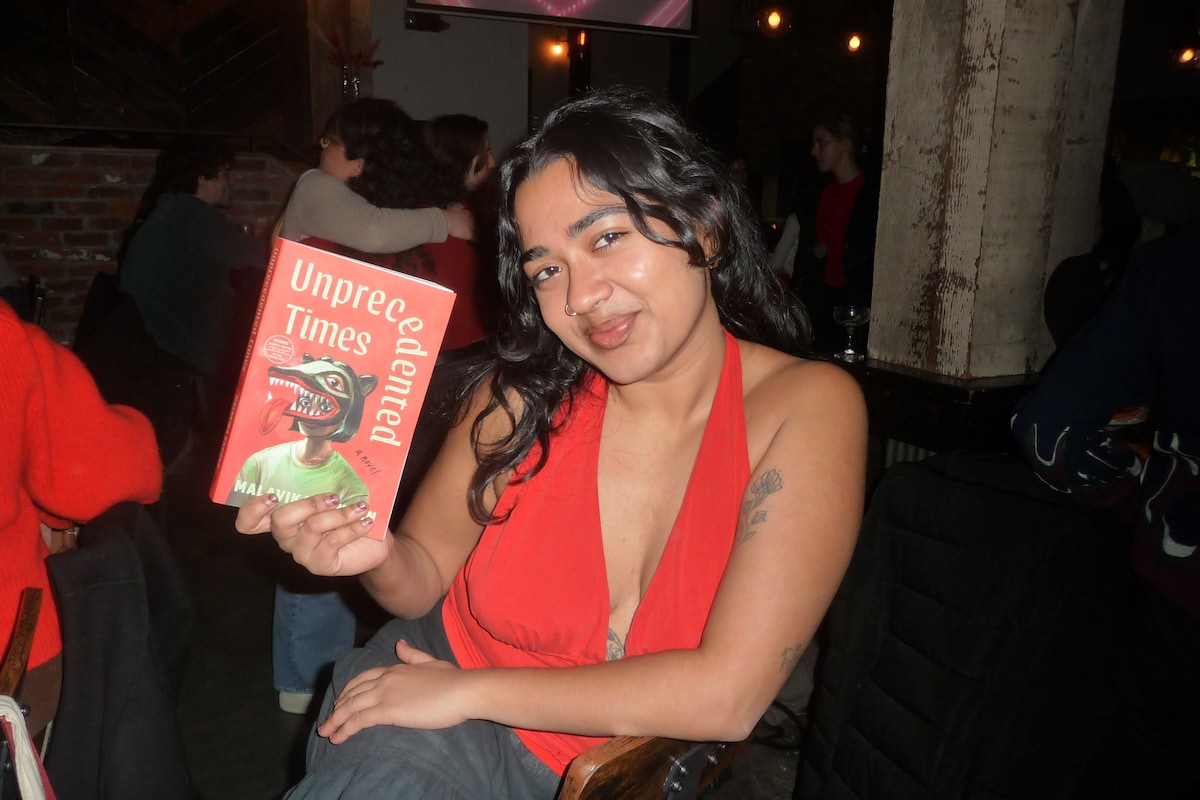
Kannan’s writing is laced with a distinctive, self-aware cynicism. In the novel, Rishi displays profound empathy for the universal human failing of being overly harsh on one’s mother—while simultaneously acting abrasively toward her own. This contradiction is not accidental; it is a deliberate commentary on what modern selfhood looks like in an era where infinite psychological frameworks are accessible via a smartphone screen.
“A lot of us have so much information available at our disposal,” Kannan explains. “We can identify dynamics and patterns, but that doesn’t necessarily empower us to do anything.” By refusing to grant her protagonist an easy, narrative-tidy redemption arc with her parents, Kannan preserves the messy, unresolved reality of the average 18-year-old experience.
Official Statements & Authorial Perspective
Speaking on her literary choices and the broader landscape of contemporary fiction, Kannan has been vocal about dismantling tired tropes within immigrant and minority narratives. Historically, the genre of the first-generation immigrant novel has often operated on a rigid moral binary, where the protagonist is an unassailable victim and secondary characters—particularly older family members—are cast as antagonists or villains.
Kannan consciously rejected this framework. “I came up from a slightly earlier moral code of characters where anything done by a person who’s marginalized is inherently moral and worthy,” she notes. “Pero that’s not true in this book—Rishi has a confidence very similar to that of white men.”
By rendering Rishi unapologetically ambitious, occasionally insufferable, yet deeply compelling, Kannan grants her protagonist the literary permission to be morally gray—a privilege historically reserved for male protagonists in classic literature.
Furthermore, Kannan addresses the aesthetic challenges of writing about an event as universally experienced as the pandemic. Dismissing the initial wave of lockdown literature as “very naval-gazy autofiction,” she acknowledges the irony that her own debut falls broadly into a similar category, albeit refracted through the vibrant, high-stakes lens of a campus novel.
“As a metaphor, it just felt so unmistakably true,” Kannan says regarding her decision to set the novel entirely under the shadow of Covid-19. “The sense of systems collapse was just what I wanted to describe.”
Beyond the pandemic, Unprecedented Times functions as a 2020 period piece, capturing the complex socio-political undercurrents that defined the era. Kannan weaves in themes ranging from the evolving dynamics of modern dating in the post-#MeToo era to the existential weight of coming of age online. Describing the intense interpersonal dynamics between Rishi and her female peers, Kannan jokingly refers to the novel as “the novelistic version of the lesbian master doc,” noting that her characters grapple with existential questions of identity and desire that take most individuals a lifetime to untangle.
Future Outlook: The Next Wave of Pandemic Literature
As the cultural wounds of the early 2020s slowly begin to scar over, literary critics are observing a shifting tide in how contemporary art engages with the pandemic. The initial rush of hasty, insular lockdown diaries has given way to a more thoughtful, sophisticated category of fiction written by authors who were in their formative years when the world locked down.
Malavika Kannan’s Unprecedented Times stands at the vanguard of this new literary movement. By anchoring grand historical trauma within the hyper-specific, messy, and deeply relatable micro-dramas of a queer Indian American freshman at Stanford, Kannan has proven that compelling storytelling does not require distance from history—it requires emotional precision and unsparing self-awareness.
Looking ahead, Kannan anticipates a robust second wave of Covid-related storytelling making its way through publishing pipelines. As a generation that felt profoundly robbed of its beginnings steps into positions of cultural and artistic leadership, narratives like Unprecedented Times offer an essential blueprint. They demonstrate that while the institutions around us may collapse, and global events may disrupt our best-laid plans, the chaotic, beautiful journey of human self-discovery remains stubbornly, resiliently alive.