By Staff Investigative Report
Updated: September 2, 2026
Executive Overview
CD Projekt Red (CDPR), the powerhouse studio globally recognized for masterclasses in storytelling through The Witcher and Cyberpunk 2077, is scaling up its internal operations for one of its most enigmatic undertakings to date: Project Hadar. According to recent corporate disclosures, the studio’s unannounced, wholly original intellectual property is experiencing active growth. Karolina Gnas, CD Projekt Red’s Vice President of Investor Relations, revealed during a financial earnings call that the dedicated Project Hadar team has already surpassed 30 developers. The studio intends to aggressively expand this footprint, targeting a headcount of up to 50 developers by the close of the year.
While the project commands rising internal interest, leadership remains tight-lipped about the game’s actual setting, genre tropes, or overarching narrative. Currently mired in the conceptual phase, Project Hadar represents a critical milestone for CDPR: a departure from pre-established franchises (The Witcher and Cyberpunk), giving the studio a clean canvas to forge a brand-new universe from scratch.
This workforce expansion occurs against a backdrop of sweeping strategic realignments within the Polish development titan. CDPR is currently juggling multiple titanic initiatives, including the high-priority development of The Witcher 4 (slated for a 2028 debut), the newly unveiled The Witcher 3 expansion titled Songs of the Past, a Cyberpunk sequel, and a temporary halt on The Witcher 1 Remake to pool necessary resources into its mainline slate. As CDPR pivots toward a multi-project parallel development model, Project Hadar stands out as the ultimate wildcard for the studio’s long-term future.
Detailed Chronology of CDPR’s Strategic Shift
To understand the current trajectory of Project Hadar, one must examine how CDPR’s internal pipeline has evolved over recent years. Following the turbulent, highly publicized launch of Cyberpunk 2077 in late 2020 and its subsequent, triumphant redemption arc spearheaded by the Phantom Liberty expansion and the massive 2.0 overhaul, CDPR fundamentally restructured its corporate architecture. The studio abandoned its historically single-project focus in favor of a synchronized, multi-franchise production strategy.
The Genesis of Project Hadar
First whispered about during high-level corporate roadmap reveals years ago, Project Hadar was introduced not as a sequel or a licensed adaptation, but as an entirely new third pillar for the company. Unlike The Witcher (rooted in dark fantasy lore) or Cyberpunk (anchored in dystopian sci-fi), Hadar was conceived to explore completely uncharted territory.
For a considerable period, Hadar existed merely as a conceptual seed—a handful of writers and creative directors brainstorming foundational lore, aesthetic pillars, and high-concept world-building. However, the recent statements from the September 2026 earnings call indicate a definitive gear-shift. Moving past pure whiteboarding sessions, the team has transitioned into an active prototyping phase.
Transitioning to Prototyping
With the team expanding past 30 developers and eyeing a 50-person cap by the end of the year, Project Hadar is finally entering its operational infancy. According to Gnas, the core objective for this burgeoning team is trial and error: testing mechanical loops, conceptualizing novel gameplay architectures, and validating core design pillars.
This phase is critical. Historically, CDPR games have leaned heavily on narrative-driven, open-world RPG structures. Whether Hadar will maintain this traditional DNA or branch out into radically different mechanical territory remains the subject of fierce speculation within the gaming community. What is certain, however, is that CDPR is methodically feeding resources into Hadar without pulling critical mass away from its primary revenue-generating pillars.
The Domino Effect on the Witcher Pipeline
Simultaneously, CDPR’s restructuring has forced tough scheduling decisions across its legacy franchises. Most notably, the ambitious remake of the original The Witcher—initially outsourced to studio Fool’s Theory—has been officially placed on hold. CDPR leadership elected to redirect resources and manpower toward The Witcher 4 (internally known as Project Polaris), which has been officially confirmed for a targeted 2028 release window following announcements at Gamescom 2026.
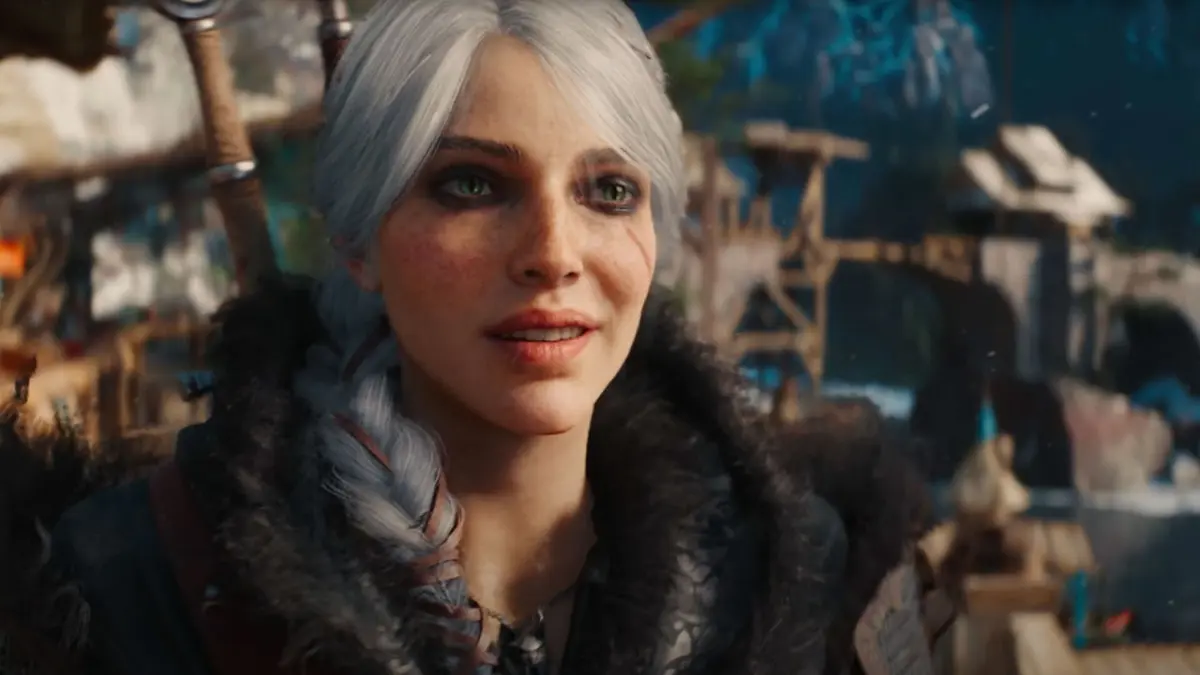
Furthermore, to bridge the gap before the next generational leap in the Witcher universe, CDPR shocked the industry at Gamescom by announcing a surprise, decade-later expansion for The Witcher 3: Wild Hunt titled Songs of the Past, alongside a modern The Witcher 3 Remastered edition slated to hit shelves this month with free upgrades and save-file carryover for existing owners.

Supporting Context & Production Metrics
Managing a multi-project studio requires an extraordinary balancing act of human capital, financial runway, and technological standardization. CDPR’s recent operational disclosures provide a fascinating window into how a AAA developer scales multiple massive universes concurrently.
Workforce Distribution and Scaling
- Project Hadar Team Size: Currently standing at over 30 developers, with an aggressive hiring ceiling of up to 50 by Q4 2026.
- The Witcher 4 (Project Polaris): Remains the studio’s primary resource sink, commanding the largest share of CDPR’s total development workforce.
- Cyberpunk Sequel (Project Orion): Spearheaded primarily by CDPR’s newly established North American studios (Boston and Vancouver), ensuring round-the-clock, follow-the-sun development cycles.
- The Witcher 1 Remake: Temporarily sidelined, reflecting a strict prioritization matrix that avoids over-leveraging internal teams.
Technological Foundations: Moving to Unreal Engine 5
A major catalyst enabling CDPR to run these simultaneous operations is its technological migration. Having abandoned its proprietary REDengine after the completion of Cyberpunk 2077: Phantom Liberty, CDPR entered a long-term strategic partnership with Epic Games to build its future catalog—including The Witcher 4, the Cyberpunk sequel, and Project Hadar—on Unreal Engine 5 (UE5).
This transition drastically streamlines cross-studio collaboration. Developers moving between The Witcher 4 and Project Hadar no longer need to wrestle with the quirks of proprietary, legacy tools. Instead, they operate within a globally recognized ecosystem, making onboarding, asset sharing, and mechanical prototyping exponentially faster. This technical standardization is a primary reason why a relatively small concept team on Project Hadar can rapidly transition into active gameplay experimentation.
Official Statements and Industry Insights
The revelation regarding Project Hadar’s headcount and current developmental phase came directly from Karolina Gnas during the studio’s financial briefing.
"Right now, the team is mostly focused on testing different approaches, ideas, and, you know, prototyping some gameplay element, and this is it," Gnas stated regarding the current scope of the project. "Hadar is still in the concept phase."
Industry analysts have noted that CDPR’s transparent communication regarding Hadar’s early status is a calculated move to manage investor expectations. Having learned harsh lessons from the marketing cycle of Cyberpunk 2077—where pre-release hype vastly outpaced the reality of the game’s development timeline—CDPR is deliberately keeping Project Hadar under wraps while it matures organically.
When pressed on what genre or thematic direction Hadar might take, Gnas and other CDPR representatives offered no concrete details. However, industry veterans point out that CDPR’s institutional expertise lies almost entirely in deep, character-driven role-playing games. While The Witcher delivered third-person fantasy sword-play and Cyberpunk experimented with first-person shooter-RPG mechanics, a safe industry consensus suggests Hadar will remain rooted within the broad umbrella of the RPG genre—though potentially filtered through a completely novel gameplay lens.
Future Outlook: What Lies Ahead for CDPR
As CD Projekt Red charts its course through the remainder of the decade, the studio’s roadmap looks both immensely ambitious and structurally complex.
[CDPR 2026–2028+ Master Production Roadmap]
 ├── The Witcher 3 Remastered (September 2026) ── [Free Upgrade / Save Transfer]
 ├── The Witcher 3: Songs of the Past Expansion ── [Decade-Later Content Drop]
 ├── Project Hadar ── [Concept & Prototyping Phase / Scaling to 50 Devs]
 ├── The Witcher 1 Remake ── [Currently On Hold / Deferred to Post-Polaris]
 ├── The Witcher 4 (Project Polaris) ── [Targeting 2028 Release]
 └── Project Orion (Cyberpunk Sequel) ── [In Development via US Studios]
The Road to 2028 and Beyond
The immediate horizon belongs to the past and the present: September brings the re-release of The Witcher 3 Remastered alongside the nostalgic rollout of Songs of the Past. These releases serve a dual purpose: they sustain community engagement and revenue flow while the heavy lifting continues behind closed doors.
For Project Hadar, the next 12 to 24 months will be definitive. Hitting the 50-developer milestone by the end of 2026 is only the first step. As gameplay prototypes solidify, Hadar will eventually need to transition out of the concept phase and into full-scale production—a milestone likely scheduled to happen once The Witcher 4 nears its targeted 2028 launch and portions of that core team can be reallocated.
Ultimately, Project Hadar represents CD Projekt Red’s evolution from a studio defined entirely by Andrzej Sapkowski’s dark fantasy universe into a multi-IP powerhouse capable of launching and sustaining entirely original creative visions. While gamers will likely have to wait several years before seeing a cinematic trailer, gameplay demo, or title reveal, the quiet expansion of its development team proves that CDPR’s next great universe is steadily taking shape beneath the surface.