Executive Overview
Internet subcultures have long operated under a bizarre, self-sustaining logic that blends tribalism with theatrical irony. Across the digital landscape—from the early 2010s text-heavy layouts of Tumblr to the hyper-paced, algorithmically driven video feeds of modern TikTok—fandoms have consistently sought out ways to cross-pollinate, battle, and ally with one another in fictional realms. Few artifacts capture this phenomenon better than "Fandoms Grab Your Weapons," an infamous 2012 Tumblr thread that asked every conceivable internet subculture to arm themselves with items from their favorite universes and prepare for an unspecified, grand-scale conflict.
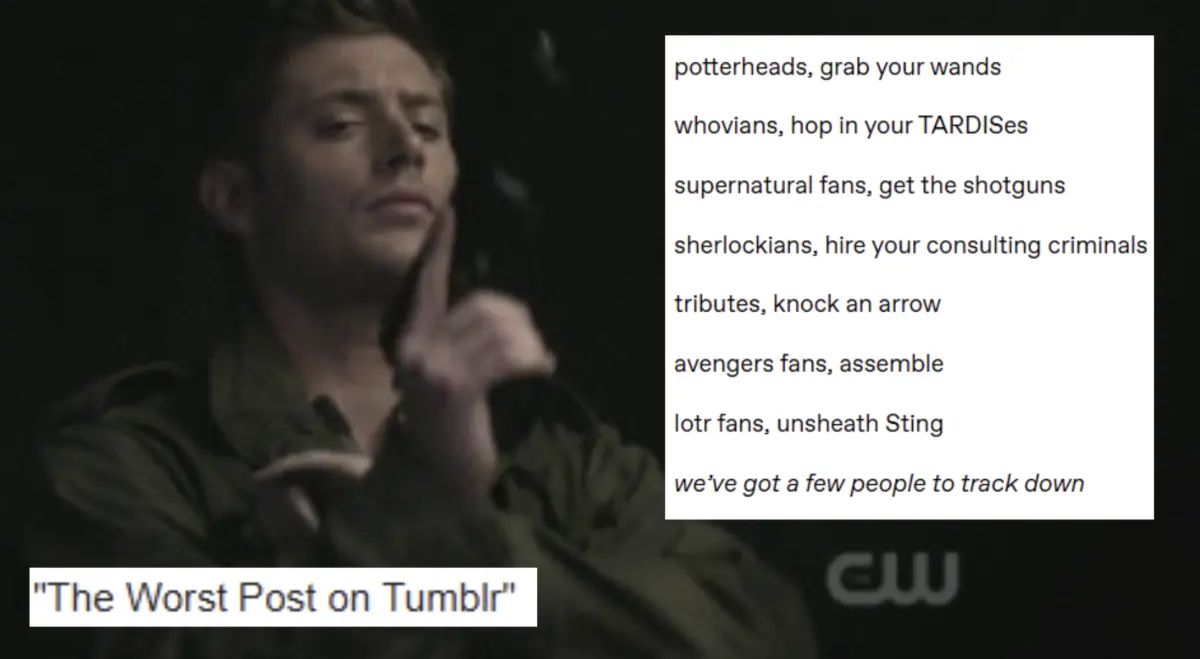
While initially born as an earnest, slightly hyperbolic in-joke among passionate pop-culture consumers, the thread devolved into a prime example of early-2010s "cringe culture." Over the decade that followed, it was screenshotted, archived, and mocked across the broader internet, eventually earning the tongue-in-cheek moniker of "The Worst Post on Tumblr." Yet, cultural phenomena on the internet rarely stay buried.
This retrospective examines the trajectory of the "Fandoms Grab Your Weapons" phenomenon, analyzing its origins on July 16, 2012, its viral mechanisms of spread, and its ultimate transition into platform lore. Furthermore, this investigation explores how the core psychological mechanics of this early Tumblr artifact experienced a massive, unanticipated resurgence in August 2026 via TikTok’s "Lesbian Space Princess Fandom War" (also known as the "Great Fandom Truce of 2026"). By studying these milestones, we gain a deeper understanding of how digital tribes organize, mock themselves, and continually reinvent the wheel of collective online participation.
Detailed Chronology
July 16, 2012: The Spark of Mobilization
The digital ecosystem of 2012 was a distinct era. Microblogging platform Tumblr was reaching a cultural peak, defined by dense networks of text-based posts, reblogs, image macros, and a burgeoning ecosystem of overlapping fandoms. On July 16, 2012, a user published what would become a digital Pandora’s box. The initial post took the form of a screenshot originating from Facebook—itself containing an insult directed at Tumblr—which served as the psychological catalyst for a defensive, unified response.
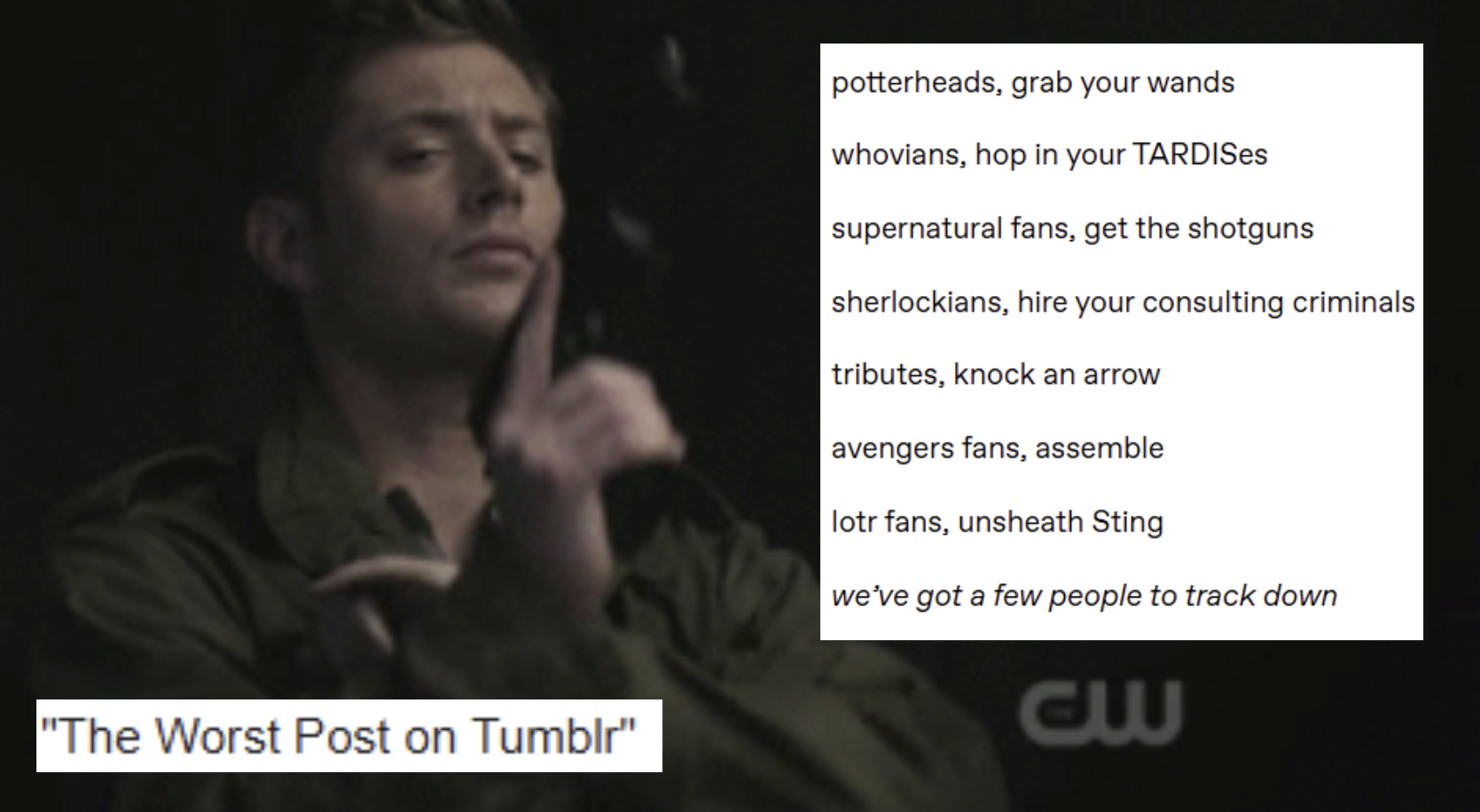
The original creator issued a rallying cry to the sprawling digital populace: various fandoms must prepare for an imagined conflict. Crucially, the prompt dictated that each group had to bring a weapon or specialized skill set directly tied to their preferred fictional property. The rules were simple, highly creative, and inherently theatrical. Within hours, the foundational blueprint of the thread was established:
- Potterheads were instructed to ready their wands.
- Whovians were tasked with piloting the TARDIS into the fray.
- Supernatural fans were told to load their salt-and-silver-packed shotguns.
- Sherlockians bypassed traditional weaponry entirely to hire consulting criminals.
- Tributes from The Hunger Games notched their arrows.
- Avengers fans were ordered to assemble.
- Lord of the Rings enthusiasts drew Elven blades like Sting.
2012–2015: Viral Reblogging and the Birth of a Snowclone
As the post swept across Tumblr’s dashboard networks, the mechanics of the platform took over. Tumblr’s "reblog" function allowed subsequent users to continuously append their own additions to the bottom of the chain. This transformed a static list into an endlessly expanding manifesto.
As hundreds—and eventually thousands—of distinct fandoms were added, the thread grew bloated, chaotic, and wonderfully absurd. Niche book series, obscure anime, long-running television shows, and indie video games were all drafted into service. This structural formatting naturally gave rise to a replicable snowclone template: "X fandom, grab your Y."
This linguistic template allowed individual subcultures to spin off the primary thread, creating localized versions tailored to their specific hyper-fixations. However, as the mid-2010s rolled on, digital tastes shifted. The earnest earnestness of early 2010s fan culture began to be viewed through an ironic, hyper-critical lens. Screenshots of the "Fandoms Grab Your Weapons" thread were extracted from Tumblr and weaponized across Twitter, Reddit, and Facebook as definitive proof of the platform’s perceived "cringe" aesthetic.
August 2026: The Resurgence and the "Great Fandom Truce"
For over a decade, "Fandoms Grab Your Weapons" remained a historical relic—a cautionary tale of internet sincerity preserved in meme archives. That was, until August 2026, when an entirely new generation of digital natives on TikTok unknowingly recreated the exact same sociological phenomenon on a vastly accelerated scale.
Triggered by widespread internet discourse surrounding Lesbian Space Princess, an Australian animated adult comedy film, TikTok users across diametrically opposed fandoms experienced a rare moment of unification. Rather than preparing to fight each other with fictional weapons, normally warring subcultures—ranging from hyper-specific anime communities to massive gaming factions—declared a temporary ceasefire.
Utilizing the recurring catchphrase "Just this once," creators posted videos portraying their favorite characters extending a hand of solidarity to former rivals. The objective? To collectively mock and push back against Lesbian Space Princess, which the internet had unilaterally dubbed one of the worst cinematic releases of all time. This moment, christened the "Lesbian Space Princess Fandom War" or the "Great Fandom Truce of 2026," proved that the foundational impulse of 2012 Tumblr—the desire to organize digital tribes into grand, cinematic coalitions against an external perceived threat—remains hardwired into internet culture.
Supporting Context & Metrics
To fully appreciate the scope of these phenomena, one must examine the underlying structural mechanics that allowed text posts in 2012 and short-form video algorithms in 2026 to achieve such staggering levels of engagement.
The Anatomy of a Fandom Chain
In the early days of Tumblr, community validation was measured through metrics unique to the platform: note counts (comprising likes and reblogs), chain-length, and the creative escalation of participants.
| Metric / Feature | 2012 "Fandoms Grab Your Weapons" (Tumblr) | 2026 "Great Fandom Truce" (TikTok) |
|---|---|---|
| Primary Medium | Text chains and nested screenshot images | Short-form vertical video (TikToks, Reels) |
| Catalyst | Cross-platform rivalry (Facebook vs. Tumblr) | Critical backlash to a single media property (Lesbian Space Princess) |
| Core Action | Arming respective fictional universes for war | Forging temporary alliances via the "Just this once" trope |
| Emotional Tone | Earnest enthusiasm morphing into ironic nostalgia | Irony-soaked solidarity, performative drama |
| Archival Status | Preserved in meme encyclopedias as "cringe lore" | Trending audio tracks and hashtag aggregates |
The 2012 thread’s longevity is evidenced by its multi-platform migration. While the original post was ultimately deleted by its author—a common casualty of Tumblr accounts being scrubbed or deactivated—the thread survived via high-resolution screenshots archived by digital historians on platforms like Know Your Meme, Reddit’s r/Tumblr, and specialized fan preservation blogs.
Psychological Drivers: Tribalism and Performance
Psychologically, both the 2012 weapons thread and the 2026 TikTok truce satisfy fundamental human needs for belonging, shared myth-making, and playful tribalism. In digital spaces, participating in a hyper-specific fandom provides an identity; however, participating in a meta-fandom coalition provides a sense of epic scale.
Users are no longer just fans of Doctor Who or Supernatural; they are soldiers in a grand, imaginary geopolitical alliance of the imagination. This play-acting allows participants to channel real-world social structures—alliances, treaties, armaments, and wars—into harmless, fictional sandboxes. Even when the culture shifts to view such earnestness as "cringe," the underlying emotional satisfaction of joining thousands of strangers in a synchronized joke ensures that these formats will continually resurface under new technological wrappers.
Official Statements & Community Perspectives
The duality of how these memes are perceived offers a fascinating look at generational shifts within internet culture. Early participants look back at the 2012 thread with a mixture of second-hand embarrassment and profound fondness.
"There is a distinct line in digital history labeled ‘Before Fandoms Grab Your Weapons’ and ‘After.’ It represents a time when we weren’t afraid to look ridiculous because we were entirely consumed by the joy of our favorite stories. Looking back, yes, it’s hilarious and intensely cringeworthy—but it was also pure community building in its rawest form."
— Archival commentary from digital culture historians on Reddit (r/Tumblr)
Conversely, the emergence of the 2026 TikTok truce brought a wave of bewildered realization to older internet users who recognized history repeating itself in real-time. Younger creators on TikTok approached the Lesbian Space Princess backlash not as a nostalgic nod to Tumblr history, but as an organic, spontaneous reaction to a piece of media they mutually despised.
"We didn’t even know about the 2012 Tumblr post when we started doing the ‘Just this once’ videos," noted one prominent TikTok creator involved in the August 2026 trend. "It just made sense. When everyone online agrees that something is universally terrible, you drop your petty fandom beefs, pull up a folding chair, and form an alliance with your worst enemies for the greater good."
This sentiment underscores a timeless internet truth: every new generation of platform users will independently invent their own versions of sacred text-roleplay and cross-fandom mobilization, completely unaware that their digital ancestors walked the exact same path a decade prior.
Future Outlook
As the digital landscape continues to evolve—moving away from chronological text dashboards toward hyper-personalized, algorithmic video feeds—the ways inopedic communities organize will inevitably change. Yet, the core pillars highlighted by "Fandoms Grab Your Weapons" and the "Great Fandom Truce of 2026" remain remarkably resilient.
- The Cyclical Nature of "Cringe": What is dismissed as embarrassing or "cringe" by one generation frequently becomes the nostalgic bedrock for the next. As Gen Z and younger cohorts age, artifacts like the 2012 Tumblr thread are increasingly viewed through a lens of campy appreciation rather than outright mockery.
- Algorithmic Cross-Pollination: Modern platforms like TikTok and its successors rely on algorithmic recommendations that force disparate subcultures into the same digital rooms. This structural collision makes future "fandom wars" and impromptu "truces" not just possible, but inevitable.
- The Immortality of Fandom Lore: As demonstrated by the seamless bridge between 2012 and 2026, internet subcultures possess a long-term memory. Platforms may rise and fall, accounts may be deleted, and codebases may be rewritten, but the human desire to unite under fictional banners will always find a way to express itself.
Ultimately, whether users are being told to grab wands, load shotguns, or declare a temporary ceasefire against an animated space princess, the underlying message remains unchanged: digital communities thrive when they share a common enemy, a common joke, and a collective willingness to suspend disbelief for the sake of a good story.