Executive Overview
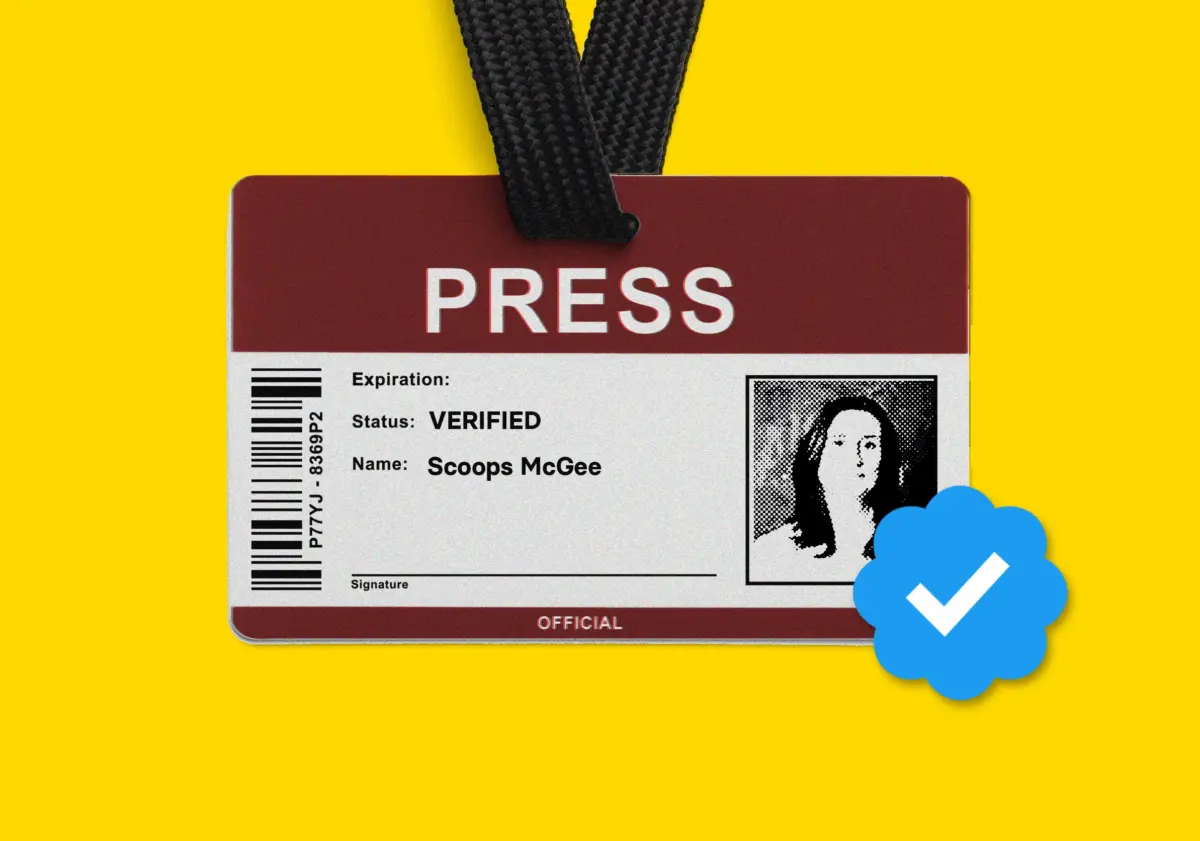
As the digital media landscape braces for a fundamental shift in platform governance, major newsrooms find themselves at a historic crossroads. Set to go into effect on April 1, Twitter’s controversial policy mandates the complete removal of legacy blue checkmarks from accounts that refuse to enroll in its $8-per-month Twitter Blue subscription—or upgrade to the newly minted $1,000-per-month “Verified Organization” enterprise tier. This seismic policy pivot marks the death of the old verification paradigm, which for over a decade served as a digital hallmark of journalistic integrity, institutional authenticity, and public accountability.
For years, the blue checkmark was a non-negotiable credential for reporters, editors, and major news institutions. It signaled to the public that breaking news updates, investigative reporting, and expert commentary originated from a verified, accountable source. Today, that legacy symbol is being redefined. Under Elon Musk’s leadership, the badge no longer represents editorial authority; rather, it denotes financial participation in Twitter’s proprietary subscription model.
This transformation has triggered a fractured, high-stakes debate across the global media ecosystem. Major journalistic institutions—including The New York Times, The Washington Post, The Los Angeles Times, Politico, Insider, and BuzzFeed—have publicly drawn a hard line, announcing they will neither foot the bill for institutional verification nor subsidize individual subscriptions for their reporting staffs. Conversely, smaller digital-native publications, independent journalists, and niche outlets are weighing the brutal economic realities of modern content distribution. For them, the algorithmic visibility promised to paid subscribers in the “For You” feed may outweigh ideological objections to the subscription fee.
This comprehensive report examines the complex calculations driving newsroom policies worldwide, analyzes the fine print of Twitter’s enterprise pricing packages, and explores the long-term implications of a social media ecosystem where institutional credibility is decoupled from platform endorsement.
Detailed Chronology: From Trusted Credential to Monetized Commodity
To understand the current crisis of confidence between traditional media and Twitter, it is necessary to examine the evolution of the platform’s verification system.
The Legacy Era: Establishing Authority
Introduced in 2009 following a trademark lawsuit filed against Twitter by baseball player Tony La Russa, the original verification system was designed to solve a singular problem: impersonation. Initially, the blue checkmark was entirely free, highly exclusive, and strictly controlled. It was reserved for high-profile accounts in politics, entertainment, journalism, and sports whose identities were prone to spoofing.
For newsrooms, the badge became an invaluable infrastructure tool. Editors could verify eyewitness accounts during breaking news, and readers could distinguish between legitimate journalists and malicious actors spreading disinformation. Over time, the checkmark morphed from a simple security measure into an industry-standard badge of credibility.
The Musk Takeover and the Overhaul of Verification
Following his acquisition of Twitter in late 2022, Elon Musk moved swiftly to dismantle what he termed the “lords and peasants system” of legacy verification. Musk argued that the old system was corrupt, subjective, and overly elitist. His solution was democratization through monetization: opening the blue checkmark to anyone willing to pay a monthly fee.
The initial rollout of Twitter Blue in late 2022 was plagued by high-profile impersonation disasters, forcing a temporary suspension of the program. However, the platform refined its approach, culminating in the early 2023 announcement that all legacy checkmarks would officially expire on April 1. To ease corporate resistance, Twitter introduced the "Verified Organization" tier—a steep $1,000 monthly subscription (plus $50 per additional affiliated account) aimed at businesses, governments, and newsrooms looking to maintain administrative control over their brand assets on the platform.
The Scramble in the Newsroom
As the April 1 deadline approached, newsroom executives found themselves caught off guard by the aggressive pricing and ambiguous terms of the enterprise packages. Internal communications obtained from various outlets revealed widespread confusion regarding how the enterprise tiers functioned, what administrative controls were included, and whether individual reporters would be left to navigate the subscription maze alone.
With corporate budgets tightening across the media industry due to macroeconomic pressures, declining ad revenues, and massive industry-wide layoffs, spending thousands of dollars a month just to keep digital badges next to staff bylines became an exceptionally hard sell.
Supporting Context & Metrics: The Economics of Visibility
At the heart of the media’s debate over Twitter Blue is a cold, hard business calculation: distribution versus credibility.
For independent creators and smaller digital publications, traffic is the lifeblood of sustainability. Recent platform algorithmic changes have prioritized paid accounts, making subscription to Twitter Blue nearly mandatory for organic reach. According to platform updates, posts and articles shared by non-paying accounts face diminished algorithmic favorability, struggling to secure placement in the influential “For You” algorithmic feed unless users already follow the specific account.
The Cost-Benefit Breakdown
- Individual Tier: $8 per month ($96 annually) per user. For a newsroom of 50 reporters, individual expensing quickly balloons into thousands of dollars annually with little direct return on investment.
- Enterprise Tier: $1,000 per month ($12,000 annually) for a primary organization account and five affiliated handles, with each additional affiliate costing $50 per month. For a mid-sized newsroom seeking to cover dozens of beats, the annual enterprise expenditure can easily exceed tens of thousands of dollars.
- The Algorithmic Penalty: Refusing to pay risks burying reporters’ breaking news threads, limiting audience acquisition, and blunting the outlet’s ability to drive referral traffic back to its primary website.
Despite these distribution advantages, legacy outlets argue that paying for verification introduces a fatal flaw: brand dilution. When a verified badge can be purchased by anyone—from professional investigative reporters to internet trolls and automated bots—the signal-to-noise ratio collapses. The checkmark ceases to be a mark of trust, transforming instead into a neon sign advertising financial compliance with a private tech platform.
Official Statements: Where Major Newsrooms Stand
The divergence in strategy between legacy giants and agile digital startups highlights deep ideological and operational splits within contemporary journalism. Below is a comprehensive breakdown of official stances gathered from major news organizations.
1. The New York Times
The New York Times was among the first major institutions to declare its opposition to the new fee structure. Charlie Stadtlander, director of external communications, issued a clear directive:
"We aren’t planning to pay the monthly fee for check mark status of our institutional Twitter accounts. We also will not reimburse reporters for Twitter Blue except in rare instances where this status would be essential for reporting purposes."
2. The Washington Post
Echoing the sentiment of America’s paper of record, The Washington Post stated categorically that it would not participate in the monetization of verification. A spokesperson for the Post noted:
"The Washington Post will not pay for Twitter Blue service as an institution or on behalf of our journalists. It’s evident that verified checkmarks no longer represent authority and expertise."
3. The Los Angeles Times
In an internal memo to the newsroom obtained by reporters, Los Angeles Times Managing Editor Sara Yasin outlined a pragmatic, highly critical perspective on the shifting utility of the platform:
"Some of you may be wondering whether or not the L.A. Times will pay for Twitter Blue subscriptions, and the answer right now is no, for several reasons: First of all, verification no longer establishes authority or credibility, instead it will only mean that someone has paid for a Twitter Blue subscription. Secondly, while Twitter remains an important tool for newsgathering, it is not as reliable as it once was."
4. Politico
Anita Kumar, Politico’s senior editor of standards and ethics, underscored the ethical and professional implications of the platform’s policy shift in a message to staff:
"In the future, a checkmark will no longer mean you are a verified journalist. Instead, it will simply mean you are paying for benefits such as longer tweets and fewer ads. Politico will not pay for you to subscribe to Twitter Blue. You may, of course, enroll at your own expense."
5. Insider
For Insider, the decision hinged on reader trust and transparency. Editor-in-Chief Nicholas Carlson offered a concise assessment:
"The value of a blue checkmark was that it said the person was who they said they are. Now a blue checkmark just says they are a Twitter Blue subscriber. That doesn’t help Twitter users or our readers."
6. BuzzFeed Inc.
Karolina Waclawiak, editor-in-chief of BuzzFeed News, framed the company’s refusal to pay as a matter of fiscal responsibility and brand integrity across its portfolio of brands (including BuzzFeed, HuffPost, Tasty, and Complex):
"As a company, we do not think it’s a wise use of resources to pay for individuals to retain a blue checkmark that is no different from anyone else’s—an amateur medical expert, Elon stan, or otherwise—who is simply willing to pay the fee for a blue check."
7. Independent and Niche Outlets: Pragmatism Over Principle
In stark contrast to legacy newsrooms, several independent digital outlets and smaller publications have adopted a pragmatic, survival-oriented approach.
Ben Smith, co-founder of media startup Semafor, confirmed that his organization would permit reporters to expense Twitter Blue if it yields measurable distribution advantages. "I just see it as a totally practical issue in that sense," Smith explained.
Alex Kantrowitz, a former media reporter who now authors the popular Big Technology newsletter on Substack, spoke candidly about why paying the $8 fee is an easy business decision for independent creators:
"I’m definitely paying for Twitter Blue. In fact, I signed up this week. I don’t care about the blue checkmark, which might be a liability at this point. But getting added distribution in the For You tab is worth it for me at $8/month, given that distribution is the lifeblood of smaller media brands like Big Technology."
Meanwhile, Geoffrey Ingersoll, editor-in-chief of the Daily Caller, noted that his organization will likely utilize the enterprise package despite personal reservations. While Ingersoll admitted he personally plans to let his own legacy badge lapse to avoid "being nerd famous among journalists," the outlet views the package as an experiment worth tracking via analytics to measure referral performance.
Other niche publications—such as an entertainment outlet interviewed on condition of anonymity—noted that paying for enterprise verification serves as a defensive shield against malicious scammers attempting to swindle artists by posing as staff writers requesting fees for fake coverage.
Future Outlook: A Fractured Digital Information Ecosystem
As the post-legacy verification era takes full effect, the relationship between journalism and social media is undergoing an irreversible transformation. Several critical trends are likely to shape the media landscape in the months and years ahead:
1. The Proliferation of Impersonation and Disinformation
Without platform-enforced authentication tied to editorial institutions, bad actors face fewer barriers to creating convincing fake profiles of prominent reporters and news organizations. This heightens the risk of coordinated disinformation campaigns, market-moving financial hoaxes, and reputational damage during breaking news events. Media organizations will need to invest more heavily in decentralized authentication methods, such as cryptographic signing and official domain-linked credentials.
2. The Decline of Twitter as an Indispensable News Wire
As major newsrooms pull back financial support and restrict institutional engagement on the platform, Twitter’s historic role as the world’s real-time digital news wire is eroding. While reporters will undoubtedly continue using the platform for sourcing, the erosion of verified authority may accelerate the migration of audiences and journalists toward alternative networks, decentralized protocols (like Mastodon and Bluesky), and owned channels like newsletters and direct-to-consumer apps.
3. The Commoditization of Digital Credibility
The pivot from merit-based verification to subscription-based badging fundamentally alters how users evaluate online authority. When a verified badge can be bought by anyone, the burden of proof shifts entirely onto the consumer and the news brand. Outlets that successfully cultivate direct relationships with their audiences—independent of algorithmic intermediaries—will likely weather this transition far better than those heavily reliant on social media referral traffic.
Ultimately, Twitter’s removal of legacy checkmarks is more than a pricing dispute over a digital icon; it is a profound philosophical statement about the nature of trust in the digital age. As newsrooms draw their lines in the sand, the industry is stepping into an uncertain future where authority can no longer be rented from a tech platform—it must be earned, verified, and protected independently.