Executive Overview
In an era defined by hyper-globalized supply chains, complex industrial distribution networks, and an alarming frequency of high-profile food safety recalls, the modern consumer is experiencing a crisis of confidence. What we eat—and, crucially, where it comes from—has transitioned from a passive dietary choice to an active decision regarding personal health, food security, and risk mitigation.
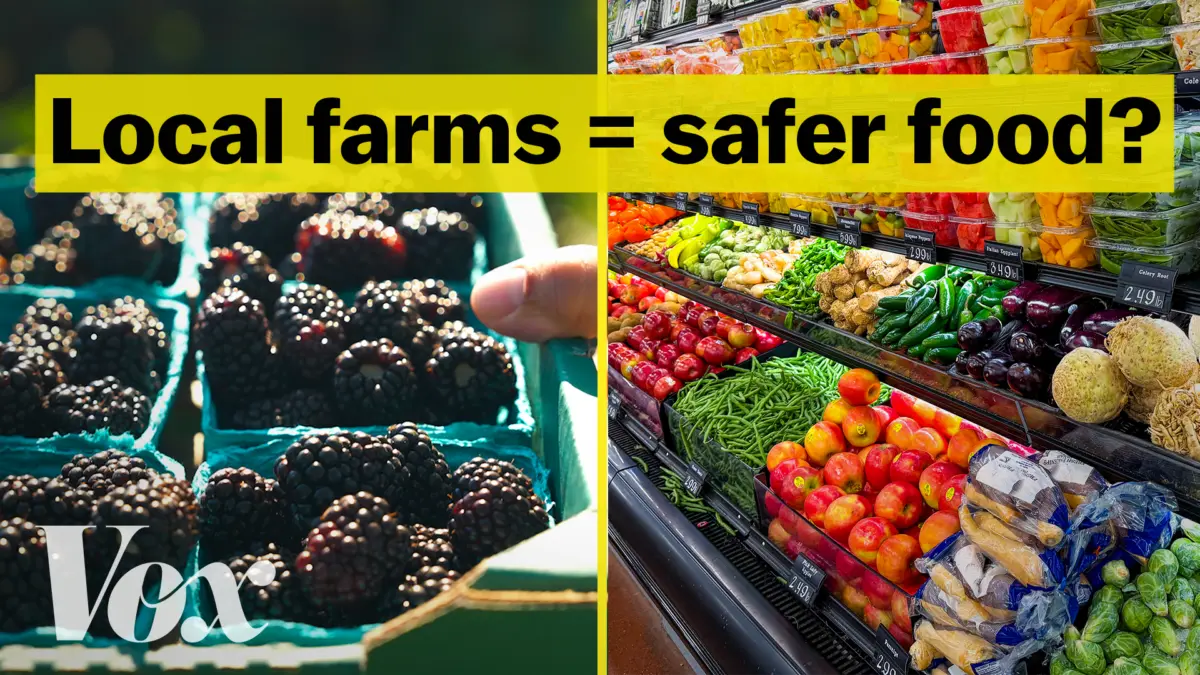
Recent data underscores this paradigm shift. According to a landmark 2025 consumer survey, an overwhelming 59 percent of Americans consider it vital to know the precise origin of their food. Furthermore, 54 percent actively prioritize access to locally available, consistently sourced foodstuffs. This rising consumer consciousness has transformed farmers markets and small-scale agriculture from quaint weekend pastimes into vital components of a resilient, alternative food economy.
Across the United States, more than 8,700 farmers markets operate as decentralized hubs where roughly 40,000 independent farmers connect directly with their communities. This direct-to-consumer (DTC) model bypasses the labyrinthine industrial food system—a system in which conventional produce routinely travels hundreds or thousands of miles from rural fields to urban distribution centers, passing through numerous processing plants, packing facilities, and middlemen along the way.
To understand how small-scale family farms are weathering modern supply chain disruptions, competing against retail goliaths, and capitalizing on the surging demand for transparent, traceable food, we traveled to Camarillo, California. There, amidst the fertile soils of Ventura County, we investigated the daily operations, economic realities, and safety philosophies of a quintessential family-run farm.
Detailed Chronology: The Evolution of the Modern Food Supply Chain and the Local Movement
To fully grasp the resurgence of local agriculture, it is necessary to examine the historical trajectory that brought the globalized food system to its current juncture—and the tipping points that drove consumers back to regional producers.
The Industrialization of Agriculture (Post-WWII to Early 2000s)
- The Consolidation Era: Following the Second World War, American agriculture underwent a radical consolidation. Spurred by technological advancements, synthetic fertilizers, and the expansion of the interstate highway system, farming transformed from a regional, diversified practice into an industrialized, centralized enterprise.
- The Rise of the Supermarket: The mid-to-late 20th century saw the birth of the modern supermarket. Retailers demanded uniform produce, year-round availability, and massive volume—demands that small, regional farms struggled to meet. Consequently, food production concentrated in specific geographic corridors (such as California’s Central Valley and international export hubs), creating a logistics network where food routinely logged thousands of food-miles before reaching a plate.
The Awakening and the Farmers Market Boom (2000s–2019)
- The Local Food Awakening: At the turn of the 21st century, a counter-movement began to take shape. Consumers, chefs, and environmentalists began questioning the ecological and nutritional costs of industrial food miles. The "locavore" movement was born, championing seasonal eating and regional economies.
- Infrastructure Growth: Federal and state agricultural agencies began investing in direct marketing infrastructure. The USDA Farmers Market Promotion Program (FMPP) provided crucial grants, helping markets scale up from parking-lot pop-ups to organized, professionalized community anchors.
The Pandemic Disruption and Food Safety Crises (2020–Present)
- Supply Chain Vulnerability (2020–2022): The COVID-19 pandemic exposed the brittle nature of centralized supply chains. While major meatpacking plants and grocery distribution hubs experienced severe bottlenecks and empty shelves, local farmers markets and CSA (Community Supported Agriculture) boxes experienced an unprecedented boom as consumers sought reliable, uncrowded food sources.
- The Recall Wave (2024–2026): A series of high-profile foodborne illness outbreaks and sweeping summer recalls severely tested public trust in mass-produced foods. Outbreaks linked to commercial produce and multi-state distribution channels dominated headlines, driving anxious consumers away from conventional retail aisles and directly toward farm stands and community markets.
Supporting Context & Metrics: The Numbers Behind the Shift
The pivot toward local food is not merely an aesthetic preference; it is backed by profound shifts in consumer psychology, economic metrics, and logistical realities.
The Scale of Direct-to-Consumer Agriculture
- 8,700+ Markets: The United States Department of Agriculture and academic agricultural databases track over 8,700 active farmers markets nationwide, supported by thousands of roadside stands, on-farm markets, and community-supported agriculture programs.
- 40,000 Vendors: These marketplaces sustain approximately 40,000 independent agricultural producers who rely on direct sales to maintain viable profit margins in an industry otherwise dominated by heavily subsidized agribusiness conglomerates.
- The 59/54 Split: The 2025 consumer survey data highlights a permanent psychological shift: 59 percent of respondents demand origin transparency, while 54 percent actively seek out local availability as a core purchasing metric.
The Mechanics of Supply Chain Risk
The vulnerability of industrial food supply chains lies in aggregation. When heads of lettuce, tomatoes, or berries from hundreds of distinct farms are pooled together in massive commercial washing and processing facilities, a single contamination event at one farm can compromise products distributed across dozens of states.
Conversely, the supply chain of a small, local farm operating in Camarillo, California, is strikingly short:
- Harvest: Produce is hand-harvested at peak ripeness by farmworkers who know the specific field.
- Transport: Goods are transported directly—often within hours—to a local farmers market or a regional farm stand.
- Sale: The farmer or farm representative sells directly to the end consumer, eliminating intermediate processing, multi-party distribution hubs, and prolonged cold-storage delays.
Official Statements & Industry Perspectives
Gaining insight into the operational realities of local farming requires examining the perspectives of those on the front lines of agriculture, food safety research, and retail competition.
Field Dispatch: The Camarillo Family Farm Experience
Arriving in Camarillo, the contrast with industrial agribusiness is immediately apparent. There are no sprawling monoculture tracts stretching to the horizon, nor are there industrial processing sheds humming with heavy machinery. Instead, the landscape is a mosaic of diversified crops: rows of heirloom tomatoes, vibrant leafy greens, and stone fruit orchards tended with meticulous care.
"When you buy from a massive grocery chain, you are buying a commodity that has been engineered to withstand shipping containers and shelf life, not necessarily flavor or nutritional density," explains Miguel Ramirez, a second-generation co-owner of a 45-acre family farm in Camarillo.
"Our business model isn’t built on how long a tomato can sit in a dark truck across state lines," Ramirez says, gesturing toward a freshly harvested crate of strawberries. "It’s built on how it tastes when you bite into it tomorrow morning, and the fact that you can look me in the eye and ask exactly what went into growing it."
Navigating the David-and-Goliath Economy
Competing against corporate grocery retailers presents daily hurdles for small farms. Major supermarkets operate on razor-thin margins achieved through immense economies of scale, long-term supply contracts, and sophisticated logistics networks. Small family farms cannot compete on sheer volume or rock-bottom pricing. Instead, they must compete on value-added differentiation: freshness, transparency, environmental stewardship, and community connection.
"People come to our farmers market stall not because we are cheaper than the supermarket," notes Ramirez. "They come because they know our name, they know our land, and they trust that the food hasn’t passed through a dozen different hands where contamination could occur."
Food Safety Experts Weigh In
Public health officials and food safety researchers acknowledge that while large commercial farms are subject to stringent federal regulations (such as the FDA Food Safety Modernization Act), the sheer complexity of their distribution networks introduces inherent vulnerabilities.
"The larger the network, the greater the exposure radius," notes Dr. Elena Vance, an agricultural economist specializing in supply chain resilience. "When contamination happens in an industrial facility, the trace-back investigation can take weeks, resulting in massive nationwide recalls. With direct-to-consumer agriculture, the feedback loop is instantaneous. If there is an issue, the farmer knows immediately, and the affected radius is localized, minimizing public health impact."
Future Outlook: The Road Ahead for Local Agriculture
As we look toward the remainder of the decade and beyond, the intersection of technology, climate volatility, and consumer demand will redefine the landscape of American agriculture. Several key trends are poised to shape the future of local and direct-to-consumer farming:
1. The Integration of Traceability Technology
Even small-scale farms are increasingly adopting digital tools to enhance consumer trust. From QR codes on farm-stand packaging that link directly to harvest logs and soil management practices, to blockchain-backed supply chain verification, transparency is becoming digitized. Consumers will increasingly demand instant, smartphone-accessible proof of origin, even at the farmers market.
2. Climate Resilience and Regional Food Sheds
With climate change threatening major agricultural regions like California’s Central Valley through recurring droughts, extreme heat events, and water rights conflicts, the national food supply is facing unprecedented environmental stress. Strengthening regional "food sheds"—decentralized networks of small and mid-sized farms surrounding urban and suburban centers—will become a critical strategy for municipal food security.
3. Policy and Institutional Support
The economic viability of small farms will increasingly depend on supportive agricultural policy. Advocates are pushing for expanded federal grants for farmers market infrastructure, streamlined zoning laws for urban and peri-urban agriculture, and increased integration of local farm produce into institutional feeding programs, such as public schools and hospitals.
Conclusion
The journey from a Camarillo family farm to a bustling weekend market stall represents more than just a localized economic transaction; it is a rejection of the alienation inherent in the industrial food machine. As consumer demand for safety, transparency, and connection continues to outpace trust in conventional retail supply chains, local agriculture stands poised not as a nostalgic relic of the past, but as an essential blueprint for a healthier, more resilient future.
This journalistic feature is presented in collaboration with Verizon Business. Verizon Business maintains a strict editorial independence policy and exercises no influence over our investigative reporting, editorial decisions, or news content.