Executive Overview
When shopping for portable audio equipment, consumers are often conditioned to look at numerical specifications as a straightforward indicator of quality and performance. Much like megapixel counts in digital cameras or gigahertz ratings in computer processors, wattage has long been treated as the ultimate metric for measuring a Bluetooth speaker’s prowess. The prevailing assumption is intuitive yet fundamentally flawed: if a 10-watt speaker is good, a 20-watt speaker must be twice as powerful, twice as loud, and objectively superior.
However, the physics of acoustics and the realities of modern audio engineering operate on a much more complex continuum. Wattage does not measure how loud a speaker is; it measures how much electrical power an amplifier delivers to the speaker’s internal drivers. Because human perception of sound is logarithmic rather than linear, doubling the wattage of a device yields a remarkably modest increase in actual volume. Furthermore, the lack of standardization in how manufacturers report power metrics—oscillating between peak performance figures and continuous RMS (Root Mean Square) ratings—leaves consumers navigating a labyrinth of misleading marketing data.
To make an informed purchase, buyers must look past the flashy numbers printed on the front of a box. Understanding the interplay between driver sensitivity, power efficiency, acoustic physics, and real-world application is essential for selecting a Bluetooth speaker that truly matches your listening environment.
Detailed Chronology: The Evolution of Portable Audio and Power Metrics
The Analog Era and the Birth of Power Standards
The obsession with wattage dates back to the mid-20th century during the golden age of high-fidelity (Hi-Fi) home audio systems. In the era of massive vacuum-tube amplifiers and heavy wooden cabinet speakers, power ratings were a crucial metric because traditional passive speakers required substantial electrical energy from external amplifiers to drive large copper-wound voice coils.
During this period, audio engineers developed rigorous testing standards to measure amplifier output accurately. The introduction of RMS (Root Mean Square) measurements provided a reliable baseline, representing the continuous, unclipped power an amplifier could deliver to a load over an extended period. This standard allowed audiophiles to match amplifiers and speakers safely without risking thermal damage to the voice coils.

The Transistor Revolution and the Rise of "Peak" Power
As solid-state electronics emerged in the 1970s and 1980s, manufacturing costs plummeted, and audio gear became smaller, lighter, and more accessible. With the democratization of consumer electronics came a shift in marketing strategies. Competition fierce, and companies sought ways to make their products appear more powerful on paper than their rivals.
This environment birthed the "Peak Power" rating. Unlike RMS, which measures sustained endurance, peak power measures the absolute maximum electrical surge an amplifier can handle for a fraction of a second before clipping or burning out. While technically a real metric, peak power is largely useless for everyday listening. Yet, because peak numbers are typically double (or even quadruple) the RMS rating, marketing departments quickly realized that slapping a high peak wattage figure onto a spec sheet was an effortless way to capture consumer attention.
The Bluetooth Boom and Modern Portability Challenges
The advent of Bluetooth technology in the late 1990s and its eventual ubiquity in the 21st century revolutionized how humans consume music. Wireless, battery-powered speakers transformed audio from a stationary, home-bound experience into an on-the-go lifestyle accessory.
Suddenly, consumers demanded high output from remarkably small packages. This created a profound engineering challenge: how to squeeze room-filling sound out of a device small enough to fit in a backpack or clip onto a bicycle. To compensate for the physical limitations of tiny drivers and compact internal batteries, manufacturers leaned heavily on digital signal processing (DSP) and aggressive power marketing. Today, the disconnect between consumer expectations of wattage and the actual physics of sound has never been wider.
Supporting Context & Metrics: The Science of Sound and Power
To understand why a 40-watt speaker isn’t twice as loud as a 20-watt speaker, one must examine the mathematics of human hearing and acoustic physics.

RMS vs. Peak Power: The Core Differences
When evaluating a speaker’s spec sheet, you are likely to encounter two distinct power metrics:
- RMS (Root Mean Square) Power: This represents the continuous thermal and mechanical power handling capacity of the speaker. It dictates how loud and clear the speaker can play indefinitely without overheating or distorting the audio signal. For instance, a speaker officially rated at 4.2W RMS (such as the ultra-portable JBL Go 4) can sustain that output level hour after hour.
- Peak Power: This measures the maximum threshold of electrical power the system can handle during sudden transient sounds—such as a sharp drum snare or a sudden orchestral crash—for mere milliseconds.
The gap between these two figures can be staggering. It is entirely common for a manufacturer to advertise a speaker with a "40W Peak" rating while burying the reality that its continuous RMS rating is only 20W. Furthermore, major retailers frequently omit RMS ratings entirely, publishing only the inflated peak figure or leaving power data out of the specifications section altogether.
The Logarithmic Reality of Loudness (Decibels vs. Watts)
Human hearing does not operate on a linear scale. Instead, our perception of loudness follows a logarithmic curve.
- The 3 dB Rule: Doubling the electrical power (watts) sent to a speaker does not double its perceived volume. In an anechoic environment, doubling the wattage results in a mere 3 dB increase in sound pressure level (SPL).
- The 10 dB Rule: For the human ear to perceive a sound as twice as loud, the sound pressure level must increase by 10 dB.
Achieving a 10 dB increase requires a tenfold increase in electrical power. Therefore, to make a 10-watt speaker sound twice as loud, you do not need 20 watts; you need 100 watts.
| Power Increase | Sound Pressure Increase | Perceived Change in Loudness |
|---|---|---|
| 10W to 20W (2x Power) | +3 dB | Barely noticeable to slight increase |
| 20W to 40W (2x Power) | +3 dB | Barely noticeable to slight increase |
| 10W to 100W (10x Power) | +10 dB | Exactly twice as loud |
This mathematical reality explains why comparing a 25-watt speaker to a 35-watt speaker based purely on power output is largely a fool’s errand. The real-world difference in volume will be negligible.
The Myth of Size and Efficiency
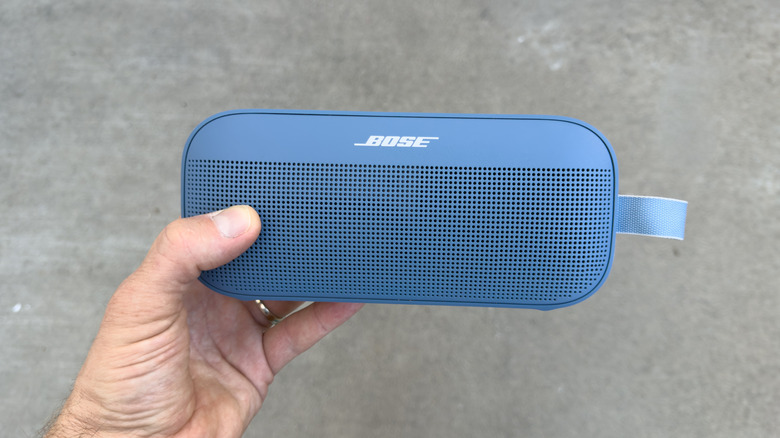
Beyond wattage, two other factors dictate speaker performance: driver sensitivity and cabinet volume.
- Driver Sensitivity: Measures how efficiently a speaker converts electrical power into acoustic sound waves, typically expressed in decibels per watt (dB/W). An exceptionally efficient 10-watt speaker utilizing high-grade neodymium magnets and well-engineered cones can easily outperform an inefficient, poorly designed 20-watt speaker.
- Physical Size: Larger Bluetooth speakers often house massive batteries and expansive internal acoustic chambers. While these elements contribute to deeper bass response and greater overall presence, they can also create a false impression of volume simply due to their physical footprint.
Official Perspectives and Industry Insights
Audio engineers and acoustic physicists have long advocated for greater transparency in consumer electronics labeling. Industry bodies and independent testing laboratories frequently caution buyers against relying on single-metric power ratings.
Renowned acoustic researchers point out that power ratings are essentially meaningless without context regarding total harmonic distortion (THD). An amplifier can technically push high wattage into a speaker, but if that power results in a THD rating exceeding 10%, the audio output will become severely clipped, muddy, and potentially damaging to the speaker’s voice coil.
Prominent audio brands have gradually adjusted their documentation, with high-end manufacturers providing comprehensive specification sheets that detail frequency response curves, signal-to-noise ratios, and explicit RMS thresholds. However, mass-market consumer brands continue to lean on peak power figures to capture impulse buyers in retail environments. Independent consumer testing organizations consistently advise shoppers to cross-reference manufacturer claims with real-world acoustic reviews that measure actual decibel output at safe listening thresholds.
Future Outlook: Where Portable Audio is Headed
As battery technology and digital signal processing (DSP) continue to advance at a rapid pace, the traditional metric of speaker wattage is steadily losing its relevance. The future of portable audio lies not in raw electrical power, but in computational acoustics and smart efficiency.
The Rise of Adaptive DSP
Modern Bluetooth speakers increasingly rely on advanced DSP chips rather than brute-force amplifier power to shape sound. These intelligent processors dynamically manage dynamic range compression, bass boost, and thermal protection in real-time. By optimizing the audio signal before it ever reaches the amplifier, a modern 15-watt smart speaker can produce cleaner, punchier, and more balanced sound than older analog-driven units boasting twice the wattage.
Solid-State Batteries and Efficiency Gains
The impending commercialization of solid-state battery technology promises to revolutionize portable speakers. By offering higher energy density and more stable power delivery in smaller footprints, these next-generation power cells will allow engineers to design higher-fidelity amplifiers that do not sacrifice battery life or add excessive weight.
Shifting Consumer Education
As consumers become more discerning and tech-savvy, the limitations of the "wattage race" are being exposed. Online communities, tech journalism, and creator-led reviews are gradually shifting the conversation away from arbitrary power numbers toward holistic metrics like frequency response, dispersion patterns, and real-world clarity.
Ultimately, finding the right Bluetooth speaker requires matching your power expectations to your actual lifestyle:
- Sub-10W RMS (Ultra-Portable): Ideal for close-range, personal listening on a desk or nightstand.
- 10W to 40W RMS (Mid-Sized Portables): Perfect for small indoor rooms, bedrooms, and quiet outdoor patios where distortion-free clarity at moderate volumes is paramount.
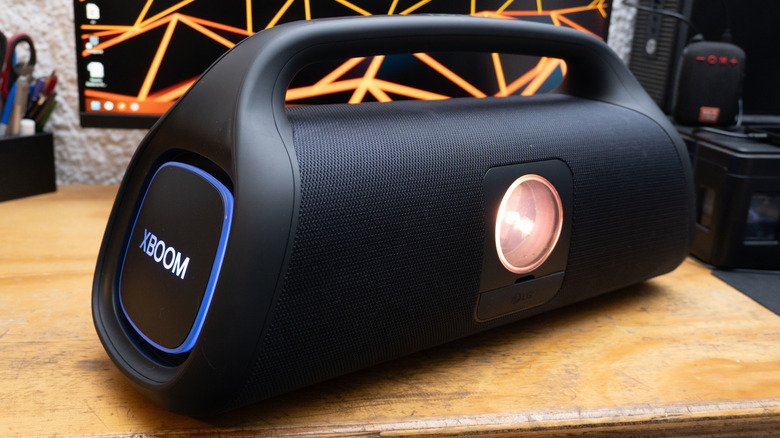
- 40W to 100W+ RMS (Party & Outdoor Speakers): Built for open-air environments, backyards, and large gatherings where overcoming ambient environmental noise requires robust power handling and larger physical drivers.
By understanding that wattage is merely one piece of a complex acoustic puzzle, consumers can bypass the marketing hype and invest in audio gear that delivers genuine fidelity and performance.