Executive Overview
In the modern gaming landscape, choosing where to invest your hard-earned money has transformed into a high-stakes tech-savvy dilemma reminiscent of Sophie’s Choice. With the escalating costs of PC components and next-generation consoles alike, value, longevity, and raw performance have never been under sharper scrutiny. As Sony and AMD aggressively tease the graphic architectures slated for future PlayStation iterations, gamers and hardware enthusiasts alike are inevitably drawn to a persistent, cross-platform question: Which NVIDIA GPU actually matches the performance of the PlayStation 5 and the PS5 Pro?
The answer, unfortunately, is far from simple. Apples-to-oranges comparisons plague this debate, complicated by architectural differences, unified memory architectures, bespoke console software optimization, and a volatile macroeconomic climate marked by hyper-inflated component pricing. While hardware benchmarks and frame-counting analysis can map out theoretical equivalents—pointing toward vintage workhorses like the NVIDIA RTX 2070 Super for the base console, or modern entries like the RTX 5060 Ti for the PS5 Pro—the real-world reality involves a complex web of bottlenecks, upscaling technologies, and vastly different price-to-performance vectors.
This deep-dive investigation examines how NVIDIA’s graphics cards stack up against Sony’s flagship consoles, exploring the technical nuances, market realities, and performance metrics that define the current hardware divide.
Detailed Chronology: The Evolution of Console APUs vs. PC GPUs
To understand how modern PC graphics cards compare to Sony’s consoles, we must first retrace the timeline of how these hardware ecosystems have evolved, particularly in the shadow of shifting manufacturing costs and component shortages.
The Launch of the Base PlayStation 5 (2020)
When Sony launched the PlayStation 5 in late 2020, it introduced a custom-designed AMD system-on-a-chip (SoC) featuring Zen 2 CPU cores and an RDNA 2 graphics architecture. Rather than relying on a discrete graphics card tethered to a separate CPU via PCIe lanes, the base PS5 integrated both processing domains onto a single monolithic die coupled with 16GB of unified GDDR6 memory.
At the time, PC gamers building rigs in the same price bracket found themselves grappling with mid-range cards like NVIDIA’s RTX 2060 and 2070 series. However, thanks to low-level hardware access, closed-source optimization, and custom API work, developers were able to extract performance out of the PS5 that routinely punched well above its raw spec-sheet weight.
The Pricing Squeeze and the Arrival of the PS5 Pro (2024–2026)
Fast forward to the mid-2020s, and the hardware market has undergone a radical transformation. Supply chain fluctuations, skyrocketing memory costs—colloquially dubbed "RAMaggeddon"—and the insatiable corporate demand for artificial intelligence infrastructure have drastically skewed computer component pricing.
Amidst this inflationary period, Sony launched the PlayStation 5 Pro, designed to bridge the gap between high fidelity and high frame rates through advanced machine-learning upscaling (PSSR). However, initial retail prices of $700 quickly inflated due to high demand and severe supply chain shortages. By the time the industry looked toward major blockbusters like Grand Theft Auto VI, the PS5 Pro frequently retailed well north of $1,000 in secondary and constrained primary markets, forcing consumers to re-evaluate whether building a mid-range PC offered superior financial and functional value.
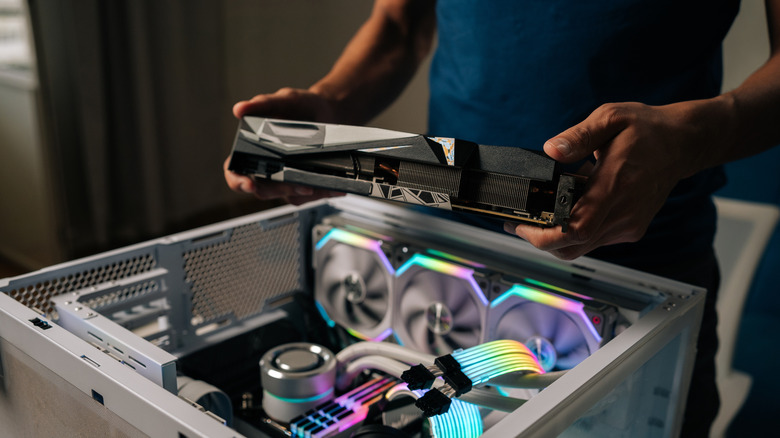
Supporting Context & Metrics: Direct Hardware Comparisons
When benchmark metrics and technical architectures are placed side-by-side, finding an NVIDIA equivalent to Sony’s consoles requires looking past simple clock speeds and examining how different system components interact.
1. The Base PS5 vs. The NVIDIA RTX 2070 Super
According to deep-dive analyses from hardware evaluation outlets like Digital Foundry, the NVIDIA graphics card that most closely aligns with the base PS5’s graphical capabilities is the NVIDIA GeForce RTX 2070 Super.
- The Architecture Gap: It is crucial to note that the PS5 utilizes an APU (Accelerated Processing Unit), combining CPU and GPU tasks on a single chip with unified memory, whereas the RTX 2070 Super is a discrete desktop GPU paired with a separate system CPU and dedicated RAM.
- Age and Cost: The RTX 2070 Super is several generations old. Despite its age, residual demand and market shifts mean that secondary and budget-tier models still command notable attention on the used market. Spec-wise, the 2070 Super features 8GB of GDDR6 memory—though this does not map directly to the PS5’s system-wide 16GB of unified GDDR6 memory, which can be allocated flexibly between system and video needs.
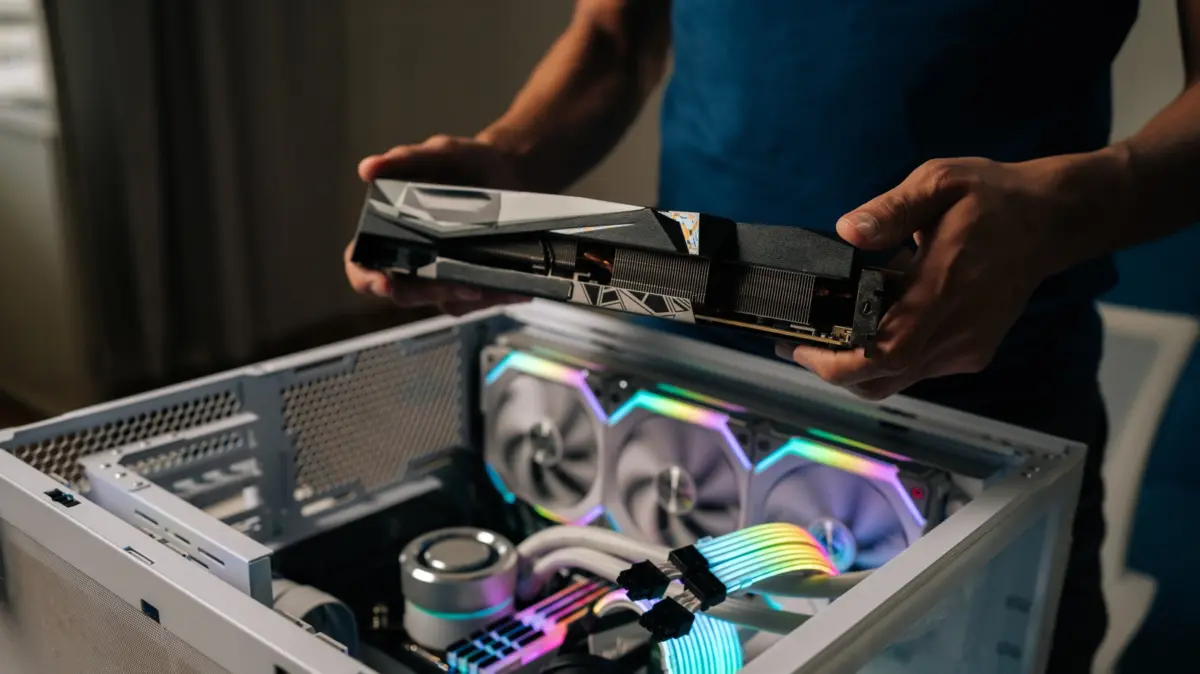
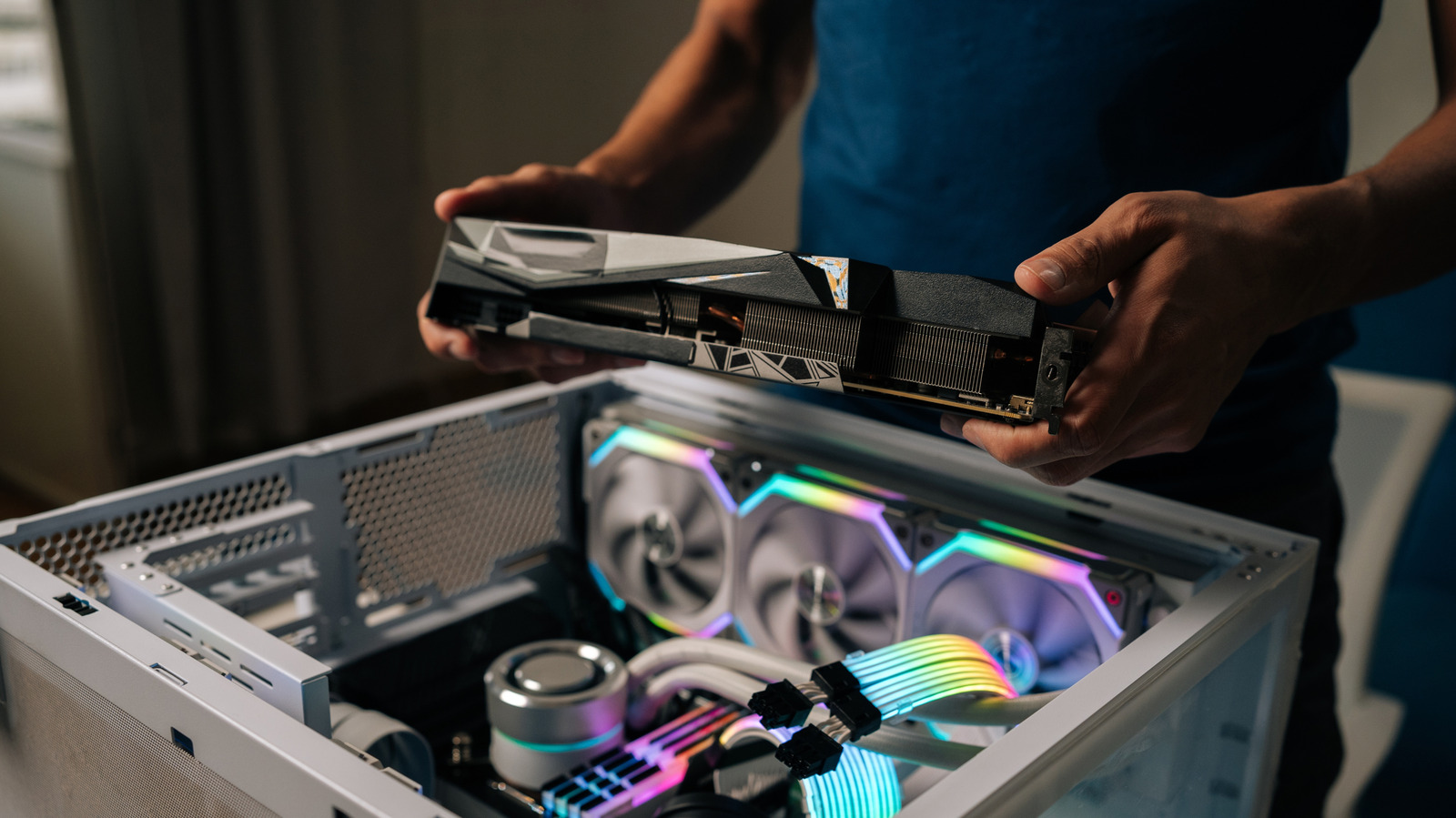
- Performance Parity: Under optimal conditions and targeted optimization, the RTX 2070 Super can replicate PS5-level frame rates and graphical fidelity, but achieving this requires a supporting PC ecosystem (CPU, motherboard, fast storage) that inflates the total cost of entry far beyond the cost of a secondhand or discounted base console.
2. The PS5 Pro vs. The NVIDIA RTX 5060 Ti & RTX 5060
The mid-2020s desktop market introduced NVIDIA’s fifth-generation Blackwell architecture, headlined by cards like the GeForce RTX 5060 and its more powerful sibling, the RTX 5060 Ti.
- Market Penetration: The RTX 5060 quickly secured a massive foothold among PC gamers, accounting for significant market share on platforms like the Steam Hardware & Software Survey. Equipped with modern features like DLSS 5 (Deep Learning Super Sampling) and 8GB to 16GB tiers of GDDR7 memory, these cards represent mainstream PC gaming efficiency.
- The PS5 Pro Counterpart: On paper, the heavy lifting of the PS5 Pro relies on a custom AMD Zen 2 8-core/16-thread "Trinity" APU. While the GPU side received a massive generational uplift over the base console, the CPU bump was relatively modest—hovering around a 10 percent increase. Consequently, even with the aid of Sony’s PlayStation Spectral Super Resolution (PSSR), many Pro-enhanced titles occasionally struggle to match the unthrottled CPU performance of a well-configured mid-range PC.
- The Raw Power Equivalent: From a pure horsepower perspective, the 16GB RTX 5060 Ti and AMD’s competing Radeon RX 9060 XT provide the closest like-for-like matching for the raw compute capabilities of the PS5 Pro. Yet, pricing remains a major hurdle: while a retail RTX 5060-series card often demands upwards of $500 standalone, the PS5 Pro package operates as an all-in-one entertainment ecosystem priced between $900 and $1,250 depending on regional supply shortages.
Official Perspectives and Industry Insights
Hardware engineers and systems analysts frequently warn against treating cross-platform hardware comparisons as absolute gospel. The fundamental philosophy separating closed consoles from open PCs dictates how performance is extracted from silicon.
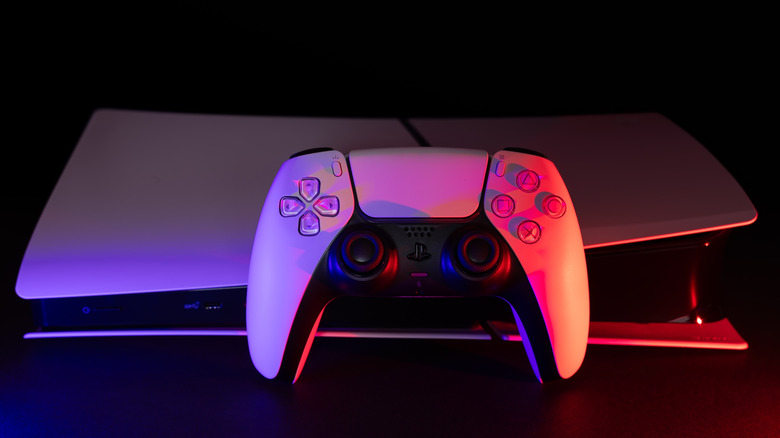
Industry analysts emphasize that console development benefits heavily from a fixed hardware target. Because developers only have to optimize their games for two specific hardware profiles (the base PS5 and the PS5 Pro), they can strip away operating system overhead, utilize low-level APIs, and deploy bespoke memory management techniques that simply cannot be replicated in a generalized Windows PC environment.
"Comparing an open-ended PC setup to a closed-source console is inherently complex," notes a hardware systems architect familiar with modern SoC design. "A PC running a mid-range GPU can easily bottleneck if paired with an inadequate CPU or insufficient RAM bandwidth. Conversely, a console maximizes every single gigabyte of its unified pool because developers design asset streaming pipelines specifically around that exact memory bottleneck."
Furthermore, software-level reconstruction techniques—such as NVIDIA’s advanced DLSS iterations versus Sony’s console-specific PSSR—change the rendering equation entirely. While an NVIDIA card can leverage tensor cores for frame generation and ultra-high-resolution upscaling with minimal latency, console developers must balance thermal envelopes, power draws, and silicon yields within a compact plastic chassis that sits under a living room television.
Future Outlook: Where is Hybrid Gaming Headed?
As the gaming industry looks past the mid-2020s toward future hardware generations—including early conceptual discussions surrounding Sony’s eventual PlayStation 6 architecture—the boundary between PC and console design continues to blur, even as their economic models diverge.
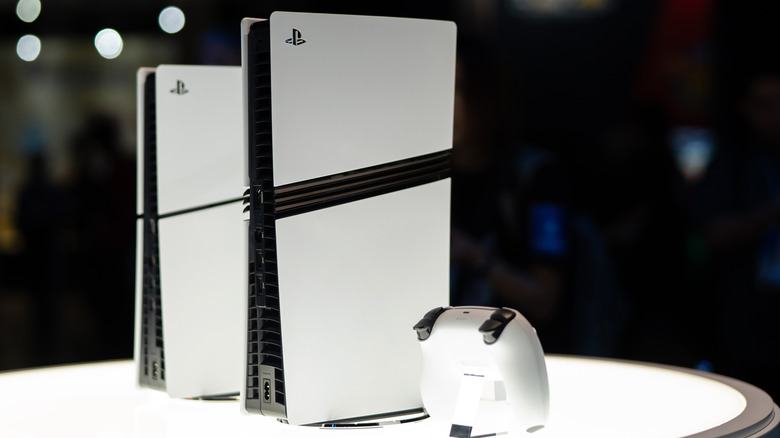
1. The Death (and Rebirth) of Budget PC Building
The days of building a budget-friendly gaming rig that comfortably undercuts a console on price-to-performance are increasingly constrained by macroeconomic realities. High memory pricing and the insatiable manufacturing demand for AI chips mean that discrete GPUs will likely remain a luxury investment. For consumers seeking plug-and-play 4K gaming at stable frame rates without navigating driver updates, configuration menus, or bottleneck diagnostics, consoles like the PS5 and PS5 Pro remain remarkably cost-effective.
2. The Scaling Importance of AI Upscaling
Both PC and console ecosystems have placed their bets on machine-learning upscaling as the primary vehicle for achieving high frame-rate 4K and path-traced visuals. As NVIDIA refines its DLSS ecosystem and console manufacturers iterate on hardware-accelerated machine learning blocks within their custom AMD APUs, the software layer will matter far more than raw rasterization performance.
3. Final Verdict: Which Path Should You Choose?
- Stick with the Console If: You already own a PS5 or PS5 Pro, want a hassle-free entertainment experience for blockbuster titles like Grand Theft Auto VI, and prefer a plug-and-play living room setup that will remain supported for years to come without requiring hardware upgrades.
- Invest in a PC If: You demand cutting-edge path tracing, uncompromised 120+ FPS refresh rates across ultrawide monitors, productive multitasking capabilities, and are willing to navigate the higher financial barrier of entry presented by contemporary discrete GPUs and modular components.
Ultimately, while an RTX 2070 Super serves as a baseline historical benchmark for the base PS5, and modern cards like the RTX 5060 Ti match the raw firepower of the PS5 Pro, the true value of your gaming hardware depends entirely on whether you value the streamlined optimization of a console or the boundless customizability of the PC master race.