Executive Overview
The intersection of generative artificial intelligence and independent video game development has officially crossed a precarious new threshold. Alliance Arts, the developer behind the upcoming supernatural anime title Drunken Goddess Reflux, has made the dramatic and unprecedented decision to completely scrap its planned public Steam demo. Citing severe anxieties regarding rapid advancements in AI technology, the studio feared that bad actors would harvest assets, mechanics, and the unique artistic presentation of the demo to manufacture low-effort clone titles. These bootleg games could theoretically be rushed to market and beat the original project to a commercial launch.
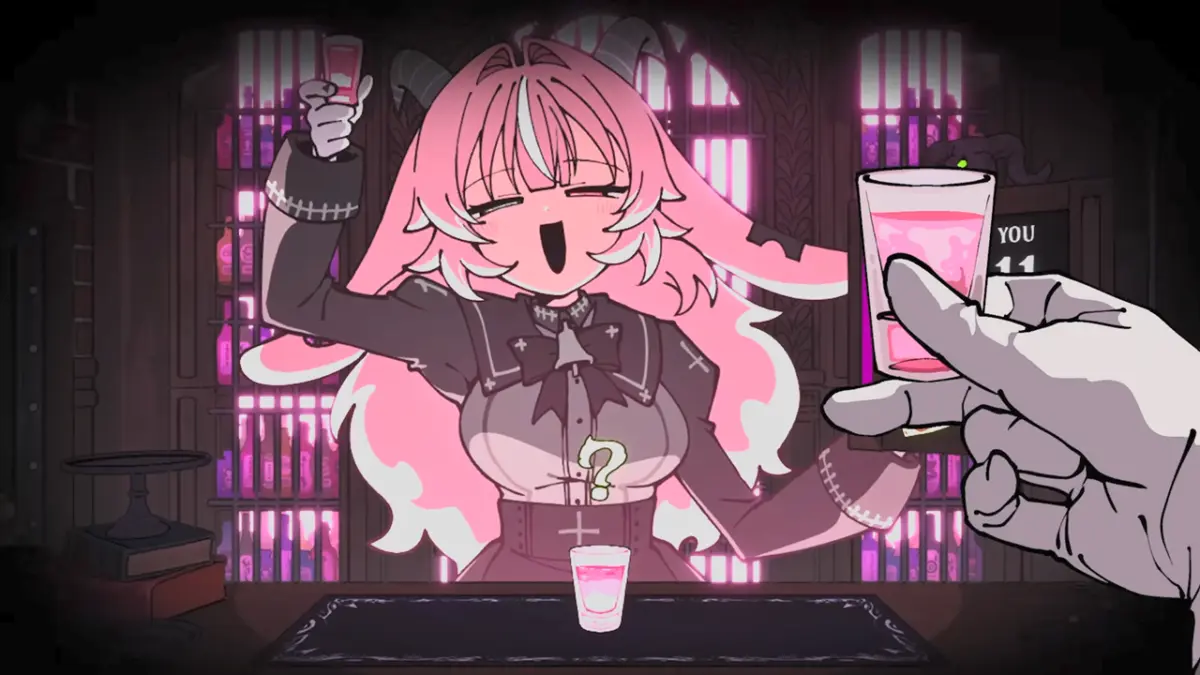
Originally announced in April with a mostly smooth development cycle, Drunken Goddess Reflux—aptly described as "shot glass Russian roulette with a demon who loves you enough to kill you"—had captured the attention of indie enthusiasts through its striking neon-pink and purple aesthetics and high-stakes psychological premise. However, the rapidly evolving landscape of generative tools, automated decompilation pipelines, and unsupervised asset scraping has forced publishers and developers to fundamentally rethink how they showcase unreleased creative works.
Rather than releasing the open trial build originally scheduled for October 19 ahead of its December 8, 2026 launch, Alliance Arts has pivoted to a heavily restricted, closed play session. This high-profile cancellation serves as a stark warning flare for the broader gaming industry. It highlights a growing paranoia among independent developers: in an era where artificial intelligence can synthesize functional games and mimic bespoke artistic styles in mere hours, the traditional public demo may no longer be a viable marketing tool for small-scale creators.
Detailed Chronology: From Concept to Last-Minute Cancellation
The Honeymoon Phase: Announcement and Hype
When Alliance Arts and developer Who You first introduced Drunken Goddess Reflux to the public in April, the reception was overwhelmingly positive. The game promised a heady mixture of stylized anime aesthetics, tense psychological horror, and a literal twist on the deadly mechanics of Russian roulette. Set against a backdrop of ghostly pinks and dark purples, the core gameplay loop involved sharing high-stakes rounds of drinks with a demonic entity whose affection was as lethal as it was endearing.
For months, the development path remained entirely unblemished. Community interest steadily grew across social media platforms and the game’s official Discord server. The visual identity of the project stood out in a crowded market of indie titles, and the narrative hook—balancing intimacy with mortal peril—resonated strongly with fans of narrative-driven indie games and psychological thrillers.
The Release Date Reveal and the Looming Demo
Momentum reached a fever pitch when Alliance Arts officially locked in a commercial release date of December 8, 2026, for PC via Steam. Alongside this exciting announcement came a major consumer touchpoint: a public Steam demo slated for release on October 19. For prospective players, the demo offered an early taste of the demonic drinking game, serving as the cornerstone of the pre-launch marketing campaign designed to build organic word-of-mouth momentum.
The Sudden Pivot and Apology
However, behind the scenes, calculations regarding risk management were shifting rapidly. Just days before the scheduled public rollout, Alliance Arts published an urgent update on the game’s official Steam news page. The studio formally announced that the public demo was canceled.
In its place, the team opted for a tightly controlled, closed play session limited strictly to verified participants. The developer issued a sincere public apology for the last-minute rug-pull, explaining that the decision was not made lightly. The primary catalyst for the reversal was the terrifying speed at which generative AI technology has advanced, leaving small development teams increasingly vulnerable to predatory cloning operations.
Supporting Context & Metrics: The Shadow of AI in Modern Game Development
To fully understand Alliance Arts’ drastic measure, one must examine the broader, volatile climate surrounding generative AI and automated software tools within the gaming ecosystem. The decision to pull the Drunken Goddess Reflux demo does not happen in a vacuum; it is the direct symptom of an industry-wide panic over intellectual property theft and unauthorized replication.
The Threat of AI-Generated Clones
In their official communication, the developers laid bare their primary fear:
"We are concerned that, based on the content of the demo, works imitating or replicating this game’s presentation and gameplay could be quickly produced using AI or other tools and released ahead of the game’s launch."
Historically, cloning a video game required weeks or months of reverse-engineering code, copying assets by hand, and building makeshift engines. While asset flipping and clones have long plagued platforms like Steam, the integration of generative AI has hyper-accelerated this dark art. Modern multimodal AI models, asset-generation tools, and automated code-generation pipelines allow opportunistic developers to analyze a playable demo, extract its structural framework, and synthesize near-identical visual styles, UI layouts, and basic mechanical loops in a fraction of the time.
If a bad actor releases an AI-generated copycat game before the legitimate title launches, they risk muddying consumer perception, stealing search engine optimization (SEO) traffic, and diluting the market value of the original intellectual property. For an independent studio operating on tight margins and relying on a singular splashy launch window, losing the element of surprise can spell financial ruin.

The Broader AI Crisis in Gaming
The anxieties facing Alliance Arts mirror a wider systemic crisis across the entire video game landscape. In recent months, the gaming community has witnessed an unprecedented wave of disruptive, AI-adjacent phenomena. Massive decompilation communities—groups dedicated to preserving classic games by reverse-engineering source code—have begun shutting down voluntarily, overwhelmed by a deluge of low-effort AI-generated ports, automated code generation, and exploitative tools.
At the same time, social media platforms like X (formerly Twitter) have been flooded with viral "vibe-coded" mashup mods. Projects blending wildly disparate intellectual properties—such as Elden Ring mixed with Super Mario 64, or Call of Duty: Modern Warfare 2 combined with Skate—showcase just how rapidly tools are evolving to merge assets and logic across completely different software engines.
Furthermore, Alliance Arts noted significant concerns regarding downstream content moderation. Opening a public demo to the wild introduces a massive influx of gameplay videos, streams, and user-generated content. Streaming platforms and social media sites can easily become saturated with footage that is difficult for a lean indie team to monitor, regulate, or restrict.
The studio candidly admitted that they "are not currently in a position to properly handle and manage those restrictions." Without the legal and administrative firepower of a major triple-A publisher to issue swift takedowns and police copyright infringement across the internet, Alliance Arts chose the path of preventative self-preservation.
Official Statements and Developer Strategy
The pivot from a wide-open public release to an insular, vetted playtest represents a major shift in how small developers must protect their intellectual property. Rather than abandoning player feedback entirely, Alliance Arts has devised a secure, highly regulated environment to test Drunken Goddess Reflux ahead of its winter launch.
The Closed Play Session Protocol
To participate in the new play sessions, interested players must bypass the public storefront entirely. Alliance Arts has directed the community toward its official Discord server, where prospective testers can apply and agree to strict vetting requirements.
According to the developer’s updated guidelines, access to the closed build is contingent upon:
- Reviewing and agreeing in advance to strict participation requirements.
- Complying with zero-tolerance rules regarding unauthorized gameplay posting, streaming, and asset extraction.
- Engaging with the game solely within a monitored online environment.
This gated community approach allows Who You and Alliance Arts to gather critical bug reports, balance feedback, and gameplay metrics without exposing their core asset pipeline to web scrapers, automated decompilers, and opportunistic clone developers. While it dampens the viral marketing potential of a traditional Steam Next Fest-style open demo, it guarantees that the integrity of the game remains intact until launch day.
Future Outlook: What This Means for the Future of Indie Demos
The cancellation of the Drunken Goddess Reflux public demo is likely a harbinger of things to come for the independent game development community. As artificial intelligence models become increasingly sophisticated at parsing, mimicking, and generating software, the traditional open demo—long considered a staple of PC gaming culture and an essential discoverability tool on Steam—faces an existential crisis.
The Death of the Open Demo?
For decades, public demos have served as the great equalizer for indie developers. A stellar demo could propel an unknown studio into international stardom, driving wishlists into the hundreds of thousands before a game even hit store shelves. However, as AI tools lower the barrier to entry for malicious copycats, developers are forced to weigh the marketing benefits of a public demo against the existential risk of corporate espionage and rapid-fire asset cloning.
If independent studios cannot safely share playable builds without risking preemptive bootlegs, we may see a permanent contraction in how early access and pre-launch testing are conducted. Gated alpha tests, Discord-exclusive playtests, under-NDA beta keys, and invitation-only showcases may replace the frictionless, open-door demos that define modern digital storefronts.
Road to December 8, 2026
Despite the turbulence surrounding its pre-launch marketing strategy, Drunken Goddess Reflux remains firmly on track for its scheduled debut. Alliance Arts and Who You have successfully re-anchored their operations, shielding their unique anime nightmare from the predatory edges of the generative AI landscape.
As the gaming world watches on, the industry will undoubtedly keep a close eye on how this unique demon-dating psychological thriller performs upon arrival. Whether Drunken Goddess Reflux can reclaim its stolen thunder and turn its defensive caution into a commercial triumph will serve as a vital case study for independent developers navigating the treacherous, AI-driven waters of the late 2020s. For now, players eager to lock eyes—and drink glasses—with a demon who loves them enough to kill them will simply have to wait for the final curtain to rise on December 8, 2026.