Executive Overview
In the fast-evolving landscape of enterprise software, open-source projects have transitioned from experimental alternatives to the bedrock of modern cloud architecture. Last week, Amazon Web Services (AWS) contributors reaffirmed their deep commitment to community-driven development by engaging directly with developers, architects, and industry leaders at the Open Source Summit Korea 2026 and the co-located MCP DevSummit Seoul 2026.
Over the course of four intensive days, the event served as a melting pot of technical collaboration, uniting key figures behind two of the most critical Linux Foundation open-source projects managed and supported at scale by AWS: OpenSearch and Valkey.
The gathering was more than just a networking opportunity; it highlighted a pivotal moment for both technologies. With recent major updates—specifically OpenSearch 3.7 and Valkey 9.1—integrated natively into AWS managed services, developers are experiencing unprecedented leaps in search performance, observability, throughput, and memory efficiency. This article provides an in-depth look at AWS’s presence at the Seoul summits, explores the latest technical advancements in OpenSearch and Valkey, and examines the broader implications of these developments for enterprise-grade cloud deployments.
Detailed Chronology: Highlights from Seoul 2026
The convergence of global cloud architecture experts and local Korean open-source communities in Seoul set a vibrant tone for the week. The itinerary was packed with technical sessions, collaborative workshops, and organic community networking events designed to bridge the gap between upstream project maintainers and end-users.
Day One to Four: The Summit Floor and Community Engagement
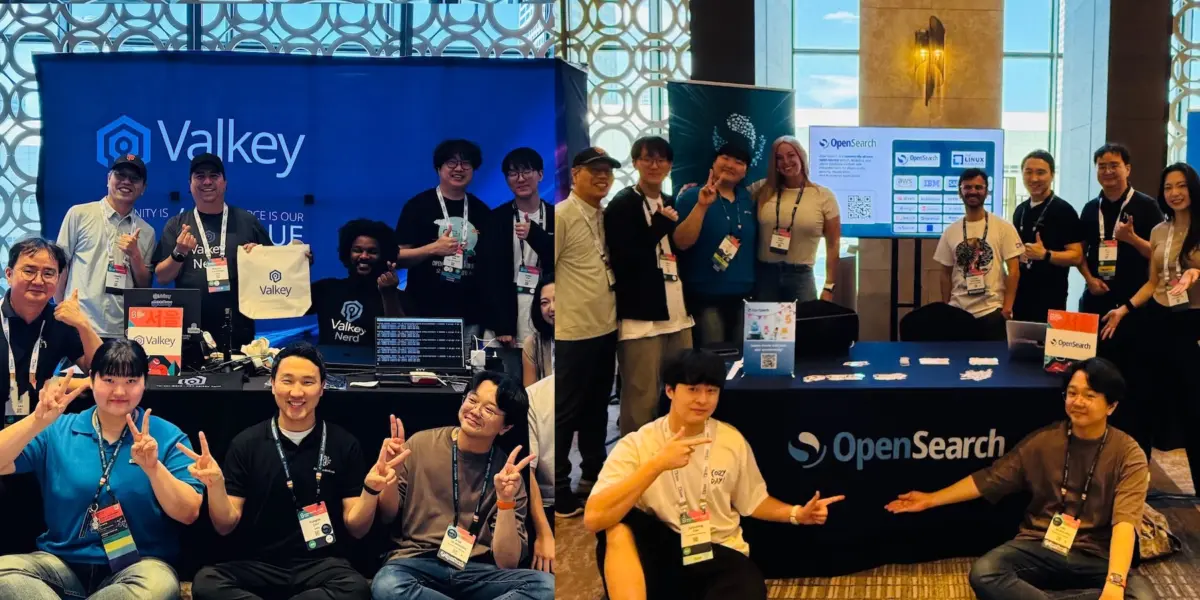
From the opening keynotes to the final breakout sessions, AWS engineers and open-source advocates maintained an active presence alongside Korean OpenSearch community leaders who volunteered at the shared AWS and community booths. These local leaders played a crucial role in onboarding new developers, demonstrating advanced implementation strategies, and gathering direct feedback from production users.
A standout moment of the week was the dedicated OpenSearch Project Seoul User Group Meetup, held in conjunction with the summit. This event provided a relaxed yet deeply technical environment where engineers shared war stories, architectural patterns, and migration pathways. Discussions frequently centered around how organizations are managing massive influxes of unstructured telemetry data and how real-time caching layers are transforming high-concurrency microservices architectures.
The Technical Spotlight: OpenSearch 3.7 and Valkey 9.1
The timing of the summits aligned perfectly with major engineering milestones for both OpenSearch and Valkey, offering attendees first-hand insights into the engineering decisions behind recent major version releases:
- June 9, 2026: The release of OpenSearch 3.7, introducing unified observability workflows and monumental leaps in vector retrieval speeds.
- July 30, 2026: The formal availability of OpenSearch 3.7 on Amazon OpenSearch Service, bringing advanced vector performance and enhanced Query Insights to managed cloud customers.
- May 19, 2026: The launch of Valkey 9.1, featuring a complete redesign of the input/output (I/O) threading model to maximize CPU efficiency and throughput.
- June 23, 2026: The integration of Valkey 9.1 into Amazon ElastiCache, delivering enterprise-ready multi-tenancy and optimized memory footprints for node-based clusters.
Supporting Context & Metrics: Under the Hood of OpenSearch 3.7 and Valkey 9.1
To fully appreciate the excitement at Open Source Summit Korea 2026, one must examine the hard metrics and architectural shifts driving these technologies forward. Both projects have achieved critical performance thresholds that redefine what is possible in distributed search and ultra-low-latency data storage.
OpenSearch 3.7: Unified Observability and High-Speed Vector Retrieval
OpenSearch has matured into an enterprise-grade search and observability suite capable of ingesting petabytes of unstructured data. With the release of version 3.7, the project addresses two of the most pressing challenges facing modern platform engineering teams: fragmented monitoring tools and the escalating computational demands of vector search workloads associated with generative AI applications.
- Unified Observability Interface: Version 3.7 introduces advanced tools designed to query, alert, and track Service Level Objectives (SLOs) across logs, traces, and metrics through a single, cohesive pane of glass. By breaking down the traditional silos between metric dashboards and log analysis tools, engineers can isolate root causes during incidents significantly faster.
- Accelerated Vector Search Performance: As organizations increasingly adopt Retrieval-Augmented Generation (RAG) and semantic search patterns, vector retrieval speed has become a primary bottleneck. OpenSearch 3.7 delivers vector search performance up to 5.5x faster than previous iterations.
- Managed Integration: Since July 30, 2026, AWS customers have been able to leverage these exact performance gains directly through Amazon OpenSearch Service. Beyond raw vector speed, the managed service update incorporates enhanced search relevance algorithms and robust Query Insights, giving database administrators deeper visibility into costly or inefficient query patterns.
Valkey 9.1: Redefining High-Performance Key-Value Datastores
As an open-source, high-performance key-value datastore, Valkey has established itself as a foundational building block for caching, real-time message queuing, and primary data storage. The release of Valkey 9.1 represents a massive leap forward in resource optimization and concurrency management.
- Redesigned I/O Threading Model: Valkey 9.1 introduces a fundamentally re-architected I/O threading model that optimizes how network requests and responses are handled across multi-core processors. This architectural enhancement yields up to a 17% increase in overall throughput, allowing existing hardware configurations to handle substantially higher request volumes without degrading latency profiles.
- Aggressive Memory Optimization: Memory efficiency is paramount in high-throughput caching layers where gigabytes—or terabytes—of RAM translate directly into infrastructure costs. Valkey 9.1 achieves up to a 20% reduction in memory usage for strings under 128 bytes. By tightening internal data structures and reducing memory overhead for small keys, applications storing massive dictionaries, session tokens, or metadata caches see immediate density improvements.
- Enterprise-Ready Deployment via Amazon ElastiCache: Available in Amazon ElastiCache since June 23, 2026, Valkey 9.1 brings these performance dividends to node-based cloud clusters. The integration provides enhanced security, granular access control, and robust multi-tenancy support, making it ideal for large-scale enterprise environments where strict workload isolation is mandatory.
Official Statements and Industry Perspectives
The collaborative atmosphere at Open Source Summit Korea 2026 underscored the symbiotic relationship between hyperscale cloud providers and upstream open-source communities. Industry leaders at the event emphasized that the sustainability of modern software relies on transparent governance, active code contributions, and rigorous real-world testing.
AWS representatives reiterated that their participation in events like the Open Source Summit and MCP DevSummit Seoul is driven by a philosophy of active stewardship. Rather than simply packaging upstream software for commercial consumption, AWS engineering teams work hand-in-hand with community maintainers to debug performance bottlenecks, contribute feature patches, and ensure long-term project health.

Community leaders from the Korean OpenSearch user group echoed this sentiment, noting that localized meetups and direct access to core contributors foster a unique cycle of innovation. Feedback gathered from developers in Seoul frequently makes its way back into upstream GitHub repositories, ensuring that global software releases address the day-to-day pain points of engineers operating at scale in diverse geographic markets.
Future Outlook: The Road Ahead for Open-Source Communities
As Open Source Summit Korea 2026 draws to a close, the momentum within the OpenSearch and Valkey communities shows no signs of slowing down. The rapid iteration cycles of both projects point toward an aggressive roadmap focused on AI integration, automated operational intelligence, and extreme hardware utilization.
For developers and cloud architects looking to stay ahead of the curve, engagement does not have to end in Seoul. AWS contributors will continue making appearances at upcoming community-led events across the globe:
- OpenSearch Community Events: Regular meetups, virtual workshops, and hackathons are continuously scheduled via the official OpenSearch Events portal.
- Valkey Community Gatherings: Developers interested in contributing to or learning more about core datastore optimizations can track upcoming gatherings through the Valkey Events page.
Staying Connected with the AWS Builder Ecosystem
Navigating the modern cloud-native ecosystem requires continuous learning and peer collaboration. Developers are encouraged to explore upcoming educational channels and community touchpoints:
- Keep an eye on the official What’s New with AWS page for real-time announcements regarding service updates and feature rollouts.
- Browse the AWS Blogs for deep technical architectural guides written by engineers and solution architects.
- Participate in in-person and virtual gatherings, including AWS Summits, AWS Community Days, and specialized startup events listed on the AWS Events Hub.
- Join the AWS Builder Center to connect with global builders, share production-tested solutions, and access comprehensive educational content tailored to modern software development.
As open-source software continues to power the backbone of digital transformation, the collaborative synergy demonstrated at Seoul 2026 proves that community-driven innovation remains the most powerful engine in the technology sector. Be sure to check back next Monday for another comprehensive Weekly Roundup of AWS and open-source news.