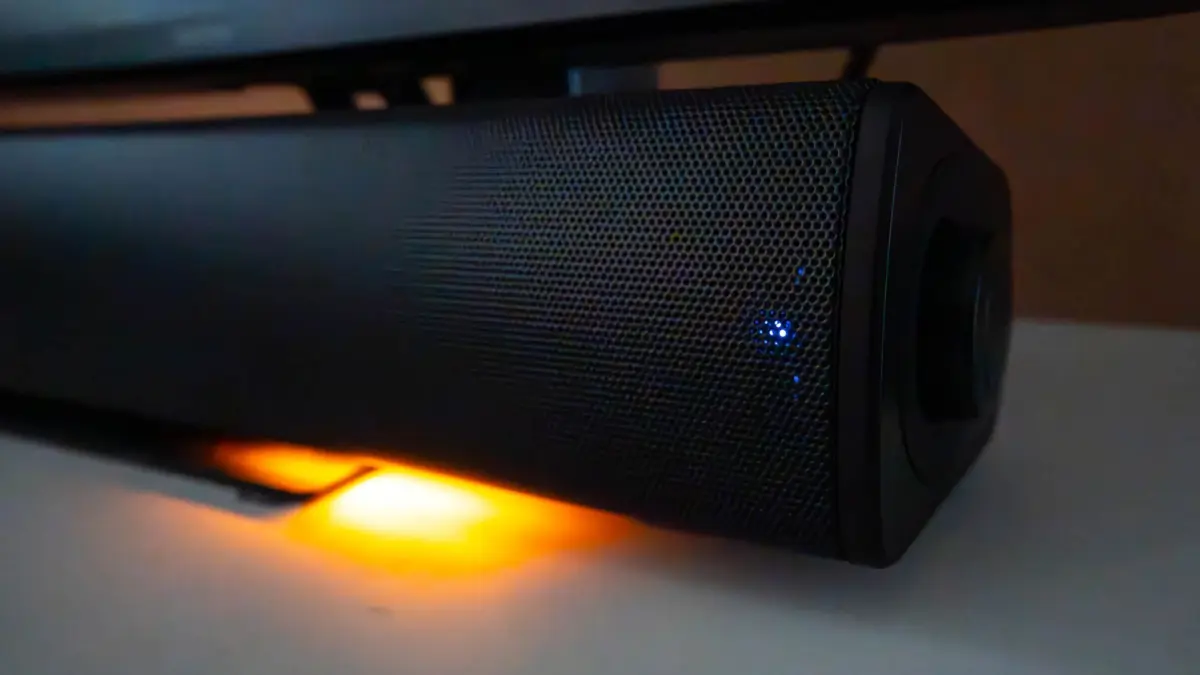
Executive Overview
As the landscape of personal computing and gaming hardware continues to mature, the peripherals market increasingly caters to a consumer base seeking high-performance aesthetics without a prohibitive financial barrier. In 2026, the proliferation of compact, feature-rich desktop audio solutions has transformed how gamers and remote professionals optimize their workspaces. Among the standout budget contenders is the Creative Sound Blaster GS3, a compact gaming soundbar currently retailing at an accessible AU$63.
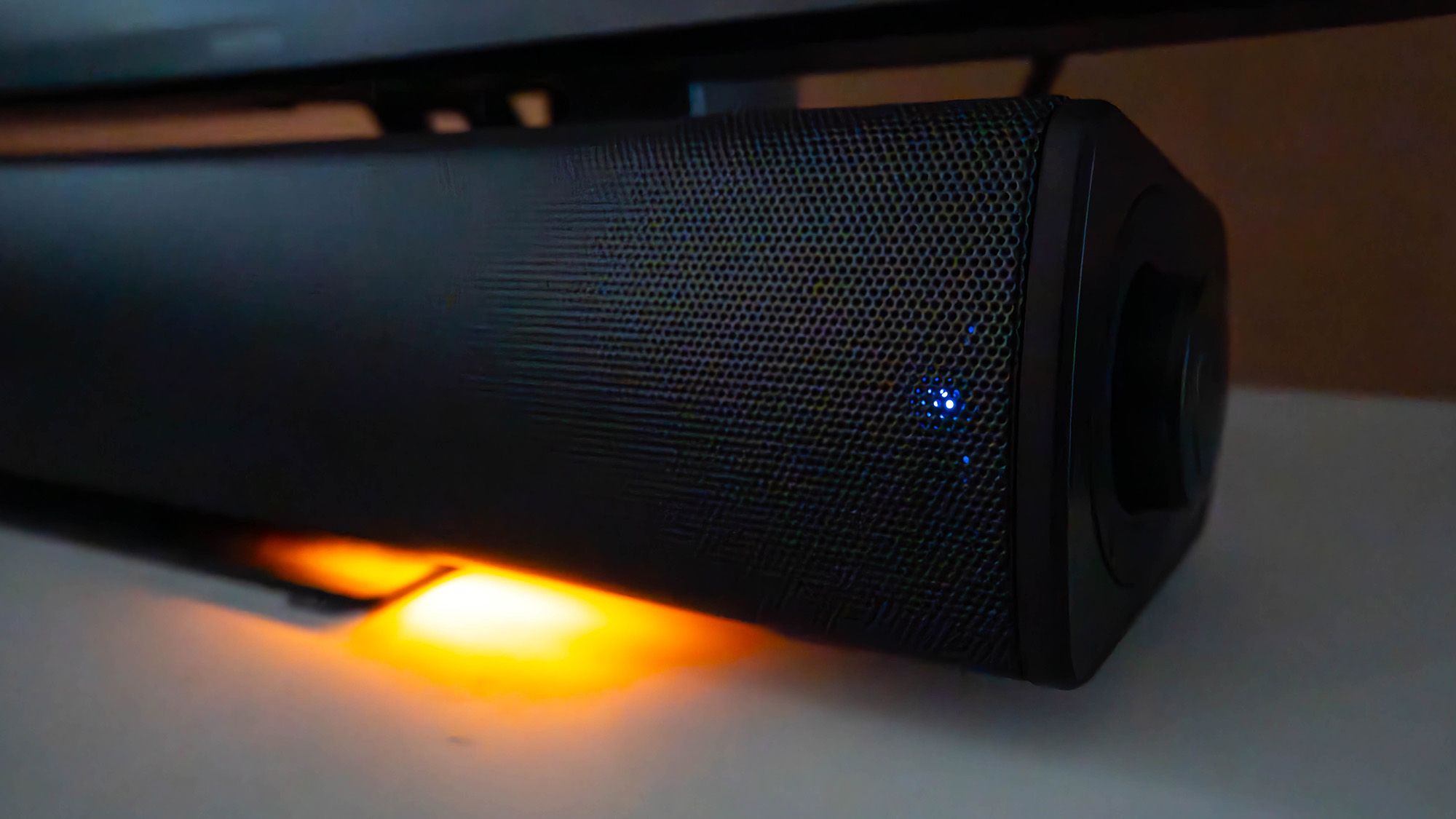
Audio fidelity on personal computers has historically been divided into two camps: bulky, multi-speaker surround-sound systems that demand significant desk real estate, and low-profile internal monitor speakers that often lack depth, clarity, and volume. The Sound Blaster GS3 attempts to bridge this gap. Measuring a modest 41 centimeters in length, it is specifically engineered to slip effortlessly beneath modern high-refresh-rate gaming displays. Yet, its appeal extends beyond mere physical footprint. Equipped with customizable RGB lighting strips, versatile modern connectivity options including USB-C and Bluetooth, and surprising acoustic delivery for its price point, the GS3 represents a broader industry shift: the democratization of premium desk aesthetics and functional audio performance.
This report provides an exhaustive examination of the Creative Sound Blaster GS3, exploring its design philosophy, audio capabilities, market positioning, and where it sits alongside alternative budget solutions like the Creative Pebble Pro. Through expert analysis and hardware metrics, we evaluate whether ultra-affordable desktop audio can genuinely satisfy the demands of contemporary PC users.
Detailed Chronology: The Rise of Compact Desktop Soundbars
The evolution of the PC soundbar has been a gradual process, shaped heavily by the minimalist desk design trends that accelerated during the remote-work boom of the early 2020s and solidified by the gaming setup culture of mid-decade.
Phase One: The Monopolization of Bulk (Pre-2020)
For decades, PC audio was synonymous with the 2.1 speaker configuration—two satellite speakers flanking a monitor, accompanied by a bulky subwoofer relegated to the floor. While effective at producing deep bass and spatial separation, these systems presented a logistical nightmare for users working with limited desk space, cable management challenges, and aesthetic preferences favoring clean, uncluttered surfaces.
Phase Two: The Soundbar Pivot (2021–2023)
As television soundbars successfully disrupted home theater audio by offering streamlined form factors, peripheral manufacturers began experimenting with downscaled versions for desktop environments. Early iterations often suffered from compromised sound profiles, struggling to separate high frequencies from muddied mid-ranges within constrained acoustic chambers. Connectivity was frequently limited to legacy 3.5mm auxiliary jacks, lagging behind the wireless integration expected by modern consumers.
Phase Three: The Smart, Aesthetic Integration (2024–Present)
Entering 2024 and moving toward 2026, manufacturers such as Creative Technology refined the formula. The introduction of units like the Sound Blaster GS3 marked a turning point. By integrating USB-C digital audio pipelines, Bluetooth 5.0+ wireless protocols, and programmable RGB lighting, companies transformed the PC soundbar from a utilitarian compromise into a centerpiece of desktop customization. Reviewers and consumers alike noted that these second- and third-generation compact bars punched well above their weight, offering plug-and-play simplicity and acoustic engineering that rivaled older, more expensive mid-tier desktop speakers.
Supporting Context & Metrics: Anatomy of the Creative Sound Blaster GS3
To understand why the Creative Sound Blaster GS3 has garnered attention in hardware circles, it is necessary to examine its technical specifications, physical dimensions, and real-world performance metrics.
Hardware Specifications and Design
- Dimensions: 410 mm (Length) – perfectly scaled to fit between the standard legs of 24-inch to 27-inch monitors.
- Connectivity: USB-C (digital audio and power), Bluetooth wireless streaming, and a traditional 3.5mm AUX-in socket for legacy devices.
- Aesthetics: Integrated RGB lighting strip along the base, offering customizable visual flair that syncs with modern gaming rig setups.
- Pricing: Aggressively positioned at approximately AU$63, making it one of the most cost-effective branded audio upgrades on the market.
Acoustic Performance Metrics
Evaluating a budget audio device requires managing expectations regarding frequency response, distortion limits, and spatial imaging. Hardware reviews highlight that while the GS3 is not designed for audiophiles seeking clinical precision or deep sub-bass rumble, it vastly outperforms built-in monitor speakers and older budget setups.
Industry experts have praised its clarity in dialogue-heavy environments—such as tactical shooters where directional footsteps and communication are paramount—as well as its surprisingly robust mid-range output. However, physical constraints mean that low-end bass frequencies taper off earlier than they would in systems equipped with dedicated subwoofers or larger acoustic chambers.
The Alternative: Creative Pebble Pro
For users who remain unconvinced by the soundbar format, the desktop speaker market offers parallel budget innovations. The Creative Pebble Pro, widely recognized as a benchmark in affordable PC audio, recently saw price adjustments dropping it to approximately AU$72.95 (down from its standard RRP of AU$99.95).
While the Pebble Pro series excels in near-field audio clarity and distinct stereo separation due to its angled satellite design, testing indicates it shares a similar limitation with the GS3: an inability to push thunderous bass without distortion at high volumes. Consumers are thus faced with a stylistic and functional choice: the low-profile, monitor-hugging soundbar (GS3) or the dynamic, dual-satellite aesthetic (Pebble Pro).
Official Statements and Industry Insights
Hardware analysts and audio engineers have noted a distinct transition in consumer purchasing behavior over recent years, shifting away from expensive, over-engineered setups toward high-value, streamlined components.
Reflecting on the acoustic capabilities of the GS3 during hardware evaluations, tech reviewer Ian Evendon noted:
"The important thing about a soundbar isn’t the way it looks but the way it sounds, and for a speaker that costs so little the GS3 is surprisingly good."
This sentiment underscores a broader philosophy within the budget hardware segment: performance-per-dollar metrics now dictate market success. Manufacturers can no longer rely solely on flashy RGB lighting or aggressive gaming branding to move units; baseline functional competence is mandatory.
Furthermore, industry observers point out that the integration of versatile connectivity—specifically bypassing the traditional 3.5mm jack in favor of clean digital USB-C connections—reflects a maturing ecosystem. As fewer modern motherboards and laptops prioritize dedicated analog audio routing, peripheral designers must ensure seamless digital integration straight out of the box.
Future Outlook: The Trajectory of Budget Desktop Audio
As we look toward the remainder of the decade, several trends are poised to shape the desktop audio landscape:
- AI-Driven Audio Processing: Expect budget and mid-tier audio devices to increasingly incorporate software-based enhancements, such as ambient noise cancellation for microphones and AI-optimized EQ profiles tailored dynamically for gaming, movie watching, and voice communication.
- Further Miniaturization and Power Efficiency: With USB-C power delivery becoming ubiquitous, future iterations of desktop soundbars may demand even lower wattage while producing higher decibel outputs through advanced driver magnetics and passive radiator designs.
- Ecosystem Harmonization: RGB lighting controls and audio settings will likely see tighter integration through centralized software suites, allowing budget peripherals to synchronize effortlessly with high-end motherboards, mice, and keyboards.
The Creative Sound Blaster GS3 demonstrates that outfitting a modern gaming or productivity station with respectable audio does not require an extravagant financial commitment. By combining a space-saving chassis, modern connectivity, and reliable acoustic tuning for roughly AU$63, it sets a high benchmark for what consumers should expect from entry-level peripheral investments in 2026 and beyond.