Executive Overview
New York Fashion Week has long served as a theater for the juxtaposition of high ambition and street-level grit, but few designers bridge these disparate worlds with the visceral, deeply personal authority of Raul Lopez. For his Spring/Summer 2027 collection—entitled Christopher Street Columbus—the visionary founder of Luar delivered more than a seasonal runway presentation; he executed a masterclass in cultural excavation. Staged against the monumental backdrop of the Unisphere in Flushing Meadows-Corona Park, Queens, the show stood as a triumphant homecoming for a designer who has continually challenged the parameters of American luxury by injecting it with the raw, uncompromising energy of New York’s subcultures.
At the heart of Christopher Street Columbus lies a complex tension between two ideological and geographical poles: Christopher Street, the historic queer epicenter of Manhattan where Lopez came of age, and Christopher Columbus, the controversial historical figure whose voyages initiated an era of colonization and empire. For Lopez, a Dominican-American designer who has consistently interrogated the structural inequities of history and fashion, this collection was an exploration of inheritances both lived and imposed. The resulting garments—a breathtaking fusion of 16th-century imperial silhouettes, punk subversion, and Caribbean agricultural history—offered an intricate meditation on survival, memory, and the enduring resilience of the marginalized.
This report provides a comprehensive examination of Raul Lopez’s SS27 presentation for Luar. By dissecting the conceptual architecture of the collection, tracing its chronological development from moodboard to runway, contextualizing its cultural and economic metrics, and reviewing the designer’s personal reflections, this article explores how Luar continues to redefine the cutting edge of contemporary fashion.
Detailed Chronology: From the Flatiron Sidewalk to the Flushing Unisphere
The Genesis: The Moodboard and the Accidental Muse
The intellectual journey of Christopher Street Columbus began weeks before the runway lights flickered on in Queens. During an exclusive preview ahead of the show, Lopez revealed the foundational components of his moodboard. Pinned side-by-side were two seemingly incongruous images: an archival portrait of Christopher Columbus and a candid photograph of an older gentleman whom Lopez had recently spotted walking through Manhattan’s Flatiron District.
The anonymous gentleman, entirely unaware that he had become the muse for one of New York’s most influential designers, embodied a distinct, unbothered urban elegance that captivated Lopez. "I was like, ‘This is it,’" Lopez recalled, noting the exact moment the conceptual framework of the collection clicked into place. "I knew I was onto something."
This juxtaposition of the historical and the mundane set the tone for a collection that continuously collapses time. By placing a global historical conqueror next to an ordinary New Yorker navigating a midtown sidewalk, Lopez established a foundational thesis for the season: history is not a distant abstraction, but a living, breathing force that manifests in the everyday rhythms of the city.
The Duality of the Two Christophers
In the official show notes, Lopez articulated the ideological crucible from which the collection emerged. "This collection sits in the tension between those two inheritances: the street and the empire. The lived and the imposed," he wrote.
The first Christopher—Christopher Street—represents the crucible of Lopez’s youth. As a young queer man of color navigating New York City in the late 20th century, Christopher Street was a sanctuary of self-discovery, yet it was also a space where he often felt an acute sense of displacement. He did not entirely fit in with the established queer aristocracy of downtown, nor did he feel at home in his own immigrant neighborhood.
The second Christopher—Christopher Columbus—represents the weight of colonial history. As a Dominican designer, Lopez views Columbus through a critical, unvarnished lens. To Lopez, the name of the navigator represents the inception of a historical narrative that Dominican people "did not author." By weaving these two figures into a single sartorial dialogue, Lopez transformed the runway into a space of historical reckoning, examining how the scars of empire continue to inform the lived realities of contemporary urban minorities.
The Narrative Concept: The Immigrant Vampires of New York
To bridge these disparate historical threads, Lopez conjured a fantastical narrative framework: imagine a coven of vampires who arrived on the ships with Christopher Columbus, survived the centuries, integrated into New York’s educational system by attending high schools in Queens, hung out in downtown Manhattan, and continue to walk the asphalt of the five boroughs today.
This conceptual conceit hits remarkably close to home for the designer, who is an alumnus of Flushing High School. "Sometimes I’m like, ‘Am I a vampire?’" Lopez mused backstage. "Because why do I remember and think so much of that era? It’s kind of weird."
Growing up, Lopez used clothing as an armor and a provocation. When he felt alienated on Christopher Street and in his own neighborhood, he curated a visual identity designed to challenge, discomfit, and ultimately reclaim power. "I figured out a way to dress myself to provoke people, make people uncomfortable and reclaim that too," he explained. "Like, ‘Oh, so you think I’m crazy?’"
The Runway Presentation at the Unisphere
If the models in Christopher Street Columbus were indeed historical vampires, the SS27 show was their long-awaited homecoming. Lopez deliberately chose the Unisphere in Flushing Meadows-Corona Park as the venue—an iconic, mid-century architectural monument situated just stone’s throw from his alma mater.
For years, Lopez had attempted to secure the permits and alignment necessary to stage a show at this historic Queens landmark. "I think it was just the universe waiting for this collection," he reflected. Surrounded by the monumental steel representation of planet Earth, the presentation felt cosmic, grounding a deeply personal narrative within a universally recognizable global landscape.
Supporting Context & Metrics: Crafting the Collection
Materiality and Silhouette: A Collision of Eras
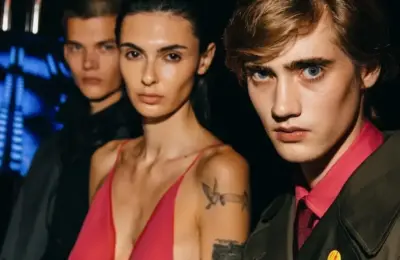
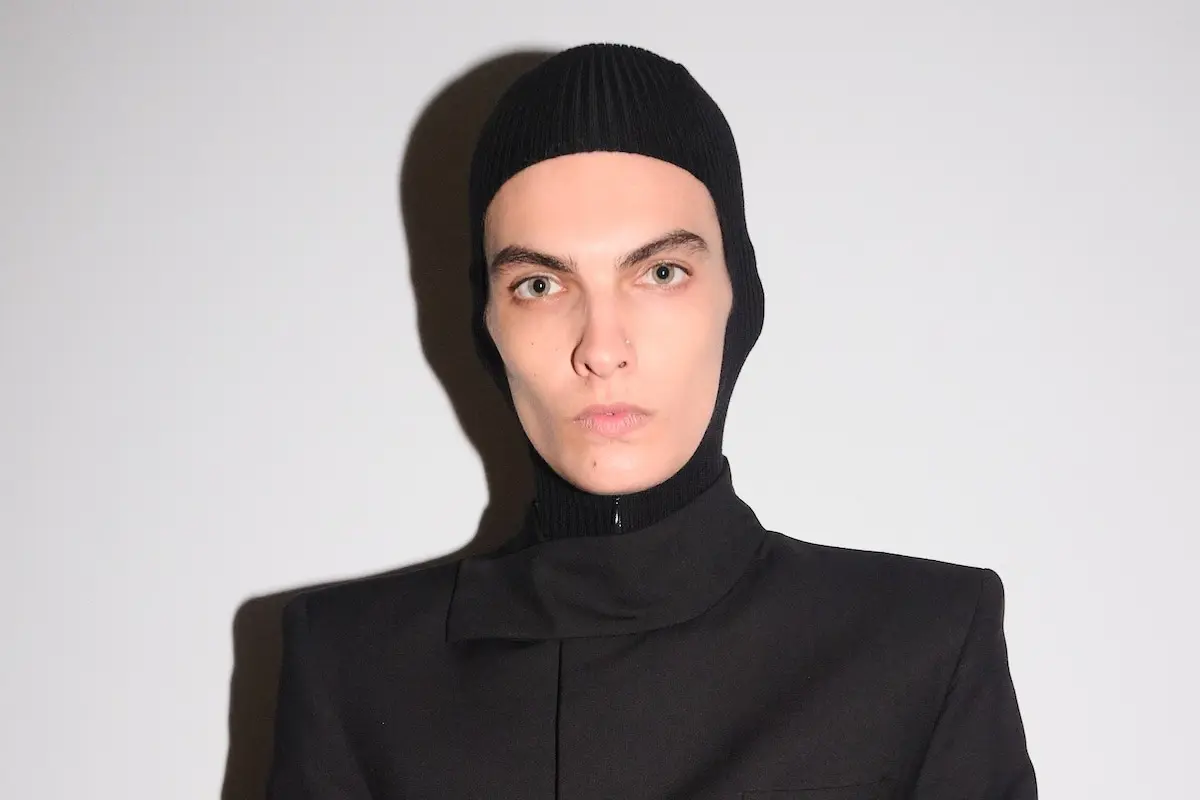
On the runway, the abstract tension between empire and street manifested in a rich, multi-layered material vocabulary. Lopez orchestrated a masterclass in stylistic mashups, juxtaposing the raw aggression of aged leather biker jackets and punk hardware with the opulent, structured grandeur of 15th- and 16th-century European court attire.
Key garments included:
- Historical Tailoring & Bloomer Pants: Exaggerated proportions that nodded to the Renaissance era, re-engineered with modern tailoring techniques that emphasized fluidity and structural defiance.
- Flamboyant Lace Ruffle Sleeves: Dramatic, voluminous cuffs that cascaded from structured outerwear, offering a theatrical counterpoint to utilitarian streetwear staples.
- Historical Feathered Hats: Regal, sweeping headwear that commanded the runway, bridging the aesthetic worlds of colonial explorers and modern avant-garde stylists.
The Cacao Economy: Indigenous History Woven into Fabric
Beyond European silhouettes and punk subculture, the collection paid deep homage to Dominican heritage through sophisticated references to cacao—the agricultural backbone of the Dominican Republic’s history.
Lopez incorporated a striking cacao silk print across several standout pieces. Most notably, the collection featured a "rotted cacao" coat, an artisanal masterpiece born from Lopez’s historical research into jacquard cacao beans. Historically, cacao beans were utilized as a sophisticated form of currency within Mesoamerican and Caribbean trade economies. By translating the texture and visual degradation of "rotted" cacao into luxury outerwear, Lopez created a poignant metaphor for economic systems, colonial extraction, and the enduring value of indigenous resources.
Brand Trajectory and Market Impact
Luar’s SS27 presentation arrives at a critical juncture in the brand’s commercial and cultural trajectory. Over the past several seasons, Raul Lopez has transformed Luar from an underground cult favorite into a powerhouse of American luxury, anchored by the ubiquitous, viral Ana bag and a critically acclaimed ready-to-wear program that earned him top honors at the CFDA Fashion Awards.
The choice of Flushing Meadows-Corona Park for the SS27 show underscores a broader industry metric: the decentralization of New York Fashion Week. By moving away from traditional Manhattan installations and anchoring his narrative in the outer boroughs, Lopez is actively expanding the geographic boundaries of high fashion. This populist yet deeply intellectual approach continues to drive immense organic digital engagement, cementing Luar’s status as a darling of both the Gen-Z consumer base and institutional fashion critics.
Official Statements & Design Philosophy
The philosophical core of Christopher Street Columbus is best understood through the direct words of its creator. Raul Lopez has consistently utilized his platform not merely to sell garments, but to articulate a distinct sociopolitical perspective on modern luxury.
Reflecting on the psychological genesis of his design process, Lopez emphasized the necessity of provocation as a tool for survival and self-authorship:
"I figured out a way to dress myself to provoke people, make people uncomfortable and reclaim that too. Like, ‘Oh, so you think I’m crazy?’"
Addressing the historical dichotomy that inspired the collection’s title and thematic weight, Lopez detailed in his show notes:
"This collection sits in the tension between those two inheritances: the street and the empire. The lived and the imposed."
Speaking on the emotional resonance of staging the show in his home borough of Queens, Lopez shared his sense of divine and cosmic timing:
"I think it was just the universe waiting for this collection. I’m so excited to give everyone the world."
Future Outlook: The Evolution of Luar
As Raul Lopez looks beyond the triumphs of his SS27 presentation, the fashion industry is left to ponder the next evolution of the Luar brand. Christopher Street Columbus has established a new high-water mark for the designer, proving that runway fashion can successfully marry rigorous historical critique with raw, street-level autobiography.
Looking forward, several key trajectories define Luar’s future outlook:
- Geographic Expansion of NYFW: By successfully staging a major, critically acclaimed international fashion week presentation in Flushing Meadows-Corona Park, Lopez has blazed a trail for other designers to explore outer-borough narratives, permanently altering the spatial geography of New York Fashion Week.
- Deepening Cultural Archives: The integration of Dominican agricultural history—specifically the cacao currency motifs—signals a shift toward deeper, more research-intensive explorations of Caribbean and indigenous histories within Lopez’s future ready-to-wear collections.
- The Intersection of Luxury and Narrative: As Luar scales its global retail footprint, the brand’s ability to maintain its punk ethos while engaging with high-concept historical themes ensures its continued relevance among consumers who demand intellectual authenticity from their luxury purchases.
In sum, Christopher Street Columbus was not just a display of clothes; it was an act of reclamation. Raul Lopez took the ghosts of empire, the asphalt of Christopher Street, and the memories of a Flushing childhood, weaving them into an unforgettable testament of survival and style. As the last vampire model disappeared beneath the steel arches of the Unisphere, one thing was definitively clear: Raul Lopez isn’t just remembering history—he is rewriting it.