In the upper echelons of contemporary fashion, portraiture, and fine-art photography, few names command the hypnotic fascination of Elizaveta Porodina. Renowned for images that exist at the perilous, intoxicating intersection of the subconscious and reality, Porodina has cultivated an aesthetic vocabulary that is instantly unmistakable. Her work is a fever-dream of vivid, psychedelic chromaticism, dripping with high-drama emotion and informed by the foundational tenets of early 20th-century surrealism.
Now, with the release of her landmark new monograph, Found Dreams (published by Prestel Publishing, edited alongside Nadine Barth), Porodina is offering the public an unfiltered portal into the phantasmagorical architecture of her mind. The book serves as a cumulative survey of her most transcendental projects over the past two decades—bringing together everything from high-profile editorial commissions featuring cultural titans like Zendaya, Ariana Grande, Paul Mescal, and Brad Pitt, to deeply personal explorations of bodily discomfort, femininity, mortality, and transformation.
Far from a simple retrospective, Found Dreams is a psychological document. It traces the trajectory of an artist who abandoned formal academic psychology to pursue a more visceral, unmediated form of human inquiry through a camera lens. In this exclusive interview and deep-dive review, we explore the origins of Porodina’s haunting visual universe, the philosophical underpinnings of her creative process, and the harrowing, dreamlike methodology that has cemented her status as one of the defining image-makers of the 21st century.
Detailed Chronology: From Moscow Slumber to Munich Artscapes and Global Acclaim
The Recurring Vision: The Violet Hillside
To understand Elizaveta Porodina’s photographic philosophy, one must journey back to her early childhood in Moscow, where the genesis of her entire artistic career took root. As a young girl, Porodina experienced a vivid, recurring dream that would permanently alter her psychological landscape.
In her sleep, she would find herself drawn to an identical, glittering violet hillside. Upon scaling its slopes, a hidden world would unfurl before her—a bizarre, spellbinding ecosystem populated by eerie, mutated beings, surreal animal hybrids, and human figures possessing piercing, luminous purple eyes.
"It had horrifying aspects, but strangely, it also felt like home," Porodina reflects, describing a sensation of profound familiarity, "Almost like somewhere I had lived before."
This duality—the friction between the terrifying and the deeply comforting—became the foundational cornerstone of her art. Ever since, Porodina has dedicated her life to capturing the essence of that childhood vision, walking a razor-thin tightrope between dreams and nightmares. According to the artist, every photograph she produces is anchored by five unyielding pillars: beauty, extravagance, eccentricity, softness, and an undercurrent of deliberate horror lurking just beneath the polished surface.
Relocation and the Turn to Psychology
At the age of 12, Porodina’s life underwent a seismic shift when she and her family relocated from Moscow to Munich, Germany. Thrust into a radically different cultural and physical environment, she began to earnestly discover and fall in love with the arts.
Yet, her fascination was never purely aesthetic; it was fundamentally tied to the inner workings of the human psyche. Intrigued by the complexities of human behavior, emotion, and subconscious processing, Porodina embarked on formal training in psychology in the mid-2000s.
However, theoretical frameworks and clinical observations eventually proved too restrictive for an imagination yearning for tactile manifestation. Porodina realized that the camera lens offered a far more potent, immediate instrument for exploring the human condition than textbooks or psychoanalytic discourse. Transitioning from theory to practice, she picked up a camera and began the arduous process of bringing her internal dreamscapes out into the waking world.
The Rise of a Fashion Iconoclast
Over the subsequent two decades, Porodina’s ascent through the ranks of international fashion and portrait photography has been meteoric. Her ability to infuse commercial and editorial spaces with high-concept surrealism caught the attention of the industry’s most prestigious magazines and creative directors.
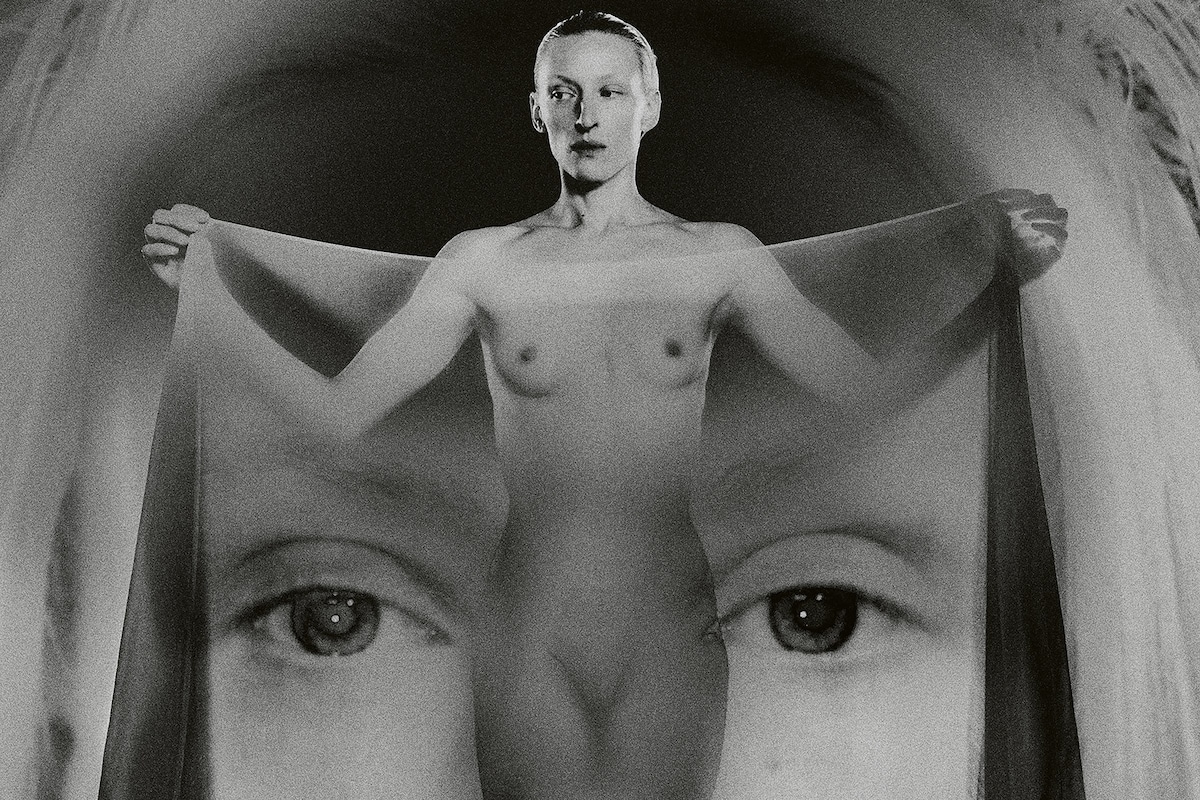
Her portfolio quickly expanded to include covers for the world’s leading style publications, while her subject list reads like a roll-call of contemporary cultural royalty. From capturing the brooding intensity of Paul Mescal and the cinematic gravitas of Brad Pitt to decoding the multifaceted pop stardom of Zendaya and Ariana Grande, Porodina’s sets are legendary for their collaborative energy and psychological depth. Rather than imposing a flat, one-dimensional glamor onto her subjects, she coaxes them into uncharted psychological territory, resulting in portraits that feel less like magazine spreads and more like windows into parallel dimensions.
Supporting Context & Metrics: The Surrealist Lineage and Macrocosmic Explorations
Influenced by the Mothers of Surrealism
Porodina’s visual language does not emerge from a vacuum. Her psychedelic, saturated, and destabilizing frames pay direct homage to the pioneering female surrealist artists of the 20th century—visionaries such as Méret Oppenheim, Leonora Carrington, Dora Maar, and Remedios Varo.
+-----------------------------------------------------------------+
                    PORODINA'S ARTISTIC PILLARS
+-----------------------+-----------------------------------------+
| Beauty                | Uncompromising aesthetic perfection     |
| Extravagance          | High-drama set design and styling       |
| Eccentricity          | Rejection of conventional norms         |
| Softness              | Emotional vulnerability and intimacy    |
| Deliberate Horror     | Unsettling undertones beneath the skin  |
+-----------------------+-----------------------------------------+
"I’m fascinated by their ability to make reality suddenly become unstable," Porodina notes of her historical inspirations. Like Carrington and Varo, Porodina treats reality not as a fixed parameter, but as a fluid, malleable construct ready to be fractured, bent, and reimagined through color and shadow.
The Macrocosmic Shift: Atmos and the Orchid Mantis
While Porodina has photographed some of the most famous faces on the planet, some of her most profound artistic breakthroughs have come from the unlikeliest of subjects. Discussing the personal milestones within her career, she highlights a transformative cover story for Atmos magazine, which required her to step away from human subjects entirely and venture into the world of macro-insect photography.
Tasked with capturing mantises, millipedes, bugs, and dragonflies, Porodina discovered an unexpected emotional resonance in the arthropod world. "I began noticing how incredibly individual they were—sassy, feisty, melancholic—and at times genuinely felt they were communicating with me through their body language," she recalls.
This intimate, cross-species connection resulted in a striking portrait of an orchid mantis, an image so powerful and haunting that it now graces the back cover of Found Dreams. For Porodina, the shoot blurred the lines between editorial fashion and natural history, proving that the uncanny, dreamlike quality she seeks is not exclusive to the human psyche, but embedded in the natural world itself.
Official Statements & Insights: An Exclusive Interview with Elizaveta Porodina
To mark the launch of Found Dreams, Porodina sat down to discuss the curation of her new book, her artistic philosophy, and her dream collaborators.
Let’s start at the beginning. Ariana Grande wrote the foreword for this book; what made her the natural choice for this?
Elizaveta Porodina: I increasingly believe that the person you become and the artist you become are inseparable. Meeting Ariana was incredibly inspiring in that sense. I saw someone with enormous discipline and kindness, who had transformed and grown while remaining an incredibly expansive artist. That combination of raw strength and power with kindness completely blew me away. Our collaborations have meant so much to me personally and artistically that asking her to write the foreword felt completely natural.
Why did it feel right to release this book now?
Elizaveta Porodina: For a long time, it didn’t. I felt I had opened doors into certain subjects—femininity, suffering, death, the strange experience and discomfort of living in a physical body—but had only touched their surfaces without exploring their shadow sides. I waited until I had this very instinctive feeling of: “okay, I got it all out.” Not that I had found definitive answers, but I had gone deeply enough that I could bring these images together and they would balance one another.
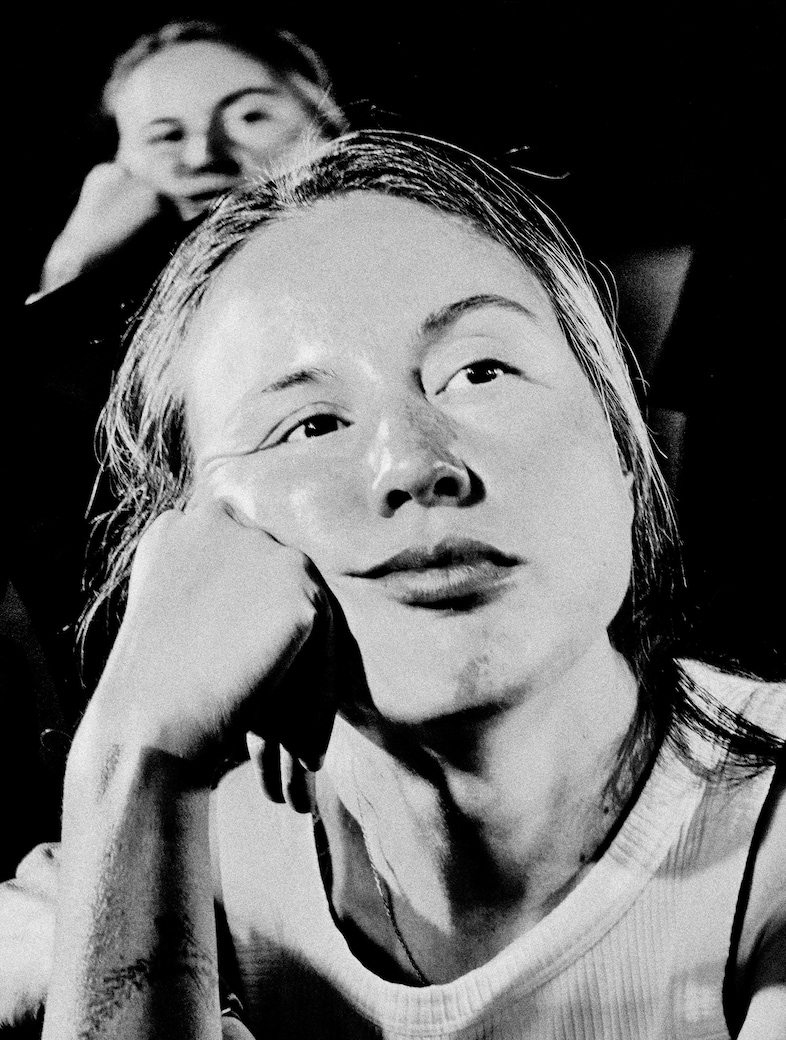
Of all the shoots featured in the book, is there one that means the most to you personally?
Elizaveta Porodina: Honestly, they’re all my babies. I don’t really differentiate between personal, commissioned, or editorial work—if I choose a project, I invest myself in it completely. But my Atmos cover story, photographing insects in macro, gave me something different. One of those images, an orchid mantis, is now on the back cover of the book. It was one of the most touching experiences I’ve had making pictures.
If you could own the original print of any photograph from history, which image would you choose?
Elizaveta Porodina: Josef Koudelka’s 1968 photograph from Prague with the wristwatch held in front of the almost empty city. I love it because it reminds me how important it is to play with the idea of time within my own storytelling. Photography already has such a strange relationship with time, but Koudelka makes time itself physically present inside the image. It brings me back to a question I find endlessly fascinating: what is time as we perceive it, and what could it potentially be?
Who’s someone you’ve never photographed that you’d like to?
Elizaveta Porodina: Emma Stone. I have a feeling we could find an incredible realm of play and experimentation together. I sense in her a willingness to play with reality, performance, and transformation, and I think we could get a lot out of challenging each other creatively. That’s always the most exciting collaboration to me—meeting somebody who might push me somewhere I haven’t been before, while I hopefully do the same for them.
Future Outlook: The Ongoing Evolution of a Visionary
As Found Dreams hits bookshelves worldwide via Prestel Publishing, Elizaveta Porodina stands at a fascinating juncture in her career. Having successfully synthesized her explorations of femininity, bodily vulnerability, mortality, and the subconscious into a definitive physical archive, the photographer is far from resting on her laurels.
The release of the monograph marks the closing of one monumental chapter and the opening of another. By capturing the full spectrum of her artistic evolution—from the visceral intensity of her celebrity portraits to the quiet, astonishing individuality of an orchid mantis—Porodina has proven that her artistic vision is boundless.
Looking forward, the prospect of future collaborations—whether it be realizing her ambition to photograph shape-shifting talents like Emma Stone or delving even deeper into the philosophical intersections of time, memory, and space inspired by masters like Koudelka—suggests that Porodina’s expedition into the human psyche is only accelerating.
For an art world increasingly dominated by homogenized digital aesthetics and algorithm-friendly uniformity, Elizaveta Porodina remains a vital, disruptive force. She reminds us that photography can be more than a mere record of reality; it can be a portal to the violet hillsides of our own hidden minds, where beauty and horror dance in eternal, mesmerizing equilibrium.
Elizaveta Porodina: Found Dreams, edited by Nadine Barth and Elizaveta Porodina, is published by Prestel Publishing © 2026 and is available now.