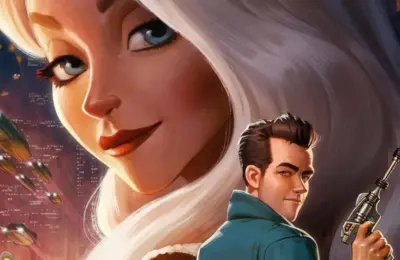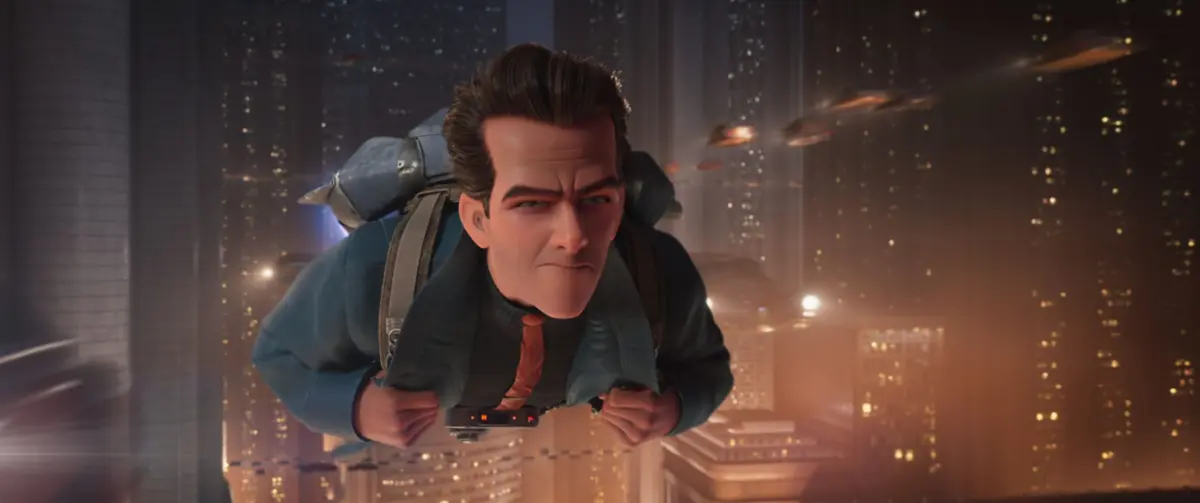
After a staggering three-decade gestation period, visionary director Brad Bird has finally brought his long-dreamed-of retrofuturist passion project to fruition. Released on Netflix under the Skydance Animation banner, Ray Gunn is far more than a long-awaited animated feature—it is a towering meta-polemic and a definitive cinematic statement. For the better part of his career, Bird has tirelessly challenged the American entertainment industry’s persistent assumption that animation is an exclusive domain for children. Ray Gunn serves as the ultimate realization of that philosophy: a sophisticated, unapologetically adult sci-fi noir thriller that merges the hard-boiled cynicism of classic Hollywood crime dramas with jaw-dropping, art deco futuristic spectacle.
Reunited with longtime collaborator John Lasseter at Skydance, Bird has crafted an immersive world that looks and feels like living concept art. Starring Sam Rockwell as the beleaguered private investigator Ray Gunn, Tom Waits as his one-eyed alien partner Eye-Ra, and Scarlett Johansson as the glamorous, dangerous diva Venus Nova, the film delivers on every promise of its decades-long development cycle. While it crams an ambitious array of socio-political themes, corporate critiques, and visual gags into its runtime, Ray Gunn succeeds as a masterclass in tone, composition, and kinetic action. It stands as a rare triumph: an adult animated adventure comedy that proves, once and for all, that the medium of animation knows no genre boundaries.
Detailed Chronology: A 30-Year Journey to the Screen
The story of Ray Gunn is an epic of resilience, creative persistence, and the grueling realities of Hollywood greenlighting processes. Its timeline maps out nearly the entire modern history of contemporary feature animation.
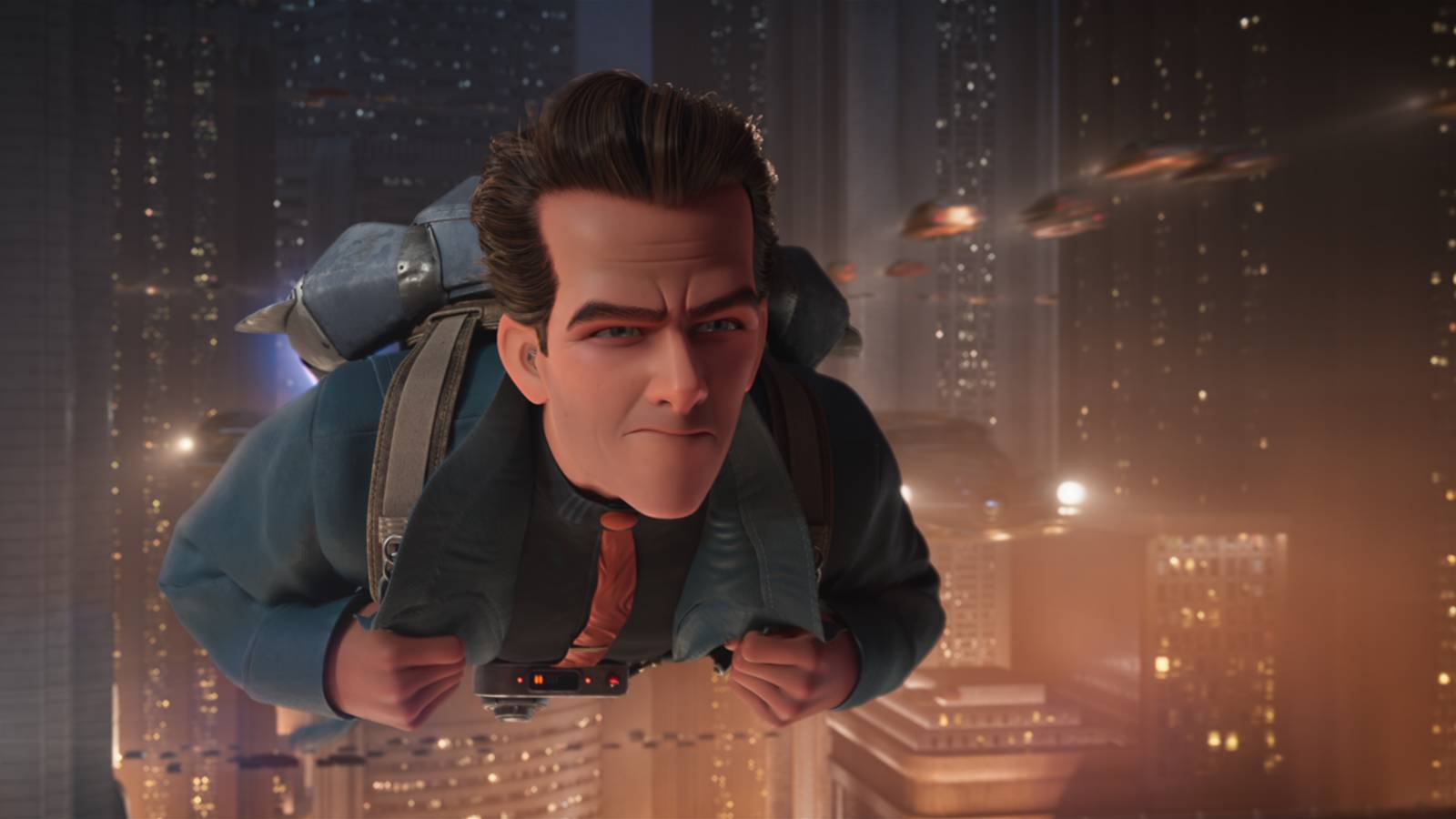
- The Pre-Millennium Conception (Mid-to-Late 1990s): Long before Brad Bird stepped into a Pixar boardroom or directed his historic feature film debut, The Iron Giant (1999), he was sketching out the contours of a gritty, retrofuturist detective story. Conceived initially in the 1990s, Ray Gunn was envisioned as a subversion of classic 1930s and 1940s detective tropes, filtered through an inventive sci-fi lens. However, the American film market of the era was wholly unprepared to finance a hard-boiled, adult-oriented animated feature, forcing the project onto the back burner as Bird pursued other ventures.
- The Pixar and Live-Action Interregnum (2000s–2010s): As Bird transitioned to Pixar, where he directed critical and commercial masterworks like The Incredibles (2004) and Ratatouille (2007), Ray Gunn remained a perpetual “what-if” project in his back pocket. Bird subsequently ventured into live-action filmmaking with blockbusters like Mission: Impossible – Ghost Protocol (2011) and Tomorrowland (2015), interspersed with his animated return via Incredibles 2 (2018). Through all these high-profile successes, the filmmaker frequently voiced his frustrations regarding Hollywood’s infantilization of animation, pointing out that global markets—particularly in France and Japan—readily embraced adult-themed animated art.
- The Skydance Partnership (2020s): The fortunes of Ray Gunn shifted when Skydance Animation, helmed by John Lasseter, stepped up to give Bird the creative freedom and technological resources necessary to bring his retrofuturist metropolis to life. Freed from traditional studio constraints regarding demographic pandering, production kicked into high gear, transforming three decades of concept art and narrative refinement into a tangible production.
- The 2026 Premiere: Released in October 2026 via Netflix, Ray Gunn finally arrived to critical acclaim. The finished film stands as a monument to perseverance, vindicating every argument Bird has made over a 30-year span regarding the limitless potential of adult animation.
Supporting Context & Metrics: World-Building, Design, and Talent
To understand the magnitude of Ray Gunn, one must examine the staggering technical and artistic metrics that define its production. Skydance Animation spared no expense in ensuring that the film’s visual fidelity matches—and occasionally surpasses—the industry benchmarks set by Pixar’s golden era.
The Architectural and Aesthetic Canvas
The film’s universe is a dizzying fusion of 1930s Hollywood romance, classic film noir, and expansive sci-fi futurism.
- Art Deco Megastructures: The metropolis in which Ray Gunn operates is a towering marvel of retrofuturist architecture, characterized by sweeping spires, neon-drenched alleyways, and sprawling multi-tiered transit systems.
- Technical Wizardry: Utilizing cutting-edge animation pipelines, the production design team packed every single frame with dense visual layers, Easter eggs, and intricate lighting reminiscent of Bird’s best work on The Simpsons and The Incredibles.
- Genre Fusion: The movie effortlessly transitions between high-stakes laser-beam shootouts, frantic single-shot rumbles, and quiet, melancholic moments of atmospheric gumshoe work.
The Voice Cast and Soundscape
The film’s auditory architecture is anchored by a legendary cast and an evocative musical score:

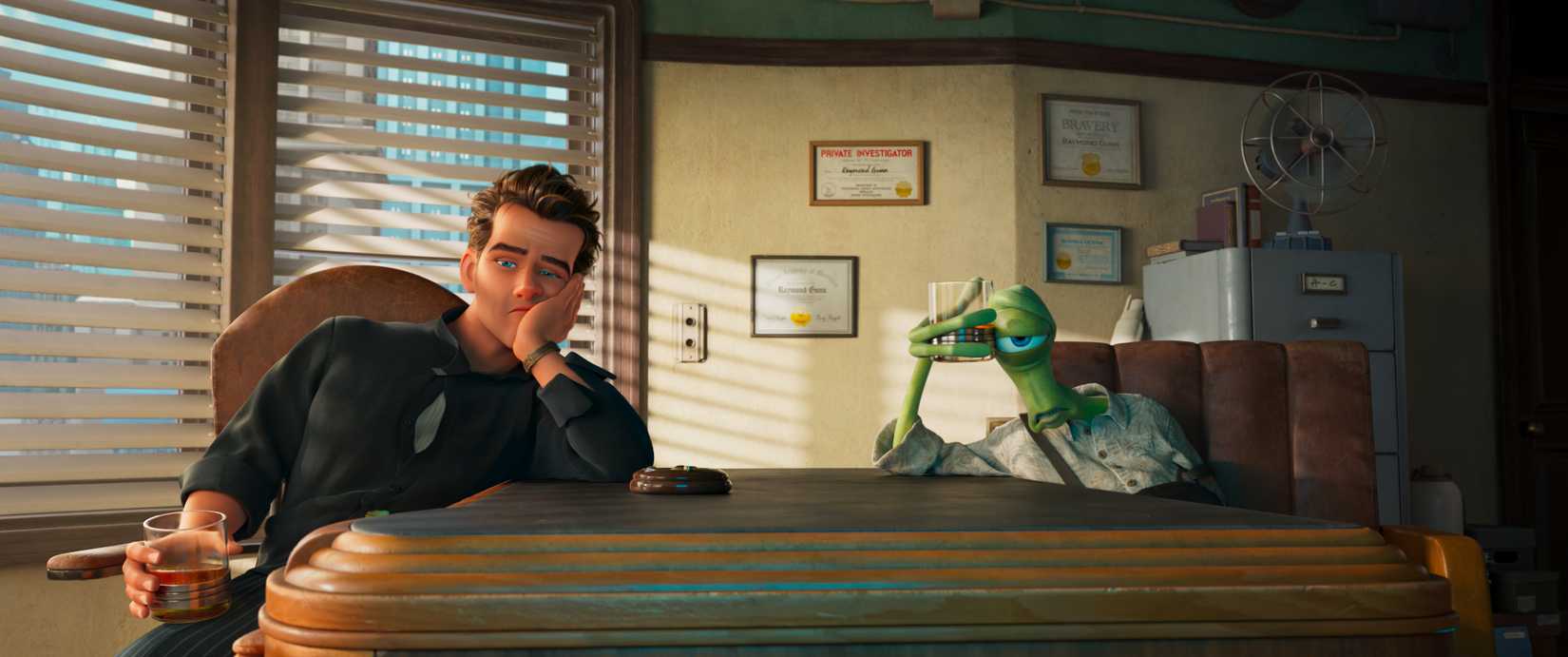
- Sam Rockwell as Ray Gunn: Rockwell infuses the titular detective with the verbal dexterity of Humphrey Bogart, combined with the physical exhaustion of a man who has taken one too many beatings for a client who won’t pay.
- Tom Waits as Eye-Ra: The gravelly-voiced singer-actor portrays Ray’s one-eyed, wall-crawling alien partner. Eye-Ra serves as the film’s unexpected moral compass, blending bizarre monocular anatomy with hard-earned street smarts.
- Scarlett Johansson as Venus Nova: Johansson delivers a sultry, magnetic performance as the glamorous diva at the center of the murder mystery, driving the film’s surprisingly tender romantic subplots.
- Michael Giacchino’s Score: The celebrated composer delivers a sweeping, authentic noir musical landscape that anchors the film not as a parody, but as a legitimate continuation of cinematic legacy.
Official Statements and Industry Philosophy
Brad Bird has never been shy about voicing his frustrations with the structural limitations placed upon American animation. His career-long campaign serves as the ideological bedrock of Ray Gunn.
"It is NOT a genre," Bird famously stated in 2004, reiterating a stance he has maintained for decades. "It is an art form that can do ANY genre."
Throughout the promotional cycle for Ray Gunn, industry analysts and critics have noted how the film functions as a living manifesto for this exact quote. Rather than engaging in defensive interviews or writing essays on the state of the medium, Bird chose to let the film speak for itself.
Skydance Animation executives noted during early press rollouts that Ray Gunn represents a vital gamble for Western animation: proving that studios can target adult audiences with high-budget, beautifully rendered original stories without diluting the narrative complexity to appease younger demographics. By refusing to compromise on its mature themes—ranging from racial tensions and economic disparity to the existential threat of artificial intelligence erasing human creativity—the creative team delivered a work that honors the foundational principles of adult storytelling.
Future Outlook: The Legacy of Ray Gunn in Modern Animation
As Ray Gunn establishes its footprint on streaming, its release prompts critical questions regarding the future distribution of animated cinema.
While the film has garnered widespread praise as one of the year’s finest cinematic achievements—seamlessly blending action, sci-fi thriller elements, comedy, and romance—critics have expressed a bittersweet sentiment regarding its distribution model. Because major studios remain hesitant to risk large theatrical windows on original, adult-oriented animated properties, Ray Gunn premieres primarily on home screens via Netflix rather than commanding the massive multiplex presence its breathtaking scale deserves.
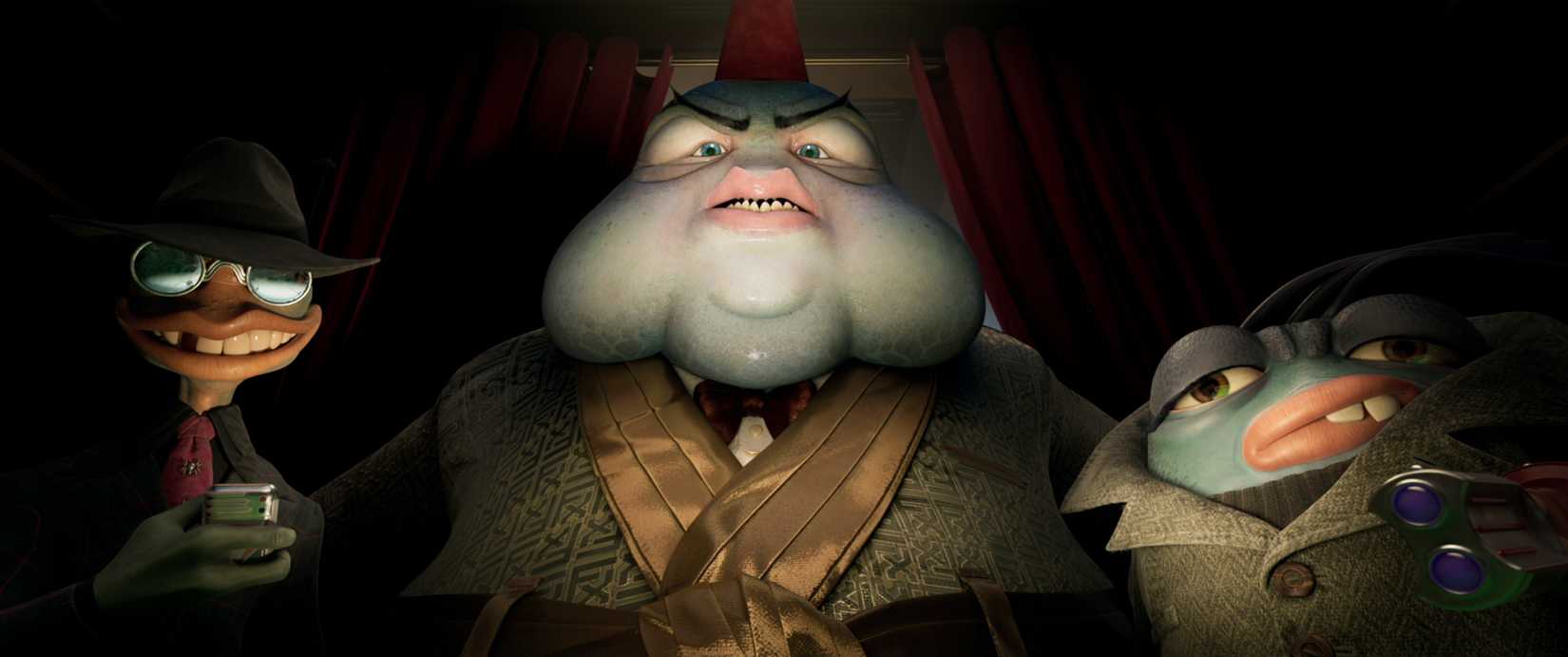
Nevertheless, the cultural impact of Ray Gunn cannot be understated. By successfully executing a high-concept, multi-layered adult animated feature that spent 30 years in development, Brad Bird has shattered psychological barriers within Hollywood. The film stands as a resounding proof-of-concept that will likely embolden a new generation of animators and writers to pitch sophisticated, boundary-pushing stories for mature audiences. For viewers willing to dim the lights and immerse themselves in its retrofuturist glow, Ray Gunn is not just a movie to be watched; it is a historic turning point for what animation is permitted to achieve.