As the rapid expansion of artificial intelligence and cloud computing reshapes landscapes across the globe, the data center industry has found itself facing an unprecedented public relations crisis. No longer content with operating quietly in remote industrial parks, massive server farms—fueled by surging demands for computing power—are increasingly encroaching on suburban and rural communities. This physical and energetic footprint has triggered a profound backlash. According to recent public opinion polling, roughly half of all Americans now view data centers as detrimental to local quality of life and environmental health, citing immense energy consumption, water usage, noise pollution, and the rapid construction of adjacent fossil-fuel power plants.
To combat this rising tide of skepticism and safeguard their "social license to operate," data center developers, trade associations, and Big Tech giants are employing a playbook historically utilized by industries like tobacco, fast food, and oil and gas. Rather than relying solely on traditional lobbying, economic development programs, and tax incentives, the industry has turned its focus toward a much more vulnerable and impressionable demographic: K-12 students.
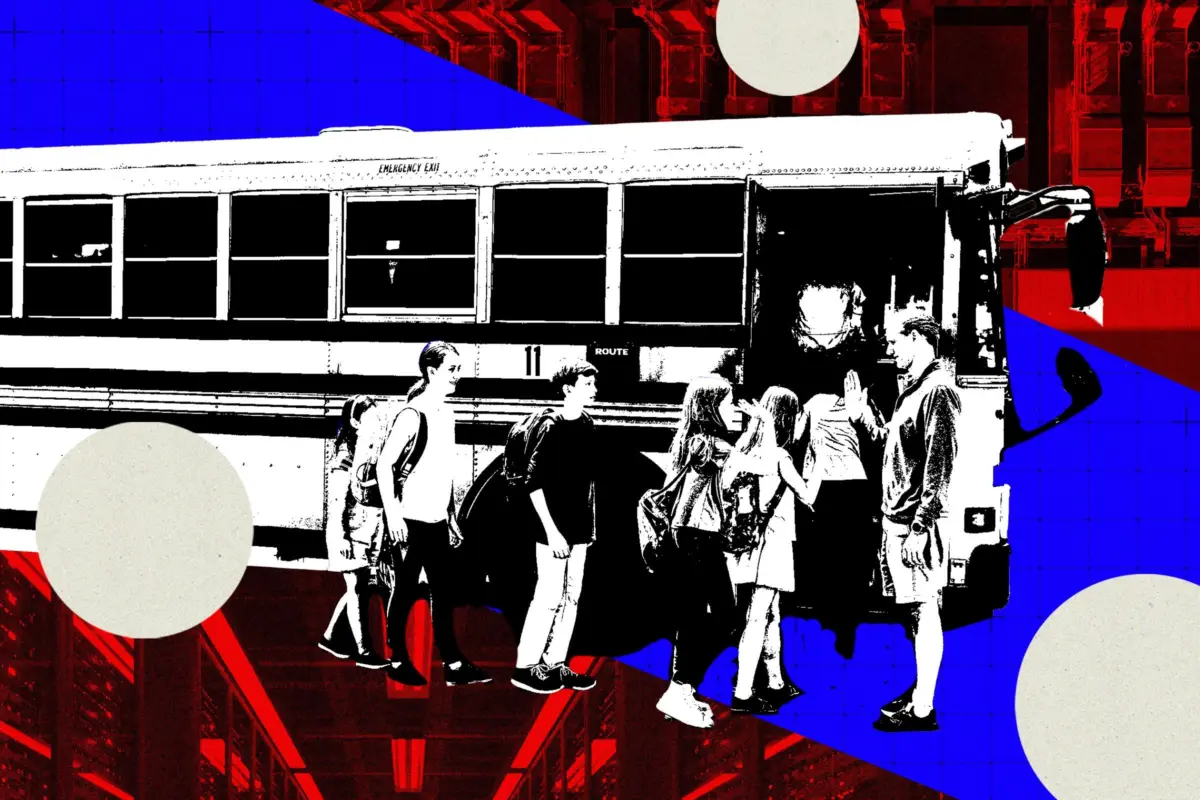
From children’s picture books featuring helpful honey badgers and robots to K-12 field trips, corporate-sponsored classroom activities, and memorial-day flag-making kits distributed in "Data Center Alley," the digital infrastructure sector is aggressively courting the youth. Industry advocates frame these initiatives as educational outreach and STEM pipeline development designed to "inspire the next generation of talent." However, education experts warn that these campaigns function as corporate propaganda, sidestepping democratic debate by embedding industry-friendly messaging directly into America’s classrooms.
Detailed Chronology of Industry Outreach
The integration of data center advocacy into school curricula and extracurricular programming has accelerated rapidly over the last several years, coordinated by a network of trade organizations, non-profits, and tech heavyweights.
Early Foundations and Conceptual Outreach
For years, the industry operated under the radar, viewing its operations as strictly technical matters far removed from public education. However, as local opposition mounted in major hubs like Northern Virginia and the Pacific Northwest, trade groups recognized the need to build long-term community goodwill.
Organizations like the nonprofit 7×24 Exchange International began championing data centers as "mission critical" infrastructure. To normalize this concept for the youngest demographics, the group began promoting children’s literature such as What is a Data Center?. The story follows a honey badger named Honey who takes a guided tour of a facility with a worker named Oliver, learning about servers that ensure online shopping remains accessible around the clock.
To formalize these efforts, 7×24 Exchange established "International Data Center Day," a designated holiday meant to raise industry awareness and inspire future talent. The holiday’s organizers actively pitch school administrators, providing high schools with crosswords and training program resources, while supplying elementary schools with evaporation-themed science projects, coloring books, and print-out activities like "Draw a picture of the cloud" and "Draw a data superhero." Furthermore, the group promotes a growing library of children’s books—such as Adventures in the Cloud World, Technoville Adventures: High Voltage, and Polly Packet’s Precious Payload—that romanticize digital infrastructure.
The 2025–2026 Expansion: Field Trips and Classroom Integration
By 2025, the strategy shifted from passive reading materials to immersive, real-world experiences. Public blogs and social media records reveal that at least eleven major companies and industry groups have hosted student field trips to local data centers since the start of 2025.
- May 2025 (Loudoun County, Virginia): The Potomac chapter of the Association for Computer Operations Management (AFCOM)—a major trade group—sponsored Memorial Day-themed flag-making kits distributed to 3,100 first graders across 37 schools in Loudoun County, famously known as "Data Center Alley." Alongside the craft kits, children received informational cards detailing the "positive impact" of the data center industry on the local economy.
- Throughout 2025 (Washington State): Sabey Data Centers, which operates seven facilities across the United States, hosted multiple high school field trips in Washington. These included visits for students from Eastmont High School, Manson School District, and Quincy High School. The Manson School District publicized its visit via a blog post detailing how students learned about data storage and career pathways, though the accompanying promotional image drew scrutiny for utilizing AI-generated content depicting individuals with missing limbs.
- February 2025 (Arlington, Virginia): Amazon Web Services (AWS) hosted a high-profile field trip at its Arlington "Skills Center"—a free community space designed to introduce cloud computing concepts. While open to high schools across the Washington, D.C. metro area, Jackson-Reed High School was the sole participant.
- Minnesota K-12 Excursions: 7×24 Exchange organized a field trip for Fridley High School students to a local Cummins diesel power generation facility, giving teenagers an up-close look at the massive backup generators utilized to keep data centers running during grid failures.
Supporting Context & Metrics: The Backlash and the Playbook
The surge in corporate school outreach is not happening in a vacuum; it is a direct response to a rapidly deteriorating public image.
Public Sentiment and Environmental Realities
A comprehensive Pew Research poll conducted in the summer of 2026 revealed a stark shift in public perception: roughly half of the 10,000 Americans surveyed now view data centers as "mostly bad" for the environment and overall quality of life. Across the nation, ideologically diverse coalitions have formed to protest hyperscale developments.
The resistance is frequently galvanized by the jarring juxtaposition of massive server campuses next to residential neighborhoods and schools. In Florida, teachers and students rallied against a proposed hyperscale AI data center located near an elementary school. In Ohio, a suburban community approved a data center, only to watch a massive fossil-fuel-powered gas plant be constructed directly adjacent to a local school to supply its immense energy needs.
Critics, including university researchers, argue that actual data centers offer little of interest or educational value to children. Dr. Alex Molnar, a research professor at the University of Colorado Boulder and director of the National Education Policy Center, paints a starkly unglamorous picture of these facilities:
"You’re going to see miles after miles of the most boring things imaginable. Lines after lines of these servers generating enormous volumes of heat. You’re also going to hear some fair amount of noise. And you’re not going to see many people because not many people work there when they’re built."
Historical Parallels: Following the Corporate Playbook
The data center industry’s reliance on K-12 outreach mirrors strategies perfected by other controversial sectors over the past century. According to Molnar, industries facing severe public relations challenges—including fast food, tobacco, and oil and gas—have long injected their messaging into schools not necessarily to sell an immediate product, but to construct a favorable corporate "story."
- Fossil Fuels: Oil and gas companies have spent decades and millions of dollars funding university research projects, developing K-12 STEM curricula, and embedding pro-industry talking points into public school systems in states like Texas and Oklahoma.
- Big Tech: Technology giants have similarly pioneered educational lobbying. Companies like Microsoft and various tech coalitions have spent years funding coding programs like Code.org and successfully lobbying state legislatures to allow computer science courses to count as core science graduation credits.
By establishing themselves as benefactors of public education, these corporations secure what sociologists call their "social license to operate"—making it politically and socially difficult for local governments to deny zoning permits or environmental variances.
Official Statements and Institutional Responses
Despite mounting media scrutiny and critical inquiries from investigative journalists, many of the primary organizations driving these school initiatives have maintained a defensive silence.
- 7×24 Exchange International, Cummins, and Fridley High School: Representatives from the nonprofit 7×24 Exchange, industrial engine manufacturer Cummins, and Fridley High School repeatedly declined or failed to respond to multiple requests for comment regarding their joint field trip and diesel generator educational programming.
- Sabey Data Centers and Manson School District: Neither Sabey Data Centers nor administrators from the Manson School District responded to inquiries regarding their high school tours or the controversial AI-generated promotional imagery utilized on district blogs.
- Quincy School District: Offering a defense of long-standing community partnerships, Quincy School District communications coordinator Jessica Blancas defended the district’s ties to the tech sector. Blancas noted that the district has collaborated with companies like Microsoft, Vantage, Yahoo, and Sabey for years, organizing guest speakers, mock interviews, internship programs, and targeted site visits—including all-girls tours designed to encourage female participation in engineering and construction fields.
- Amazon Web Services (AWS): AWS has defended its community spaces and educational outreach as vital workforce development tools, emphasizing that facilities like the Arlington Skills Center are intended to democratize access to cloud computing education for local youth.
- Academic Critique: Sounding a firm warning against these partnerships, Dr. Alex Molnar argues that children are uniquely unequipped to process corporate advocacy.
"As an adult, I have access to alternative information—I have a critical ability to assess what I’m hearing, and to render some kind of judgments. None of that is true of children… They’re in an absolutely powerless position [and] need to be protected by their school districts and communities."
Future Outlook
As the artificial intelligence boom continues to drive unprecedented demand for computational infrastructure, the tension between rapid tech expansion and community preservation will only intensify. Industry analysts project that hundreds of new data centers will break ground across North America over the next decade, requiring vast quantities of water, localized grid expansions, and dedicated power generation facilities.
In response, local pushback is expected to organize more strategically, shifting from ad-hoc neighborhood protests to formalized legal challenges and municipal zoning restrictions. Facing a hostile public relations environment, data center developers and tech conglomerates will likely double down on community-building and educational outreach. School boards, parent-teacher associations, and local legislators will increasingly find themselves on the front lines of a subtle ideological battleground—forced to weigh the tempting allure of corporate-funded STEM programs and career pipelines against the long-term environmental, energetic, and societal costs of the digital age.