By Ashely Claudino
Published October 18, 2026
Executive Overview
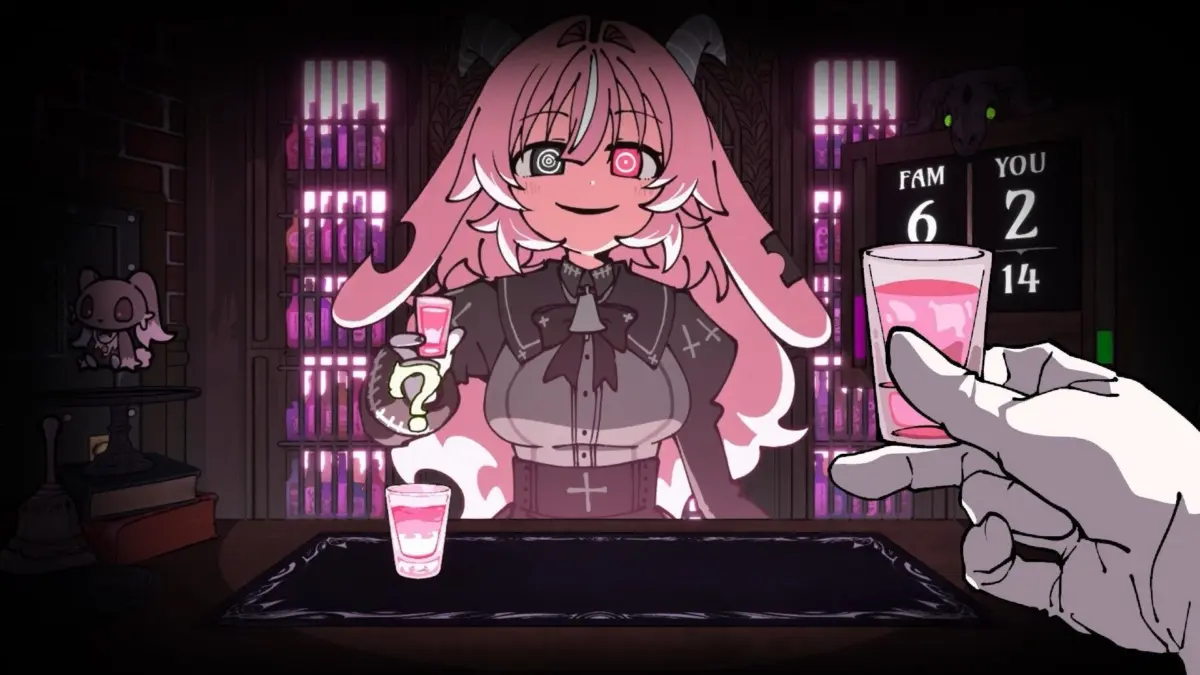
In the hyper-competitive landscape of independent game development, securing player attention is a high-stakes endeavor. For publisher Alliance Arts and developer Who You, their high-concept upcoming title, Drunken Goddess Reflux—a high-stakes, Russian Roulette-style drinking game played against a charming yet intimidating anime demon—was well on its way to indie darling status. Having already amassed a robust following of over 25,000 wishlists on Steam, the title was primed for a breakout showcase during the eagerly anticipated October 2026 edition of Steam Next Fest.
However, in a move that has sent shockwaves through the indie dev community, the creators abruptly pulled the plug on their scheduled public demo just days before the festival’s launch. Citing fears of stringent copyright policing and, more radically, the looming threat of generative AI-powered copycats, the studio chose to retreat behind closed doors. Rather than a wide-open public trial, Drunken Goddess Reflux will now rely on a vetted, invite-only closed test via Discord, preserving its core code and mechanics ahead of its official December 8 launch.
This decision marks a pivotal inflection point in the modern video game industry. It underscores a growing, existential dread among independent creators: that the very tools democratizing software development—generative artificial intelligence and rapid prototyping platforms—are simultaneously arming bad actors with the capability to clone, iterate, and beat original creators to market.
Detailed Chronology: From Anticipation to Abrupt Cancellation
The timeline leading up to the cancellation of the Drunken Goddess Reflux demo highlights the fragile ecosystem of digital game festivals and the mounting anxieties of developers operating within it.
- Early 2026 – Mid-2026: Drunken Goddess Reflux gains traction across social media and gaming forums due to its provocative premise, striking visual style, and tense, psychological mechanics. The community steadily builds, pushing the game past the crucial 25,000-wishlist milestone on Steam—a vital metric that signals algorithmic favor and market viability to Valve’s storefront.
- October 18, 2026: With Steam Next Fest scheduled to run from October 19 through October 26, anticipation reaches a fever pitch. Thousands of players prepare to download the demo to experience the grim, high-stakes drinking match firsthand.
- Late October 18, 2026 (Hours Before Launch): Alliance Arts issues a sudden, unexpected statement on X (formerly Twitter). The studio formally apologizes to the eager player base, announcing that the public demo has been entirely canceled.
- Immediate Aftermath & Pivot: To mitigate community backlash and maintain momentum, the developers pivot to a controlled environment. They announce that select, vetted players can apply for limited access to closed test sessions hosted directly on the official Who You Discord server. The game’s commercial release remains firmly pinned to December 8, 2026.
Supporting Context & Metrics: The Anatomy of a High-Stakes Indie Release
To fully understand why Alliance Arts and Who You made the drastic decision to withhold their demo, one must examine the mechanics of Steam Next Fest and the shifting economics of indie game discovery.
The Power and Peril of Steam Next Fest
Steam Next Fest has evolved into the premier digital showcase for independent developers. Running multiple times a year, the weeklong event gives millions of players free, frictionless access to hundreds of vertical slices and functional demos. For developers, a successful Next Fest appearance can single-handedly make or break a commercial launch, often dictating whether a game secures enough momentum to break even or turn a profit.
However, this exposure comes with a hidden tax: total transparency. By releasing a playable demo, developers expose their game loops, asset structures, UI/UX designs, and narrative hooks to the public eye. Historically, this risk was limited to traditional piracy or minor asset-flipping. Today, the technological landscape has fundamentally shifted.
The Threat Vector: Generative AI and "Vibe Coding"
The integration of generative artificial intelligence into the software development lifecycle has sparked fierce debate. While enterprise studios often tout AI for procedural generation and workflow efficiency, independent developers face a darker reality. Advanced multimodal AI models, rapid prototyping frameworks, and automated "vibe coding" environments have drastically lowered the barrier to entry for predatory copycats.

In the eyes of modern developers, releasing a fully functional, polished public demo is akin to handing a blueprint and raw materials directly to opportunistic asset thieves. With modern AI tools, bad-faith actors can analyze a game’s core loop, UI elements, and mechanical rules from a public demo, synthesize functional code approximations, and rush a clone to market. The terrifying prospect for a studio like Who You is not merely intellectual property theft, but the genuine possibility that an AI-accelerated clone could be developed, polished, and published before the original masterpiece even makes its debut on December 8.
Furthermore, Alliance Arts cited the immense difficulty of monitoring and enforcing publishing restrictions across thousands of live streams and video uploads during a high-profile festival. Ensuring that content creators adhered to strict guidelines regarding narrative spoilers and proprietary asset usage proved to be an administrative impossibility for the lean team.
Official Statements and Industry Impact
The announcement sent ripples across developer forums, sparking intense discussions about the future of open-access playtests.
In their public communication, Alliance Arts emphasized that the choice was not made lightly. The studio stated:
"We deeply apologize to all the fans who have been eagerly anticipating the chance to dive into the demo during Steam Next Fest. However, after careful evaluation, we cannot move forward with the public release. Protecting the integrity of our intellectual property and ensuring our development team’s hard work reaches players in its intended form is our top priority. The risks associated with widespread gameplay broadcasting under our current constraints, alongside the rising threat of rapid generative AI cloning, have forced us to alter our strategy."
Industry analysts have noted that this event may serve as a precedent. While major AAA publishers have long utilized closed alphas and tightly NDA-gated betas, independent developers have historically relied on open demos to build grassroots momentum. If the fear of AI cloning continues to metastasize, the golden age of open-access Steam Next Fest demos may begin to contract, replaced by closed, heavily monitored playtests restricted to trusted community members via platforms like Discord.
Future Outlook: What Lies Ahead for Drunken Goddess Reflux?
Despite the turbulence surrounding its pre-launch marketing campaign, the core prospects for Drunken Goddess Reflux remain strong.
- The Closed Testing Phase: By shifting testing to the Who You Discord server, the developers retain absolute control over who interacts with the game code. This drastically reduces the surface area for data scraping, code extraction, and malicious cloning while still providing the essential QA feedback needed for the final polish.
- The Countdown to December 8: With the noise of the public demo bypassed, the studio can focus entirely on completing the final build. The game’s existing base of 25,000+ wishlists demonstrates that consumer appetite remains completely intact.
- A Broader Industry Reckoning: The situation surrounding Drunken Goddess Reflux serves as a cautionary tale for the games industry at large. As generative AI tooling continues to evolve at a breakneck pace, platform holders like Valve will likely face mounting pressure to introduce more robust anti-cloning protections and content-policing frameworks to safeguard independent creators who choose to participate in public showcases.
When Drunken Goddess Reflux finally hits Steam on December 8, 2026, it will arrive not only as a darkly unique indie gaming experience, but as a symbolic survivor of a new, defensive era in software development—where guarding the digital temple has become just as important as building it.