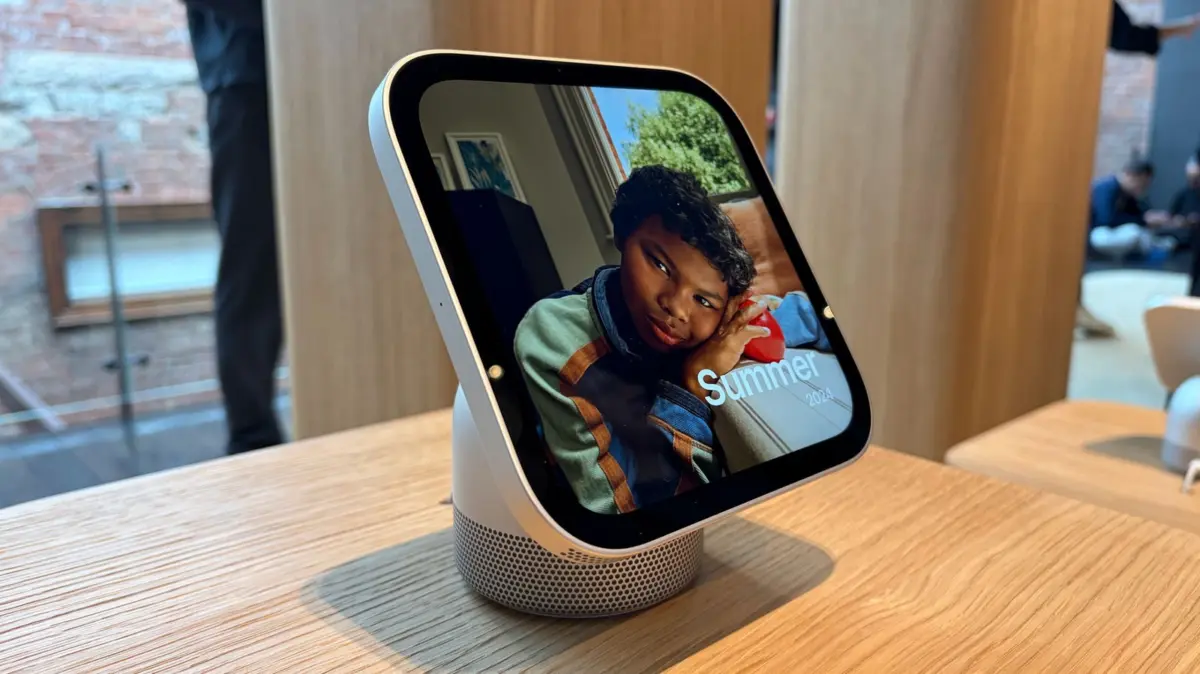
The intersection of ambient computing and strict personal privacy has long presented a paradox for consumer technology developers. As smart displays become permanent fixtures in modern kitchens, living rooms, and corridors, manufacturers have frequently struggled to balance utility with data security. Enter Apple and its latest hardware ecosystem expansion: the newly launched HomeView, a multi-functional smart display that attempts to redefine how communal home hardware interacts with highly sensitive personal data.
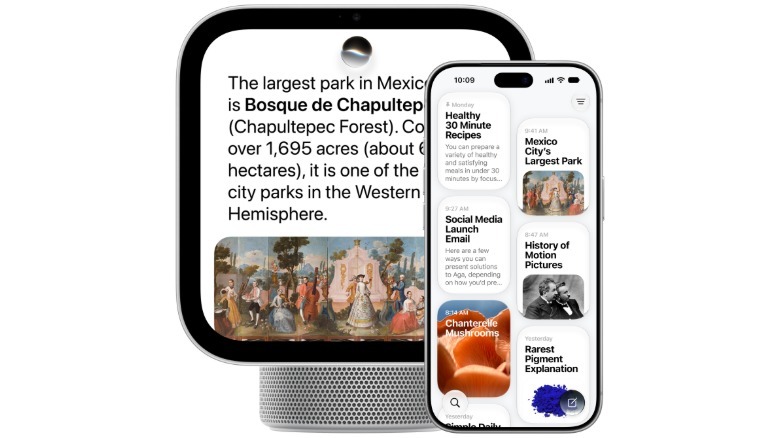
Unveiled earlier this month and arriving in consumer hands amid significant industry fanfare, the HomeView operates as a visual interface, an always-listening smart speaker powered by Siri AI, a connected smart home controller, a kitchen-side sous chef, a FaceTime communication station, and a dynamic digital photo frame. However, unlike traditional smart displays that function as standalone computing nodes with dedicated app stores, the HomeView runs no native apps. Instead, it relies on a mirroring paradigm akin to Apple’s CarPlay, pulling compatible applications dynamically from a nearby iPhone or iPad.
This architectural dependence on mobile devices is not a design oversight; it is the cornerstone of Apple’s strategy to deliver a deeply personalized user experience without compromising domestic privacy. By anchoring the smart display’s intelligence directly to an individual’s personal device, Apple has engineered a home hub that adapts fluidly to whoever is standing in front of it—and instantly erases their data footprint the moment they walk away.
Detailed Chronology: The Genesis and Evolution of Apple’s Smart Display Strategy
The path to the HomeView’s commercial release spans nearly a decade of internal speculation, prototype iterations, and shifting consumer expectations regarding the smart home.
The Pre-HomeView Era (2016–2022)
Apple’s early ventures into the smart home space were largely acoustic. The debut of the original HomePod in 2018 established the company’s voice-first ambitions, anchored by Siri. However, as competitors like Amazon with its Echo Show line and Google with Nest Hub popularized visual smart displays, Apple resisted entering the category. Industry insiders frequently cited the company’s reluctance to compromise on design standards and data privacy frameworks as primary bottlenecks. While competitors populated the market with budget-friendly displays that doubled as ad-delivery mechanisms, Apple’s internal teams deliberated over how a screen could exist in a shared family space without becoming a surveillance vector for sensitive communications.
The Leadership Transition and Pivot (2023–2024)
A significant internal restructuring set the stage for the HomeView project’s finalization. During this period, newly appointed CEO John Ternus assumed leadership, signaling a renewed focus on tightly integrated ecosystem hardware. In early briefings leading up to this year’s major product announcements, Apple executives began framing the iPhone not merely as a personal communications device, but as the foundational "intelligent personal hub" of a user’s entire digital life. This philosophical pivot provided the blueprint for the HomeView: rather than building a separate computing platform that required its own security credentials and app ecosystem, Apple would extend the existing security perimeter of the iPhone outward into the physical home.
The Launch Window (Current)
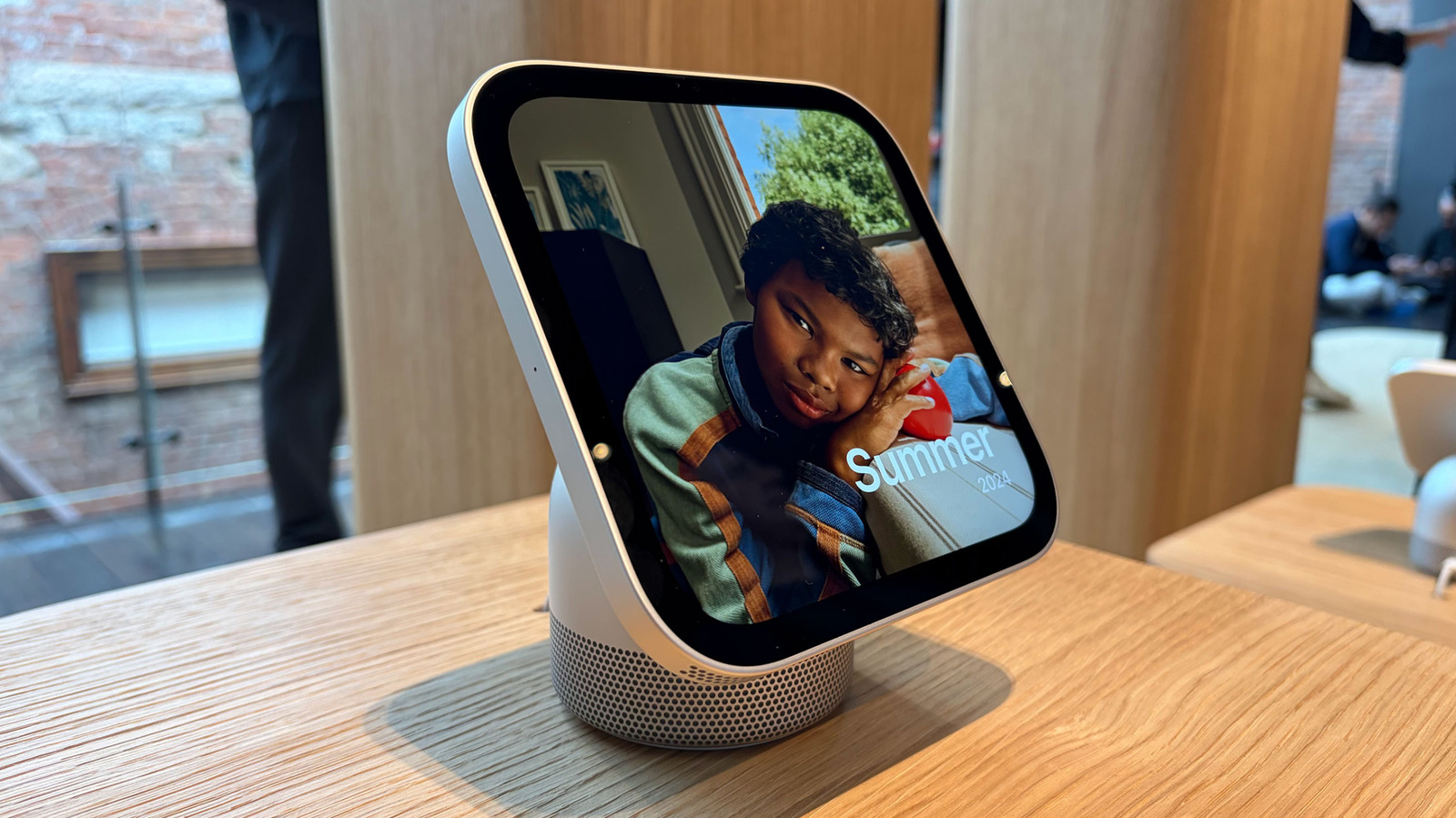
Marking John Ternus’s debut iPhone event keynote address, the HomeView was officially introduced to the public. Positioned as a bridge between the personal intimacy of an iPhone and the shared utility of a smart home, the device made its retail debut this week. Early reviews have highlighted its unique operational mechanics—specifically its refusal to function without a synchronized Apple mobile device within proximity—sparking industry-wide discussions about the future of edge computing, ambient interfaces, and localized privacy controls.
Supporting Context & Metrics: Architecture, Ecosystem, and Privacy Engineering
To fully understand why the HomeView is tethered so tightly to the iPhone, one must examine the engineering choices underpinning its interface design, hardware configuration, and data-handling protocols.
The Mechanics of App Mirroring
The HomeView’s operating system avoids the software fragmentation associated with dedicated IoT app stores. Instead, it mirrors compatible third-party applications alongside Apple’s core productivity suites—including Calendar, Messages, Reminders, and Weather—directly from a paired iPhone or iPad.
This technical approach yields several distinct operational advantages:
- Zero Local Footprint: Because personal files, message histories, and calendar invites are not permanently stored on the HomeView, the risk of data exfiltration via physical theft or network compromise of the smart display is dramatically reduced.
- Unified State Synchronization: Changes made to a reminder or calendar event on the HomeView instantly propagate to the user’s mobile device (and vice versa) via secure local and iCloud handshakes, maintaining a single source of truth for personal data.
- Streamlined Ecosystem Handoff: Features such as Safari recipe integration for cooking sessions and media handoffs for audio or video calls operate smoothly, leveraging established protocols pioneered by AirPlay and Continuity.
Multimodal Authentication and Proximity Enforcement
A central engineering challenge for any shared smart display is multi-user management. A kitchen display must be accessible to every member of a household—allowing anyone to adjust the thermostat, check the weather, or turn off hallway lighting—while simultaneously safeguarding private communications like text messages or personal schedule entries.
Apple solved this conundrum through a layered authentication matrix:
- Biometric Recognition: The HomeView employs advanced facial and voice recognition to identify who is standing in front of the unit.
- Device Proximity Verification: Even if the system recognizes a user’s face, personal data streams (such as incoming messages or calendar details) are withheld unless a paired, recently unlocked iPhone or iPad is nearby.
- Transient Data Display: Information surfaces dynamically upon recognition and interaction, evaporating instantly when the user steps away from the device’s field of view.
The Philosophy of "Voice First, Touch Second"
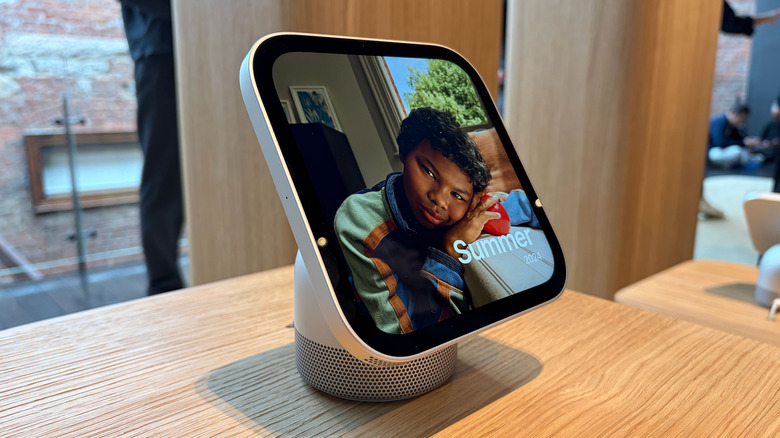
A notable physical characteristic of the HomeView is its complete lack of physical buttons. Fusing design elements from the touchscreen iPad, the square form-factor of the Apple Watch, and the acoustic architecture of the HomePod, the device omits tactile controls entirely.
According to hardware engineering leadership, this decision was intentional. The product was conceptualized from its inception as a voice-first interface, with touch serving strictly as a secondary modality. This design philosophy eliminated the need for physical control clusters, yielding a clean, minimalist profile intended to blend seamlessly into domestic environments.
Official Statements and Executive Insights
The architectural motivations behind the HomeView were elaborated upon by key members of Apple’s executive and product marketing teams during recent press briefings.
Addressing the media during his opening remarks, CEO John Ternus underscored the central thesis of the company’s hardware strategy:
"There’s no product in the world better designed to be your intelligent personal hub than iPhone."
Expounding on this philosophy, VP of Hardware Engineering Matthew Costello emphasized the delicate balance between personalization and communal utility:
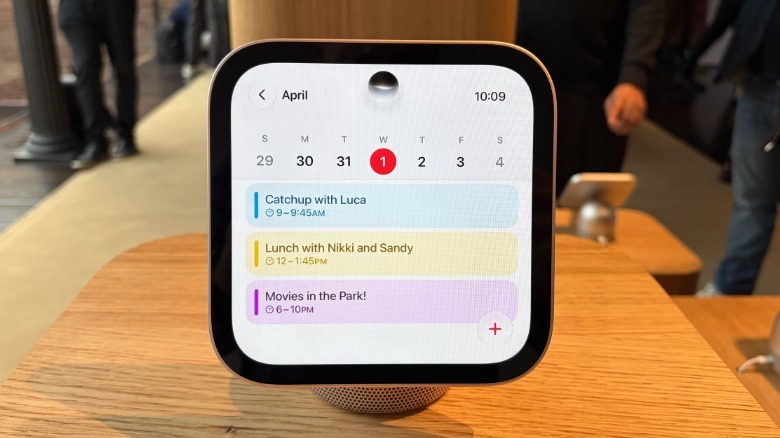
"Everything that feels natural on a phone is now available in a subtle, glanceable device that gives you what you need in the moment. It recognizes you and shows you your information, but when you step away, it’s gone."
Costello further clarified the cryptographic and contextual necessity of mobile device coupling:
"Personal information only surfaces once you’ve been recognized by your face, and [if] your paired iPhone is present and recently unlocked. We thought building on the contextual information and the intelligence, but also the privacy, was super critical and also very unique."
Addressing the perception that requiring a phone or tablet might introduce friction into the user experience, Cecilia Dantas of Apple’s Home Product Marketing team rejected the notion of dependency in favor of ecosystem synergy:
"It’s not just dependency, it’s also part of this ecosystem. When we design home products, we always keep three things in mind: they have to be intelligent, personal and private."
Dantas also highlighted the immense developmental challenge of restraint during the engineering phase:
"We’ve had home products for a while, and we built on that foundation. I think it was really, really challenging to go through and decide what do we bring and what do we not bring [to the HomeView]. That was very intentional to deliver this experience that’s powerful and that’s simple."
Future Outlook: The Road Ahead for Ambient Apple Hardware
The commercial trajectory of the HomeView will likely serve as a litmus test for the broader smart home industry. As artificial intelligence models become increasingly conversational and deeply integrated into daily routines, consumers face a growing tension between the desire for hyper-personalized assistance and the imperative to protect personal privacy from corporate overreach or domestic exposure.
By tethering ambient displays strictly to personal edge devices like the iPhone, Apple has staked out a distinct philosophical and architectural position. Rather than building centralized smart home hubs that aggregate user data on shared local servers or cloud databases, Apple is doubling down on the iPhone as the ultimate arbiter of digital identity.
Several key trends will dictate the success and evolution of this strategy in the coming years:
- Expansion of Siri AI Capabilities: As Apple rolls out deeper contextual reasoning across its operating systems, the HomeView will inherit these improvements dynamically via iPhone updates, bypassing the need for major hardware overhauls.
- Adoption Rates and Ecosystem Lock-In: While the reliance on an iPhone ensures ironclad privacy, it inherently restricts the addressable market to existing Apple ecosystem users, potentially limiting broader adoption in multi-platform households.
- Industry Counter-Responses: Competitors in the smart display space will be closely monitoring user reception to the HomeView’s transient data model. Should consumers embrace the philosophy of "data that disappears when you walk away," rival manufacturers may be forced to overhaul their own persistent-storage smart home architectures to match heightened privacy expectations.
Ultimately, the HomeView represents a mature acknowledgment that the most effective smart home devices are those that fade into the background until they are needed—and vanish entirely the moment they are left behind.