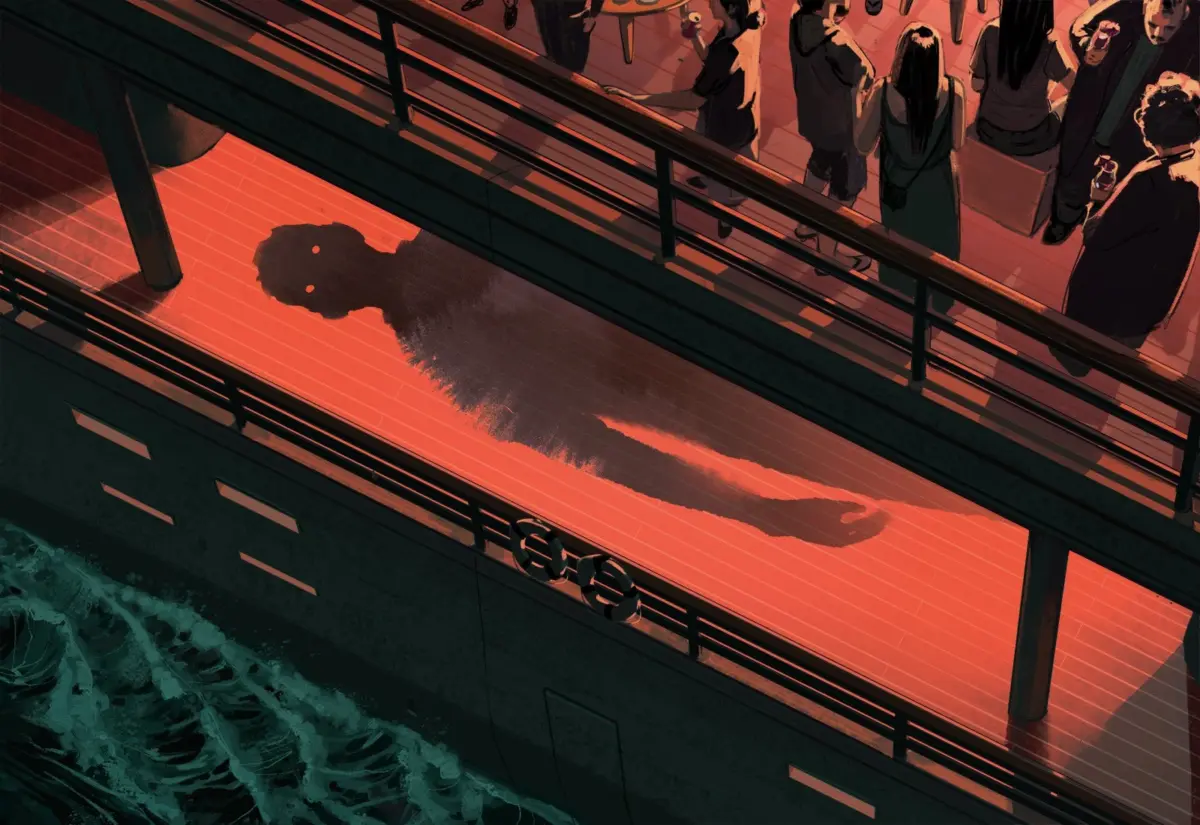
For millions of vacationers worldwide, the multi-billion-dollar cruise industry symbolizes the pinnacle of luxury, relaxation, and escape. Generating tens of billions of dollars annually, major corporations such as Carnival Corporation, Royal Caribbean, and Norwegian Cruise Line market their vessels as floating paradises where guests can disconnect from the stresses of daily life. However, beneath the veneer of sun-drenched decks, world-class dining, and round-the-clock entertainment lies a deeply troubling reality that the industry has spent decades attempting to minimize, obscure, or outright ignore.
According to data compiled by the Federal Bureau of Investigation (FBI) and the U.S. Department of Transportation, sexual assault remains the most prevalent reported crime on cruise ships. Since 2015, hundreds of allegations involving sex crimes at sea have been officially logged, though legal experts, advocates, and victims’ attorneys agree that the true numbers are exponentially higher due to widespread underreporting.
An extensive investigative review of hundreds of pages of civil court records, confidential depositions, and internal corporate documents reveals a systemic pattern. Major cruise lines have repeatedly failed to implement adequate security infrastructure—such as comprehensive closed-circuit television (CCTV) coverage and sufficient security personnel—because senior executives have historically deemed these investments too costly. Furthermore, when crimes do occur, victims frequently encounter severe institutional hurdles, ranging from mishandled forensic evidence and missing surveillance footage to jurisdictional voids and aggressive legal defense tactics by corporate entities.
Despite legislative efforts by lawmakers like U.S. Senator Richard Blumenthal and continuous warnings from internal security whistleblowers, the structural vulnerabilities that enable perpetrators to target passengers—and frequently escape accountability—remain largely intact.
Detailed Chronology: Case Studies in Corporate Negligence
The Carnival Miracle (December 2018)
On the first Saturday of December 2018, the Carnival Miracle cast off from Cozumel, Mexico, making its way back to Tampa, Florida, on the final stretch of an eight-day Caribbean itinerary. Among the approximately 2,000 passengers was a 21-year-old woman experiencing her first-ever cruise, identified in court documents as Jane Doe.
After spending the day tanning, drinking, and socializing, Doe attended dinner and a comedy show with her friend. Around midnight, she separated from the group to run around the ship’s decks. As she ascended a stairwell, a Carnival crew member intercepted her, lured her into a service closet, and locked the door. Despite her attempts to defuse the situation, the employee raped her.
Upon escaping to her cabin, Doe suffered a panic attack and immediately reported the assault to guest services. Taken to the ship’s medical facility, she recounted the assault to a shipboard doctor, who allegedly apologized and remarked, "Unfortunately, this happens all the time."
When the ship docked in Tampa, FBI agents boarded the vessel, but critical forensic and digital evidence had already been compromised. Carnival medical personnel had administered a rape kit and seized her clothes, but the company failed to preserve the evidence, claiming it was eventually discarded. Furthermore, surveillance footage and the perpetrator’s employment file were reported missing or destroyed. Although the assailant was fired immediately, he was never criminally charged. In July 2022, a Miami federal jury ruled that Carnival was liable for its crew member’s actions, awarding Doe $10.2 million in damages—believed to be the largest sum ever awarded in a cruise line sexual assault case. Carnival appealed the verdict.
The Disney Wonder and the Case of "G." (August 2012)
Former Florida law enforcement officer Dawn Taplin joined Disney Cruise Line as a security officer in 2011, recruited in the wake of public relations fallout surrounding the disappearance of crew member Rebecca Coriam from the Disney Wonder. Taplin quickly discovered severe deficiencies in how the company investigated onboard crimes.
Months into her tenure, on August 5, 2012, an 11-year-old passenger identified as "G." was groped and forcibly kissed in an elevator by a restaurant waiter. Security footage confirmed the child’s account. However, when senior officers were urged to contact the FBI while docked in Port Canaveral, they chose to cast off into international waters first, delaying federal notification.
When the crew member was eventually questioned, a senior officer allegedly threatened him violently off the record before turning the investigation over to Bahamian police at the next port. The assailant signed a confession but was never arrested; instead, he was repatriated to India. He subsequently secured employment with another major cruise operator, Norwegian Cruise Line, highlighting a pervasive industry loophole where fired perpetrators effortlessly find work elsewhere in the fleet.
The Sky Princess (2021)
In January 2023, a 27-year-old woman identified in court filings as B.U. filed a civil lawsuit against Princess Cruises, a subsidiary of Carnival Corporation. B.U. alleged that during a 2021 voyage, she was lured into an art gallery storage room by an employee, given alcohol while already intoxicated, and raped.
Enduring the remainder of the five-night cruise in a state of terror and isolation, B.U. sought medical attention upon returning home after experiencing persistent physical illness. In February 2022, she was diagnosed with HIV. She has since battled severe Post-Traumatic Stress Disorder (PTSD), depression, and night terrors, filing a lawsuit that Carnival has actively sought to dismiss on procedural grounds.
Supporting Context & Metrics: The Scale of the Crisis
Statistical data provided by the FBI and the Department of Transportation underscores the persistent threat of sexual violence on cruise vessels. Following pandemic-related shutdowns and the subsequent resurgence of the tourism sector, reported assaults climbed sharply. In 2022, 87 alleged sexual assaults were reported on cruise ships—the second-highest annual total since federal crime data collection began in 2010.
Key systemic vulnerabilities identified by maritime attorneys and security experts include:
- Inadequate Surveillance: Cruise ships routinely lack CCTV cameras in passenger corridors, stairwells, elevators, and public lounges. Internal company audits, such as one conducted by Carnival’s senior manager of investigations in 2013–2014, explicitly concluded that vessels were deficient in camera placement, yet recommendations were sidelined due to budgetary constraints.
- Understaffed and Under-trained Security: Security personnel often receive minimal training—sometimes limited to a few hours of online coursework—and are stretched too thin to effectively patrol passenger areas or deter predators.
- The Crew Member Threat: FBI analyses indicate that nearly 1 in 4 reported sexual assaults on cruise lines are committed by crew members—the very individuals entrusted with passenger safety.
- Jurisdictional and Procedural Roadblocks: Unlike crimes committed on land, crimes at sea lack an immediate independent police presence. Cruise operators control the initial response, crime scene preservation, and evidence collection. Furthermore, standard passenger ticket contracts enforce restrictive one-year statutes of limitations and mandate that lawsuits be filed in specific, often distant, federal jurisdictions chosen by the cruise line.
Official Statements and Industry Defense
The Cruise Lines International Association (CLIA) and major corporate entities maintain that cruise ships are among the safest vacation destinations globally. Citing independent studies—such as a 2019 report by Northeastern University criminologist James Fox, which compared FBI cruise crime data to population-adjusted land cities—CLIA argues that serious crime rates at sea are exceedingly low.
In statements provided to media outlets, Carnival Corporation emphasized its commitment to guest safety:
"In the rare instances of an incident, our ships are equipped with security, medical staff, and facilities to handle and investigate alleged sexual assaults and provide immediate victim care services… As with all areas of our operation, we constantly examine and adjust our safety and security processes and protocols to adopt industry best practices."
Conversely, safety advocates like Jamie Barnett, president of the International Cruise Victims advocacy group, argue that multi-billion-dollar corporations find it far more financially advantageous to settle individual lawsuits confidentially than to overhaul their security infrastructure. Barnett’s sentiment is echoed by maritime lawyers who note that settlements invariably include non-disclosure agreements and do not constitute admissions of liability.
Future Outlook: Legislative Reform vs. Corporate Resistance
Efforts to mandate systemic change have largely stalled in the halls of the U.S. Congress. For over a decade, Senator Richard Blumenthal has championed the Cruise Passenger Protection Act, a comprehensive bill designed to bridge the regulatory gaps governing maritime travel.
The proposed legislation would:
- Extend the statute of limitations for civil lawsuits from one year to three years.
- Establish a mandatory federal crime-reporting hotline.
- Require cruise ships to notify the FBI of alleged felonies within four hours.
- Prohibit vessels from leaving port until law enforcement has been properly notified and given access to investigate.
While incremental legislative victories have been achieved—such as provisions embedded in recent defense bills requiring qualified onboard physicians and increased CCTV retention periods—comprehensive industry-wide reform remains elusive. Armed with powerful lobbying expenditures totaling tens of millions of dollars over the past five years, the cruise industry continues to successfully fend off sweeping federal mandates.
As executives gather at annual industry symposiums under optimistic banners like "Forward Momentum," victims, legal advocates, and lawmakers continue to demand accountability. Until federal oversight matches the immense scale and profitability of the modern cruise industry, passengers stepping aboard these floating resorts will continue to navigate waters where legal protections remain dangerously adrift.
If you have information or tips regarding allegations of abuse or sexual assault on cruise ships, contact investigative reporters securely at tips.buzzfeed.com.