For a quarter of a century, Fashion East has operated as the undisputed engine room of British fashion, churning out raw, uncompromising creative talent long before mainstream houses dare to take notice. Founded by Lulu Kennedy in 2000, the legendary non-profit talent incubator has launched the careers of industry titans ranging from Jonathan Anderson and Kim Jones to Martine Rose and Simone Rocha. This season, as the platform marked its landmark 25th anniversary, the fashion pilgrimage inevitably led showgoers down to Manor Place in south London.
Far from the traditional, polished white tents of central London schedules, this industrial south London pocket offered a gritty, authentic backdrop for a generation of designers uninterested in playing by the rules. The front row was a testament to the incubator’s enduring cultural cachet, drawing heavyweight tastemakers, musicians, and models—including global rap phenomenon Central Cee, alongside industry icons Paloma Elsesser, Sabrina Elba, and Miquita Oliver.
This commemorative season balanced institutional legacy with radical disruption, spotlighting two returning design forces—Jacek Gleba and Traiceline Pratt’s GOYAGOMA—alongside a buzzy, fiercely anticipated newcomer straight out of Central Saint Martins (CSM): Mé Mé. What unfolded on the runway was less a conventional apparel presentation and more a sociological study on modern anxieties, historical subversion, and high-fashion subcultures. From the hazy, cigarette- smoke-filled reveries of 1980s Hong Kong to deconstructed ballet aesthetics and blue-collar survivalism, the autumn collections reaffirmed why Fashion East remains the vital beating heart of London Fashion Week.
Detailed Chronology: The Runway Breakdown
Mé Mé: Cigarette Smoke, Birdcage Veils, and the Melancholy of 1980s Hong Kong
As the designated newcomer tasked with opening the showcase, Cantonese designer Mé Mé walked onto the Manor Place runway bearing the heavy, electrifying weight of post-graduate expectation. Having already turned critical heads earlier in the year with a breakout MA collection at Central Saint Martins, Mé Mé used the Fashion East platform to solidify a distinctive, disruptive design language.
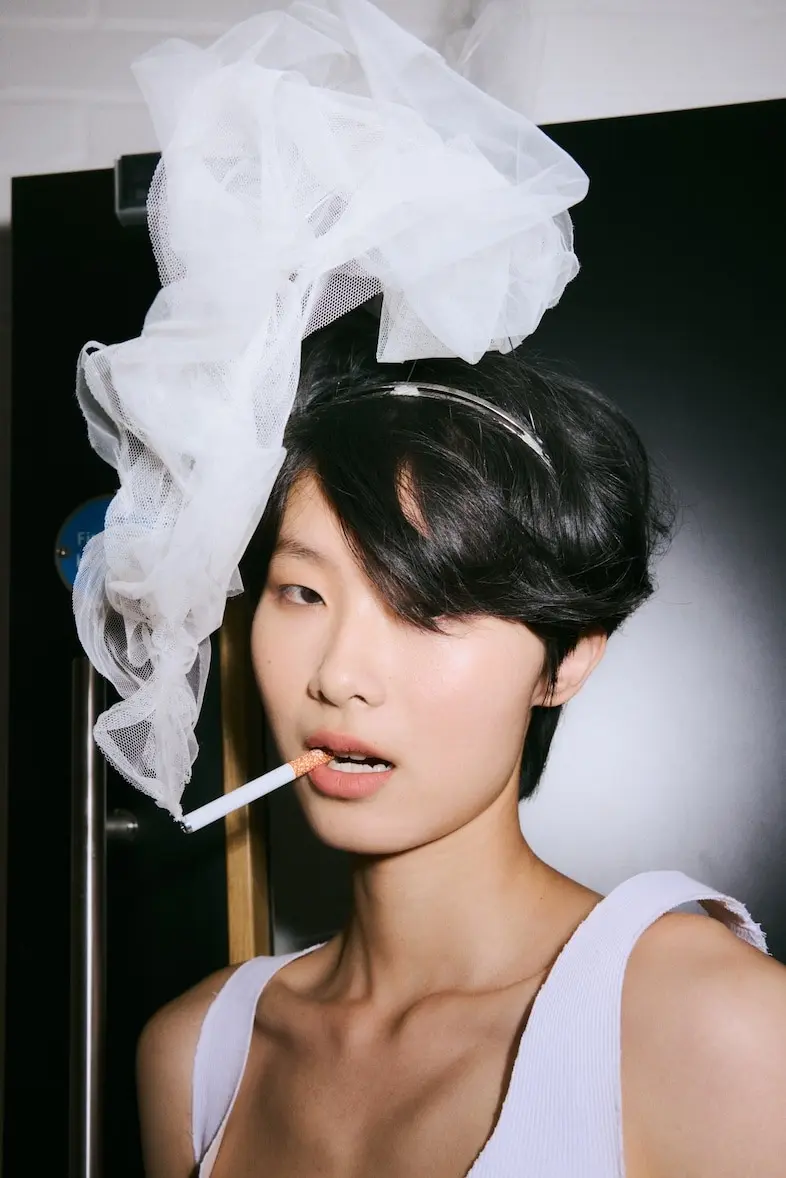
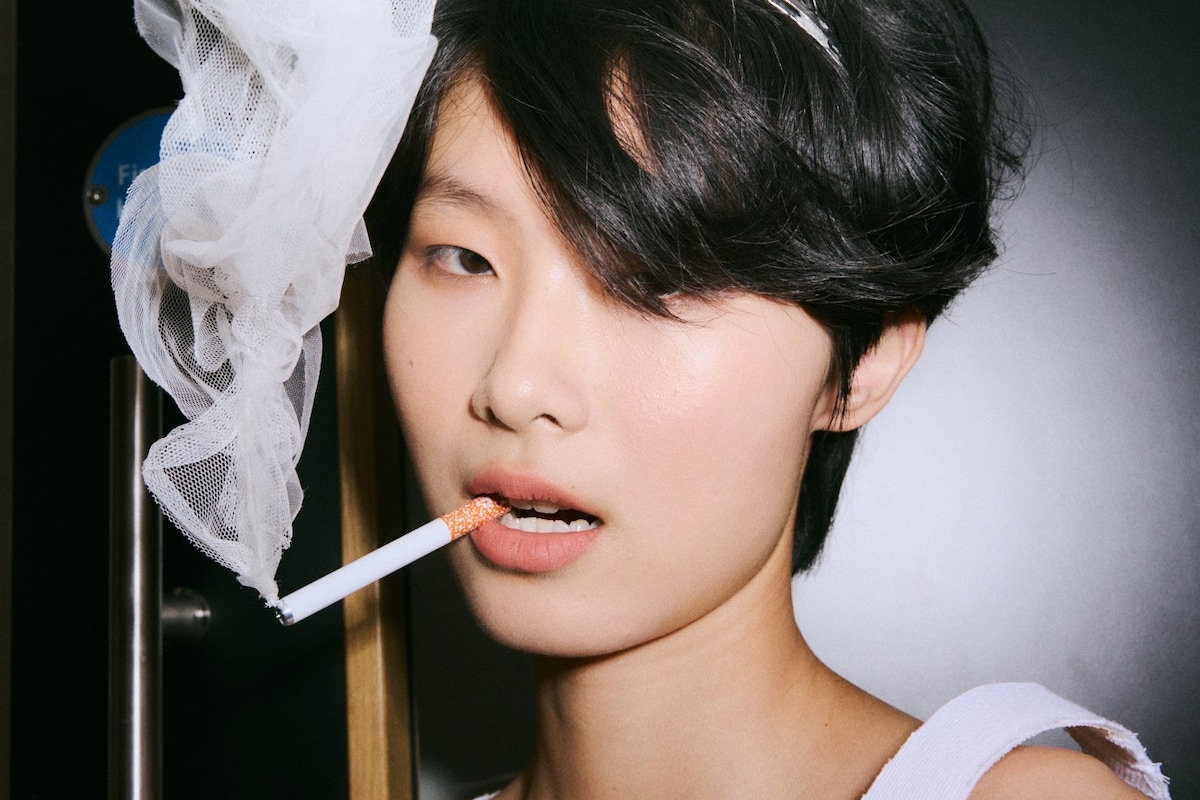
The aesthetic signature of Mé Mé is immediate and cinematic: a distinct olfactory and visual illusion of cigarette smoke. On the runway, this translated into clouds of vapor mingling with stiff, structural white netting engineered to mimic the lingering gray plumes of a freshly lit cigarette. Models navigated the space with faux Marlboros tucked between their fingers, stomping down the concrete floor draped in uncanny, hyper-stylized sartorial commentary.
Layered beneath the smoke were dark, poignant references: birdcage veils obscured models’ eyes like modern-day mourners, while inverted bowls served as stark, minimalist headwear, paired incongruously with bubblegum pink bloomers. On the surface, the styling felt like an eccentric collision between Ladies Day at Royal Ascot and the frantic, shadowy corner of a late-night club smoking area.
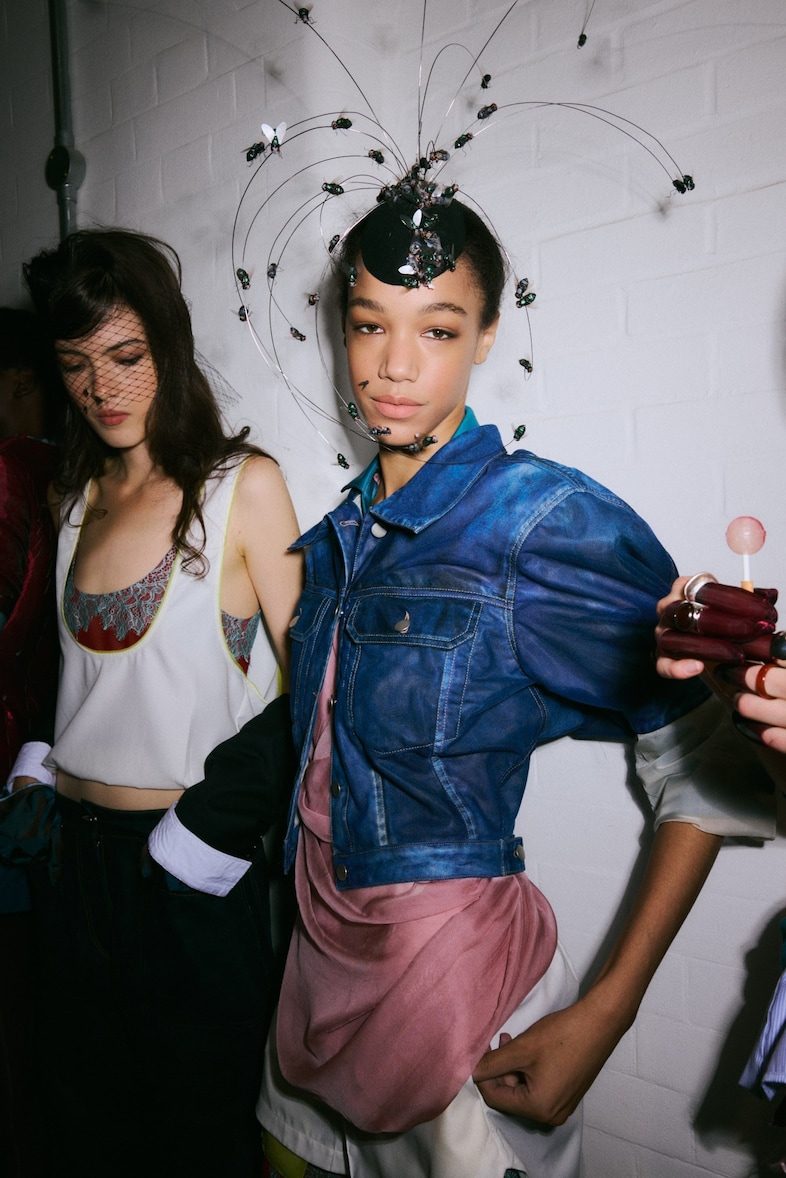
Look closer, however, and a deeper historical narrative emerged. The collection was a heartfelt, melancholy tribute to the working women of 1980s Hong Kong—figures defined by a relentless, breathless hustle, darting frantically through neon-drenched urban alleyways. In a stroke of surrealist genius, dead flies were embedded into intricate headpieces and glued directly onto the models’ faces. This gruesome yet mesmerizing detail served as a visceral nod to the domestic realities of urban life: flies buzzing persistently around late-night restaurant tables and unwashed dishes stacking up in cramped kitchen sinks. Mé Mé successfully weaponized the mundane and the grotesque, delivering an opening act that left the audience unsettled, intoxicated, and utterly transfixed.
Jacek Gleba: Subverting Masculinity Through Ballet and Historical Melancholy
Transitioning from the neon-lit urban angst of Hong Kong, the showcase pivoted toward the delicate, highly choreographed world of Jacek Gleba. Known for dissolving the boundaries between high fashion and classical ballet, Gleba’s autumn collection drew inspiration from a rich, disparate cultural canon: the avant-garde choreographic genius of Pina Bausch and Denton Welch’s searing 1945 semi-autobiographical novel, In Youth is Pleasure.
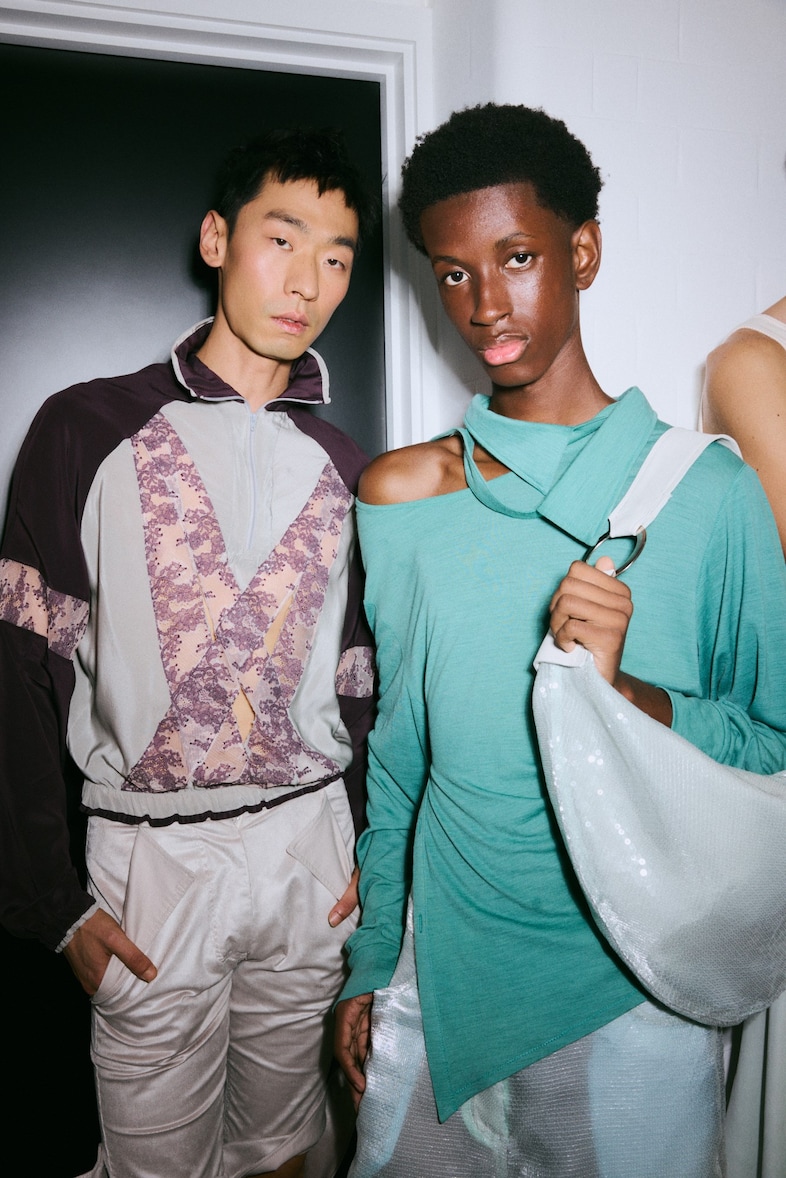
Gleba’s design thesis has always centered on the interrogation and subversion of traditional masculinity. For this outing, that interrogation took shape through an exquisite manipulation of touch, weight, and transparency. The runway was populated by boys draped in floating layers of gossamer-thin chiffon, rendered in a muted, poetic palette of pastel hues that defied rigid gender binaries.
Cascading backless tops exposed the spine, bringing a raw, physical vulnerability to menswear that is rarely permitted on commercial runways. Models glided—rather than marched—in heeled ballet pumps, their silk shirts meticulously detailed with intricate lace appliqué tracing the musculature of their torsos. By marrying the rigorous physical discipline of the ballet studio with the decadent, introspective romanticism of mid-century literature, Gleba crafted a collection that felt both agonizingly fragile and quietly revolutionary. It was a masterclass in softening the masculine silhouette without stripping it of its internal tension.
GOYAGOMA by Traiceline Pratt: Workwear, Resilience, and the Ultimate Finale
Closing out the monumental 25th-anniversary showcase was Traiceline Pratt’s label, GOYAGOMA. The Bahamas-born designer commanded the room so completely that he managed to extract the ultimate modern badge of honor: Central Cee pulling out his smartphone to film the looks as they passed by.
Pratt’s creative universe this season was rooted in the deeply personal, translating the architectural realities of blue-collar labor and familial migration into high-concept garments. Turning his lens toward workwear, Pratt found inspiration directly in the domestic wardrobes of his own parents—reinterpreting his mother’s cozy, lived-in dressing gown alongside his father’s rigid, day-to-day office attire. The resulting pieces blurred the lines between private comfort and public endurance.
The standout visual and thematic anchor of the collection, however, was an inflated life jacket. Serving as both a literal piece of survival gear and a powerful metaphor, the garment channeled a profound quote by Luther Collie: “No one’s coming to save you; it’s either you sink or swim.” For a designer navigating the cutthroat financial and creative waters of the contemporary independent fashion ecosystem, the message was unmistakable. Based on the rapturous reception at Manor Place, Traiceline Pratt—alongside his fellow Fashion East alumni—is not only staying afloat; he is dominating the stroke.
Supporting Context & Metrics: The Business of Incubating Gen-Z Disruptors
To understand the cultural gravity of Fashion East’s 25th-anniversary showcase, one must examine the mechanics of the modern fashion incubator. Founded in 2000 by Lulu Kennedy, Fashion East was born out of a desperate need to shield London’s rawest creative minds from the crippling financial realities of launching a label. In an era where corporate consolidation threatens to homogenize global style, independent incubators serve as vital ecological reserves for uncompromised design.
Metric / Indicator
Contextual Overview
Industry Impact
Operational Lifespan
25 Years (Est. 2000)
One of the longest-running continuous independent fashion incubators globally.
Notable Alumni Base
Jonathan Anderson, Kim Jones, Simone Rocha, Martine Rose, Wales Bonner
Incubated generations of designers who now helm the world’s most prestigious luxury houses.
Location Strategy
Non-traditional industrial spaces (e.g., Manor Place, south London)
Rejects traditional White-Cube runway formats in favor of immersive, site-specific environments.
Audience Reach & Caching
High-profile front row (Central Cee, Paloma Elsesser, Sabrina Elba)
Bridges underground avant-garde design directly with mainstream global youth culture.
The financial barrier to entry for London Fashion Week has skyrocketed over the past decade, driven by inflated venue rentals, PR overhead, and production costs. Without platforms like Fashion East—which provides participating designers with subsidized runway production, financial grants, industry mentorship, and vital showroom exposure to international buyers—talents like Mé Mé, Jacek Gleba, and GOYAGOMA would likely be priced out of the global conversation before they even begin.
Furthermore, the integration of cross-disciplinary talent in this anniversary cycle highlights a broader market shift. Luxury conglomerates are increasingly looking to incubators not just as charitable ventures, but as reliable R&D departments. When a rapper of Central Cee’s global magnitude documents a GOYAGOMA presentation, the traditional metrics of runway success—immediate digital impressions, peer-to-peer sharing, and cultural ubiquity—are instantaneously satisfied, proving that grassroots incubator shows now wield marketing power that rivals legacy fashion houses.
Official Statements & Industry Reactions
The atmosphere backstage at Manor Place was charged with a mixture of retrospective reverence and forward-looking anxiety. Founders, critics, and the designers themselves weighed in on what a quarter-century of Fashion East truly signifies for the capital’s creative identity.
Lulu Kennedy, reflecting on the milestone anniversary, emphasized the unwavering rebellious spirit that has kept the organization alive through economic downturns, Brexit, and shifting industry tides:
"When we started Fashion East twenty-five years ago, London was a very different landscape, but the sheer desperation of young designers to express themselves was identical. We didn’t build this to be a corporate stepping stone; we built it as a safe house for dangerous ideas. Seeing what Mé Mé, Jacek, and Traiceline have brought to the floor today proves that the hunger for authentic, unpolished storytelling is stronger than ever."
For newcomer Mé Mé, stepping into the legacy of alumni like Kim Jones and Jonathan Anderson was an exercise in channeling pressure into conceptual clarity:
"We didn’t want to come in and play it safe just because the stakes are high. The imagery of 1980s Hong Kong—the hustle, the smoke, the unglamorous survival—is part of my DNA. Putting dead flies on faces and using netting for smoke wasn’t just about shock value; it’s about capturing the exact texture of a city that never stops breathing, even when it’s suffocating."
Traiceline Pratt of GOYAGOMA spoke candidly about the socio-economic underpinnings of his workwear-focused collection:
"My parents’ wardrobes hold history, labor, and migration. When you put a life jacket on a runway, you aren’t just making a styling choice—you’re making a statement about survival in an industry, and a world, that offers very few safety nets. Luther Collie’s words—’sink or swim’—are the daily mantra of every independent designer working out of London right now."
Front-row attendees and international buyers echoed these sentiments, noting that while Paris and Milan offer immaculate tailoring and commercial polish, London remains the global capital for emotional risk-taking and cultural anthropology.
Future Outlook: Where Goes British Independent Design?
As the lights went down on Manor Place and showgoers dispersed into the south London evening, the broader questions facing independent fashion remained sharply in focus. Celebrating 25 years of Fashion East is a triumphant exercise, but it also serves as a stark reminder of the fragile economic tightrope walk young designers must perform today.
The success of Mé Mé’s smoke-and-fly surrealism, Jacek Gleba’s delicate subversions of masculinity, and GOYAGOMA’s gritty working-class elegies points to a clear industry trajectory: consumers—particularly Gen Z and millennial luxury buyers—are suffering from corporate fatigue. They are rejecting sanitized, algorithmically generated aesthetics in favor of garments that tell complex, uncomfortable, and deeply human stories.
Yet, creative brilliance alone cannot pay studio rent in a post-Brexit, high-inflation London. The structural challenge for the next decade will be ensuring that incubators like Fashion East receive the long-term institutional and private-equity backing necessary to scale these raw talents into financially viable global businesses. Without robust commercial bridges, London risks continuing its historical pattern of nurturing the world’s best creative minds only to watch them flee to well-funded European legacy houses.
Nevertheless, if the energy at Manor Place was any indication, the spirit of British underground fashion refuses to be commodified or subdued. As long as designers are willing to pull inspiration from the grit of urban life, the heartbreak of literature, and the raw necessity of survival, Fashion East will remain the most important room in global fashion—proving, yet again, that when pushed to the edge, London designers don’t just swim; they create tidal waves.