In a major development for the artificial intelligence and cloud computing sectors, Amazon Web Services (AWS) has officially launched Amazon CloudWatch Omni. Positioned as a unified, next-generation observability ecosystem, CloudWatch Omni is specifically engineered to address the complex architectural and operational demands of modern application and agentic AI workloads.
For years, software engineering teams deploying generative AI and autonomous agents have hit a proverbial wall. Traditional monitoring solutions—optimized for deterministic code, predictable HTTP status codes, and linear server metrics—are fundamentally ill-equipped to handle the non-deterministic nature of large language models (LLMs) and autonomous agents. A minor prompt adjustment or an updated model weight can quietly degrade system output quality or introduce semantic regressions while standard infrastructure dashboards display pristine green health indicators.
CloudWatch Omni aims to bridge this visibility gap by integrating agent observability directly into the developer workflow. Built on open standards like OpenInference and the AWS Distro for OpenTelemetry (ADOT), the platform provides an app-centric, AI-powered solution for designing, evaluating, and operating AI agents across virtually any framework, runtime, or model provider. Crucially, the platform operates off-console by default, delivering its toolsets natively inside developer Integrated Development Environments (IDEs) such as VS Code and Kiro, while offering a collaborative, SSO-enabled standalone web experience for operational teams.
By combining deep tracing, 17 built-in semantic evaluators, side-by-side prompt playgrounds, and automated regression detection, Amazon CloudWatch Omni eliminates the friction of context-switching. It allows developers and operators to monitor, debug, and optimize autonomous systems from initial local prototyping all the way to massive production deployments.
Detailed Chronology: The Evolution of Agentic Observability
The release of CloudWatch Omni represents a logical yet ambitious leap in the evolution of cloud monitoring. To understand the significance of this launch, one must trace the compounding complexities of software architecture over the past decade.
From Monoliths to Microservices, and Finally to Agents
In the era of monolithic applications, debugging was largely a localized, synchronous endeavor. The rise of microservices distributed applications across clusters of containers, necessitating centralized tracing tools like AWS X-Ray and traditional CloudWatch dashboards to track distributed network hops.

However, the explosive growth of generative AI—and specifically agentic workflows—has fundamentally altered the debugging paradigm. Modern AI agents do not merely execute deterministic functions; they reason, dynamically select tools, compose recursive sub-prompts, and chain multi-step logic across asynchronous API calls.
Before the introduction of Omni, engineers building complex applications with frameworks like LangChain, LangGraph, CrewAI, or the Vercel AI SDK faced a frustrating dilemma. They were forced to choose between siloed, point-solution generative AI monitoring tools or fragmented homegrown logging scripts. This resulted in hours of manual log-crunching across disparate systems, trying to diagnose why an agent suddenly decided to invoke a tool twice or hallucinate a response.
The Architectural Conception of CloudWatch Omni
Recognizing that agentic debugging required a paradigm shift, AWS engineers conceptualized CloudWatch Omni to unify two historically separated domains: traditional application performance monitoring (APM) and generative AI evaluation.
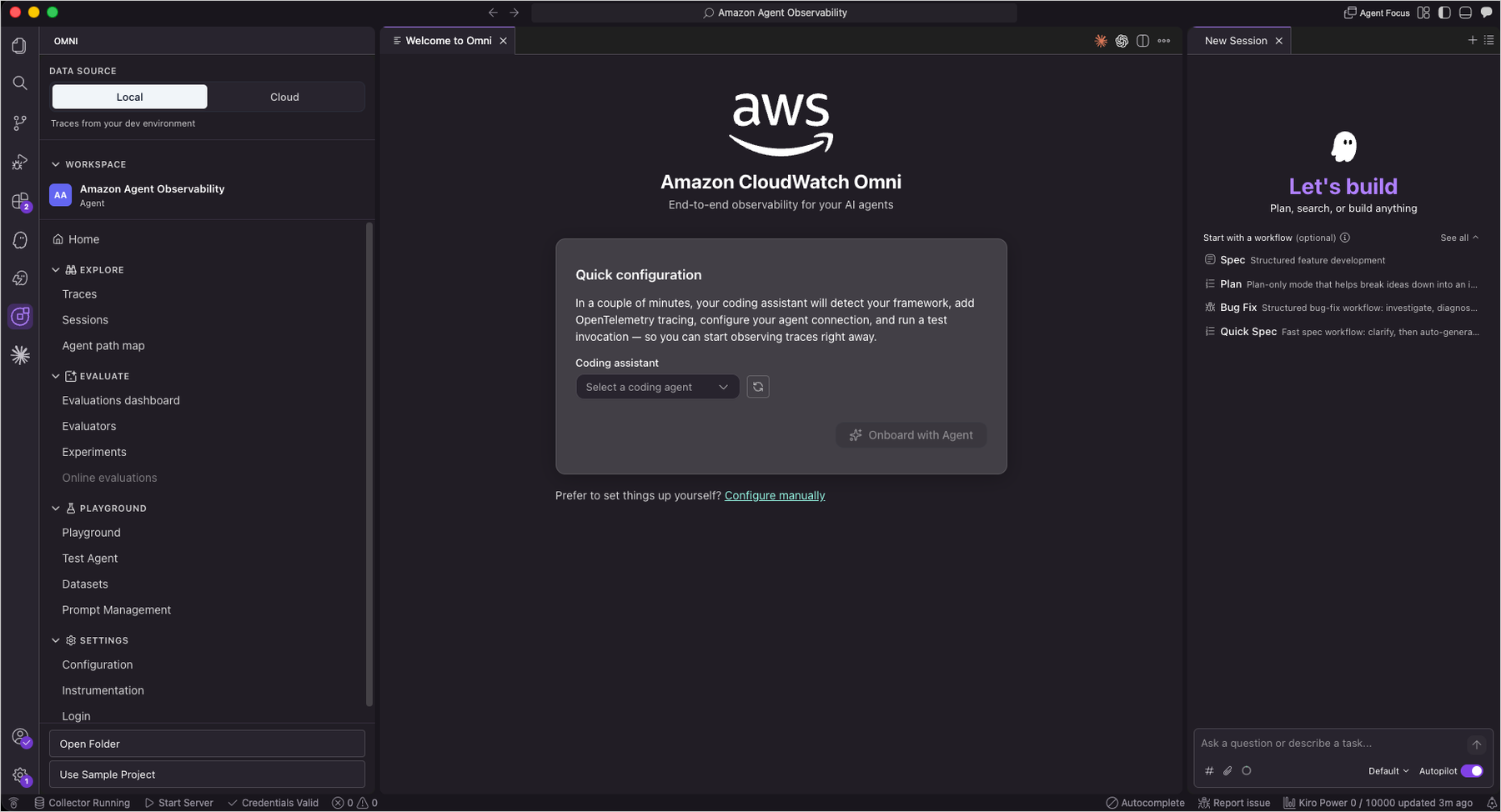
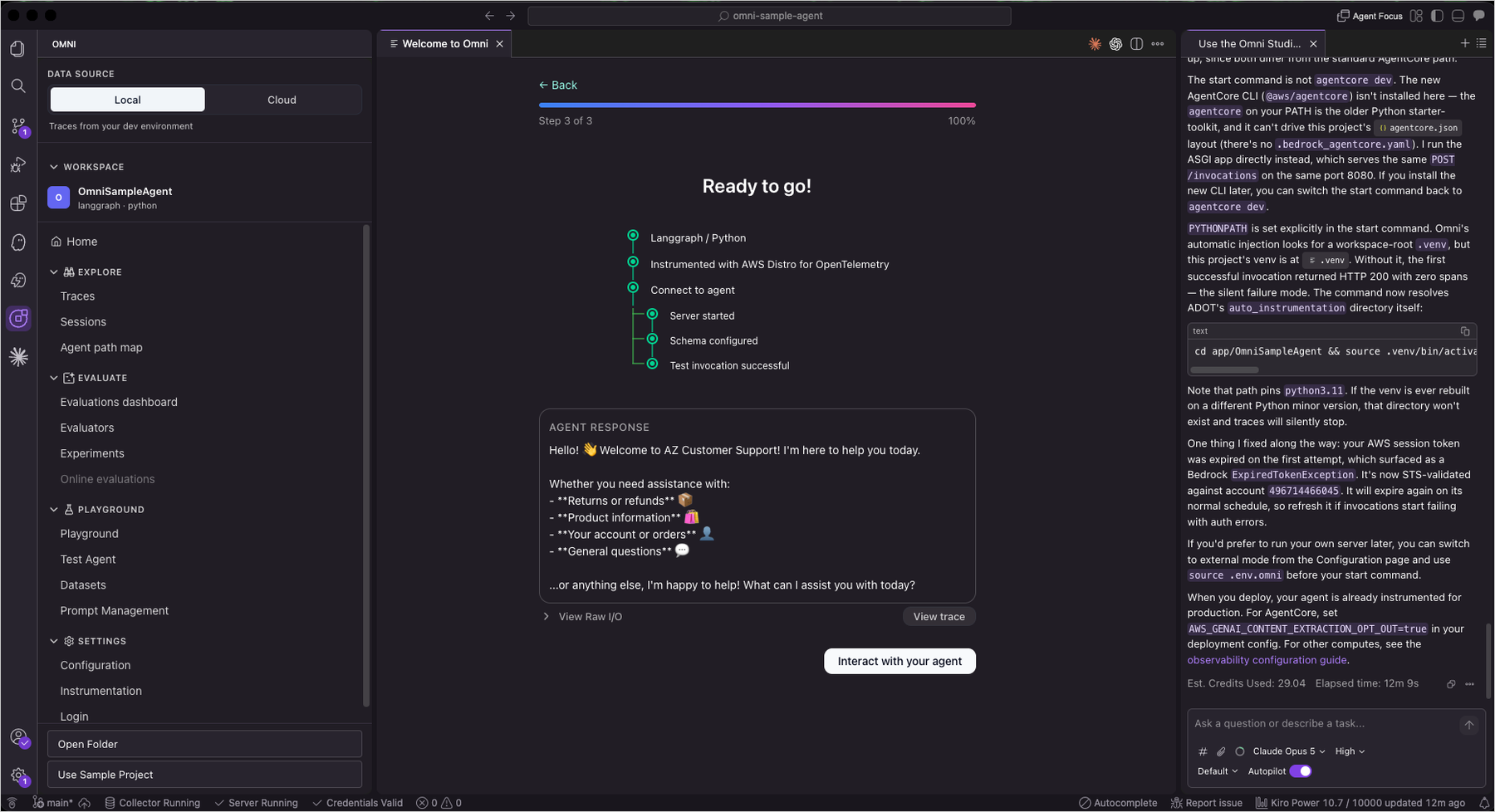
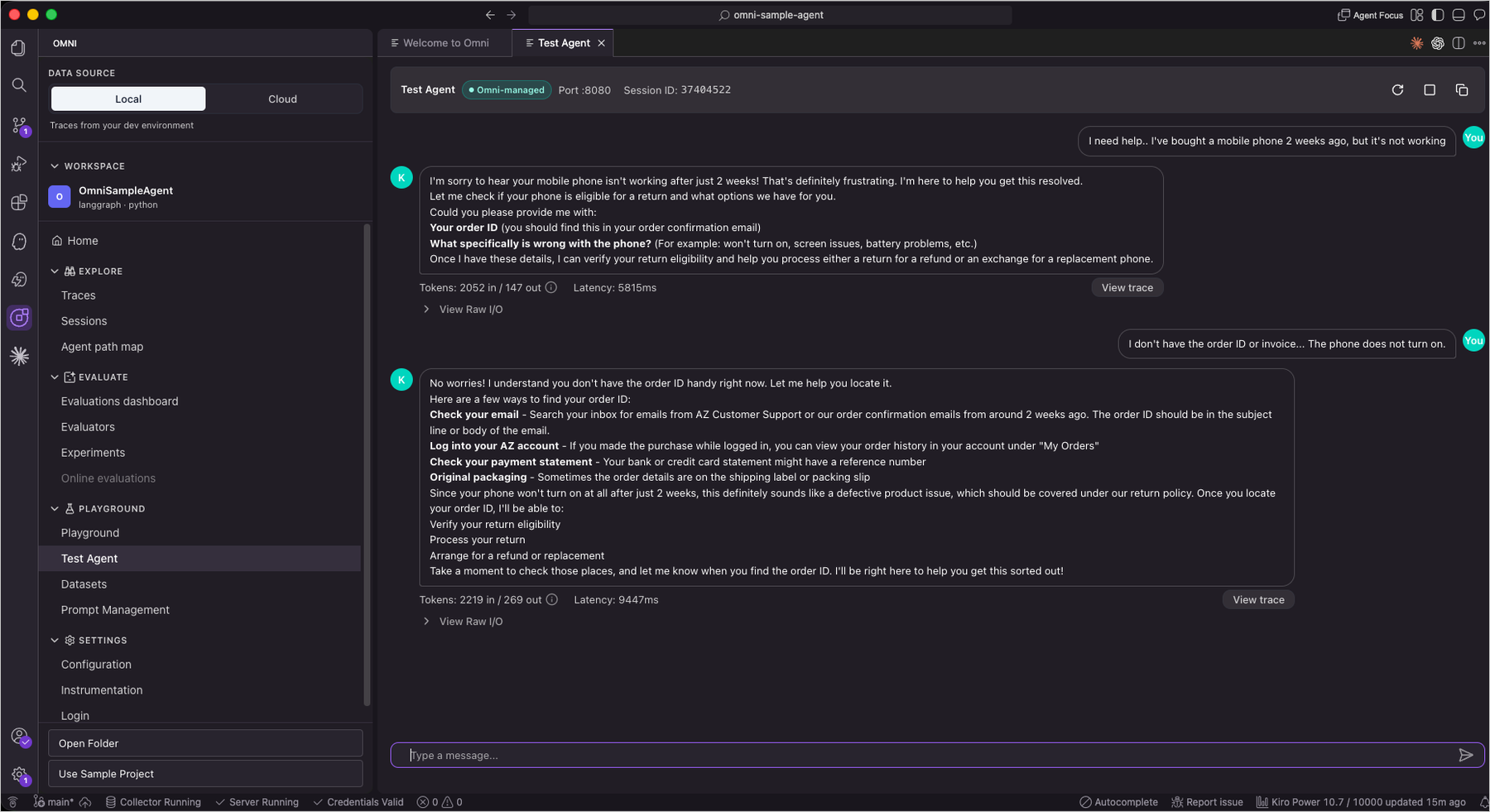
The development timeline prioritized a "developer-first" entry point. Rather than forcing engineers to jump into the AWS Management Console to inspect a trace, AWS built a lightweight, native extension for modern IDEs. This allowed developers to spin up local development servers, run interactive chat sessions with agents, and immediately inspect execution timelines without ever leaving their coding environment.
Simultaneously, AWS architected a synchronized bridge—the Cloud Login feature—allowing local telemetry to be securely transmitted to Amazon CloudWatch for persistent cloud storage and team-wide visibility. This dual-surface strategy ensured that the exact trace a developer debugs locally in VS Code is the identical trace an operator investigates in production through the standalone web interface.
Supporting Context & Metrics: Solving the Non-Deterministic Crisis
The core engineering challenge that CloudWatch Omni addresses is the inherent non-determinism of generative AI. To appreciate the scale of this problem, industry analysts and AWS telemetry metrics point to several operational bottlenecks that traditional monitoring misses entirely.
The Breakdown of Traditional Metrics
In standard microservices architectures, telemetry revolves around four golden signals: latency, traffic, errors, and saturation. If an API returns a 500 Internal Server Error, monitoring tools instantly flag the anomaly.
In agentic systems, however, an agent can successfully complete an API call with a 200 OK status while generating completely useless, unfaithful, or logically flawed output. A slight variation in a system prompt can silently trigger semantic drift. Traditional logging cannot answer critical questions such as:
- Why did the agent choose Tool A instead of Tool B?
- Is the retrieved context relevant to the user’s prompt?
- Did the multi-turn conversation degrade in coherence over time?
Granular Tracing and Built-In Evaluators
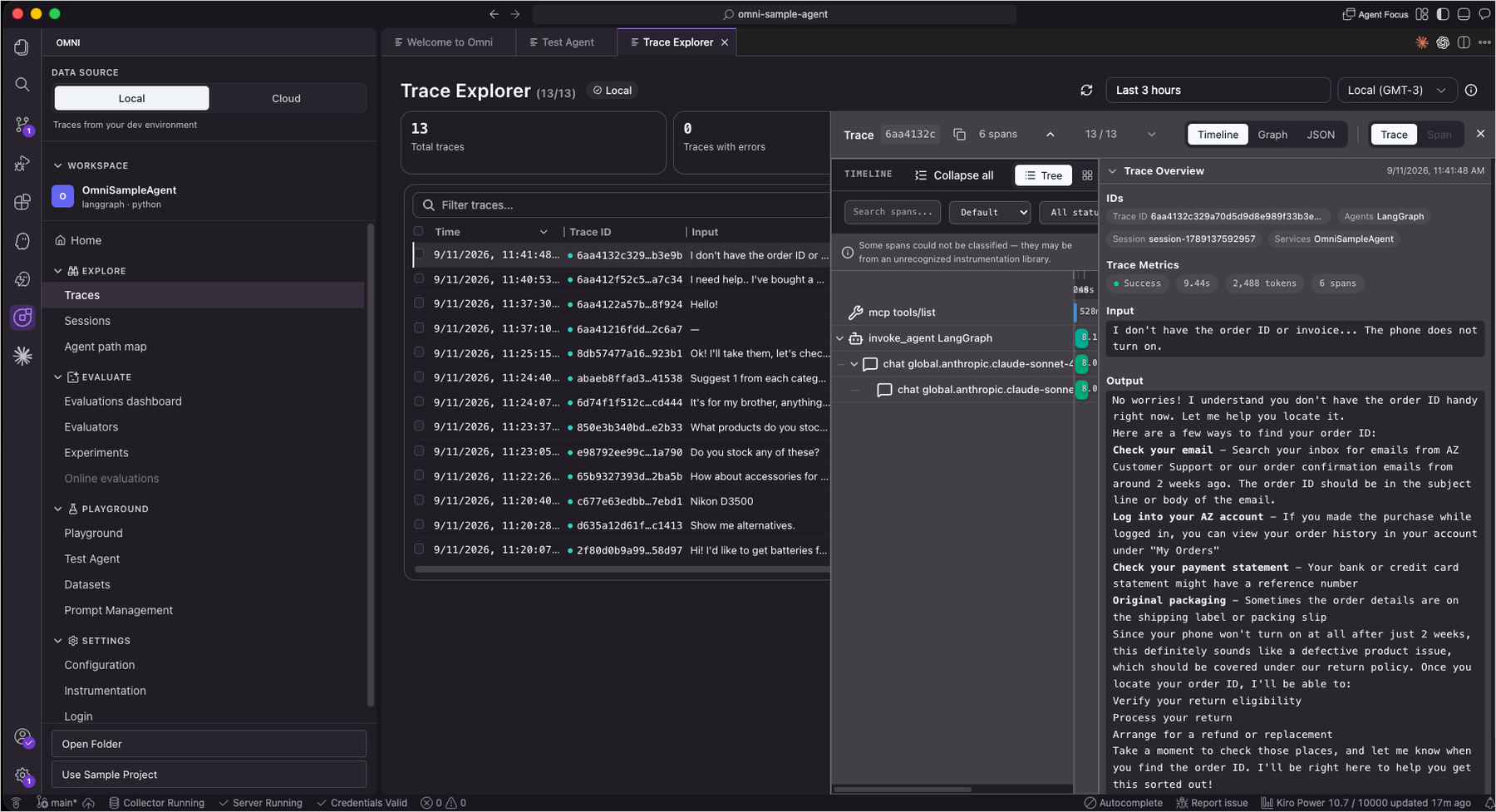
CloudWatch Omni solves this by capturing every trace and structuring it into a hierarchical execution timeline via the Trace Explorer. Developers can drill down into individual spans to inspect inputs, outputs, token consumption, and precise latency metrics.
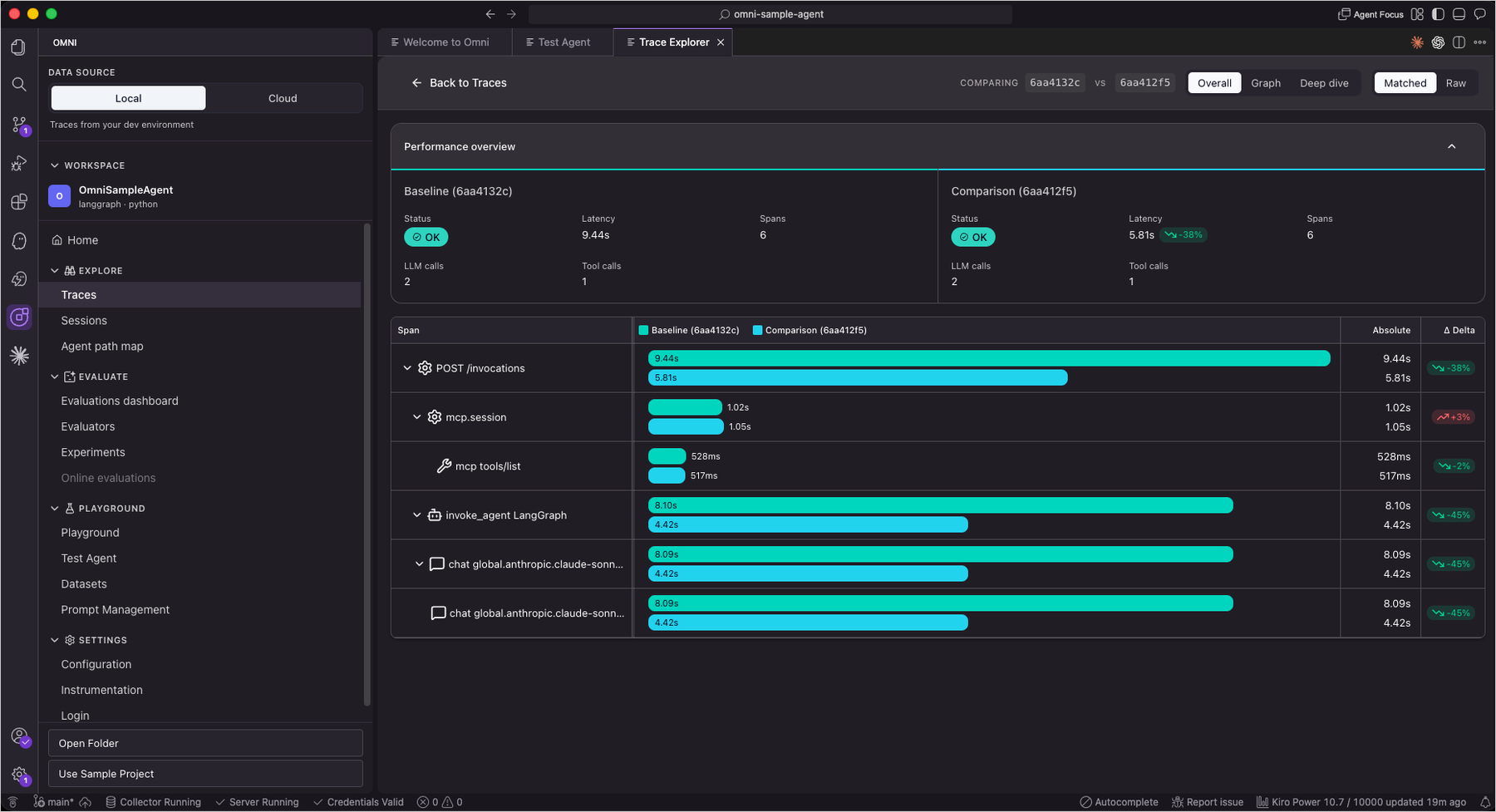
To transition from raw logs to actionable quality control, Omni ships with 17 built-in evaluators. These programmatic judges assess responses across vital dimensions, including:
- Correctness: Verifying if the agent’s final output aligns with ground truth.
- Coherence: Measuring the logical flow and readability of multi-turn interactions.
- Faithfulness: Checking whether generated answers are strictly derived from retrieved context, mitigating hallucinations.
- Routing Correctness: Ensuring the agent correctly delegates tasks to appropriate sub-agents and tools.
Furthermore, the platform integrates advanced workflows such as Compare mode (for side-by-side prompt regression analysis), Ask Assistant (an AI-powered diagnostic tool that explains anomalous agent behavior in plain English), and Golden Dataset curation for rigorous CI/CD regression testing.
Official Statements and Industry Impact
While AWS has long dominated traditional infrastructure monitoring, the launch of CloudWatch Omni signals an aggressive push to capture the burgeoning market for generative AI tooling and LLMOps.
In technical briefings accompanying the launch, AWS product leadership emphasized that the platform was designed around flexibility rather than vendor lock-in.
"Organizations deploying agentic AI systems cannot afford to operate in the dark, constantly context-switching between fragmented browser dashboards and their codebases," engineering leads noted during the rollout. "CloudWatch Omni brings the full power of observability directly to where developers write code and where operators manage fleets—built entirely on open standards so teams can use the frameworks and models they already trust."
Industry analysts have responded favorably to Omni’s open-ecosystem approach. By supporting popular orchestration frameworks like LangChain, LangGraph, and CrewAI, alongside native integrations with Amazon Bedrock AgentCore and open standards like OpenInference and ADOT, AWS has positioned Omni as a universal telemetry layer.
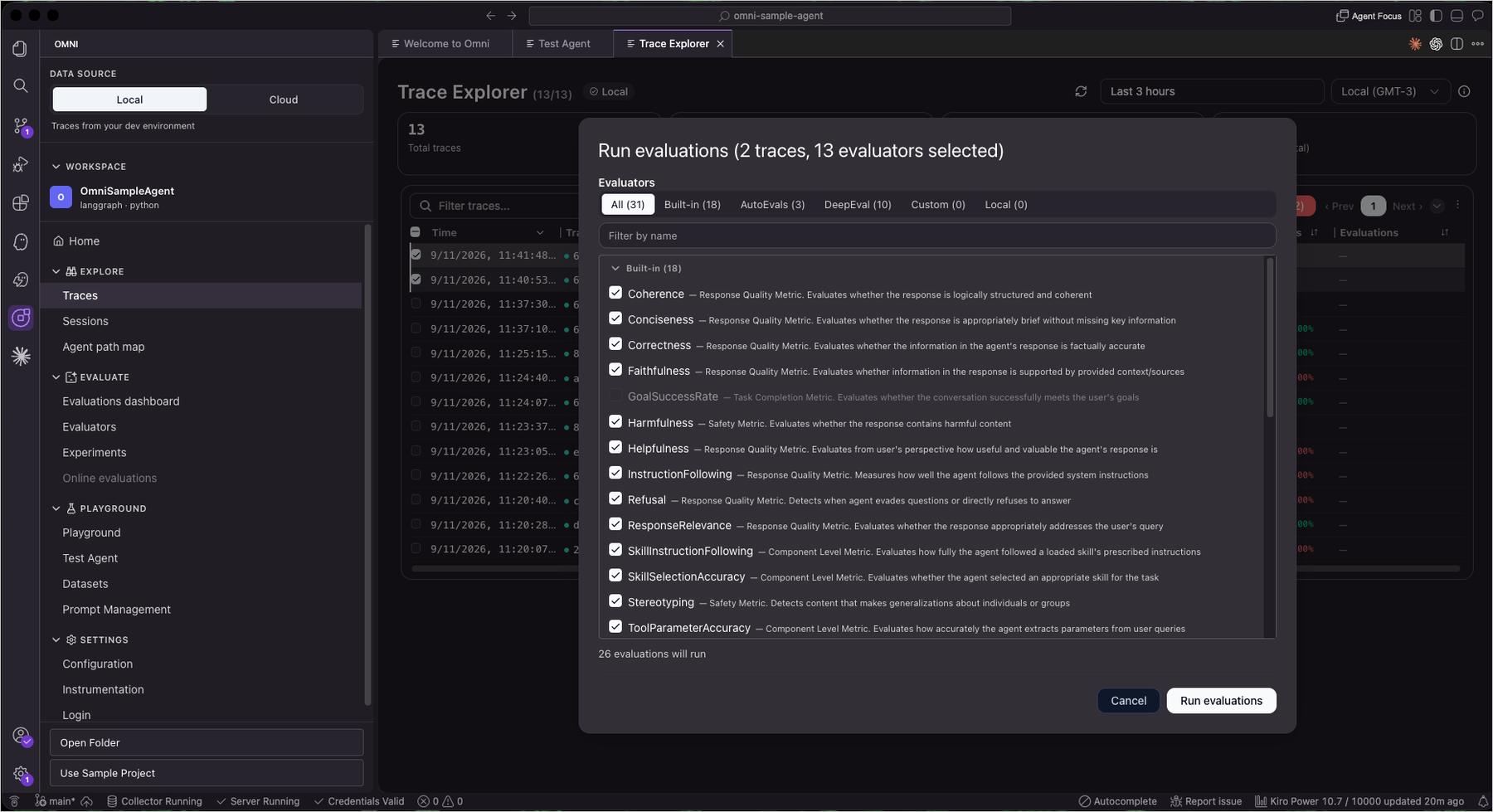
Crucially, the platform’s pricing structure—where the IDE extension is entirely free and does not require an upfront AWS account to begin local development—lowers the barrier to entry significantly. Developers only require API keys or AWS credentials when they are ready to connect to specific model providers like OpenAI, Anthropic, or Amazon Bedrock, or when they choose to stream telemetry data to the cloud.
Future Outlook: The Next Frontier of Autonomous Operations
The release of Amazon CloudWatch Omni marks a foundational milestone in how enterprises will build, test, and scale autonomous software in the coming years. As businesses transition from simple prompt-response wrappers to fully autonomous multi-agent ecosystems capable of executing complex business workflows, the demand for enterprise-grade observability will only intensify.
The Convergence of APM and AI Evaluation
Looking forward, the strict boundary between application performance monitoring and AI evaluation will continue to dissolve. Tools like CloudWatch Omni point toward a future where infrastructure health, database latency, and semantic reasoning accuracy are monitored within a single, cohesive pane of glass.
Features like the Agent Topology view—which visually maps out complex interconnections between sub-agents, tools, and runtime dependencies—foreshadow a paradigm where managing software fleets increasingly resembles managing human organizational structures. Operators will need to monitor behavioral dynamics, communication bottlenecks, and decision-making efficiencies rather than just CPU utilization and memory leaks.
Adoption and the Path Ahead
As development teams rapidly adopt agentic workflows across financial services, healthcare, customer support, and software engineering, the ability to rapidly catch regressions, run batch experiments, and enforce rigorous evaluation metrics will separate successful AI deployments from costly failures.
With CloudWatch Omni now generally available, AWS has provided the developer community with a comprehensive, standards-compliant toolkit to tame the non-deterministic nature of AI. Whether utilized locally within a developer’s favorite IDE or scaled across enterprise production fleets via collaborative web dashboards, CloudWatch Omni establishes a robust new standard for what it means to truly understand modern, intelligent applications.