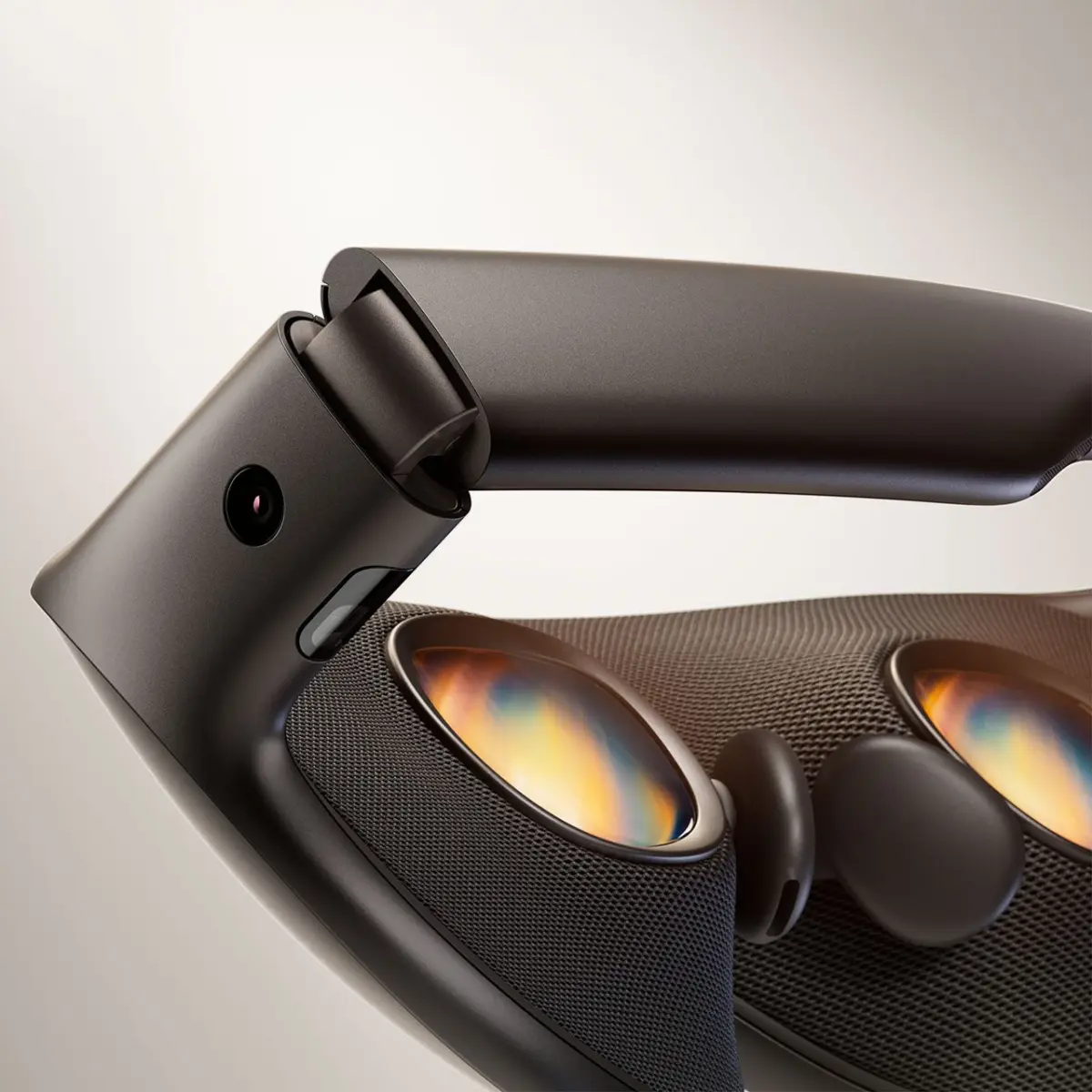
The convergence of Silicon Valley and the silver screen reached a striking new milestone at the Toronto International Film Festival. Tucked away in a makeshift gallery space just blocks from the world premiere of Zack Snyder’s latest feature, Meta quietly debuted its most ambitious hardware project to date: a secretive line of entertainment-centric eyewear slated for a commercial launch this coming spring.
For years, the consumer electronics market has attempted to steer society toward a bulky, ski-goggle-dominated future of virtual reality. Devices like the Meta Quest and the Apple Vision Pro boast undeniable technical prowess, yet they remain tethered to a clunky aesthetic that frequently alienates mainstream audiences. They demand isolation, block out the physical world entirely, and transform living rooms into sci-fi interrogation chambers.
Meta’s upcoming device, tentatively dubbed the Meta VR Glasses, represents a profound philosophical and ergonomic pivot. Weighing in at a mere 100 grams—roughly a quarter of the weight of standard VR headsets—these streamlined shades eschew the heavy, face-crushing bulk of their predecessors in favor of an aesthetic closer to X-Men’s Cyclops than cybernetic dystopia. By prioritizing comfort, hand-tracking precision, and a theater-grade cinematic experience over full-scale spatial computing immersion, Meta is targeting a crucial demographic: the skeptics, the agnostics, and the cinephiles who have spent the last decade rejecting the gospel of the metaverse.
Detailed Chronology
The journey toward Meta’s new hardware began long before the clandestine briefings at TIFF, though the festival marked the first time select industry insiders were allowed hands-on access to a working prototype.
Phase 1: The R&D Shift Away from Isolation
Following years of lukewarm reception to fully enclosed VR headsets used primarily for niche gaming and enterprise productivity, Meta’s hardware division initiated a radical redesign project. Recognizing that consumers were unwilling to wear heavy, closed-off visors for passive entertainment like movie-watching or sports broadcasting, engineers focused on radical weight reduction and externalized processing. The result was the decoupling of the heavy computing components from the display visor itself.
Phase 2: The TIFF Clandestine Briefings
During the Toronto International Film Festival, Meta orchestrated private, one-on-one keynote demonstrations. Housed in a discrete pop-up gallery near the festival’s main cinematic venues, the company bypassed traditional press conferences in favor of controlled, highly personalized media interactions. Executives acknowledged the industry’s past mistakes with surprising candor, using phrases like "we are self-aware" to disarm critics before diving into the product demonstration.

Phase 3: The Software and Ecosystem Synergy
Ahead of the hardware’s scheduled spring release, Meta has been actively locking down crucial partnerships. Collaborations with major streaming services—including Prime Video, YouTube, DIRECTV, AMC+, Crunchyroll, Plex, and Tubi—were finalized to ensure day-one content availability. Simultaneously, a landmark partnership with IMAX was secured to deliver native 1:43:1 full-frame cinematic content directly to users, circumventing the traditional limitations of home media formats.
Supporting Context & Metrics
Evaluating the Meta VR Glasses requires analyzing how hardware specifications translate directly to user comfort, visual fidelity, and real-world utility.
Ergonomics and Hardware Architecture
At just 100 grams, the glasses represent a 75% reduction in weight compared to the 500-to-600-gram footprint of the Meta Quest. This featherlight facial fit is achieved by shifting the battery and core processing unit into an external "puck"—roughly the size of an iPhone—that users can slip into a pocket, drop into a handbag, or clip onto a belt.
- Battery Life & Power: The pocket-sized compute puck supports 45W fast-charging and delivers approximately three hours of continuous media playback.
- Optical Customization: The hardware features interchangeable nose pads of varying sizes and manually sliding lenses to accommodate differing interpupillary distances. While official prescriptions details remain unconfirmed, early hardware leaks suggest built-in prescription lens accommodation is planned for retail rollout.
- Display Specifications: The device utilizes high-density 5K micro-OLED panels boasting 37 pixels per degree, enhanced by Dolby Vision support to deliver exceptionally sharp contrast and color grading.
Input and Spatial Interaction
Abandoning physical handheld controllers entirely, the Meta VR Glasses rely on advanced computer vision. Tiny, discreet cameras embedded along the stems of the glasses track minute hand gestures. Users can navigate user interfaces by performing subtle pinches, thumb-scroll mimicry, and natural eye movements. By syncing eye tracking with an on-screen cursor, simply gazing at an application icon highlights it, ready for a confirming finger pinch.
Pass-through technology allows users to view their physical surroundings via front-facing cameras. However, early prototypes reveal lingering technical hurdles: the pass-through feed introduces a noticeable degree of digital noise, and frame-rate synchronization issues can cause visual flickering when looking at traditional fluorescent office or home lighting.
Content Formats and Entertainment Integration
The true differentiator for Meta’s new hardware lies in its cinematic capabilities:

- The IMAX Partnership: The device brings native 1:43:1 full-frame IMAX viewing to a home headset. This effectively replicates the theatrical experience of premium-format releases like The Odyssey, Sinners, and Dune: Part Three—aspect ratios previously compressed down to standard 16:9 television dimensions.
- ILM "Immersive Cinema": Developed in partnership with Industrial Light & Magic, specialized virtual viewing environments place users directly inside universe-appropriate backdrops. A Disney+ demo of Avengers: Infinity War, for instance, allowed viewers to watch the film from inside a crumbling star-forging space factory surrounded by active lava streams. Future environments tied to Marvel and Star Wars properties (such as Tatooine and Avengers Tower) are reportedly in active development.
- Sports Broadcasting: Beyond cinema, live sports integration offers 180-degree spatial viewing fields. A demonstration utilizing Game 4 of the 2026 NBA Finals allowed viewers to virtually inhabit courtside seats and swivel their heads to observe the surrounding arena.
Official Statements
Meta’s approach during the TIFF showcases was defined by a refreshing lack of corporate spin. Rather than leaning into hyper-futuristic jargon or pretending that virtual reality had already conquered the mainstream, representatives adopted a pragmatic, consumer-first tone.
"We are… self-aware."
— Anonymous Meta Entertainment Executive
This candid admission opened the private keynotes, serving as an implicit acknowledgment that the tech sector’s previous hardware offerings—characterized by clunky VR spheres and ski-goggle enclosures—had largely failed to capture the imagination of the general public.
Reflecting on the compromise between total digital immersion and maintaining a connection to the physical world, the executive team emphasized that the device was designed for comfort and accessibility. By avoiding the jarring, completely closed-off nature of traditional headsets, the hardware aims to bridge the gap for consumers who find modern spatial computing intimidating, socially isolating, or physically uncomfortable.
Future Outlook
As the Meta VR Glasses approach their scheduled spring release, the device occupies a fascinating and precarious middle ground in the consumer electronics landscape.

Priced at $1,299.99, the hardware demands a significant financial commitment—costing considerably more than a high-end television and a dedicated Blu-ray player combined. This premium price point creates an immediate barrier to entry for casual consumers who have not previously invested in spatial computing ecosystems. Meta’s primary challenge will not merely be manufacturing a superior product, but convincing skeptical buyers to take a chance on an unproven form factor. As demonstrated at TIFF, the hardware nearly requires an in-person, hands-on demonstration to be fully appreciated; flat-screen video previews fail to convey the spatial depth of stepping into a rendered virtual environment.
Furthermore, software updates and post-launch feature rollouts will dictate the platform’s long-term viability. While core media streaming apps (including Prime Video, YouTube, and Tubi) and an initial library of 75 launch games (featuring hand-tracking enhancements for titles like Beat Saber and Xbox Cloud Gaming support) provide a robust foundation, certain software capabilities demonstrated to journalists—such as dynamic screen repositioning and spatial video calling with holograms—remain works in progress.
Ultimately, by trimming away the excess weight, eliminating cumbersome handheld controllers, and securing exclusive content partnerships with IMAX and major Hollywood studios, Meta has engineered a device that feels less like a corporate tech experiment and more like a genuine consumer appliance. Whether mainstream audiences are willing to embrace a $1,300 cinematic visor remains to be seen, but for fence-sitters and cinematic purists, the Meta VR Glasses offer the most compelling compromise yet struck between the physical world and the digital screen.