In the hyper-accelerated ecosystem of modern internet culture, the lifespan of a viral meme can often be measured in days. Yet, every so often, a piece of user-generated audio cuts through the digital noise with such distinct auditory peculiarity that it captures the collective imagination of millions. The late-summer 2026 phenomenon known as "I Can’t Do Nathan" stands as a prime example of this phenomenon.
What began as a routine, albeit humorous, interaction during a Fortnite live-stream quickly mutated into a cross-platform multimedia trend spanning TikTok, Instagram, and X (formerly Twitter). At its core, the meme hinges on a classic linguistic misinterpretation: a frustrated young gamer, attempting to complain that he "can’t do nothing" against an opponent utilizing exaggerated controller assistance, slurs his words to sound precisely like he is complaining about a mysterious individual named "Nathan."
This comprehensive investigative report examines the origins, trajectory, cultural impact, and algorithmic spread of the "I Can’t Do Nathan" meme. By tracking its migration from a niche YouTube trolling video to a ubiquitous audio snippet boasting millions of views and diverse creative adaptations, we unpack the mechanics of how internet communities construct humor out of mundane digital interactions.
Detailed Chronology: From Twitch Trolling to Viral Audio
To understand how a frustrated child playing a battle royale video game became a digital archetype, one must trace the timeline of events that unfolded across August and September 2026.
August 18, 2026: The Spark on YouTube
The genesis of the meme occurred within the digital domain of YouTube creator Blitzerz, a content producer well-known within the gaming community for producing Fortnite trolling and 2v2 competitive commentary videos. On August 18, 2026, Blitzerz uploaded a video titled "He started crying because he sucks at Fortnite… | 2v2 Trolling."
The video, which would go on to garner over 187,000 views within its first month, followed a standard formula: Blitzerz engaged with random or matched teammates and opponents, playfully provoking them regarding their gameplay proficiency. However, around the 12:38 mark, the interaction escalated into comedic gold.
Blitzerz targeted a young player, bluntly informing him that his performance in the match was subpar. Stung by the critique, the child shot back with a defensive, highly specific accusation:
"You’re playing on a controller with one million trillion aim assist, I can’t do Nathan."
Confused and seizing on the accidental nomenclature, Blitzerz immediately broke character to interrogate the statement: "You can’t do Nathan? Who’s Nathan?" In the background, another player can be heard dissolving into laughter at the absurdity of the exchange. This spontaneous moment of verbal misdirection provided the raw material needed for a viral explosion.
Late August 2026: Cross-Platform Migration and Audio Mutation
While the original YouTube video steadily accumulated views, the true viral velocity of "I Can’t Do Nathan" was unlocked when content creators extracted the audio and repurposed it on short-form video platforms.
On August 25, 2026, TikTok user @therealzengu published a video layering the audio clip over alternative Fortnite gameplay footage. Crucially, the creator introduced a creative embellishment: a sudden, exaggerated puking sound effect timed precisely to the moment the secondary player laughs at Blitzerz’s response. Capitalizing on the absurd juxtaposition, the video was captioned "Bro threw up mid laugh" and struck a chord with the algorithm. Within two weeks, the post exploded past 5.5 million views, cementing the audio—complete with the newly added retching sound effect—as a template for future iterations.
The trend quickly leaped across ecosystem boundaries. On August 28, Instagram user eternalrll cross-pollinated the trend into the vehicular soccer game Rocket League, pairing the modified audio with high-speed gameplay. This post rapidly secured over 135,000 likes, proving that the meme’s appeal transcended any single video game title.
Early September 2026: Diversification into Animation and Surrealism
As September began, the meme shed its direct ties to gaming footage entirely, evolving into a vehicle for abstract storytelling, animation, and situational irony.
- September 2, 2026: TikToker @therealpoocher published an original animated sketch built entirely around the audio clip, drawing over 127,000 views in under a week and demonstrating the meme’s viability within digital art spaces.
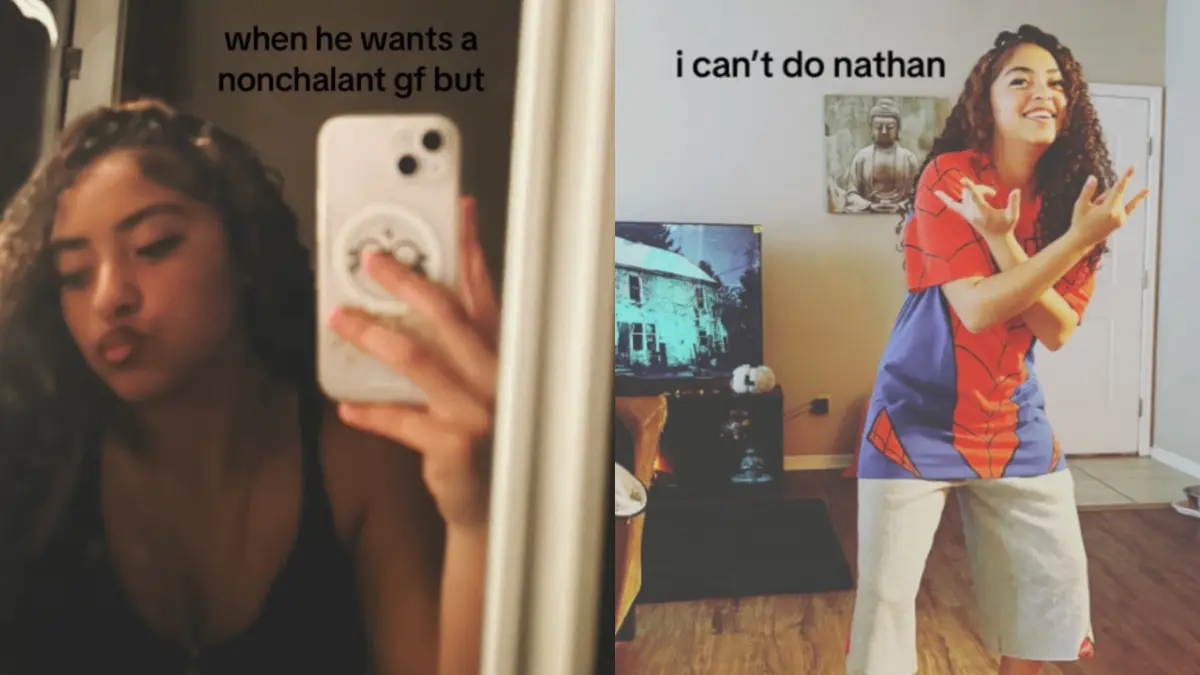
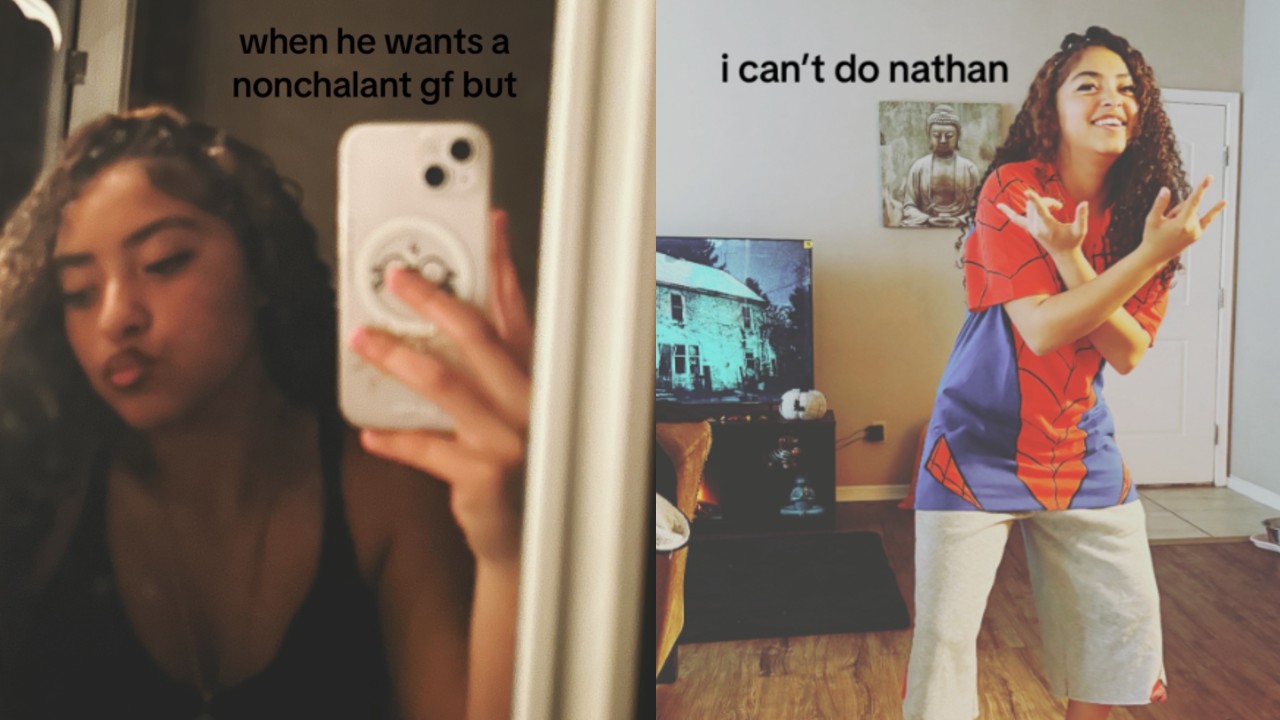
- September 5, 2026: TikToker @.name00123 introduced a text-based emotional juxtaposition by pairing the audio with a series of deadpan images under the caption, "When he wants a nonchalant gf but I can’t do Nathan." This unexpected marriage of internet slang ("nonchalant gf") with nonsensical audio resonated deeply, pushing past 1.1 million views in just three days.
- September 6, 2026: The text-only format bled onto X, where user @LiterallyMeGuy posted a simple text declaration of "I can’t do nathan," pulling in over 7,300 likes in 48 hours and proving the phrase had entered the broader lexicon as a standalone absurdist catchphrase.
Supporting Context & Metrics: Analyzing the Algorithmic Anatomy
The rapid ascent of "I Can’t Do Nathan" offers a fascinating case study in modern media consumption, characterized by specific metric milestones and behavioral patterns among Gen Z and Gen Alpha digital natives.
Quantitative Breakdown of Spread
| Platform | Key Creator / Account | Date Posted | Content Type | Engagement Metrics |
|---|---|---|---|---|
| YouTube | Blitzerz | Aug 18, 2026 | Original Long-Form Video | 187,000+ views (1 month) |
| TikTok | @therealzengu | Aug 25, 2026 | Gameplay + Puke SFX | 5.5+ million views (2 weeks) |
| eternalrll | Aug 28, 2026 | Rocket League Edit | 135,000+ likes (2 weeks) | |
| TikTok | @therealpoocher | Sep 2, 2026 | Custom Animation | 127,000+ views (6 days) |
| TikTok | @.name00123 | Sep 5, 2026 | Image Slideshow / Relatable Text | 1.1+ million views (3 days) |
| X (Twitter) | @LiterallyMeGuy | Sep 6, 2026 | Text-based Shitpost | 7,300+ likes (2 days) |
Linguistic Deconstruction and Auditory Pareidolia
Psychologically, "I Can’t Do Nathan" relies heavily on auditory pareidolia—the phenomenon where the human brain perceives a specific, familiar pattern (in this case, a human name) within a random or ambiguous acoustic signal.
When the young gamer spoke under emotional duress, his phonetic blending of the phrase "can’t do nothing" resulted in a linguistic slip that closely mirrored "can’t do Nathan." In internet culture, specific mishearings of children shouting or crying during online multiplayer sessions have a rich history of generating viral hits (dating back to classic Xbox Live meltdowns). However, "Nathan" stands out because it personalizes an abstract frustration. Instead of complaining about an amorphous lack of options ("nothing"), the kid’s slip-up creates a fictional, third-party antagonist named Nathan who is somehow responsible for his inability to counter the opponent’s aim assist.
Official Statements & Community Reactions
While neither Blitzerz nor the unidentified minor who originated the audio have released formal public press statements regarding the sudden explosion of internet fame, the broader gaming and creator communities have engaged in extensive commentary.
Gaming culture analysts on platforms like TikTok have noted that the clip highlights the uniquely unscripted, high-pressure, and often absurd nature of modern voice-chat culture in competitive multiplayer games. The innocent confusion of Blitzerz—who genuinely paused to ask, "Who’s Nathan?"—is frequently cited by community members as the emotional anchor of the clip. Rather than leaning into toxic hostility typical of many online gaming arguments, the interaction pivoted into a moment of collective, bewildered amusement.
Furthermore, digital culture commentators have pointed out the collaborative nature of the meme’s evolution. The addition of the puking sound effect by user @therealzengu transformed a simple mispronunciation into a multi-layered sensory joke, proving that contemporary memes are rarely consumed passively; rather, they are iteratively built upon by successive creators who add their own creative layers—whether through visual editing, animation, or ironic text captions.
Future Outlook: The Longevity of Absurdist Gaming Memes
As the initial wave of high-velocity engagement stabilizes, industry observers are left to consider the long-term legacy of "I Can’t Do Nathan."
Historically, audio-driven memes originating from platforms like TikTok follow a predictable lifecycle: rapid exponential growth, widespread saturation across secondary platforms like Instagram and X, a phase of surrealist abstraction (such as deep-fried edits and abstract animations), and eventual assimilation into internet history as a recognizable touchstone.
Because "I Can’t Do Nathan" relies on a catchy, easily repeatable phonetic cadence and a nonsensical character ("Nathan"), the phrase possesses strong catchphrase potential. It is highly likely that variations of the meme will continue to surface in gaming lobbies, meme compilation channels, and streaming chats for months to come. The unknown minor whose voice sparked the phenomenon has inadvertently joined the pantheon of accidental internet icons, reminding us that in the digital age, immortality can be achieved simply by mispronouncing a single word while losing a match of Fortnite.