Executive Overview
In the high-stakes, fast-paced environment of B2B SaaS and modern enterprise software, the cost of a bad sales hire goes far beyond base salary and commission structures. Every month a new Account Executive (AE) spends ramping up without producing results represents a compounding opportunity cost: squandered marketing qualified leads (MQLs), delayed revenue targets, overburdened sales leadership, and team demoralization.
Yet, startup founders and sales managers are routinely caught in a perpetual loop of indecision. When is a struggling sales rep just experiencing a normal onboarding friction curve, and when are they fundamentally unsuited for the role?
According to foundational insights from industry experts and the broader SaaStr community, the definitive answer is both sobering and precise: A new sales representative should generally be given between 1.0 and 1.5 sales cycles to prove their viability. While true mastery of a complex product, market positioning, and objection-handling takes time, sales leadership will almost always recognize underlying capability—or the lack thereof—much sooner.
This comprehensive report examines the exact timelines required to evaluate sales talent accurately, the subtle indicators of early success or failure, the hidden costs of holding onto underperforming reps for too long, and the strategic exceptions—such as having a hands-on VP of Sales—that can sometimes alter the trajectory of a slow-starting hire.
Detailed Chronology: The Lifecycle of a New Sales Rep’s Ramp-Up
Evaluating a new sales hire is not a passive waiting game; it is an active, phase-by-phase diagnostic process. To understand when to pull the plug or double down, sales leaders must break down the ramp-up period into distinct chronological milestones.
[Hire Date] ------------------------ [0.5 - 1.0 Cycles] ------------------- [1.0 - 1.5 Cycles]
   │                                        │                                         │
   ├─ Product Training & Script Mastery     ├─ "Getting on the Board" (1-2 Deals)     ├─ Full Quota Expectation
   ├─ Internal Systems Onboarding           ├─ Early Pipeline Movement                ├─ Hard Decision Point:
   └─ Prospecting Kickoff                   └─ Warning Signs of Blame Game               Pivot or Terminate
Phase 1: Onboarding and the First Half-Cycle (Days 1 to 30)
During the initial weeks, expectations must be tempered. A new AE is absorbing an immense volume of information: product architecture, competitive differentiation, pricing models, internal CRM workflows, and messaging scripts.
Expecting a freshly minted rep to hit full stride during this window is unrealistic. However, this period is critical for establishing habits. Leaders should be evaluating the rep’s intellectual curiosity, speed of comprehension, and willingness to role-play tough customer scenarios.
Phase 2: The Critical Window—Halfway Through to One Full Sales Cycle (0.5 to 1.0 Cycles)
This is the crucible of the sales evaluation process. Within roughly half to one full standard sales cycle, the top-performing reps invariably "get on the board."
It is crucial to note that getting on the board does not mean hitting 100% of an aggressive monthly or quarterly quota. Few new hires achieve that feat immediately. Rather, it means they have found a way to close something. They have pushed one or two smaller deals across the finish line.
If a rep fails to secure any closed-won business within this window, warning bells should ring. In most cases, if an AE cannot close a single deal in a standard sales cycle, the engagement rarely works out long-term. By this point, confidence begins to erode, self-doubt sets in, and the psychological barrier to closing becomes exponentially higher. Furthermore, it often exposes foundational deficiencies: inadequate training, poor lead qualification, or a fundamental mismatch in core sales competencies.
Phase 3: The Hard Deadline (1.0 to 1.5 Sales Cycles)
By the time the enterprise reaches 1.0 to 1.5 sales cycles, the ambiguity clears. The rep has either built a self-sustaining pipeline or they have not. If the AE has failed to close deals by this juncture, the narrative within team meetings invariably shifts.
This is where leadership begins to hear the classic excuses:
- "The product lacks the necessary enterprise features."
- "The marketing leads are low quality and unresponsive."
- "The sales training program was inadequate."
- "I just need another month or two to get fully up to speed."
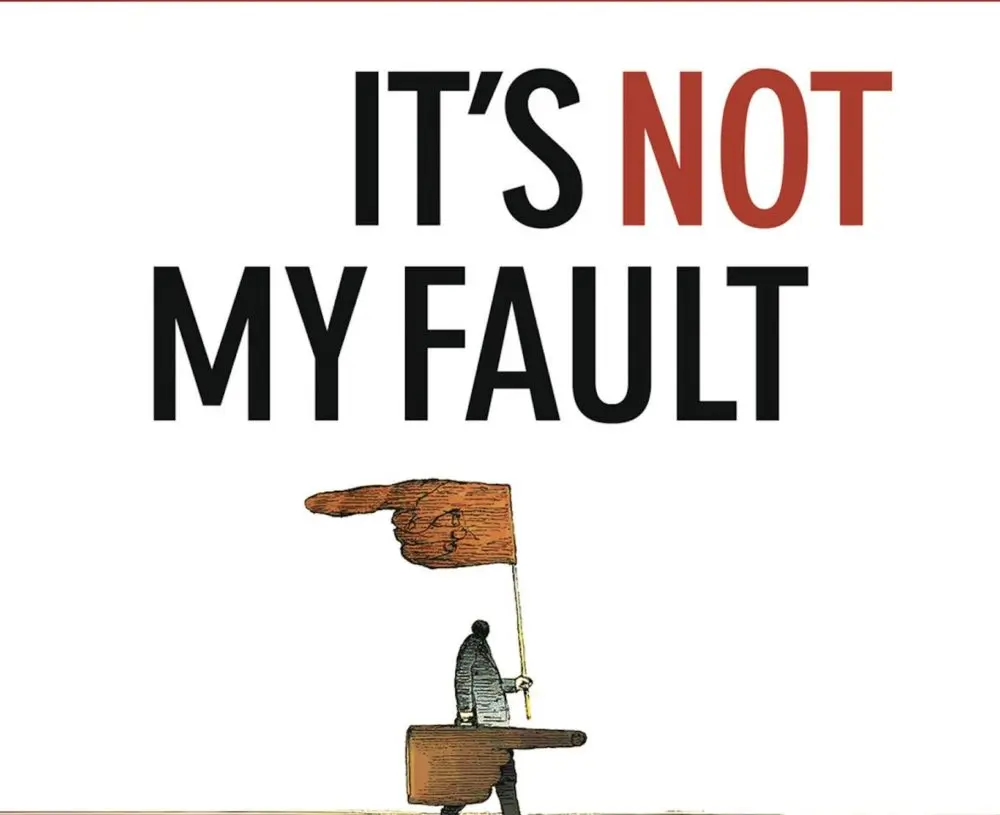
While elements of these statements may carry truth—no product is perfect, and marketing pipelines always have friction—the defining characteristic of elite sales talent is resilience. Exceptional reps find a way to close deals despite imperfect products, less-than-ideal leads, and messy onboarding frameworks. Underperformers use those exact same systemic challenges as a shield for their lack of output.
Supporting Context & Metrics: The Hidden Costs of Delayed Decisions
Indecision in sales management is exceptionally expensive. Many early-stage founders and inexperienced managers make the mistake of calculating a struggling rep’s cost solely through the lens of payroll: "They cost $8,000 a month in base pay, so keeping them for another month only costs us $8,000."
This narrow accounting ignores the three most destructive hidden costs of keeping an underperforming sales rep too long:
1. Squandered Leads and Pipeline Erosion
In most startups and scale-ups, high-intent inbound leads and well-researched outbound accounts are finite, precious resources. When an unproven or failing sales rep sits on a territory, they consume valuable leads that could have been routed to a proven closer.
Every discovery call botched by a slow-starting AE is a potential customer lost to a competitor. Worse, it damages the brand’s reputation in the market if the prospect experiences a disorganized, unpolished sales pitch. Founders must view lead distribution as an investment asset: precious early-stage leads should always be allocated to individuals who have proven they can convert them.
2. Management Drag and Team Demoralization
When a sales manager or founder spends disproportionate hours trying to coach a low-performing rep through basic competency gaps, they are neglecting the top performers who are driving the business. This creates a toxic dynamic where underperformers consume 80% of management’s attention while delivering 5% of the revenue. Furthermore, high-performing reps notice when standards are compromised, leading to team-wide frustration and potential flight of top-tier talent.
3. The Math of Sales Attrition
Consider a standard software sales cycle of 60 days (2 months).
- At 1.0 cycle (2 months): The writing is on the wall.
- At 1.5 cycles (3 months): The absolute outer boundary of reasonable evaluation.
- At 3.0 cycles (6 months): The danger zone where founders make emotional decisions to keep reps because "they’ve already been here half a year."
Extending a failing rep’s tenure from 3 months to 6 months does not just waste three months of salary; it delays the hiring and ramping of their replacement by a full quarter, effectively writing off six to nine months of target revenue.
Official Perspectives: The VP of Sales Exception
While the 1.0 to 1.5 sales cycle rule holds true for individual contributors operating in standard organizational structures, industry experience reveals a notable exception: The presence of an experienced, hands-on VP of Sales.
When a VP of Sales Changes the Equation
If a company brings on a seasoned VP of Sales who takes direct ownership of coaching, deal-structuring, and pipeline execution, the calculus shifts. A strong VP of Sales may be willing to carry an underperforming AE past the standard 1.5-cycle threshold.
Why? Because a capable sales leader can diagnose why a rep is stalling and actively intervene—joining client calls, restructuring proposals, refining discovery techniques, and effectively co-selling until the rep builds the muscle memory required to win independently.
┌────────────────────────────────────────────────────────┐
│              THE LEADERSHIP FACTOR                     │
├──────────────────────────┬─────────────────────────────┤
│ Founder-Led Sales        │ VP of Sales-Led Sales       │
│ Management               │ Management                  │
├──────────────────────────┼─────────────────────────────┤
│ • Limited time           │ • Dedicated coaching time   │
│ • Low patience for ramp  │ • Ability to co-sell & fix  │
│ • Strict 1-1.5 cycle cut │ • Willingness to extend run │
└──────────────────────────┴─────────────────────────────┘
However, founders must evaluate this dynamic realistically:
- Founders almost never possess the time, deep sales-coaching bandwidth, or emotional patience required to turn a slow-starting AE into a consistent quota-bearer. For founders, keeping a slow starter usually results in prolonged frustration and missed quarterly targets.
- VPs of Sales, conversely, are evaluated on overall team quota attainment. If a VP believes a particular slow starter has the raw cultural and intellectual raw materials to succeed—and is willing to invest their own sweat equity to rescue them—letting that leader carry the rep longer can occasionally yield high-reward outcomes.
Even at the leadership level, however, swift accountability remains the gold standard. As industry benchmarks indicate regarding executive hires (such as a VP of Sales), if leadership isn’t working out, the warning signs are typically undeniable within the first 30 days.
Future Outlook: Building a Predictive, Data-Driven Sales Culture
As B2B sales cycles evolve and buyers become increasingly sophisticated, relying on gut instinct to evaluate sales talent is no longer sufficient. High-growth organizations are moving toward predictive ramp models that look at leading indicators long before a deal is officially marked closed-won.
Leading Indicators vs. Lagging Metrics
Rather than waiting anxiously for the 1.5-cycle mark to see if revenue materializes, modern sales operations teams track predictive leading indicators within the first 30 to 45 days:
- Pipeline Generation Velocity: Is the rep actively sourcing and adding net-new opportunities to the CRM, or are they passively waiting for inbound leads?
- Activity-to-Conversion Ratios: How many cold touches translate into discovery calls? How many discovery calls convert to second meetings?
- Objection Handling Agility: How quickly does a rep internalize customer pushback on pricing, security, or feature gaps and adapt their pitch deck accordingly?
The Strategic Takeaway for Founders and Sales Leaders
Time is the ultimate non-renewable resource in early-stage and scaling companies. While empathy is a vital leadership trait, in sales management, prolonged empathy for a non-performing hire is often disguised procrastination.
To protect enterprise value, preserve marketing ROI, and maintain team morale, leadership must establish clear, non-negotiable evaluation milestones. Give new sales reps the tools, training, and support they need to succeed. Give them 1.0 to 1.5 sales cycles to prove their capacity to close. But when that window closes without results, make the hard, decisive choice: pivot, restructure, or part ways—and redirect those precious leads to someone who can cross the finish line.