Executive Overview
In an era dominated by relentless hustle culture and extreme athletic regimens—where waking up at 4:30 AM for punishing endurance blocks is frequently glorified as the only path to success—Berlin-based designer and flight attendant Hong represents a refreshing, highly effective paradigm shift. Once identifying firmly as a "non-runner," Hong is now actively training for her seventh marathon. Yet, her approach to the grueling demands of endurance sports defies conventional wisdom: she loves it cozy, values the snooze button, demands a morning coffee before any physical exertion, and insists that comfort and high-level athletic performance are not mutually exclusive.
This deep-dive feature explores Hong’s weekly training blueprint, dissecting how she balances a demanding, multi-continental career in aviation and design with the rigorous physical adaptations required for marathon running. By anchoring her schedule in holistic cross-training, mental well-being, community engagement, and intelligent recovery protocols, Hong proves that athletic longevity is built not on burnout, but on consistency, self-compassion, and joy. Through a detailed examination of her weekly chronology, the psychological frameworks driving her motivation, and expert insights into modern endurance training, this article reveals how everyday athletes can sustainably push their boundaries without sacrificing their quality of life.
Detailed Chronology: A Week in the Life of a Marathon-Training Flight Attendant
Balancing the erratic schedules of an international flight attendant and a creative designer with a marathon training block requires meticulous logistical execution. Below is the day-by-day breakdown of how Hong structures her physical and social life to maintain peak momentum without tipping into overtraining.
Monday: Establishing Rhythm and Psychological Triggers
- Professional Context: Working alternating shifts in design and aviation.
- Core Focus: Maintaining baseline motivation and pacing control.
Mondays set the tone for the week. Recognizing that the transition from a weekend of socializing or flying back into a heavy workload can trigger lethargy, Hong relies on intentional psychological cues. Her primary weapon against flagging motivation is her curated running playlist—a dynamic mix of disco, house, and techno designed to elevate her heart rate and trigger immediate mental alignment with the workout ahead.
However, Hong’s Monday run is also characterized by a unique tactical adjustment: singing. When fatigue sets in mid-stride, she deliberately dials back her pace and begins humming or singing along to her music. This physiological self-regulation forces her to control her breathing rhythm, naturally lowering her heart rate and extending her aerobic capacity while transforming a grueling training session into a moment of levity that frequently elicits smiles from passing pedestrians.
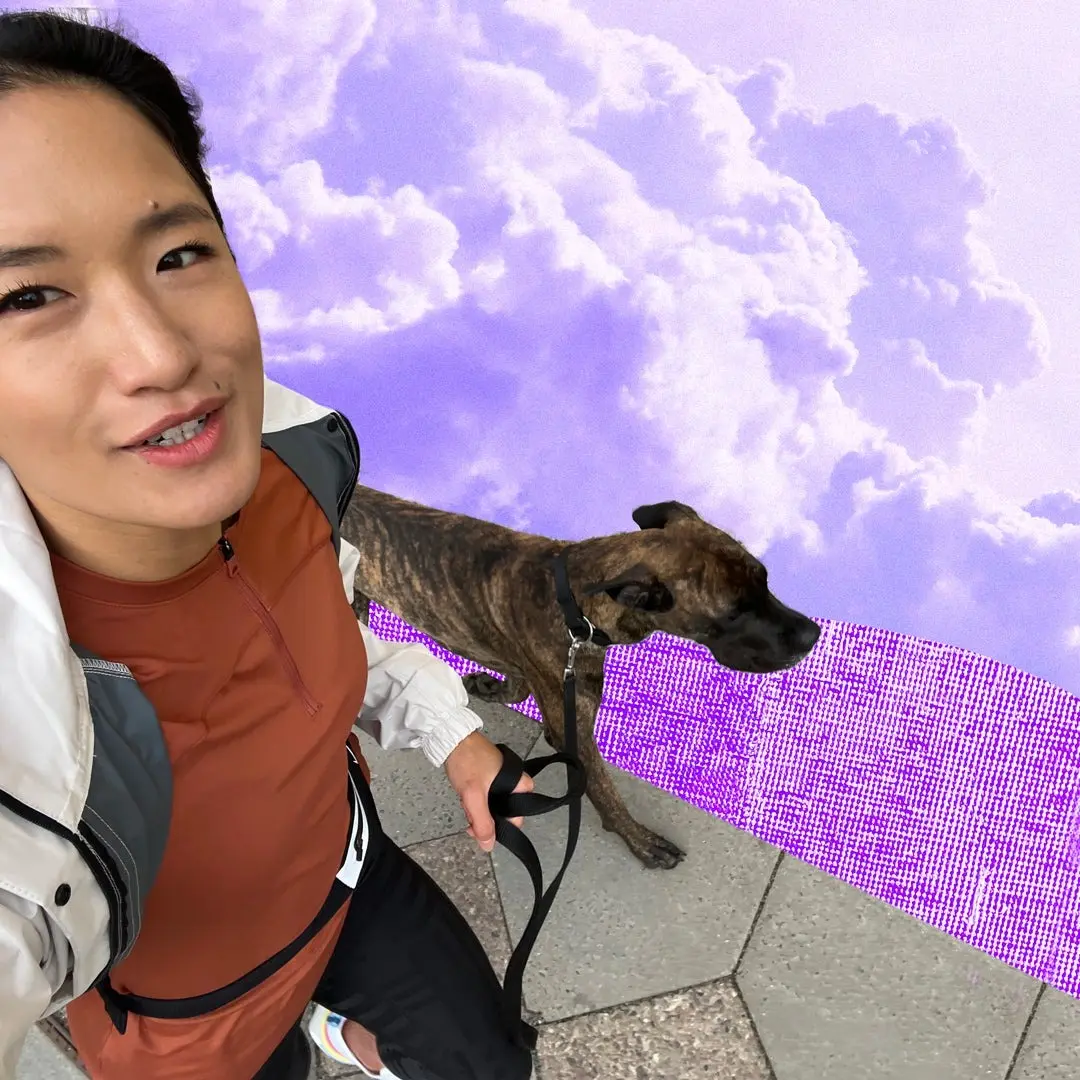
To inject additional companionship into her miles, Monday often features a canine running partner: a friend’s high-energy dog named Mia. The dynamic is mutually beneficial; Mia provides early-stage pulling power, while Hong’s steady endurance takes over in the later kilometers, proving that pace is secondary to sustained effort.
Tuesday: Cross-Training and Injury Mitigation
- Professional Context: Mid-week recovery integration.
- Core Focus: Yoga, strength training, and physical therapy.
True marathon preparation extends far beyond logging high mileage on asphalt. On Tuesday, Hong foregoes running entirely, shifting her focus to structural integrity. Her regimen includes targeted strength training designed to reinforce stabilizing muscles, proactive physical therapy sessions to address micro-tightness, and restorative yoga.
This holistic cross-training framework provides the structural armor necessary when she chooses to step outside her comfort zone later in the week. By building a robust musculoskeletal foundation, Tuesday’s work ensures that her high-intensity sessions do not result in acute trauma or excessive systemic fatigue. Crucially, this is paired with scheduled rest, allowing her body to supercompensate and prepare for the upcoming loads.
Wednesday: Social Integration and Cultural Respite
- Professional Context: Maximizing time in Berlin between international flights.
- Core Focus: Mental decompression and community connection.
As someone whose career as a flight attendant routinely pulls her across time zones and continents, time spent in Berlin is a precious commodity. Wednesday is designated as a social and cultural anchor. Rather than forcing a redundant workout when her schedule and social obligations intersect, Hong prioritizes mental recovery. She catches up with friends and immerses herself in Berlin’s thriving art scene by visiting local exhibitions. This psychological reset is treated as an active component of her training block, recognizing that mental burnout is just as detrimental to marathon performance as physical fatigue.
Thursday: Pushing Limits and Track Dynamics
- Professional Context: High-stress cognitive week paired with high-intensity physical output.
- Core Focus: Speed work, anaerobic threshold testing, and gear optimization.
Dispelling the myth that marathon runners effortlessly leap out of bed at dawn to effortlessly churn out 20 kilometers, Thursday often requires an extra dose of conscious motivation for Hong. To bridge the gap between her desire for comfort and the demands of a hard track workout, she relies on premium gear optimization—specifically lacing up in the Nike Invincible 3. The shoe’s highly responsive, "bouncy" foam cushioning and stable platform across varied surfaces provide the tactile comfort and psychological security needed to tackle high-speed intervals.
Thursday’s session is all about velocity and anaerobic threshold testing. Hong leans into her love for competitive challenges, rigorously testing how long she can hold aggressive paces around the track. This is where her structured Tuesday cross-training pays dividends, allowing her to safely push her physical limits without compromising form.
Friday: Active Recovery and Creative Exploration
- Professional Context: Post-track workout fatigue management.
- Core Focus: Gentle mobility and social reconnection.
Following the heavy tax of Thursday’s track session, Friday is mapped out for intentional recovery. Aside from a light, restorative yoga flow to flush out metabolic waste from the lower limbs, Hong keeps her physical exertion minimal. She meets friends to explore another local gallery or exhibition, reinforcing her commitment to maintaining a rich identity outside of running. For Hong, athletic pursuits enhance her life rather than consume it.
Saturday: The Iconic Long-Form Solitude Run
- Professional Context: Weekend decompression.
- Core Focus: The Landwehrkanal route, mindful dissociation, and local rewards.
Saturday morning belongs to the Landwehrkanal—Hong’s signature testing ground. This route offers a varied terrain of hard asphalt, soft grass, and unpredictable mud, challenging ankle stability and core engagement.
During these medium-to-long efforts, Hong alternates between deep mental dissociation powered by immersive podcasts and complete silence, allowing her to absorb the ambient auditory landscape of Berlin. Observing the vibrant street life around her provides a grounding sense of place. Upon completion, she executes her non-negotiable post-run ritual: securing a fresh coffee and a artisanal snack from a local market stand in Kreuzberg.
Sunday: Collective Endurance and the Joy Run Collective
- Professional Context: End-of-week community integration.
- Core Focus: Long slow distance (LSD) run through the Tiergarten and social bonding.
Sunday serves as the physical and social culmination of Hong’s training week. Running alongside her community, the Joy Run Collective, she tackles a protracted long-distance endurance run through the sprawling expanse of the Tiergarten.
Operating in lower temperatures and covering extended durations requires calculated preparation, from layering thermal apparel to pacing discipline within a pack. The psychological lift of shared suffering and collective momentum transforms a challenging distance into a celebratory event. The week concludes with a communal ritual that Hong anticipates for days: a post-run brunch featuring handmade dumplings prepared by a fellow collective member, proving that culinary rewards are among the most powerful motivators in endurance sport.
Supporting Context & Metrics: The Evolution of Modern Amateur Endurance
Hong’s trajectory—transforming from an ambivalent recreational jogger into a seasoned marathoner in her thirties—reflects broader demographic shifts in global endurance sports. According to recent sports science and industry data, the profile of the modern marathon runner has evolved significantly over the past decade.
Demographic Shifts: The Rise of the 30+ Female Endurance Athlete
Historically dominated by elite male runners and rigid coaching paradigms, the endurance community has seen a massive surge in participation among women aged 30 to 45. Industry reports from major European marathons indicate that female participation in the full 42.195-kilometer distance has risen by over 35% in the last ten years.
Furthermore, data shows that athletes entering the sport in their late twenties and thirties often exhibit greater psychological longevity than their younger counterparts. Armed with developed self-awareness, professional stress-management skills, and a refusal to adopt puritanical training mentalities ("no pain, no gain"), these athletes view training as a sustainable lifestyle integration rather than a temporary obsession.
The Physiology of "Cozy" Training and Parasympathetic Recovery
Sports scientists increasingly validate Hong’s emphasis on comfort, sleep, and mental well-being. Chronic elevation of cortisol—driven by the combination of high-stress professional careers (such as aviation and design) and overtraining—significantly impairs athletic recovery and increases injury rates.
- The Role of Parasympathetic Dominance: Rest days, social outings, art exhibitions, and culinary rewards act as powerful activators of the parasympathetic nervous system ("rest and digest"). This dampens systemic inflammation and accelerates muscle protein synthesis.
- Cross-Training Efficacy: Integrating yoga, strength training, and physical therapy directly addresses structural imbalances. Research published in the Journal of Strength and Conditioning Research indicates that runners who incorporate at least one dedicated strength and mobility session per week reduce their incidence of running-related overuse injuries by up to 50%.
Official Statements & Expert Perspectives
To contextualize Hong’s philosophy within the broader framework of modern athletic coaching, industry experts emphasize the critical balance between psychological enjoyment and physiological adaptation.
"The modern endurance athlete cannot rely on sheer willpower alone. In high-stress urban environments like Berlin, training must serve as a regenerative outlet rather than an additional source of anxiety. When athletes like Hong prioritize sleep, community, mental downtime, and sensory pleasure—such as music, dogs, and post-run dumplings—they are not compromising their discipline; they are optimizing their hormonal profile for sustained adaptation."
— Dr. Elena Vance, Exercise Physiologist and Endurance Coach
"We are seeing a definitive shift away from the archaic ‘miles at all costs’ mentality. Gear innovation, such as high-energy-return foams like those found in the Nike Invincible 3, combined with community-led running collectives, have democratized marathon training. It is no longer about suffering in isolation; it is about shared experiences, mental resilience, and feeling secure in every stride you take."
— Marcus Lindqvist, Sports Footwear Analyst and Biomechanics Researcher
Future Outlook: The Horizon of Sustainable Endurance
As Hong sets her sights firmly on her seventh marathon, her journey offers a compelling blueprint for the future of recreational endurance sports. The old guard of marathon training—characterized by monastic isolation, sleep deprivation, and an obsessive focus on pacing metrics—is rapidly giving way to a more holistic, community-centric model.
Key Takeaways for Everyday Athletes
- Consistency Outranks Perfection: Missing a single early-morning session to prioritize sleep or social connection will not derail a marathon block. Long-term consistency over months and years is what builds true aerobic capacity.
- Comfort as a Performance Metric: Utilizing high-performance gear that minimizes impact stress, listening to music or podcasts that regulate mood, and tailoring routes to scenic urban landscapes directly influences psychological stamina.
- Community as an Anchor: Joining local running collectives transforms solitary endurance tests into shared cultural experiences, drastically lowering dropout rates during heavy training blocks.
- Integration, Not Isolation: True fitness should enhance one’s professional and social life, not detract from it. Whether working as a designer, flying international routes, or exploring local art galleries, a well-rounded life fuels a resilient runner.
As Hong prepares to toe the line for her next major 42-kilometer test, she stands as living proof that you do not need to sacrifice your comfort, your social life, or your love for sleep to become a high-performing endurance athlete. By seamlessly blending rigorous physical preparation with unadulterated joy, she redefines what it means to run far, run strong, and—above all—run happy.
Hong’s 3 Golden Rules for Maximum Running Enjoyment
- Prioritize Footwear Comfort: Invest in supportive, high-rebound footwear like the Nike Invincible 3 to ensure every kilometer feels protected and energized across shifting urban terrains.
- Curate Your Auditory Environment: Maintain a versatile playlist (spanning disco, house, and techno) to rescue flagging motivation, or use strategic pacing adjustments like controlled breathing and singing to reset mid-run.
- Design a Holistic Post-Run Ritual: Pair scenic, engaging routes (such as Berlin’s canals and parks) with a rewarding social finish line, whether that involves a community brunch, artisanal coffee, or handmade dumplings with friends.