Executive Overview
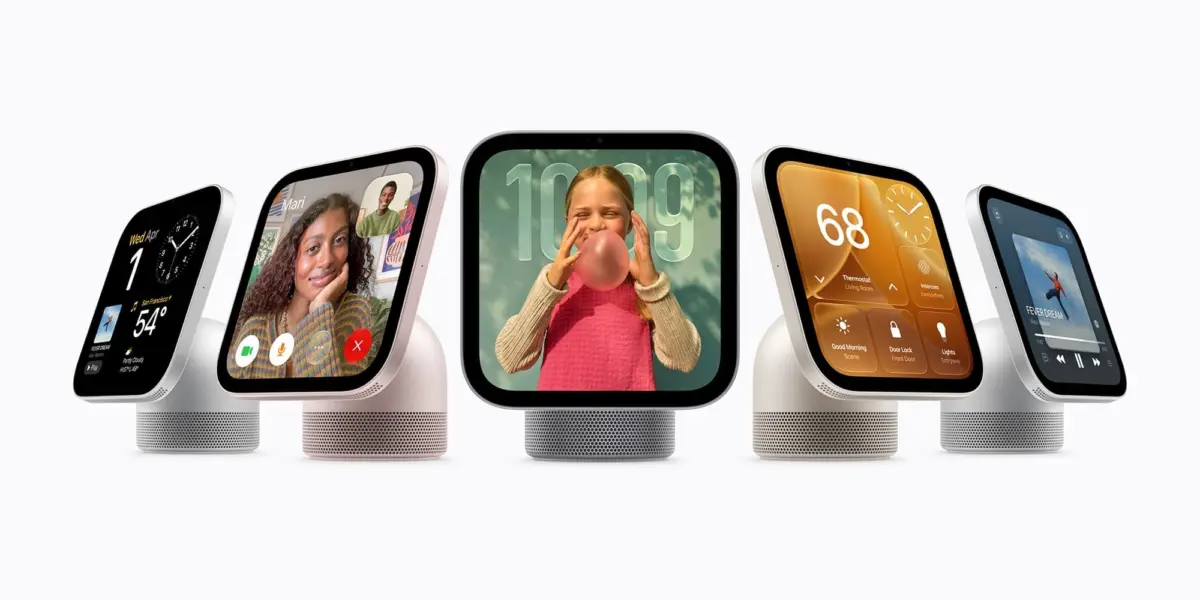
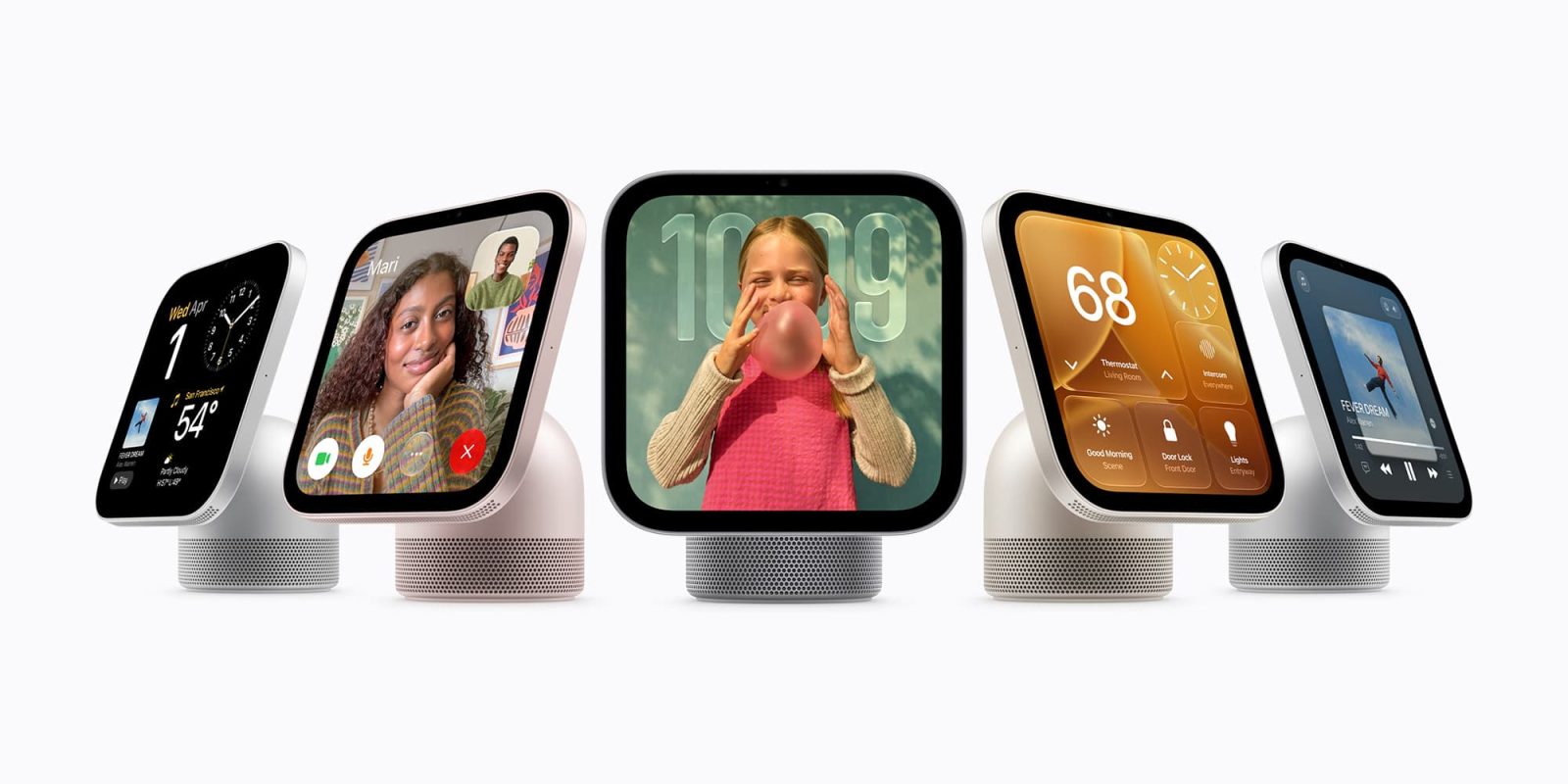
Ahead of its official retail release on November 13, Apple has unexpectedly rolled out HomeView system update version 27.2 (Build 24V514). Designed to power the company’s much-anticipated smart home hub, the software update has already begun circulating through internal validation channels and preliminary availability configurations. While the hardware remains available for pre-order, the unexpected release of HomeView 27.2 has opened a rare window into Apple’s upcoming ecosystem.
Beyond laying the foundational software architecture for the smart home hub, the update serves as a treasure trove for digital sleeks and enthusiasts alike. It officially unmasks the default aesthetic identity of the device, packaging 20 distinct wallpapers—each split into dedicated light and dark mode variants—alongside early previews of the hardware’s interface customization menus. Furthermore, deep-dive forensic analysis by software developers has unearthed intriguing remnants of earlier internal development builds, validating persistent rumors that Apple originally intended to bring this hardware category to market much earlier.

This comprehensive report explores the implications of the HomeView 27.2 rollout, analyzes the aesthetic and functional design choices embedded within Apple’s new operating system, evaluates the developer-discovered interface assets, and contextualizes what this launch means for Apple’s long-term smart home strategy.

Detailed Chronology of the Release
The trajectory toward the launch of Apple’s smart home hub has been defined by years of quiet development, shifting internal timelines, and regulatory milestones. Understanding the significance of HomeView 27.2 requires tracing the timeline of how Apple arrived at this release.

The Long Road to Market
Industry analysts have tracked Apple’s ambitions in the dedicated smart home display category for half a decade. Early supply chain reports began circulating in late 2023, indicating that Apple was prototyping wall-mountable command centers equipped with localized processing units to manage HomeKit accessories, intercom messaging, and FaceTime communication.

By mid-2024, expectations were high for an imminent product rollout. However, engineering hurdles, shifting priorities within Apple’s software engineering divisions, and the refinement of spatial intelligence features reportedly delayed the hardware’s debut. Hidden assets discovered within the HomeView 27.2 codebase—specifically a residual graphic referencing "HomeView Software 26," highlighted by security researcher Aaron Perris on social media—lend heavy credence to the theory that Apple missed an intended late-2024 launch window, pushing the device’s release cycle into late 2025.

The Pre-Order Phase and Software Drop
With the hardware finally locking in a confirmed public release date of November 13, Apple opened pre-orders, allowing early adopters to secure their units. In a move that caught many by surprise, Apple’s servers pushed out the HomeView 27.2 update (Build 24V514) shortly after pre-orders went live.

While end-users cannot yet run the operating system on unreleased hardware, the build was quickly intercepted by the developer community. Reverse-engineering efforts immediately began extracting system assets, transforming what would typically be a routine pre-launch firmware deployment into a major preview event for digital customizers.

Aesthetic Identity: Analyzing the HomeView 27.2 Wallpaper Collection
Apple has always treated wallpapers as an integral extension of its hardware design language, utilizing color theory, texture, and minimalism to showcase display fidelity. The HomeView 27.2 update introduces 20 unique wallpaper concepts, tailored specifically for the smart home hub’s screen geometry.

Because the hardware features a balanced, squared display footprint, the raw source assets feature a native 1:1 aspect ratio. However, Apple’s ecosystem design ensures that these images can be scaled, cropped, and adapted across iPhones, iPads, and Macs.

Categorizing the Design Families
The 20 default wallpapers are categorized into distinct stylistic families, each offering paired light and dark mode executions to accommodate changing ambient lighting conditions in a living space:

-
Environment Collection (Environments 1–4):
Focusing on organic textures, subtle geographical abstractions, and natural lighting shifts, these wallpapers are designed to blend harmoniously into domestic environments. In light mode, they present airy, daylight-infused palettes, whereas their dark mode counterparts transition into deep, muted tones that prevent the display from becoming an aggressive light source in a dark room.
-
Gradient Collection (Gradients 1–8):
Apple’s mastery of color blending is on full display here. Ranging from vibrant, energetic fusions of electric blue and warm violet to restrained monochromatic fades, these abstract gradients utilize smooth mathematical transitions. They provide a clean, uncluttered backdrop that ensures UI elements, widget cards, and smart home toggles remain legible at a glance.
-
Illustrative Collection (Illustrative 1–4):
Moving away from pure abstraction, the illustrative series incorporates vector-based geometric compositions and playful layering. These wallpapers introduce character and warmth to the interface, signaling Apple’s intent for the device to feel approachable and friendly rather than purely utilitarian.
-
Material Collection (Materials 1–4):
Mimicking physical textures—such as frosted glass, brushed metals, woven textiles, and ceramic finishes—the material wallpapers tie the digital software experience directly to the physical industrial design of the device’s chassis and surrounding home decor.
Cross-Platform Adaptability
Although these wallpapers were engineered specifically for the HomeView operating system, their 1:1 canvas makes them versatile for universal deployment. Users running modern versions of iOS, iPadOS, and macOS can easily import these graphics, utilizing Apple’s native wallpaper cropping and perspective zoom settings to fit them onto rectangular smartphone panels or widescreen desktop monitors.

Software Architecture and Interface Customization
Beyond aesthetics, the HomeView 27.2 codebase provides the first tangible look at how users will interact with the device on a daily basis. Prominent developer Guilherme Rambo shared early insights into the system’s face customization and layout management interfaces via Mastodon, shedding light on the user experience philosophy driving the new hub.

Modular Customization
The interface screenshots extracted from Build 24V514 confirm that Apple is heavily emphasizing personalization. Much like watchOS complications or iOS Lock Screen widgets, HomeView allows users to configure modular dashboards.

- Dynamic Complications: Users can pin real-time data feeds—such as indoor air quality metrics, local weather forecasts, security camera feeds, and energy consumption statistics—directly onto their primary screen.
- Contextual Profiles: The system supports multiple layout profiles, enabling the display to adapt depending on the time of day, user proximity (detected via ultra-wideband or spatial sensors), or specific home automation routines.
Performance and Responsiveness
Built on a lightweight, highly optimized branch of Apple’s unified operating system architecture, HomeView 27.2 prioritizes low latency and high reliability. Smart home hubs operate under rigorous demands; they must wake instantly from sleep states, maintain persistent local mesh network connections (via Thread and Matter protocols), and render UI elements seamlessly without thermal throttling. The inclusion of Build 24V514 indicates that Apple has spent the intervening months between the hardware’s original target window and the present refining background resource management and memory allocation.

Supporting Context & Metrics: The Smart Home Landscape
To fully understand why Apple is launching this dedicated hardware category now, one must examine the broader macroeconomic and technological trends governing the smart home market.

Market Dynamics and Ecosystem Lock-In
The global smart home automation market has experienced exponential growth, transitioning from niche hobbyist setups to mainstream household infrastructure. However, consumer frustration remains high due to fragmentation among competing voice assistants, proprietary protocols, and inconsistent app interfaces.

- The Matter Standard: The universal adoption of the Matter protocol has leveled the playing field, making it easier for Apple Home to interoperate with third-party lighting, HVAC, and security hardware.
- The Control Center Gap: While iPhones and iPads serve as powerful remote controllers, industry research indicates that consumers prefer persistent, dedicated environmental displays placed in high-traffic areas like kitchens and hallways. By introducing a dedicated hardware hub, Apple is directly addressing this consumer preference, closing the loop against competing offerings from Amazon and Google.
Supply Chain and Pricing Metrics
While launch pricing details fluctuate by regional market, supply chain analysts note that Apple has positioned this product to capture the premium mid-tier segment. Rather than competing at the ultra-cheap end of smart displays, Apple is banking on superior display calibration, privacy-first processing (leveraging on-device Apple Intelligence where applicable), and seamless ecosystem continuity to justify hardware investment.

Future Outlook: What Lies Beyond November 13
As the November 13 retail release date approaches, HomeView 27.2 represents more than just a pre-launch firmware update—it is the opening salvo of Apple’s renewed push into ambient computing.

Software Roadmaps and Iterative Updates
With Build 24V514 establishing the baseline operating system, software engineers are already looking ahead to subsequent point releases. Industry insiders suggest that subsequent updates in the HomeView 27.x cycle will likely introduce deeper integrations with upcoming generative AI features, expanded multi-user voice recognition profiles, and advanced computer vision capabilities utilizing built-in camera hardware for gesture control and occupancy sensing.

Ecosystem Expansion
The introduction of the HomeView operating system hints at a modular software strategy that could eventually scale beyond a single smart home hub form factor. As developers dissect every line of code within these early releases, it becomes increasingly clear that Apple is building a cohesive ambient software foundation designed to govern the spatial computing and automated living spaces of the next decade.

For now, enthusiasts and early adopters can download the freshly unearthed wallpaper collection, configure their devices in anticipation of the November 13 launch, and prepare for a new chapter in Apple’s home ecosystem.