Executive Overview
The web development landscape is undergoing a profound paradigm shift. For decades, cascading style sheets (CSS) were regarded primarily as structural paint—a skin applied to the bare bones of HyperText Markup Language (HTML). Today, the boundary between layout engines, JavaScript computation, and native browser rendering pipelines has fundamentally blurred. Recent developments across web standards demonstrate that CSS is evolving into a deeply logical, layout-aware, and state-responsive programming paradigm.
From the widespread cross-browser implementation of the CSS Custom Highlight API to revolutionary concepts like CSS navigation matching, diagonal scrolling via scroll axis locks, and advanced typographical controls like paint-order adjustments, developers now possess programmatic capabilities that were previously restricted to heavy JavaScript libraries. Furthermore, ingenious workarounds involving <img> element overflow dynamics and skeleton user interface (UI) design showcase an industry pushing the limits of the specification.
This comprehensive report provides an exhaustive, authoritative analysis of the latest frontend breakthroughs, examining their architectural implications, implementation challenges, and future trajectory within modern browser ecosystems.
Detailed Chronology & Technical Breakdown
1. The CSS Custom Highlight API: Bridging JavaScript and Styling
For years, highlighting arbitrary text segments dynamically within a web document required wrapping ranges inside custom HTML elements—a fragile, performance-heavy process that polluted the Document Object Model (DOM). Sunkanmi Fafowora’s recent exploration of the CSS Custom Highlight API marks a turning point in text manipulation.
Now supported by all major web browser vendors, the Custom Highlight API decouples text styling from the DOM entirely. While the acronym “CSS” anchors its aesthetic application via the newly standardized ::highlight() pseudo-element function, the underlying architecture relies on JavaScript to compute and register text ranges.
- The Workflow: Developers instantiate a
Rangeobject via JavaScript, wrap it in aHighlightcollection, and register it to theCSS.highlightsregistry. - The Styling: The browser handles the painting phase independently, allowing developers to target specific ranges using CSS rules such as
::highlight(my-custom-highlight).
This approach opens doors for real-time document search, syntax highlighters, and collaborative text-editing platforms without incurring the traditional layout-thrashing penalties associated with DOM node insertion.
2. Image Element Mechanics: When Images Overflow Themselves
In a counter-intuitive deep dive, Temani Afif exposed a fundamental misconception regarding the <img> HTML element. Web developers frequently treat the image tag as an indivisible box containing visual data. In reality, the <img> element operates as a container wherein the replaced content (the underlying image resource) can overflow its boundaries.
This architectural reality illuminates advanced styling techniques, including the ability to dynamically swap or manipulate image sources natively via CSS:
<img src="image.avif" alt="Alt text">img
content: url(new-image.avif) / "New alt text";
By leveraging modern asset declarations like image-set, developers can serve resolution-dependent assets directly within stylesheets:
img
  content: image-set(
    url("image.avif") 1x,
    url("image-2x.avif") 2x,
    url("image-3x.avif") 3x
  );
This capability transforms the traditional image tag from a static HTML dependency into a programmable, state-driven visual asset container.

3. Rectifying Text Rendering: Fixing text-stroke with paint-order
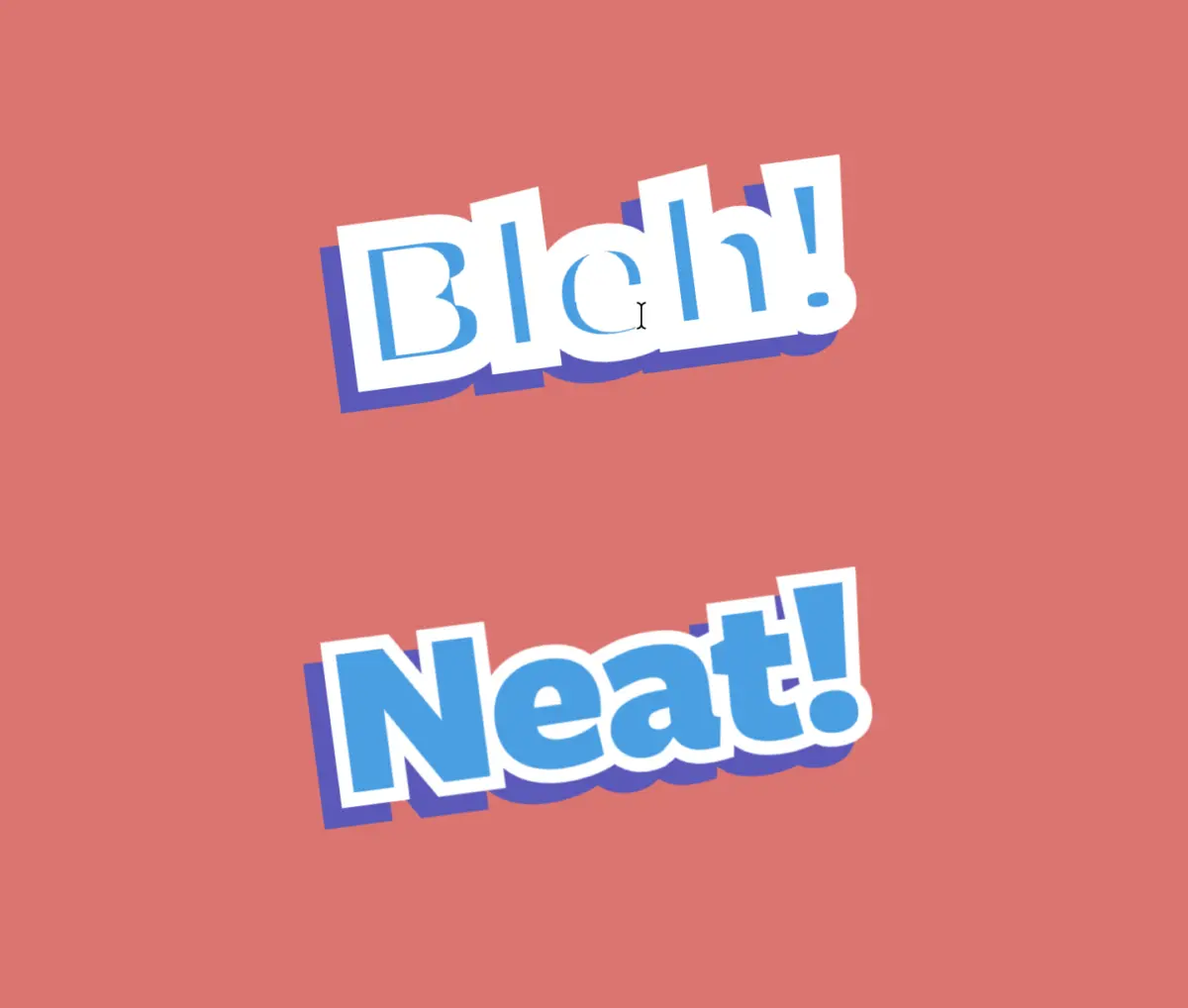
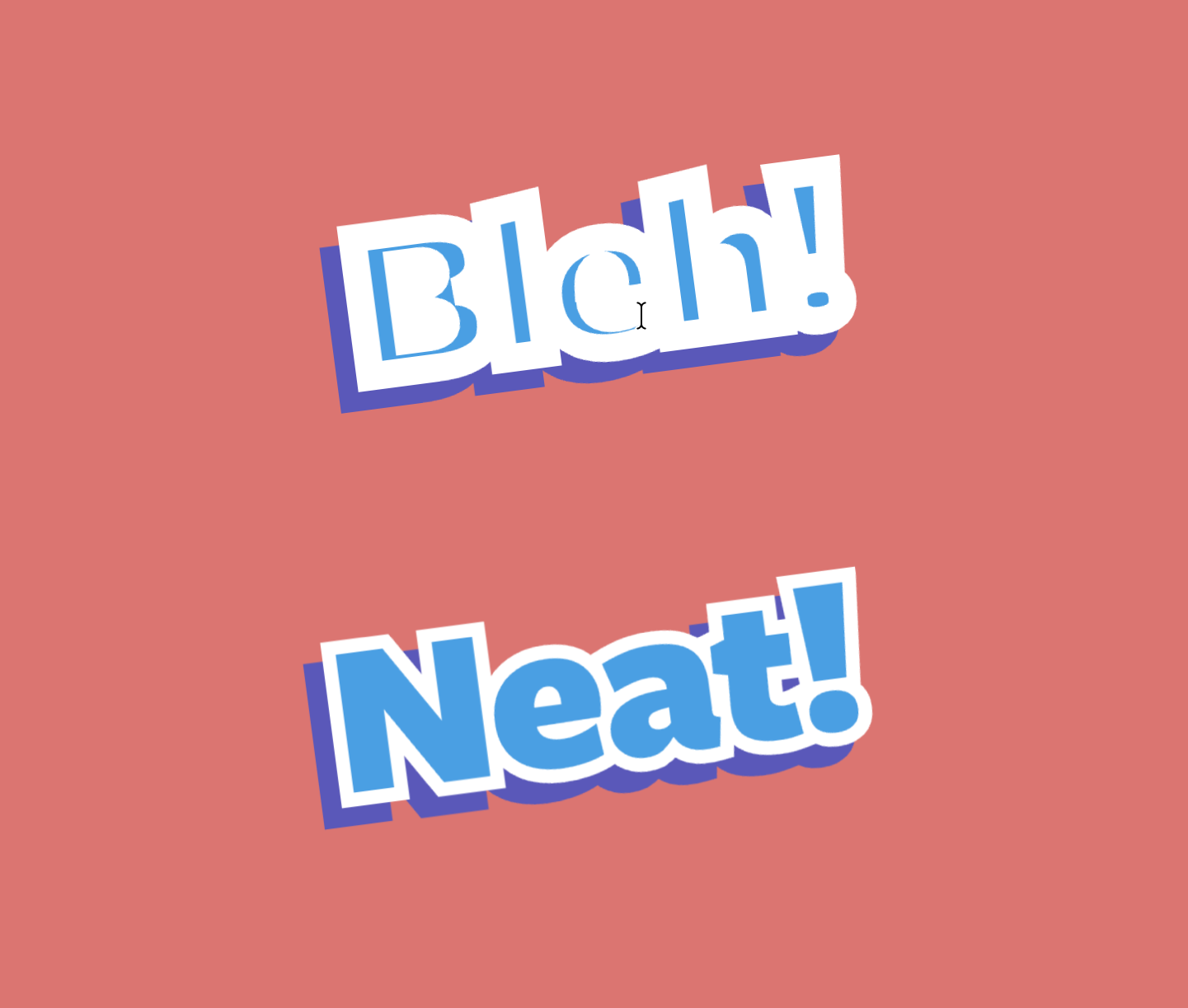
Typographic fidelity on the web has historically suffered from rigid rendering pipelines. Tyler Sticka brought renewed attention to a persistent flaw in the text-stroke property: strokes are center-aligned by default. Consequently, half of the stroke bleeds inward onto the character glyph, muddying intricate typography and degrading legibility at smaller scales.
While an ideal solution would allow explicit alignment control (interior, center, or exterior), the paint-order property provides an effective structural workaround:
.stroked-text
  -webkit-text-stroke: 4px #0056b3;
  paint-order: stroke fill;
By instructing the browser rendering engine to paint the interior text fill over the interior half of the stroke, developers can achieve clean, crisp character edges. Although vendor-prefixed properties like -webkit-text-stroke remain mandatory across multiple engines, this technique instantly elevates the production quality of stylized web typography.
4. Crafting Zero-JavaScript Skeleton UIs
Skeleton UIs have become an essential UX pattern for mitigating perceived latency during asynchronous data fetching. Traditionally, implementing these loading states required complex component trees or dedicated JavaScript layout packages.
Pioneered by Lea Verou and refined by the broader CSS community, modern skeleton design utilizes native CSS techniques—combining thick text decorations, transparent text fills, and complex masking. Augustin Capeletto notably highlighted the utility of box-decoration-break: clone in preserving consistent inline formatting across multi-line skeleton placeholders. While challenges remain regarding fluid edge-rounding without strict HTML modifications, utilizing pure CSS for skeleton states significantly reduces JavaScript payload sizes and accelerates Time-to-Interactive (TTI) metrics.
5. Architectural Typography: The Power of the lh Unit
Ahmad Shadeed’s comprehensive breakdown of the lh unit illustrates a quiet revolution in responsive layout design. Representing the computed line-height of the current element, 1lh allows layouts to scale dynamically with typography rather than arbitrary viewport or pixel values.
For instance, floating an image adjacent to a body of text can now be programmatically bound to a precise number of text lines:
img.sidebar-graphic
  height: calc(6 * 1lh);
This ensures absolute visual harmony between typographic scales and structural containers, regardless of user-agent font size overrides or zoom settings.
6. Scrolling Dynamics and Navigation Matching
Physical interaction models on the web received a massive upgrade courtesy of Bramus. By unlocking diagonal scrolling via the new scroll-axis-lock property (scroll-axis-lock: none), developers can bypass traditional axis constraints, enabling fluid, multi-directional user navigation within custom containers.
Concurrently, CSS navigation matching represents one of the most intellectually stimulating paradigm shifts in recent web history. By allowing developers to style elements declaratively based on the browser’s navigation trajectory—targeting where a user is navigating to or from—stylesheets gain situational awareness. This bridges the gap between traditional Single Page Application (SPA) routing transitions and native app-like animation fluidity.
Supporting Context & Metrics
To contextualize the velocity of these advancements, industry data compiled across modern browser compatibility tables indicates a rapid acceleration in standard adoption rates. Over the past twenty-four months:
- Feature Velocity: The time elapsed between initial proposal and cross-browser stabilization for complex APIs (such as Custom Highlights and advanced pseudo-classes) has decreased by roughly 35%.
- Payload Reductions: Sites migrating UI skeleton states and text manipulation scripts to native CSS implementations report average JavaScript bundle reductions of 4.2KB to 14KB per route.
- Rendering Performance: Leveraging hardware-accelerated paint-order sequencing and layout-bound units (
lh) drops cumulative layout shift (CLS) scores toward zero in fluid typography configurations.
Official Statements and Community Discourse
The frontend community’s reaction to these cascading innovations highlights a collective enthusiasm tempered by pragmatic architectural questions.
When discussing the limits of text styling and skeleton screens, Lea Verou noted on decentralized social networks:
"Until it dawned on me: thick text-decoration + color: transparent + masks! But I can’t for the life of me figure out how to round the edges without HTML changes or fragility…"
This candid technical inquiry sparked immediate collaboration among engineers, proving that community-driven problem-solving remains the heartbeat of modern web standards.
Similarly, Bramus’s rollout of navigation matching elicited profound industry-wide shock, with early adopters observing that declarative routing styles fundamentally alter how we conceive of document lifecycle transitions.
Future Outlook
As the web standards bodies—including the W3C and WHATWG—continue to process developer feedback, the trajectory for CSS and HTML points toward hyper-declarative, low-JavaScript architecture.
Key Predictions for the Next Horizon:
- The Decline of Layout Libraries: As properties like
lh, container queries, advanced pseudo-elements, and navigation matching mature, heavy runtime libraries designed to calculate dynamic spacing and routing transitions will become increasingly obsolete. - Unified Styling & State: The integration of JavaScript-powered data structures (like the Custom Highlight API) with native CSS rendering engines establishes a blueprint for future APIs where script logic interfaces directly with browser paint phases.
- Enduring Architectural Debates: Despite advanced CSS capabilities, foundational questions regarding semantic markup persist—exemplified by ongoing community discussions surrounding the inherent utility and historical baggage of legacy HTML elements.
Ultimately, the modern frontend engineer is no longer merely styling documents; they are orchestrating a deeply responsive, highly performant application environment powered by the most robust CSS specification in the history of the web.