Executive Overview
The modern endurance sports landscape is experiencing a paradigm shift. For decades, the dominant cultural narrative surrounding marathons demanded uncompromising asceticism: punishing predawn wake-up calls, grueling mileage thresholds, and a psychological embrace of suffering over style, ease, and individual expression. Today, however, a new generation of everyday athletes is rewriting the rules of high-performance training. They are proving that grueling physical ambition and holistic personal comfort do not have to exist in mutual exclusion.
Nowhere is this cultural evolution more apparent than in the life of Hong, a Berlin-based designer and flight attendant who is currently training for her seventh official marathon. Once identifying firmly as a non-runner who struggled to function before her morning coffee, Hong has cultivated a dynamic, highly balanced lifestyle that seamlessly integrates elite-level endurance preparation with a demanding professional career, an active social calendar, and an unwavering commitment to personal well-being.
This in-depth investigative feature explores Hong’s weekly training methodology, breaking down how a modern metropolitan athlete balances high-intensity track workouts, injury-prevention conditioning, community runs, and intentional rest. Far from the rigid, joyless regimens of the past, Hong’s approach demonstrates that consistency is not born from deprivation, but from creating a sustainable ecosystem of comfort, community, and joy. Through a detailed examination of her weekly schedule, training philosophy, and recovery protocols, we uncover the modern blueprint for sustainable athletic longevity.
Detailed Chronology: A Week in the Life of a Modern Marathoner
Understanding how an amateur athlete can sustainably train for a marathon while juggling two careers requires looking beyond isolated workouts and examining the ecosystem of a full week. Hong’s weekly schedule is a masterclass in periodization, time management, and psychological self-care.
Monday: The Rhythm of the Start and the Power of the Playlist
Mondays set the tone for Hong’s demanding week. Balancing life as both a visual designer and a commercial flight attendant means her professional schedule is anything but uniform. To maintain momentum without burning out, she relies heavily on psychological anchors—most notably, a carefully curated running playlist.
"I don’t always listen to music when I run," Hong notes, "but when I feel sluggish, it is an absolute lifesaver." Her audio rotation leans heavily into high-energy electronic subgenres, including disco, house, and techno—a fitting soundtrack for a resident of Berlin’s vibrant electronic music scene.
Yet, physical adaptation requires creative problem-solving. When fatigue sets in mid-stride and breath control begins to slip, Hong employs a unique behavioral hack: she drops her pace and begins to sing out loud. "It forces me to slow down and bring my breathing back under control," she explains. The physical reset is instantaneous, transforming a grueling effort into an enjoyable exercise that frequently brings a smile to the faces of unsuspecting passersby on the Berlin streets.
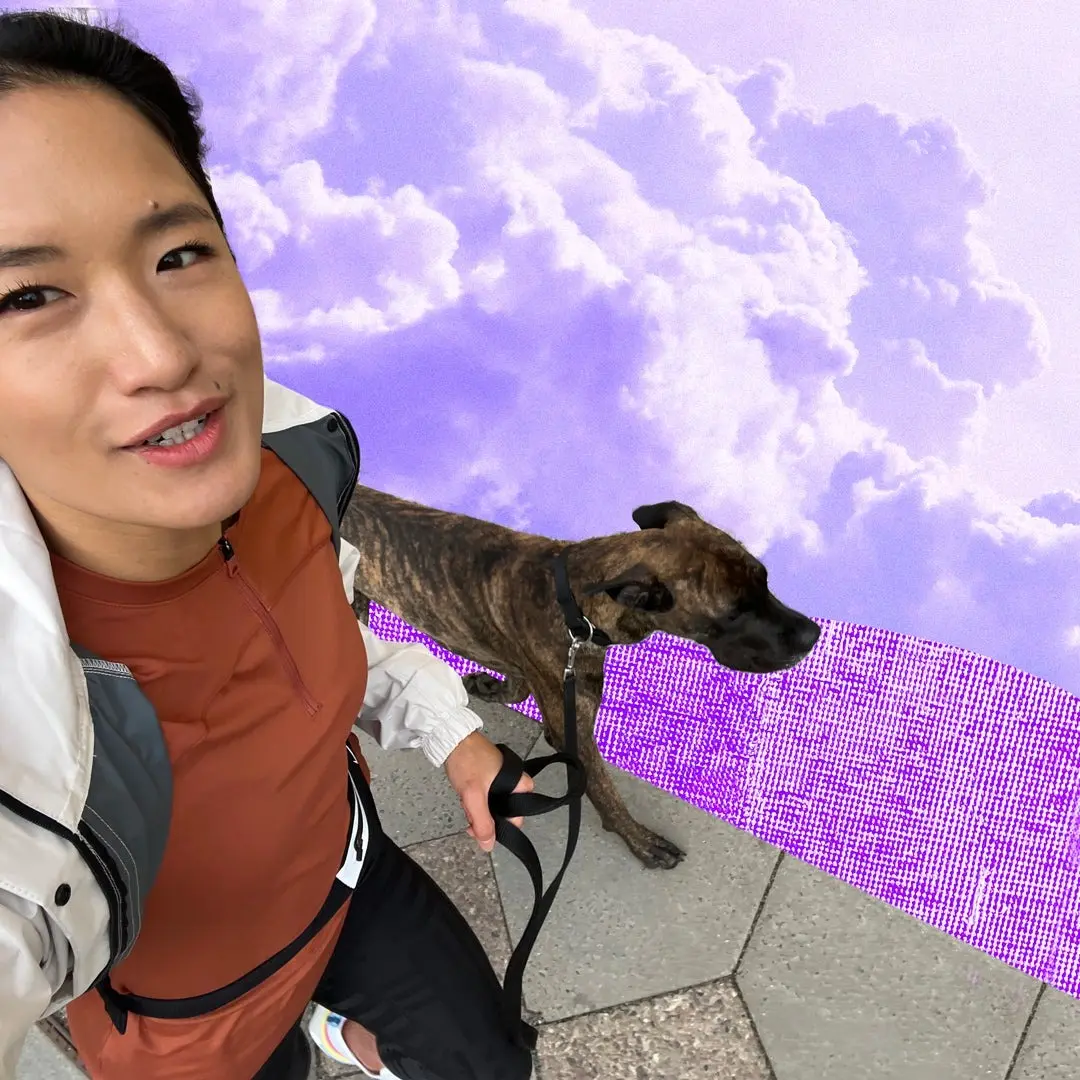
To add a social and dynamic element to her Monday session, Hong frequently borrows a friend’s high-energy dog, Mia. "Mia has so much energy, and it’s fun to race her," Hong says. "In the beginning, she pulls me; in the end, I pull her. I might not be as fast as her sprint, but when it comes to endurance, I win."
Tuesday: Cross-Training, Injury Prevention, and the Foundation of Strength
Marathon training is rarely just about running. On Tuesday, Hong steps away from the asphalt entirely to focus on cross-training and structural integrity. Her regimen incorporates dedicated yoga flows and heavy-focused strength training designed specifically to bulletproof the joints against the repetitive impact of high-mileage running.
Crucially, these sessions are complemented by regular physiotherapy appointments. This holistic triad—yoga, strength, and clinical bodywork—forms the structural foundation that allows Hong to safely push her physical limits during high-intensity runs. By building a robust musculoskeletal baseline, she ensures that her body is never completely depleted by hard efforts. This structured resilience is what enables her to lace up her shoes and continue her training cycle day after day without succumbing to overuse injuries.
Wednesday: Professional Travel, Social Integration, and Intentional Rest
Because rest is just as physiologically critical to athletic progression as the workout itself, Wednesday is designated for strategic recovery. However, recovery in Hong’s world does not mean lying passively on a couch. As a flight attendant who crosses international time zones regularly, maximizing her time on the ground in Berlin is a top priority.
Wednesday serves as a bridge between her athletic commitments and her social life. When she is in the city, she actively seeks out cultural stimulation, frequently spending her afternoons exploring local art galleries and design exhibitions. This intentional downtime feeds her creativity as a designer while offering vital mental respite from physical training demands.
Thursday: Pushing Limits and the Science of Comfort
While comfort is a cornerstone of Hong’s philosophy, Thursday represents the crucible of her physical conditioning: high-intensity track work. Breaking the cultural myth that marathoners must suffer endlessly, Hong approaches intense workouts with a pragmatic eye toward gear and mental framing.
"Some people think marathon runners tumble out of bed at 5:00 AM and effortlessly knock out 20 kilometers," Hong observes. "In reality, I sometimes need an extra dose of motivation."
To bridge the gap between hesitation and execution, she relies heavily on performance footwear that prioritizes energy return and impact protection. During her threshold and speed sessions on the track, she frequently opts for the Nike Invincible 3. "They give me a secure feeling on any surface, and I love the bouncy sole," she notes.
Thursday’s track workout is designed to test velocity thresholds and sustained pace retention. By leaning into competitive intervals, Hong hurls herself out of her comfort zone—safely cushioned by footwear engineered to absorb high-impact shock and reduce muscular fatigue.
Friday: Active Recovery and Cultural Exploration
Following the intense physiological demands of Thursday’s track session, Friday is dedicated to active recovery. Aside from a gentle, restorative yoga session to mobilize tight hip flexors and calves, Hong deliberately keeps her schedule light.
True to her identity as a deeply connected urbanite, she spends Friday afternoon meeting friends for gallery walks and museum visits. This integration of community, art, and movement ensures that her athletic identity never completely overshadows her personal life or creative passions.
Saturday: The Meditative Long-In-City Run
Saturday morning marks the execution of Hong’s standard training route along Berlin’s historic Landwehrkanal. This weekly run serves a dual purpose: physical conditioning and mental decompression.
The terrain offers a natural undulating surface—transitioning seamlessly between hard asphalt, soft grass, and unpredictable patches of mud. This varied footing acts as an organic proprioceptive workout for stabilizing muscles in the ankles and feet. Mentally, Saturday is a sanctuary. Sometimes, Hong plugs into a complex long-form podcast to let her mind wander; other times, she turns off her headphones entirely to absorb the ambient acoustic landscape of the city, people-watching as the neighborhoods wake up.
The run invariably culminates in a ritualistic post-workout reward: a freshly brewed artisanal coffee and a gourmet snack from a local market stall in Kreuzberg.
Sunday: Collective Endurance and Culinary Community
The pinnacle of Hong’s training week takes place on Sunday, anchored by her involvement with the Joy Run Collective, a local Berlin running community. Together, the group tackles an extended long run through the sprawling historic landscapes of the Tiergarten.
Because Sunday runs involve prolonged physical output—often in the biting cold of seasonal European weather—preparation is paramount. Hong bundles up in technical layering designed to regulate core body temperature over hours of continuous motion.
Yet, the primary motivator for Sunday’s grueling mileage is as much social as it is athletic. The entire collective converges for a post-run brunch following the completion of the long haul. For this specific session, the designated host prepared homemade dumplings—a culinary reward that Hong admits she looks forward to throughout the entirety of her grueling training week.
Supporting Context & Metrics: The Evolution of Modern Endurance
To fully contextualize Hong’s journey, it is necessary to examine the broader demographic and physiological shifts occurring within endurance sports globally.
The Rise of the Everyday Athlete
Historically, long-distance running was dominated by elite professionals or hyper-dedicated amateur athletes who treated training as a second full-time job. Over the past decade, however, participation data from major marathons worldwide—including Berlin, London, and New York—shows a dramatic democratization of the sport. A significant percentage of modern marathon entrants identify as working professionals, creatives, and individuals who balance demanding careers with multi-day training schedules.
Physiology at Age 30: Peak Maturity
Hong began her running journey four years ago. Now at age 30, she reports feeling healthier, stronger, and more physically resilient than she ever did during her twenties. Sports science increasingly supports this anecdotal observation. While maximal aerobic capacity (VO2 max) can begin a very gradual decline in the late twenties, physiological maturity, muscular endurance, and psychological pain tolerance often peak well into the thirties and forties. Adults in this age bracket frequently excel in marathon disciplines due to enhanced emotional regulation, superior time-management skills, and greater consistency in stress recovery.
The Biomechanics of Comfort: Footwear Technology
The psychological emphasis on comfort highlighted in Hong’s regimen is mirrored by massive advancements in running shoe technology. Modern maximalist footwear—typified by high-stack, highly resilient foam compounds like those found in the Nike Invincible series—has fundamentally altered how runners approach high-mileage training. By maximizing energy return and cushioning impact forces, these technological breakthroughs significantly reduce delayed-onset muscle soreness (DOMS) and lower the barrier to entry for runners seeking to protect their joints during rigorous training blocks.
Official Statements and Personal Philosophy
Reflecting on her four-year evolution from non-runner to veteran marathoner, Hong offers profound insights into the psychological transformations catalyzed by endurance sports:
"I started running four years ago. At 30, I am healthier and fitter than I ever was in my twenties. But running is so much more than physical training. I have gained a tremendous amount of self-confidence as a runner because I now know how hard I can push myself, even when I feel a bit low.
I have learned a vital lesson: consistency and comfort do not have to mutually exclude one another. I can set new boundaries, test my limits, and still feel completely supported and comfortable along the way."
Hong’s coaching and lifestyle philosophy dismantles the puritanical notion that athletic greatness requires suffering. By decentralizing misery and centering joy—through curated playlists, singing mid-run, incorporating canine companions, investing in premium gear, and anchoring her weeks with social brunches—she has built a bulletproof framework for sustainable, lifelong fitness.
Future Outlook: The Road to the 7th Marathon
As Hong looks ahead to her upcoming seventh marathon, her training philosophy serves as a blueprint for the future of urban endurance athletics. The old guard of running culture—marked by burnout, injury, and uncompromising rigidity—is steadily giving way to a holistic, community-driven, and comfort-prioritizing paradigm.
For athletes struggling to balance demanding professional lives with ambitious fitness goals, Hong’s triad of success offers a clear roadmap:
- Prioritize Physiological and Psychological Comfort: Invest in high-performance gear, supportive footwear, and mental health practices that make the journey enjoyable.
- Cultivate Community: Anchor grueling physical efforts in social structures—whether through running collectives like the Joy Run Collective or shared post-run rituals like market snacks and artisanal coffee.
- Embrace Holistic Periodization: Balance high-intensity track sessions with cross-training, yoga, clinical bodywork, and uncompromising rest days.
With her sights firmly set on the starting line of her seventh marathon, Hong proves unequivocally that you do not have to sacrifice your well-being, your social life, or your love for comfort to achieve elite endurance milestones. Next stop: the finish line.
Hong’s 3 Essential Rules for Maximizing Enjoyment on Every Run
For runners looking to inject more joy, sustainability, and ease into their training cycles, Hong recommends adhering to three core principles:
- Prioritize Footwear Integrity: Always wear comfortable, supportive shoes designed to absorb impact and protect your joints across varied urban surfaces.
- Curate Your Soundtrack: Maintain a dynamic running playlist (spanning disco, house, and high-energy electronic beats) to lift your spirits when physical motivation wanes.
- Design Intentional Routes and Rewards: Combine scenic, engaging urban routes with a guaranteed post-run reward—whether it’s a fresh coffee, a market snack, or homemade dumplings shared with friends.