Executive Overview
In an era dominated by relentless hustle culture and the glorification of extreme athletic suffering, a quiet revolution is taking place on the asphalt, gravel, and park trails of Berlin. For decades, the narrative surrounding marathon training has been uncompromising: early alarms at 4:30 AM, grueling mileage spikes, and a puritanical rejection of comfort. But what happens when an athlete decides to rewrite the rules?
Enter Hong, a Berlin-based designer, international flight attendant, and seasoned endurance athlete currently preparing for her seventh marathon. Hong’s journey challenges the orthodox blueprint of modern endurance sports. Once self-identified as a “non-runner,” she now trains nearly every day while fiercely prioritizing comfort, mental well-being, a vibrant social life, and—crucially—her morning coffee.
This in-depth feature explores Hong’s weekly training blueprint, dissecting how she balances a demanding dual-career schedule with high-level endurance preparation. By examining her holistic integration of strength work, yoga, physiotherapy, community engagement, and psychological resilience, this article investigates a broader paradigm shift in modern running culture: the realization that long-term athletic consistency and personal comfort are not mutually exclusive, but rather symbiotic partners on the road to peak performance.
Detailed Chronology: A Week in the Life of a Balanced Marathoner
To understand how modern endurance training adapts to the complexities of contemporary urban life, one must examine the micro-level execution of a well-rounded training week. Hong’s schedule serves as a compelling case study in time management, physiological preservation, and psychological motivation.
Monday: The Soundtrack of Momentum and Canine Companionship
Balancing a career as a graphic designer alongside the unpredictable time zones and physical toll of working as a flight attendant requires meticulous mental fortitude. Mondays often present the dual challenge of residual fatigue from the weekend and a towering professional to-do list.
For Hong, the antidote to a sluggish start is auditory curation. “I don’t always listen to music when I run, but when I feel unmotivated, my running playlist is an absolute lifesaver,” she explains. Featuring an eclectic mix of driving house, disco, and propulsive techno beats, the playlist acts as an external pacemaker.
When fatigue threatens to cut a training session short, Hong employs a unique behavioral hack: she starts singing. By forcing herself to vocalize song lyrics, she naturally regulates her respiratory rate, compelling her to drop her pace and bring her breathing back under control. This unexpected strategy transforms a grueling physical obligation into a joyful, lighthearted experience—frequently eliciting amused smiles from bewildered pedestrians.
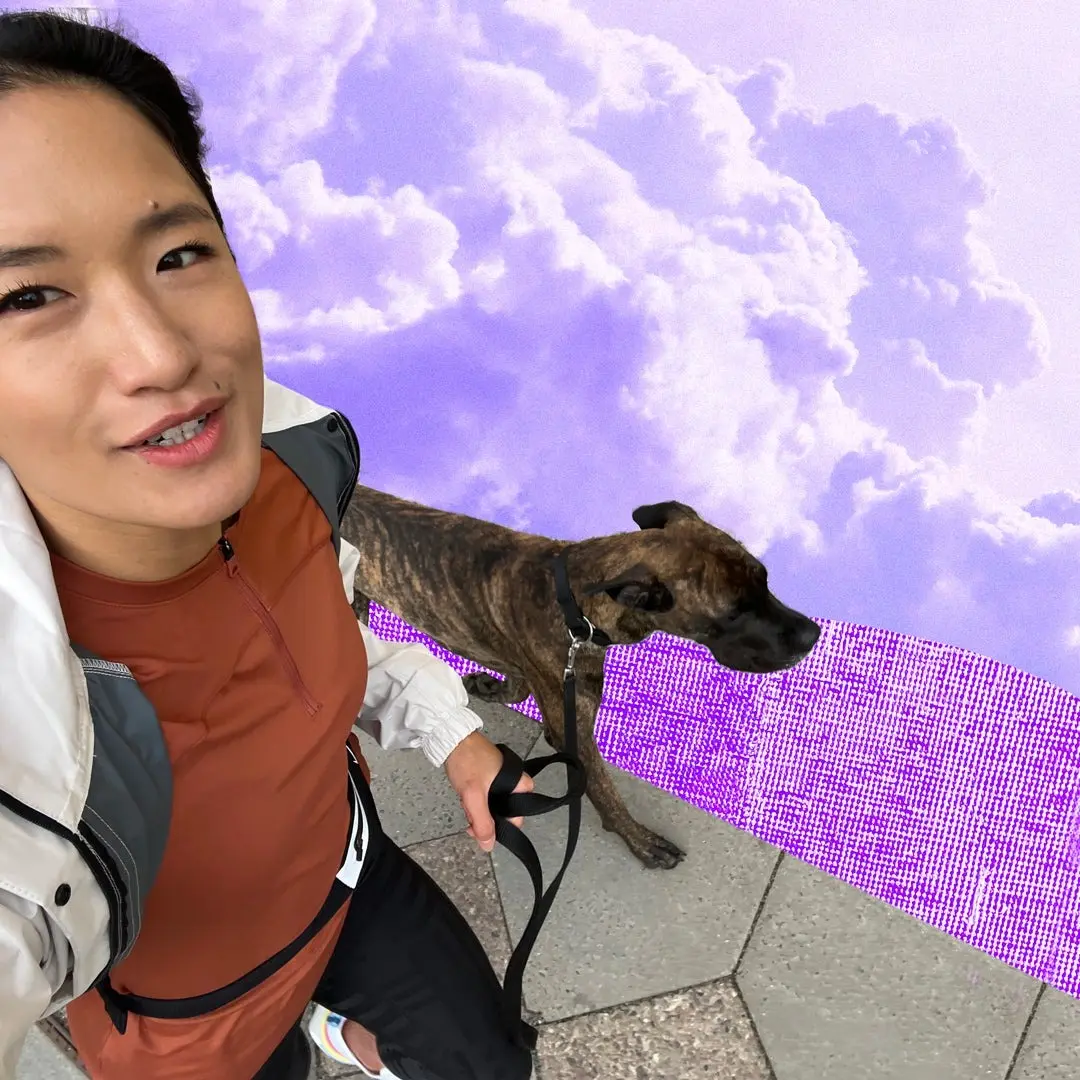
To elevate Monday’s mileage further, Hong enlisted a temporary training partner: a friend’s high-energy rescue dog, Mia. Navigating urban paths with an enthusiastic canine companion introduces an interactive dynamic to the run. “In the beginning, she pulls me; at the end, I pull her,” Hong notes. While the dog may possess superior raw speed, the human endurance athlete holds the distinct advantage in sustained, long-haul stamina.
Tuesday: The Unseen Foundation—Yoga, Strength, and Injury Prevention
The greatest misconception in contemporary distance running is that progress is forged solely through high-impact road miles. Tuesday’s schedule deliberately omits running entirely, pivoting instead toward a cross-disciplinary regimen designed to bulletproof the body against overuse injuries.
Hong’s Tuesday protocol centers on a triad of restorative and conditioning modalities:
- Dynamic Yoga: Enhancing hip mobility, thoracic spine rotation, and hamstring flexibility to counteract the tight posture often induced by desk-bound design work and long-haul aviation.
- Targeted Strength Training: Focusing on glute activation, core stability, and eccentric lower-limb loading to absorb the immense ground-reaction forces generated during a marathon build.
- Physiotherapy Interventions: Proactive soft-tissue management to address minor muscular imbalances before they manifest into chronic running injuries.
This holistic foundation is the hidden engine behind Hong’s ability to push her threshold during intense running blocks without paying the tax of total physical depletion. By respecting the structural limits of her musculoskeletal system, she ensures that a heavy workout day never cascades into a debilitating injury cycle.
Wednesday: Navigating the Intersection of Social Capital and Recovery
Recovery is not merely the absence of training; it is an active physiological and psychological requirement. As a frequent flyer navigating global time zones, Hong’s social capital is inherently precious. When she touches down in Berlin, maximizing interpersonal connection is just as vital to her overall well-being as hitting her weekly mileage targets.
Wednesday serves as a deliberate mental reset. Eschewing physical exertion, Hong immerses herself in Berlin’s vibrant cultural landscape, frequently visiting local art exhibitions with friends. This intentional detachment from athletic performance metrics protects against psychological burnout—a silent killer of amateur athletic careers.
Thursday: Pushing Limits on the Track
Thursday marks a return to high-intensity physical output. Countering the cultural myth that elite marathoners leap out of bed at dawn craving twenty hard kilometers, Hong acknowledges that even seasoned endurance athletes require deliberate motivational scaffolding.
Today’s objective is a rigorous track workout designed to test lactate threshold, pacing discipline, and mental fortitude. Operating at high speeds requires absolute trust in equipment. During these high-stress velocity sessions, Hong relies on performance footwear engineered for impact attenuation and energy return, specifically citing the Nike Invincible 3 for its secure lockdown across varying track surfaces and its exceptionally responsive, bouncy foam midsole.
“I love competitions. It gives me an incredible amount of joy to challenge myself,” Hong reflects while navigating the track intervals. By systematically measuring how long she can sustain an aggressive pace, she gathers vital physiological data for her upcoming marathon campaign.
Friday: Active Decompression and Urban Exploration
Following Thursday’s punishing track session, Friday demands physiological grace. Aside from a gentle mobility flow or restorative yoga session, the day is dedicated to active rest.
True to her identity as a deeply connected urbanite, Hong uses Friday afternoon to explore further cultural exhibitions across Berlin. This rhythm reinforces a core philosophical tenet of her training methodology: a rich, multidimensional life outside of athletics directly enhances athletic longevity. By refusing to let running consume her entire identity, she maintains a healthy, hunger-driven enthusiasm for her upcoming weekend long runs.
Saturday: The Ritual of the Landwehrkanal
Saturdays belong to the ritualistic long-steady-distance (LSD) run along Berlin’s iconic Landwehrkanal. This multi-surface route offers a dynamic sensory tapestry—shifting seamlessly from urban asphalt to damp grass and soft mud.
Here, running transforms into a moving meditation. With an engaging narrative podcast playing in one ear, or simply tuning into the ambient acoustic backdrop of waking city life, Hong practices mindful detachment.
Crucially, the Saturday run concludes with a non-negotiable cultural ritual: a post-run artisan coffee and a gourmet snack from a local vendor at the bustling Kreuzberg market stalls. This culinary reward serves as both an immediate glycogen-replenishment strategy and a psychological carrot at the end of the endurance stick.
Sunday: Community, Mileage, and Dumpling Celebrations
The crown jewel of Hong’s training week occurs on Sunday, executed in collaboration with her running collective, the Joy Run Collective. Long-distance endurance in urban environments is profoundly amplified by social infrastructure.
Sunday’s long run cuts through the historic expanse of the Tiergarten. Navigating extended mileage in colder ambient temperatures demands meticulous preparation—layering technical fabrics, pre-hydrating, and relying on group pacing dynamics to maintain morale through the final kilometers.
The physical labor of the Tiergarten long run is universally redeemed by what follows: a communal post-run brunch. For this particular session, the hosting community member prepared handmade dumplings—a culinary carrot that fueled Hong’s mental resolve through the latter miles of the route.
Supporting Context & Metrics: The Paradigm Shift in Modern Endurance Culture
To contextualize Hong’s journey, one must look at the broader demographic and physiological shifts occurring within the global running community over the past decade.
The Rise of the "Balanced Athlete"
Traditional sports science historically viewed adaptation through a lens of pure deprivation: maximum volume, strict dietary restriction, and the minimization of non-training life stressors. However, contemporary physiological research increasingly supports a holistic paradigm. Chronic psychological stress—whether from inflexible job demands, social isolation, or the guilt of missing a workout—elevates systemic cortisol levels, directly impairing muscular recovery and immune function.
- Consistency over Intensity: Longitudinal studies on recreational endurance runners consistently demonstrate that injury rates plummet when strength training and structured rest are integrated into weekly schedules at a 3:1 ratio relative to high-intensity speedwork.
- The Psychology of Comfort: Consumer research within the athletic footwear and apparel sector highlights a massive surge in demand for products that merge high-performance technological specifications with everyday aesthetic comfort and psychological ease.
Metrics of Hong’s Transformation
- Athletic Progression: Transitioning from a self-proclaimed non-runner to an experienced endurance athlete currently preparing for her 7th marathon.
- Age-Defying Fitness: Commencing her serious running journey four years ago at age 26, Hong reports feeling physically healthier, stronger, and more metabolically fit in her thirties than she did throughout her entire twenties.
- Cross-Training Volume: Dedicating approximately 30% to 40% of her weekly active time to non-running modalities (yoga, strength conditioning, and physiotherapy).
Official Statements and Expert Perspectives
The philosophy championed by athletes like Hong is increasingly validated by coaches, sports psychologists, and industry thought leaders who recognize that the future of running lies in accessibility and sustainability rather than exclusive gatekeeping.
"For too long, the endurance sports world has propagated an intimidating, puritanical narrative that alienated everyday people," notes a leading European sports psychologist specializing in endurance athletics. "When athletes like Hong demonstrate that you can train for a marathon while prioritizing social connection, culinary pleasure, and mental rest, it democratizes the sport. It shifts the motivation from self-punishment to self-care."
Industry analysts point out that modern running culture is experiencing a demographic decentralization. The traditional archetypes of elite isolation are being replaced by hyper-connected, community-driven collectives—such as Berlin’s Joy Run Collective—that view the physical run as merely one component of a broader cultural lifestyle ecosystem.
"Consistency and comfort do not have to be mutually exclusive," Hong asserts when reflecting on her multi-year evolution. "You can establish ambitious boundaries, test your absolute limits, and still treat your mind and body with profound kindness. In fact, that is the only way sustainable longevity is achieved."
Future Outlook: The Road to the 7th Marathon and Beyond
As Hong’s training blocks intensify in the lead-up to her seventh marathon start line, her trajectory offers a blueprint for the modern endurance athlete. The future of recreational marathoning will not be dominated by those willing to suffer in joyless isolation, but rather by those who successfully master the art of integration.
By refusing to choose between professional ambition, international travel, vibrant social circles, and high-level athletic achievement, athletes like Hong are redefining what it means to be a runner. They prove that the path of 42.2 kilometers does not require abandoning one’s humanity at the starting line.
With a supportive running community at her back, a playlist of driving techno in her ears, and a basket of handmade dumplings waiting at the finish line, Hong steps forward into her next training cycle. Next stop: her seventh marathon—and undoubtedly, a post-race coffee well earned.