Executive Overview
In a sweeping restructuring of its consumer artificial intelligence ecosystem, Google is introducing a tiered model-access framework for its Gemini app suite. Building upon the compute-based usage changes implemented earlier this year in May, the tech giant is drawing sharper boundaries around which underlying AI architectures are available to free-tier users versus various paid subscription tiers.
According to newly updated official support documentation, the upcoming policy changes—slated to go into effect on October 9—will sharply restrict free users to Google’s lightweight Gemini (3.5) Flash-Lite model, removing access to both the (3.6) Flash and (3.1) Pro variants. Concurrently, subscribers to the entry-level AI Plus tier ($4.99 per month) will see their access curtailed to Flash-Lite and Flash, losing access to Pro models entirely.
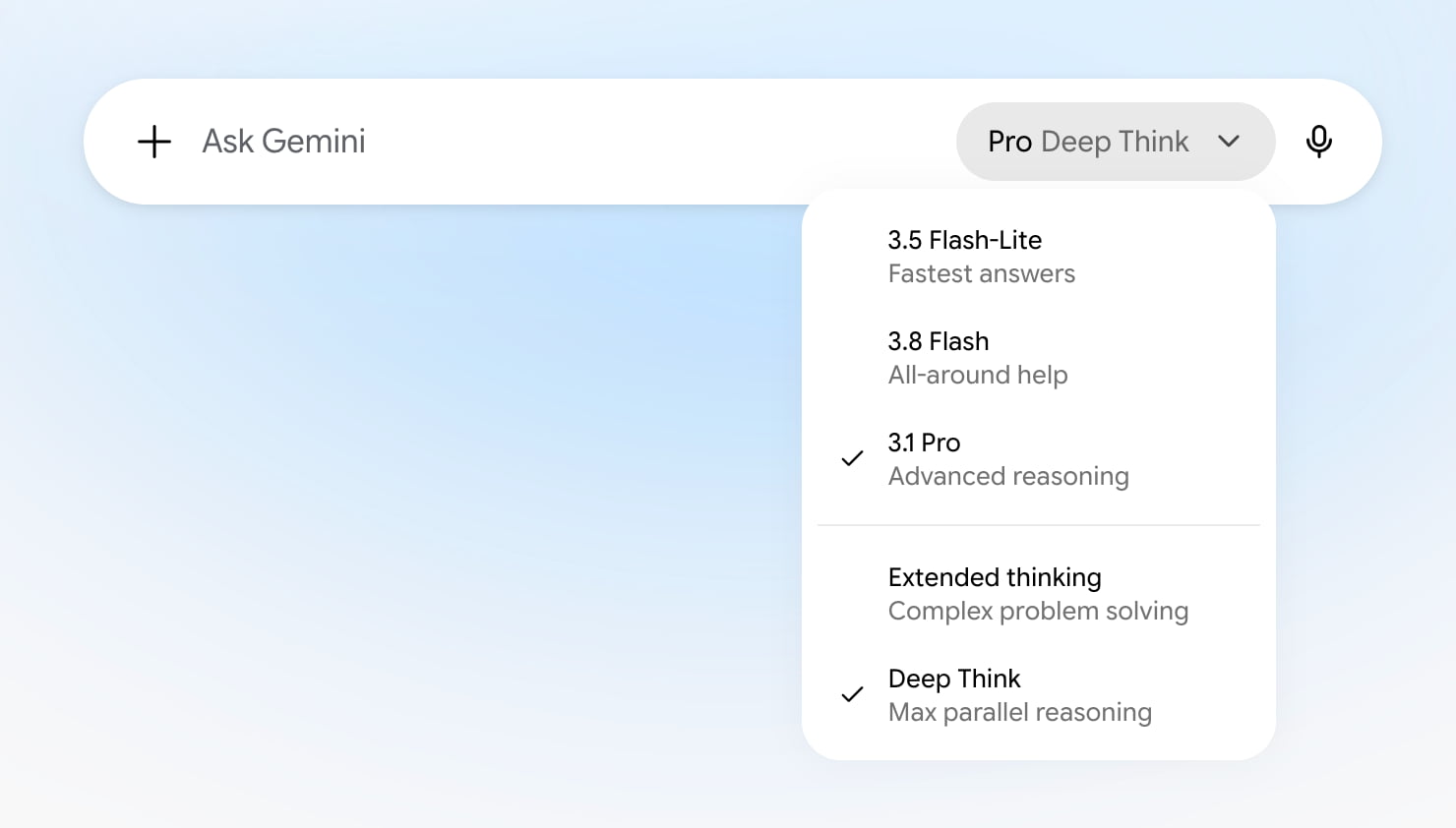
While lower-tier users face pruned capabilities, premium subscribers stand to benefit. Users on the AI Pro ($19.99/month) and AI Ultra tiers will retain unrestricted access across all primary models while gaining coveted features previously locked behind ultra-expensive plans, such as the advanced Deep Think reasoning option. Furthermore, Google is overhauling how users interact with AI capacity by introducing granular "low," "medium," and "high" reasoning effort levels across the board, alongside lingering questions regarding the impending rollout of the mysterious Gemini 4 Argon model.
This comprehensive analysis breaks down the structural shift in Google’s monetization and product strategy, detailing what these changes mean for everyday users, power users, and the competitive generative AI landscape as a whole.
Detailed Chronology: From Compute Limits to Hard Access Walls
To understand the weight of Google’s October directives, one must examine the trajectory of the Gemini app’s policy evolution over the past year.
The May Shift: The Compute-Based Paradigm
In May, Google transitioned its usage philosophy from rudimentary message-count limitations to a dynamic, compute-based consumption model. Rather than penalizing users simply for sending a high volume of prompts, the system began calculating the complex computational resources—measured in tokens and processing overhead—required to fulfill individual requests. While this system aimed to be fairer, it laid the groundwork for deeper structural segmentation of Google’s model zoo.
The October 9 Mandate: Hard Model Restrictions
The newly surfaced support documentation solidifies a hard architectural boundary. Starting October 9, the free-tier experience of Gemini will be siloed exclusively into the streamlined Gemini (3.5) Flash-Lite model. For casual users who rely on the app for drafting emails, brainstorming, or basic web searches, Flash-Lite offers swift response times and sufficient competency. However, tasks requiring deep analytical reasoning, complex coding, or nuanced creative synthesis that previously tapped into (3.6) Flash or (3.1) Pro will be barred behind paywalls.
For the AI Plus subscriber base paying $4.99 monthly, the adjustments are equally definitive. These mid-tier users will be limited to Flash-Lite and Flash, with the powerful Pro tier stripped from their feature set. Google has indicated that affected AI Plus subscribers will receive targeted email communications detailing precisely when these access rollbacks take effect on their accounts.
Supporting Context & Metrics: The Gemini Subscription Matrix
To visualize how Google is parsing its model accessibility across its evolving financial tiers, consider the updated access matrix below:
| Google AI Plan | Monthly Cost | Flash-Lite ((3.5)) | Flash ((3.6)) | Pro ((3.1)) | Deep Think |
|---|---|---|---|---|---|
| Without a Plan (Free) | $0.00 | Supported | Restricted | Restricted | Unavailable |
| AI Plus | $4.99 | Supported | Supported | Restricted | Unavailable |
| AI Pro | $19.99 | Supported | Supported | Supported | Newly Added |
| AI Ultra | $99.99+ | Supported | Supported | Supported | Supported |
The Upside for Premium Subscribers ($19.99 and Up)
While the free and entry-level tiers face restrictions, mid-to-high-tier subscribers enjoy clear value enhancements. Users subscribed to the AI Pro tier ($19.99/month) will experience no model regressions. Crucially, they will now inherit access to the Deep Think option—a capability designed for "maximum parallel reasoning" that was previously restricted exclusively to enterprise and ultra-premium tiers costing between $99.99 and $199.99 per month.
This democratization of deep-reasoning infrastructure within the $20/month bracket brings Google’s flagship consumer tier into closer parity with advanced reasoning modes offered by rival ecosystems like OpenAI’s o-series and Anthropic’s Claude 3.5 Sonnet.
Granular Control: Introducing Effort Levels and Thinking Modes
Beyond model availability, Google is modernizing how users can direct the cognitive depth of their chosen AI models.
Granular Reasoning Controls
At present, Gemini app users looking for heavy-duty problem-solving must toggle a binary switch labeled "Extended thinking: Complex problem solving." However, matching features already deployed inside Google AI Studio and Antigravity, the Gemini app will soon roll out granular "low," "medium," and "high" effort levels configurable for each available model.
According to Google’s preliminary documentation, adjusting these effort levels will dynamically scale the model’s internal reasoning steps:
- Low Effort: Optimized for rapid, conversational, and straightforward queries where speed takes precedence over exhaustive verification.
- Medium Effort: A balanced state suited for general multi-step problem-solving and structured data organization.
- High Effort / Deep Think: Allocates maximum compute time and recursive chain-of-thought processing to tackle advanced mathematical proofs, intricate codebases, or deeply ambiguous philosophical and logical inquiries.
The Trade-Off: Google explicitly warns users that dialing up the effort level will consume significantly more of their daily computational limit. This creates a strategic usage dynamic where users must carefully weigh whether a given query genuinely requires high-effort processing or if a default low-to-medium setting will suffice to preserve their token budgets.
The Enigma of Gemini 4 Argon
Amidst these structural shifts, a significant hardware and model wildcard remains on the horizon: Gemini 4 Argon.
Earlier this week, Google dropped preliminary hints regarding the existence and deployment strategy of Gemini 4 Argon, confirming that the new model architecture will make its debut exclusively for AI Ultra subscribers. However, significant ambiguity remains regarding Argon’s taxonomy within Google’s broader portfolio.

As of publication, Google has yet to clarify whether Argon will be classified as a next-generation Pro-class model, a specialized reasoning variant, or the flagship centerpiece of an entirely new tier positioned above the current AI Ultra pricing structure. Industry analysts speculate that Argon may represent Google’s response to upcoming frontier models from competing AI labs, designed specifically to push the boundaries of multimodal synthesis and autonomous agentic workflows. How Argon eventually trickles down—or if it remains locked behind the most expensive subscription barriers—will heavily influence consumer perceptions of Google’s high-end value proposition.
Future Outlook: The Maturation of AI Monetization
Google’s latest policy updates reflect a broader, undeniable reality in the generative AI industry: the era of boundless, unstructured free access to cutting-edge cognitive compute is drawing to a close. Operating state-of-the-art Large Language Models (LLMs) at scale incurs staggering infrastructure, electrical, and data-center overheads. By delineating clear boundaries between Flash-Lite, Flash, and Pro models, Google is transforming its product line into a traditional software-as-a-service (SaaS) value ladder.
What This Means for Consumers and Developers
For the casual user, the constraint to Flash-Lite may initially feel restrictive, but for basic conversational tasks, summaries, and ideation, Flash-Lite remains remarkably competent. Meanwhile, power users, software engineers, and researchers who rely on Gemini for mission-critical workflows will find the inclusion of Deep Think in the $19.99 AI Pro tier to be a compelling justification for their monthly subscription.
Ultimately, these shifts signal that the competitive battleground for consumer AI is no longer just about who has the smartest model, but who can most effectively package, tier, and monetize compute resources sustainably. As October 9 approaches, Gemini users across all subscription levels will need to evaluate their usage habits, adjust to the new effort controls, and decide where their AI needs fall along Google’s newly fortified financial and architectural boundaries.