Executive Overview
As the global energy landscape undergoes a monumental pivot toward decentralized generation, homeowners increasingly seek out renewable technologies to insulate themselves from volatile utility rates and shrink their carbon footprints. While photovoltaic (PV) solar panels have thoroughly dominated residential discourse—crushing adoption milestones and consistently seeing drops in hardware costs—small-scale wind energy remains a quiet, often misunderstood sibling in the clean energy family.
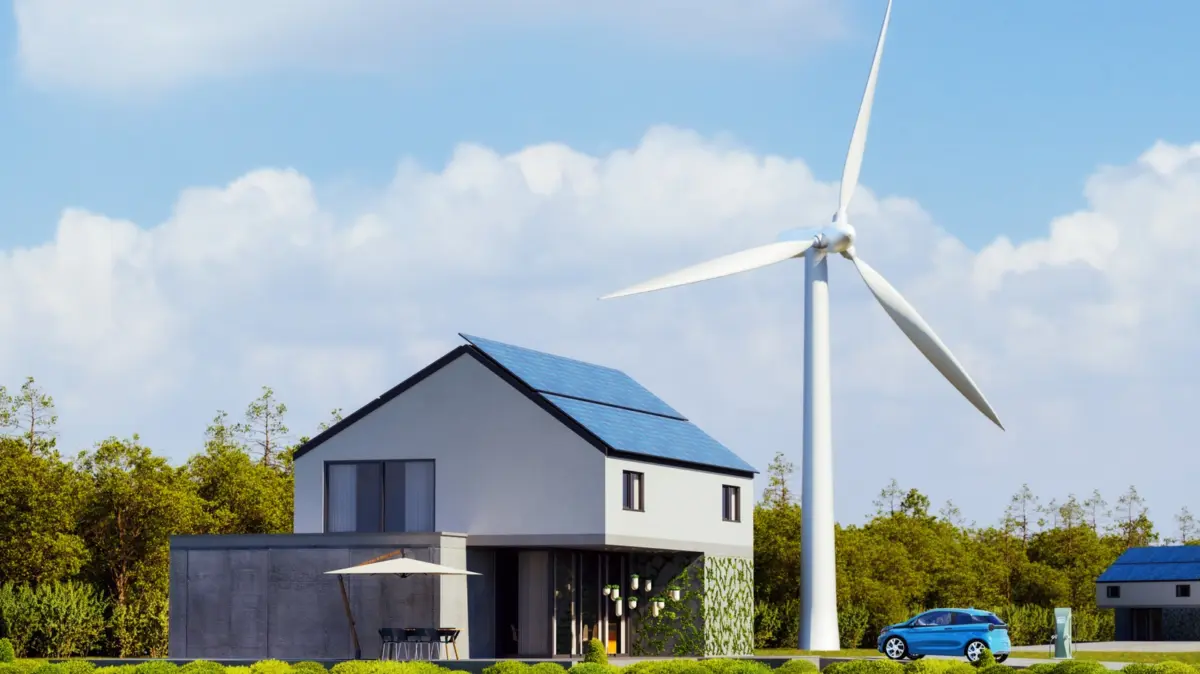
At the center of this conversation is the 1-kilowatt (kW) home wind turbine. Often marketed as an accessible entry point for green-minded property owners, compact turbines evoke visions of total energy independence, turning every stray gust into clean, free electricity. Yet, the reality of small wind power is governed by unforgiving physical, geographical, and economic constraints. Do home wind turbines actually work? The answer is a heavily qualified "yes."
While a 1kW wind turbine can indeed generate electricity, its output depends almost entirely on unpredictable meteorological conditions, strict zoning regulations, and precise geographical placement. For the average suburban homeowner, a small wind turbine is rarely a viable standalone solution. However, for rural properties, cabins, or highly efficient auxiliary setups, these compact systems can serve as a valuable piece of a broader energy puzzle. This investigation explores the true capacity of 1kW residential wind turbines, evaluates the financial and logistical hurdles of small wind deployment, and contrasts the technology with established alternatives like residential solar.
Detailed Chronology and Technical Evolution of Small Wind
To understand where residential wind power stands today, it is helpful to look at how micro-generation technologies have evolved over the past several decades.
The Off-Grid Roots of Small Wind
Before modern solar panels dropped in price and improved in efficiency, small wind turbines—typically ranging from 400 watts to 1kW—were the undisputed kings of remote, off-grid living. In the late 20th century, homesteaders, sailors, and remote cabin owners relied heavily on small-scale wind generators paired with deep-cycle lead-acid battery banks. These systems were prized for their ability to charge batteries overnight and during stormy, overcast days when solar panels underperformed.
The Solar Boom and the Marginalization of Wind
As the twenty-first century progressed, the photovoltaic industry experienced unprecedented manufacturing scaling, driven by massive investments in silicon wafer production and governmental incentives. Solar power became plug-and-play. It required no moving parts, emitted no noise, and could be mounted flush against a roof with minimal structural engineering oversight.
In contrast, small wind turbine technology largely stagnated in the residential sector. While utility-scale wind farms grew exponentially—featuring multi-megawatt turbines with sweeping blades miles long—the engineering challenges of scaling wind down to a backyard footprint proved formidable. Issues concerning mechanical wear, gear box maintenance, low-altitude wind turbulence, and municipal noise ordinances kept small wind relegated to niche markets.
Recent Innovations: Portability and Alternative Designs
In recent years, engineering firms have attempted to revitalize small wind through novel form factors. We have seen the introduction of portable, collapsible turbines designed for RV camping and backcountry expeditions (such as the Shine 20), as well as architectural innovations like vertical-axis wind turbines (VAWTs) that claim to capture wind from any direction. Furthermore, companies showcasing advanced kinetic energy systems at exhibitions like CES indicate that the search for better low-wind-speed capture mechanisms is ongoing. Despite these innovations, the fundamental physics governing air density and kinetic energy extraction remain unchanged.
Supporting Context & Metrics: Quantifying the 1kW Turbine
When evaluating a wind turbine labeled with a "1kW" capacity, consumers frequently fall victim to a common misunderstanding: equating peak capacity with actual, sustained energy generation.
Peak Power vs. Actual Yield
A 1kW rating signifies the maximum electrical output the turbine can produce under optimal, laboratory-tested wind speeds (usually quite high, around 28 to 35 mph). Because nature rarely provides a steady, optimal gale, a residential turbine almost never operates at its peak rating.
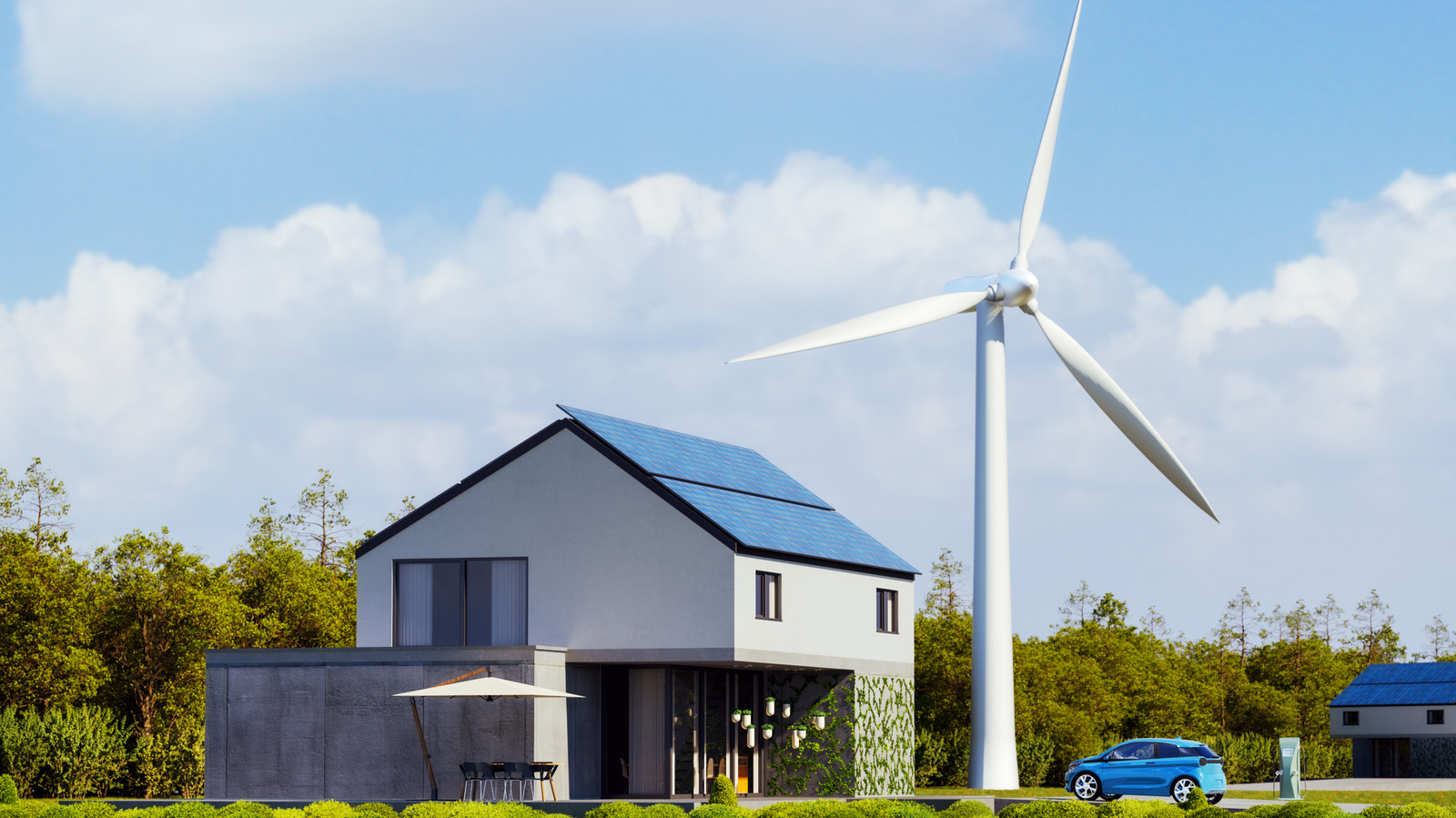
Instead, energy professionals look at monthly and annual energy production (AEP), measured in kilowatt-hours (kWh). According to data from the U.S. Department of Energy (DOE) and its WINDExchange program, a well-sited 1kW wind turbine can feasibly produce roughly 200 kWh of electricity per month, translating to approximately 2,400 kWh per year.
To put this metric into perspective:
- Average U.S. Household Consumption: A typical American home consumes approximately 10,500 kWh of electricity annually, or about 850 kWh per month.
- The 1kW Contribution: A 1kW turbine operating under favorable conditions will supply less than 25% of the average household’s yearly electricity needs.
- Conclusion: A 1kW system is inherently a supplemental power source, designed to offset a fraction of an already energy-efficient home’s draw, rather than power an entire modern household.
The Geography of Wind: Why Location is Everything
The single most critical factor determining a turbine’s success is local wind speed. Wind power is governed by the cube law: power output is proportional to the cube of the wind speed. This means that if wind speed doubles, the power available in the wind increases by a factor of eight ($2^3 = 8$).
Consequently, small differences in average wind speed result in massive differences in energy production:
- High-Wind Areas (14+ mph average): Properties situated in open plains, coastal regions, or ridgelines with verified annual wind speeds averaging 14 mph or higher are prime candidates for small wind systems.
- Low-to-Moderate Wind Areas: Suburban environments, wooded valleys, and densely populated regions rarely sustain the necessary laminar (smooth) airflow required for efficient turbine operation.
The Physics of Placement: Obstacles, Turbulence, and Zoning
If you are considering a residential wind turbine, your primary battle will not be with the turbine itself, but with the surrounding environment.
The Obstacle Problem
Wind is easily disrupted. Trees, neighboring houses, outbuildings, retaining walls, and rolling hills act as formidable windbreaks. When wind encounters these obstacles, it does not simply flow around them; it slows down and creates turbulence—chaotic, swirling air masses that wreak havoc on turbine blades.
Turbulence significantly reduces energy output because the turbine is constantly trying to track shifting wind directions and fluctuating speeds. More destructively, turbulence places immense cyclical stress on the turbine’s mechanical components, bearings, and tower structure, drastically accelerating wear and tear and leading to premature mechanical failure.
To combat this, the U.S. Department of Energy’s small wind guidelines issue a strict recommendation: The bottom of the turbine’s rotor must be at least 30 feet above any obstacle (such as a tree or building) located within a 300-foot horizontal radius.
The Suburban Reality Check
Meeting the DOE’s height requirement in a typical suburban neighborhood is virtually impossible.
- Zoning Laws: Most municipal zoning codes cap residential structures at 35 feet. A wind turbine tower that needs to clear mature neighborhood oak trees and rooftops by an additional 30 feet would easily need to stand 60 to 100 feet tall—a non-starter for local zoning boards and homeowner associations (HOAs).
- Rooftop Mounting Fallacies: Mounting a small wind turbine directly to a residential roof sounds appealing, as it avoids tall tower construction. However, in practice, rooftops are turbulent zones. Furthermore, turbines generate constant low-frequency vibrations and mechanical humming that transmit directly into the framing of the house, turning your living space into a resonant drum chamber—not ideal when trying to sleep before a workday.
Comprehensive Site Assessment Steps
Before investing capital into wind technology, experts strongly advise conducting a rigorous site evaluation:
- Consult Regional Wind Maps: Review data from the National Renewable Energy Laboratory (NREL) to check baseline wind speeds in your region.
- Perform On-Site Anemometer Testing: Install a temporary wind-measuring device (anemometer) on your property for several months to record accurate, site-specific wind data.
- Analyze Local Ordinances: Investigate municipal zoning restrictions, setback requirements, and noise ordinances.
- Consult Certified Installers: Hire a professional wind energy assessor to evaluate local topography, tree growth, and expected return on investment.
Economic Realities and the Solar Comparison
When evaluating clean energy upgrades, homeowners must weigh performance against financial investment. Here, the comparison between wind and solar starkly highlights why residential wind remains a niche market.
Capacity Requirements for Whole-House Power
As noted earlier, a 1kW turbine is insufficient for a standard suburban home. To genuinely impact or offset 100% of a typical American home’s 10,500 kWh annual consumption, a residential wind system must typically fall within the 5 kW to 15 kW range.
Cost-Benefit Analysis: Wind vs. Solar
- Capital Expenditure (CapEx): Installing a residential wind turbine system—including the turbine, tower, foundation engineering, wiring, and inverter or battery storage—typically ranges from $20,000 to $50,000, depending on tower height and system capacity.
- The Solar Alternative: By contrast, a residential photovoltaic solar array designed to produce equivalent annual energy output generally costs between $15,000 and $25,000 before federal, state, and local tax incentives (such as the federal Investment Tax Credit). Pound for pound, solar panels are vastly more cost-effective and predictable for residential settings.
| Metric | Residential Solar PV (Standard 6kW System) | Small Wind Turbine (1kW to 5kW System) |
|---|---|---|
| Average Installation Cost | $15,000 – $25,000 | $20,000 – $50,000 (heavily dependent on tower height) |
| Maintenance Needs | Low (occasional cleaning, no moving parts) | High (moving parts, bearings, periodic mechanical inspections) |
| Zoning Friendliness | High (generally permitted on most roofs) | Low (height restrictions, noise complaints, strict setbacks) |
| Energy Predictability | High (modeled accurately via sun path data) | Low (highly dependent on localized micro-weather) |
| Ideal Environment | Any unshaded roof or open ground | Open rural acreage, coastal properties, high-wind corridors |
System Architecture: Grid-Tied vs. Off-Grid
The electrical balance-of-system requirements also impact the bottom line:
- Grid-Connected Systems: These require specialized grid-tied inverters that synchronize with your local utility. When the wind blows and your home consumes less than the turbine produces, excess energy can sometimes be fed back into the grid via net metering (where permitted).
- Off-Grid Systems: These require robust battery banks (lithium-ion or deep-cycle) and charge controllers to safely store harvested energy for times when the wind is calm. Batteries add substantial upfront cost and require eventual replacement after 10 to 15 years.
Official Statements and Industry Insights
Energy economists and renewable energy researchers emphasize that while wind power is an indispensable pillar of utility-scale decarbonization, its application at the micro-scale requires pragmatic expectations.
Dr. Aris Thorne, a renewable energy systems analyst, notes:
"The physics of wind power dictate that scale matters immensely. Capturing smooth, high-velocity kinetic energy requires elevation and open space. When consumers try to force micro-turbines into obstructed suburban microclimates, they are fighting an uphill battle against fluid dynamics. Wind is magnificent when deployed in the right theater—such as agricultural acreage or open coastal landscapes—but it should not be viewed as a drop-in replacement for rooftop solar in densely built environments."
Similarly, guidelines from the U.S. Department of Energy stress that prospective buyers must approach small wind with eyes wide open:
"A small wind energy system can be a practical addition to your home if you have the right site conditions. However, zoning restrictions, initial capital costs, and the requirement for consistent, high average wind speeds mean that homeowners must conduct thorough due diligence before making a purchase."
Future Outlook: Where Does Small Wind Fit?
Looking forward, the future of small wind power is unlikely to be found in the traditional suburban backyard. Instead, industry growth is pivoting toward specialized applications and hybridized energy systems.
Hybrid Systems (Wind + Solar)
One of the most promising frontiers for small wind is the hybrid renewable energy system. Because solar production peaks during sunny, calm summer days, and wind production often peaks during stormy, overcast winter days or breezy nights, pairing a small wind turbine with a solar array creates a complementary generation profile. For off-grid cabins or remote agricultural outposts, a hybrid setup provides superior reliability compared to solar alone.
Architectural Integration and Urban Airflow
Innovators continue to explore building-integrated wind energy (BIWE), attempting to capture the accelerated wind currents that form around high-rise structures and commercial buildings. While still largely experimental for single-family residences, architectural engineering firms are designing structures that channel wind through internal conduits, driving shrouded turbines safely out of sight and away from direct public exposure.
Conclusion
Ultimately, a 1kW wind turbine is a fascinating piece of engineering, but it is not a magical cure-all for residential energy bills. For tiny homes, RVs, remote off-grid cabins, and sprawling rural homesteads blessed with steady, unobstructed breezes, a small wind turbine can be a rewarding and functional asset. For the suburban homeowner, however, investing in enhanced home insulation, energy-efficient appliances, and a ground- or roof-mounted solar array remains the most reliable, cost-effective, and practical path toward sustainable energy independence.