Executive Overview
In an aggressive push to transform itself into a dominant artificial intelligence superpower, Elon Musk’s SpaceX reportedly attempted to acquire Cognition, the high-profile AI coding startup behind the autonomous software engineer "Devin." The reported overture, detailed by Bloomberg, underscores SpaceX’s relentless hunger to absorb top-tier AI software assets as it battles industry titan OpenAI, Anthropic, and Alphabet’s Google DeepMind for generative AI supremacy.
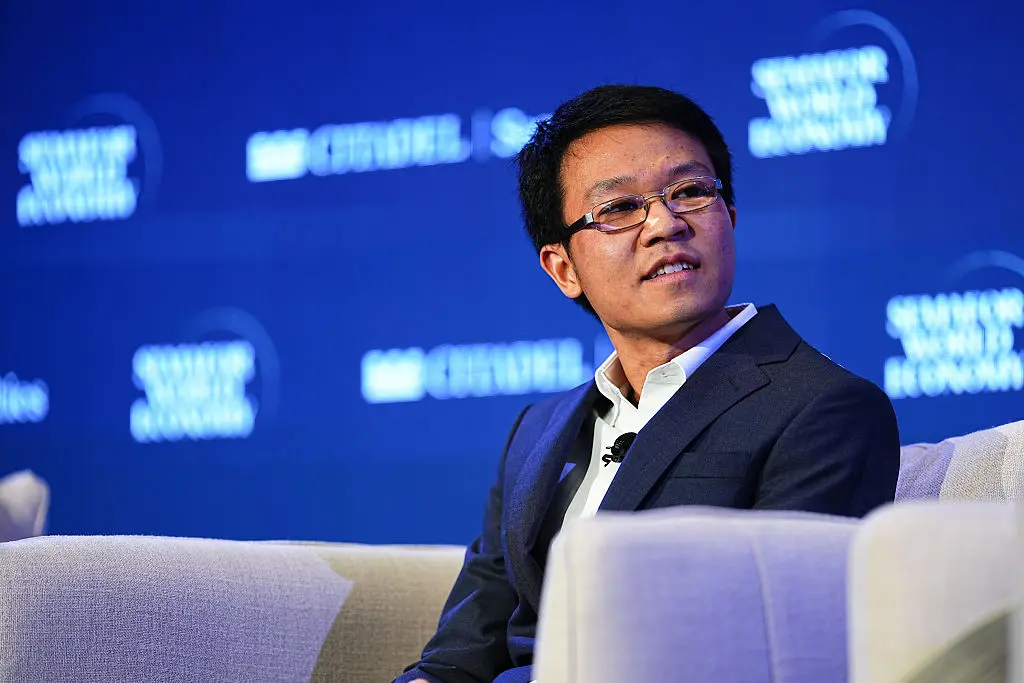
The acquisition attempt comes on the heels of SpaceX’s staggering $60 billion stock-based purchase of Cursor—another premier AI coding ecosystem—and follows the company’s historic public market debut, which saw its market capitalization briefly eclipse $2.3 trillion. However, Cognition CEO Scott Wu moved swiftly to quash rumors of an impending deal. In a public statement on X, Wu declared the report inaccurate, asserting flatly that Cognition "is not for sale" and denying active acquisition negotiations.
Despite Wu’s denial, industry insiders indicate that dialogue regarding infrastructure, compute capacity sharing, and potential strategic commercial alignments remains on the table. As Musk informs SpaceX employees that AI will generate 99% of the enterprise’s ultimate value over the next half-decade, the battle for AI-assisted software engineering has emerged as the principal arena for rapid enterprise monetization. SpaceX’s dual strategy—combining orbital infrastructure with cutting-edge software automation—signals a dramatic evolution in how industrial conglomerates intend to conquer the next paradigm of computing.
Detailed Chronology: From Space Race to AI Consolidation
+-----------------------------------------------------------------------------------+
|                            SPACEX & COGNITION TIMELINE                            |
+-----------------------------------------------------------------------------------+
| 2025:                                                                             |
|  • Grok faces PR setbacks ("MechaHitler" incident).                                |
|  • Google DeepMind acqui-hires Windsurf founders for $2.4B.                       |
|  • Cognition absorbs remaining Windsurf assets; institutes strict work culture.   |
|                                                                                   |
| Early 2026:                                                                       |
|  • SpaceX officially absorbs xAI into its corporate structure.                    |
|  • Grok faces renewed backlash over nonconsensual imagery generation.             |
|                                                                                   |
| May 2026:                                                                         |
|  • Cognition secures $1B funding round at a $25B post-money valuation.             |
|                                                                                   |
| June 2026:                                                                        |
|  • SpaceX launches blockbuster IPO, peak market cap reaches $2.3 Trillion.        |
|  • SpaceX announces $60B acquisition of AI coding platform Cursor.               |
|                                                                                   |
| August 2026:                                                                      |
|  • SpaceX officially closes $60B Cursor deal; joint-releases Grok 4.6 model.      |
|  • Cognition seeks new funding at a target $40B valuation.                        |
|  • Bloomberg reports SpaceX buyout attempt on Cognition; CEO Scott Wu denies deal |
|    talks, maintaining the firm "is not for sale."                                 |
+-----------------------------------------------------------------------------------+
The Bloomberg Allegation and the Swift Rebuttal
The report of SpaceX’s bid for Cognition sent shockwaves through the technology ecosystem, coming just days after SpaceX finalized its $60 billion deal for Cursor. According to sources familiar with the matter, SpaceX approached Cognition leadership with an acquisition framework designed to unify the two premier platforms in AI-driven software development under the SpaceX-xAI umbrella.
The narrative took an immediate turn when Cognition’s Chief Executive Officer, Scott Wu, took to X to explicitly deny the report. "This story is inaccurate," Wu wrote. "Cognition is not for sale, and we have not been in acquisition talks."
While Wu’s statement unequivocally shut down rumors of an outright buyout, reports persist that high-level dialogue between the two entities continues around non-equity partnerships—specifically regarding compute capacity usage and neocloud service allocations.
SpaceX’s M&A Rampage: Absorbing xAI and Cursor
SpaceX’s pursuit of Cognition represents the latest chapter in a breathtaking M&A blitz. Earlier this year, SpaceX executed an internal consolidation by absorbing Musk’s standalone AI venture, xAI. That move created a unified entity possessing both orbital launch logistics (Starlink and Starship) and frontier AI research capability.
Equipped with xAI’s model suite, SpaceX staged a blockbuster Initial Public Offering (IPO) in June, riding an unprecedented wave of investor euphoria. At its peak, the newly public giant commanded a market valuation of nearly $2.3 trillion, propelled by Musk’s vision of space-based data centers and orbital computing clusters.
                  ┌─────────────────────────────────────────┐
                  │          SpaceX Conglomerate            │
                  │   (Peak Market Cap: $2.3 Trillion)    │
                  └────────────────────┬────────────────────┘
                                       │
        ┌──────────────────────────────┼──────────────────────────────┐
        │                              │                              │
┌───────▼────────┐             ┌───────▼────────┐             ┌───────▼────────┐
│ Starlink &     │             │ xAI / Grok     │             │ Cursor         │
│ Starship Ops   │             │ Frontier Models│             │ ($60B Buyout)  │
└────────────────┘             └───────┴────────┘             └────────────────┘
                                       │                              │
                                       └──────────────┬───────────────┘
                                                      │
                                           ┌──────────▼──────────┐
                                           │ Grok 4.6 Platform   │
                                           │ (Joint AI Coding)   │
                                           └─────────────────────┘
To validate this staggering valuation, SpaceX needed immediate, massive software revenue streams. Just days after the IPO, the company announced a staggering $60 billion stock acquisition of Cursor, a widely adopted AI-native code editor. The Cursor deal closed quickly, yielding immediate technical dividends with the joint release of Grok 4.6—an AI model optimized specifically for complex multi-step programming and autonomous agent tasks.
Cognition’s Ascent, Windsurf Assets, and Corporate Restructuring
Cognition captured industry attention in early 2024 with the launch of Devin, marketed as the world’s first fully autonomous AI software engineer. Capable of planning, debugging, and executing end-to-end coding assignments, Devin gained rapid adoption across enterprise technology, financial services, and automotive engineering sectors.
Cognition demonstrated its tactical aggressive posture late last year following a chaotic restructuring in the AI coding space. When Google DeepMind executed a $2.4 billion reverse talent-raid on competitor Windsurf—acqui-hiring its founder and core research team—Cognition stepped in to buy the remaining assets of Windsurf.
The post-merger integration of Windsurf offered a window into Cognition’s uncompromising operating culture. Following the acquisition, Cognition laid off 30 employees and offered voluntary severance buyouts to the remaining 200 Windsurf staff members. Those who chose to stay were subjected to hyper-intense operational standards, including mandatory six-day, 80-plus-hour workweeks in the office—a high-pressure "wartime" environment that mirrors the legendary work ethic demanded by Musk across his corporate empire.
Supporting Context & Enterprise Metrics
Monetizing the Code Frontier: Claude Code, Grok 4.6, and Devin
AI-assisted coding has emerged as the premier high-margin revenue engine for frontier AI developers. While consumer-facing chatbots face retention hurdles and high inference costs, developer tools deliver immediate productivity gains, allowing vendors to command enterprise pricing tiers.
+---------------------------------------------------------------------------------------+
|                             ENTERPRISE AI CODING LANDSCAPE                            |
+---------------------------------------------------------------------------------------+
| Entity / Tool   | Controlling Company | Key Enterprise Customers    | Core Focus      |
+-----------------+---------------------+-----------------------------+-----------------+
| Cursor / Grok   | SpaceX              | Global Developers, Aerospace│ IDE Integration,|
|                 |                     |                             | Multi-step Code |
+-----------------+---------------------+-----------------------------+-----------------+
| Devin           | Cognition           | Goldman Sachs, Citi,        | Autonomous End- |
|                 | (Independent)       | Mercedes-Benz               | to-End Coding   |
+-----------------+---------------------+-----------------------------+-----------------+
| Claude Code     | Anthropic           | Global Enterprise Ecosystem | Agentic Terminal|
|                 |                     |                             | & IDE Coding    |
+-----------------+---------------------+-----------------------------+-----------------+
| Copilot         | Microsoft / OpenAI  | Global Fortune 500          | Native GitHub   |
|                 |                     |                             | Integration     |
+-----------------+---------------------+-----------------------------+-----------------+
Anthropic’s recent revenue growth—driven primarily by its Claude Code tooling—proved to the market that software engineering workflows are the most lucrative frontier for generative models. SpaceX’s strategy was built on replicating this success. By pairing Cursor’s intuitive user interface with xAI’s underlying compute, SpaceX launched Grok 4.6 to directly challenge Anthropic and OpenAI on coding benchmarks.
However, adding Cognition’s Devin to the SpaceX software stack would have provided an unmatched enterprise footprint. Cognition boasts a highly lucrative enterprise customer roster, including blue-chip institutions like Goldman Sachs, Citigroup, and Mercedes-Benz. Incorporating Devin’s autonomous capabilities alongside Cursor would have effectively given SpaceX a lock on both interactive coding environments and fully automated background development agents.
Infrastructure as a Weapon: Compute Monetization and Neocloud Dynamics
Beneath the software layer lies an aggressive infrastructure strategy. To support its ambitious AI models and orbital data center roadmap, SpaceX has amassed giant GPU compute clusters. To offset the immense capital expenditure of these infrastructure investments, SpaceX operates a expanding "neocloud" business, selling off excess server capacity to rival AI developers.
                           +------------------------+
                           |  SpaceX GPU Compute    |
                           |  Mega-Cluster Infrastructure
                           +-----------+------------+
                                       |
                   ┌───────────────────┴───────────────────┐
                   │                                       │
                   ▼                                       ▼
    +------------------------------+        +------------------------------+
    | Internal AI Model Operations |        |  Neocloud Compute Off-Lease  |
    |  (Grok 4.6, Cursor, Starlink) |        |  (Third-Party AI Vendors)    |
    +------------------------------+        +--------------+---------------+
                                                           |
                                            ┌──────────────┴──────────────┐
                                            │                             │
                                            ▼                             ▼
                             +-----------------------------+ +-----------------------------+
                             | Anthropic Compute Allocation| | Potential Cognition Compute |
                             |                             | | Allocation (Under Discussion)
                             +-----------------------------+ +-----------------------------+
Interestingly, while Scott Wu vehemently denied acquisition discussions, his statement notably omitted any refutation of rumors surrounding a compute partnership. Industry analysts speculate that Cognition—which requires enormous compute capacity to train and run Devin’s multi-step execution chains—may be negotiating to buy compute power directly from SpaceX’s neocloud infrastructure. SpaceX currently rents GPU clusters to top-tier players like Anthropic during windows when its own model training cycles are not utilizing 100% capacity.
Financial Valuations in a Hyper-Inflated Market
The financial metrics surrounding both entities illustrate an extraordinary private market environment for AI software startups.
- SpaceX Market Cap: Peak of $2.3 Trillion post-IPO, driven largely by its dual pitch of space infrastructure and high-margin AI software scaling.
- Cursor Acquisition Value: $60 Billion (closed in August 2026 via stock transaction).
- Cognition Raised Capital: Secured a $1 Billion series in late May 2026 at a $25 Billion post-money valuation.
- Cognition Active Valuation Target: Currently in early-stage negotiations for a new funding round targeting a $40 Billion valuation—representing a 60% jump in market valuation in just three months.
      COGNITION VALUATION TRAJECTORY ($ BILLIONS)
  $40B ───────────────────────────────────────────► [Target / Aug 2026]
  $25B ─────────────► [Series Raise / May 2026]
   $2B ──► [Early 2024 Baseline]
       ____________________________________________
       Q1 2024          Q2 2026          Q3 2026
Official Statements and Cultural Dynamics
Denial vs. Reality: The Nuances of M&A Negotiations
While corporate denials during initial deal phases are common, Scott Wu’s post on X left little immediate room for ambiguity:
"The Bloomberg story is inaccurate. Cognition is not for sale, and we are not in acquisition talks with SpaceX."
— Scott Wu, CEO of Cognition
Despite the definitive tone of Wu’s post, sources maintaining proximity to SpaceX’s corporate development arm insist that preliminary acquisition frameworks were indeed drawn up, but stalled over valuation expectations and autonomy demands. With Cognition commanding a valuation path toward $40 billion independently, its leadership team appears intent on building an enduring, standalone software giant rather than selling early to an industrial conglomerate.
However, Musk’s underlying directive to SpaceX leadership remains clear. In an all-hands address to SpaceX staff following the Cursor deal, Musk laid out an uncompromising vision for the business:
"In about four or five years, artificial intelligence will represent 99% of the absolute enterprise value of this company. Every operational arm must orient around this truth."
— Elon Musk, CEO of SpaceX
"Wartime" Ethos: Comparing Cognition and SpaceX Work Cultures
Had an acquisition materialized, the cultural synthesis between SpaceX and Cognition would likely have been seamless compared to standard corporate integrations. Both enterprises are defined by an intense, uncompromising internal culture.
+---------------------------------------------------------------------------------------+
|                                CULTURAL COMPARATIVE MATRIX                            |
+---------------------------------------------------------------------------------------+
| Metric / Practice          | SpaceX Operational Paradigm  | Cognition Post-Windsurf    |
+----------------------------+------------------------------+---------------------------+
| Average Weekly Commitment  | Up to 120 Hours (Musk Baseline)| 80+ Hours Mandatory       |
| In-Office Requirement      | Strict In-Person Mandates     | 6 Days / Week In-Office   |
| Corporate Stance           | Extreme "Wartime" Intensity   | High-Velocity Sprint      |
| Executive Philosophy       | Hardcore First-Principles    | Uncompromising Standards  |
+----------------------------+------------------------------+---------------------------+
When Cognition integrated Windsurf’s remnants, management reportedly offered generous buyout packages to any employee uncomfortable with extreme workload expectations. Those who remained agreed to six-day workweeks exceeding 80 hours. This hardcore operational posture mirrors Musk’s famously demanding management style, where 120-hour workweeks and sleeping on production floors are viewed as badges of honor.
Future Outlook: The Battle for AI Supremacy
Can SpaceX Transform into a $2 Trillion AI Conglomerate?
SpaceX’s strategy of leveraging launch infrastructure and satellite networks to fund massive software acquisitions is unprecedented in modern business history. However, executing this pivot carries serious challenges:
- Enterprise Reputation & Brand Safety: While SpaceX excels at hardware engineering, its AI software division has faced public relations headwinds. xAI’s consumer chatbot, Grok, has suffered from high-profile content moderation failures, including a series of controversial antisemitic generation incidents in 2025 and nonconsensual sexual imagery controversies in early 2026. Transitioning from consumer controversy to trusted enterprise software provider for institutions like Goldman Sachs or Citi will require strict governance guarantees.
- Model Performance Parity: Despite the rollout of Grok 4.6 alongside Cursor, competitors like OpenAI (GPT-5/Codex variants) and Anthropic (Claude 3.5/4 suites) are continuously pushing the frontier of code synthesis and autonomous reasoning. SpaceX must continually reinvest capital to maintain model parity.
- Capital Expenditure Demands: Developing space-based data centers alongside next-generation AI models requires tens of billions of dollars in annual capex. If the yield on software tools like Cursor slows, market pressures on SpaceX’s newly public stock could mount quickly.
The Trajectory for Cognition and Independent AI Startups
For Cognition, remaining independent amidst a wave of mega-consolidations presents both significant risks and massive upside. As major tech conglomerates buy out or "acqui-hire" promising software startups—as demonstrated by Google DeepMind’s absorption of Windsurf’s leadership—the pool of truly independent AI coding platforms is shrinking rapidly.
Should Cognition successfully close its target funding round at a $40 billion valuation, it will possess the capital runway needed to resist hostile buyout attempts for the foreseeable future. By scaling Devin across major corporate clients, expanding its research capabilities, and leveraging third-party neocloud compute from partners like SpaceX, Cognition aims to prove that an independent AI platform can stand toe-to-toe with tech conglomerates.
Whether Cognition maintains its independence or eventually succumbs to the financial gravity of a mega-cap tech giant, SpaceX’s pursuit reveals a clear reality: the race to control artificial intelligence has moved beyond consumer chatbots into the underlying code that builds the modern digital world.