Executive Overview
The sport of Thoroughbred horse racing stands at a fascinating, high-stakes intersection of ancient tradition and cutting-edge innovation. At its core, the discipline is an exercise in symbiotic athleticism: a human rider, operating with split-second reflexes and profound physical conditioning, partners with a half-ton equine athlete capable of reaching blistering speeds nearing 40 miles per hour. Yet, this high-velocity partnership carries inherent, formidable risks. When things go wrong on the track, the consequences can be catastrophic for both horse and rider.
For generations, the safety paradigms governing the sport relied heavily on human observation, intuition, and post-incident analysis. However, a profound transformation is currently underway across legendary racing grounds like Belmont Park. Driven by a convergence of advanced wearable technology, biometric monitoring, and sophisticated sports medicine, the racing industry is shifting decisively from a reactive posture to a proactive, predictive safety model.
By looking deeply into the physiological profiles of both athletes—analyzing equine biomechanics alongside human athletic performance—researchers, veterinarians, and jockeys are unlocking unprecedented insights. This comprehensive report explores the technological and medical frontiers reshaping horse racing safety, featuring firsthand field reporting from Belmont Park and insights from leading authorities, including Dr. Sara Langsam, chair of the American Association of Equine Practitioners (AAEP) Racing Committee; Michaela Keener, a jockey health researcher at the University of Kentucky; and veteran jockey ReyLu Gutiérrez, who has navigated the starting gates in over 6,000 races.
Detailed Chronology: A Day of Observation at Belmont Park
Morning Mist and Biometric Reality
The morning sun has barely cleared the horizon at Belmont Park, casting long, dramatic shadows across the sprawling backstretch. While the grandstands remain quiet and empty, the real work of horse racing is already at a fever pitch. Grooms walk cooling-out horses in rhythmic circles, exercise riders chat in hushed tones near the gap, and trainers stand with stopwatches, watching the rhythmic pounding of hooves on the training track.
It is in this crucible of morning training that the modern safety revolution begins. To the casual observer, the scene looks identical to how it has looked for a century. But a closer inspection reveals subtle shifts: horses outfitted with lightweight, non-invasive sensor packages beneath their girths, and exercise riders wearing biometric armbands that track heart rate variability, core body temperature, and G-force impacts.
The Veterinarian’s Perspective: Dr. Sara Langsam
Stepping away from the rail, I catch up with Dr. Sara Langsam, an esteemed equine veterinarian and chair of the AAEP Racing Committee. Dr. Langsam’s daily routine involves a delicate balance of clinical medicine and high-stakes athletic evaluation.
"People often forget that we are managing two elite athletes simultaneously, and their destinies are inextricably linked," Dr. Langsam explains, gesturing toward a string of Thoroughbreds jogging past. "If a horse is experiencing microscopic fatigue in a bone, or subtle inflammation in a tendon, it changes the way that animal moves. That change, even if imperceptible to the naked eye, alters the physical demands placed on the jockey."
Dr. Langsam elaborates on how modern diagnostics have changed the game. "We used to wait for overt lameness to intervene. Today, with thermal imaging, high-speed gait analysis, and continuous biometric tracking, we can detect anomalous physiological shifts days—sometimes weeks—before a catastrophic injury occurs. We are moving from treating injuries to predicting and preventing them."
The Rider’s Equation: Speaking with ReyLu Gutiérrez
To fully grasp the human side of this high-speed equation, I transition from the barns to the jockeys’ quarters to speak with ReyLu Gutiérrez. With over 6,000 career starts under his belt, Gutiérrez possesses an intimate, hard-earned understanding of the physical toll exacted by the sport.
"When you’re sitting on a 1,200-pound animal going 40 miles per hour, your body is absorbing an incredible amount of kinetic energy," Gutiérrez says, adjusting his riding boots. "You aren’t just a passenger; you are an active stabilizer. If your core gives out, if your balance falters for a fraction of a second, the horse feels it immediately. A fatigued jockey can disrupt a horse’s stride, and when a horse loses its rhythm at that speed, danger follows."
Gutiérrez welcomes the influx of sports science into the jockeys’ room. "In the past, jockeys were expected to just tough it out through injuries, dehydration, and exhaustion. We were treated like jockeys, not like athletes. Today, realizing that our physical fitness directly impacts the safety of the horse has changed everything. Nutritionists, physical therapists, and wearable trackers are helping us perform at our absolute peak safely."
The Academic Lens: Michaela Keener at the University of Kentucky
To understand how the broader scientific community is quantifying this human-equine dynamic, I consult Michaela Keener, a pioneering jockey health researcher at the University of Kentucky. Keener’s work focuses on the biomechanical demands placed on jockeys and how rider fatigue correlates with racing incidents.
"Our research looks at the physical conditioning of jockeys as a critical safety variable," Keener notes via digital correspondence following my field visit. "We track parameters like asymmetrical loading, muscular fatigue thresholds, and impact concussion forces. When a jockey experiences cumulative fatigue over a race card, their reaction time slows down. In a sport where decisions must be made in milliseconds, that delay is a major risk factor."
Keener’s studies highlight a paradigm shift: protecting the horse requires protecting the jockey, and vice versa. "If a rider lacks the required physical fitness to maintain proper technique, the horse is forced to compensate, placing undue stress on its musculoskeletal system. It is a continuous feedback loop."
Supporting Context & Metrics: The Anatomy of Risk and Resilience
Quantifying the Speed and Stress
To appreciate the necessity of modern safety interventions, one must examine the raw physics of Thoroughbred racing. A typical racehorse weighs approximately 1,000 to 1,200 pounds and generates immense mechanical power. At peak acceleration down the stretch, these animals reach speeds between 37 and 43 miles per hour.
During a full gallop, the entirety of a horse’s body weight—magnified by gravitational forces and momentum—is periodically supported by a single leg. The forces exerted on the distal limbs can exceed several tons per stride.
| Metric / Parameter | Equine Athlete | Human Jockey |
|---|---|---|
| Average Operating Speed | Up to 40+ MPH | N/A (Passenger/Pilot) |
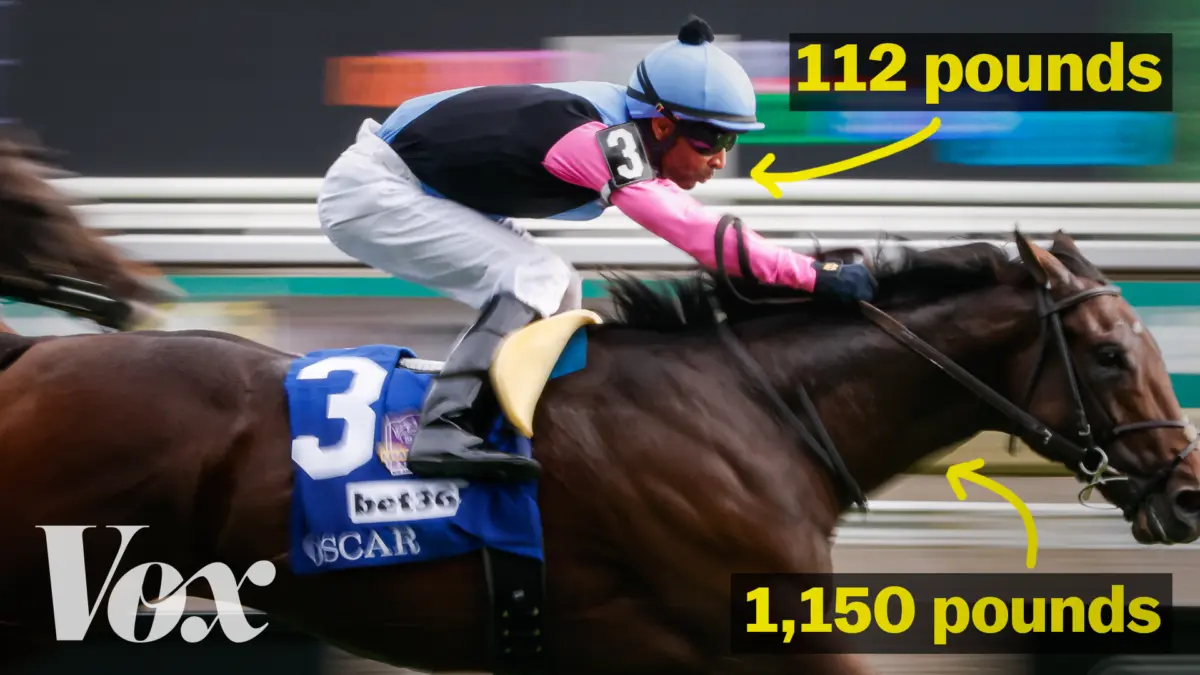
| Body Weight | 1,000 – 1,200 lbs | 110 – 126 lbs (Regulated) |
| Primary Risk Factors | Musculoskeletal fatigue, micro-fractures | Concussions, spinal compression, asymmetry |
| Technological Monitoring | GPS gait sensors, thermal imaging, heart rate telemetry | Biometric vests, force-plate analysis, hydration tracking |
| Intervention Goal | Early detection of lameness / catastrophic prevention | Enhanced core stability, fatigue management, reflex optimization |
The Evolution of Equine Sports Medicine
Historically, veterinary medicine in racing was largely reactive—treating fractures, lacerations, and joint ailments after they occurred. Over the past decade, however, regulatory bodies and racing associations have invested heavily in proactive sports medicine.
Advanced diagnostic imaging tools, once restricted to high-end equine hospitals, are now routinely deployed trackside. Positron Emission Technology (PET) scans and standing MRI units allow veterinarians to visualize bone metabolism at a cellular level, identifying areas of high bone turnover (hot spots) that precede stress fractures. Combined with wearable heart-rate monitors and stride-frequency sensors, trainers and veterinarians now possess a real-time dashboard of an animal’s physiological wellbeing.
The Professionalization of the Jockey
Simultaneously, the perception and preparation of the human athlete have undergone a renaissance. For decades, jockeys endured severe weight-cutting practices, chronic dehydration, and rigorous, unmonitored physical exertion. Today, institutions like the Jockeys’ Guild, alongside university research labs, champion a sports-medicine approach to rider health.
Jockeys now utilize specialized training regimens focused on core stability, lower-back resilience, and neck strength to resist the violent forces of the mount. Nutritional science has replaced crash dieting, ensuring that riders maintain optimal cognitive function and muscular endurance throughout a grueling 9-to-10-race card.
Official Statements and Industry Perspectives
The integration of technology and sports medicine is not merely an academic exercise; it is backed by major industry stakeholders committed to modernizing the sport’s safety infrastructure.
Dr. Sara Langsam, Chair of the AAEP Racing Committee:
"We are living through the most progressive era in the history of equine veterinary medicine. The tools we have today—ranging from biometric sensors to advanced imaging—allow us to be advocates for the horse in ways our predecessors could only dream of. Safety is no longer a matter of luck; it is a matter of science, vigilance, and collaboration."
ReyLu Gutiérrez, Veteran Jockey:
"When you head out of the starting gate, you want to know that every possible box has been checked—for you and for your horse. The culture has shifted entirely toward safety. We understand that taking care of our bodies as athletes isn’t a weakness; it’s the ultimate responsibility we owe to the sport and to the animals we ride."
Michaela Keener, University of Kentucky Researcher:
"By bridging the gap between equine biomechanics and human sports science, we are building a holistic framework for racetrack safety. When you optimize the physical readiness of both the rider and the mount, you drastically reduce the margin of error in a inherently dangerous profession."
Future Outlook: The Next Horizon in Racetrack Safety
As the racing industry looks toward the future, the integration of artificial intelligence (AI), machine learning, and next-generation wearables promises to push safety standards even higher.
Predictive AI and Machine Learning
Researchers are currently developing algorithmic models that ingest vast amounts of racing data—including track surface conditions, weather variables, historical training logs, and real-time biometric feeds. These machine-learning models can flag anomalous patterns in stride length or heart-rate recovery that might elude even the most experienced veterinarian or trainer. By synthesizing this data, tracks of the future may soon feature automated early-warning systems that recommend scratching a horse before any clinical signs of injury manifest.
Advanced Materials and Smart Textiles
For jockeys, the future lies in smart protective gear. Innovations in impact-absorbing polymers and embedded sensor networks will yield safety vests and helmets that not only protect against blunt-force trauma during falls but also continuously stream neurological and physiological data back to medical staff on-site. If a rider experiences a subtle concussion or extreme fatigue, track medical personnel will be alerted instantly, preventing potential secondary incidents.
Track Surface Intelligence
Beyond the athletes themselves, the racing surfaces are also getting smarter. Embedding fiber-optic sensors into dirt, turf, and synthetic tracks allows officials to monitor moisture levels, compaction rates, and shear strength in real-time. Ensuring uniform surface consistency minimizes the environmental stressors placed on equine joints during high-speed exertion.
Conclusion
Horse racing will always remain a high-adrenaline sport defined by speed, courage, and risk. However, the narrative of the sport is being rewritten. Through the fusion of advanced sports medicine, wearable technology, and a renewed commitment to the dual-athlete paradigm—where the health of the horse and the rider are seen as inextricably linked—the racing industry is forging a safer, more sustainable path forward. As seen on the misty tracks of Belmont Park, the future of racing belongs to those who embrace innovation to protect the heart and soul of the sport.