Executive Overview
In the spring of 2023, the streets of Paris transformed into a theater of democratic discontent. Millions of citizens flooded the boulevards to protest a controversial pension reform pushed through by President Emmanuel Macron’s government, raising the retirement age from 62 to 64. Amid the tear gas, flying debris, and escalating confrontations between militant youth and militarized police, a new kind of journalism emerged.
At the center of this digital paradigm shift is Rémy Buisine, a 32-year-old video journalist for the French online media outlet Brut. Armed with little more than dual smartphones, a gas mask, and an unwavering commitment to unbroken documentation, Buisine has redefined how a global audience experiences civil unrest. His multi-hour livestreams on TikTok, Facebook, and the Brut app have attracted millions of viewers, turning raw, unfiltered street-level reporting into a cultural phenomenon.
This article explores the mechanics of modern digital reporting, examining a day on the frontlines of the Paris protests with Buisine. It details the operational realities of live-streaming civil disobedience, the socio-political roots of France’s youth mobilization, and the profound personal toll exacted by a 24/7 digital news cycle where the reporter is simultaneously the narrator, the target, and the spectacle.
Detailed Chronology: A Day on the Frontlines
The Gathering Storm: 3:00 PM – 4:00 PM
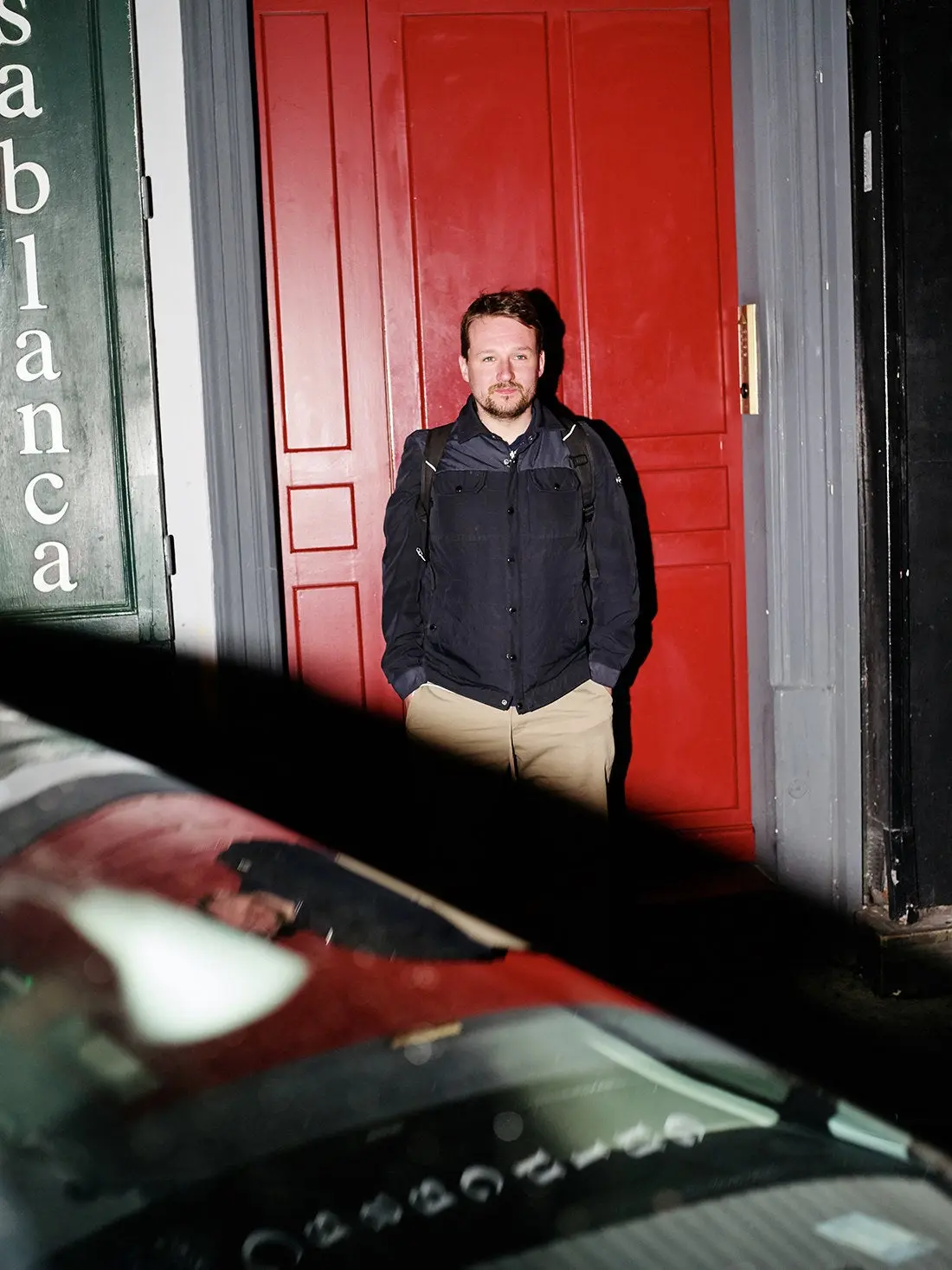
The protest on April 6 had already been moving for half an hour when I met Rémy Buisine near Montparnasse station. Blending effortlessly into the crowd of tens of thousands—wearing a light navy puffer jacket and blue jeans, devoid of the neon-yellow press armbands typically worn by traditional correspondents—Buisine was virtually indistinguishable from the civilian demonstrators. Yet, his operational focus was absolute. Within moments of our rendezvous, he was delegating camera angles to a colleague and keeping a pulse on the shifting dynamics of the march.
As we moved closer to the vanguard of the demonstration, Buisine transitioned into operational mode. Pausing near the Brut offices, he systematically extracted hermetically sealed goggles and a gas mask from his backpack, tucking tear gas decontaminant spray into an outer pocket.
By 3:29 PM, the atmosphere shifted sharply. A concussive blast echoed down the boulevard, drawing jeers and chants of "ACAB" from the crowd. Gendarmes—a militarized police force—formed a dense wall across the boulevard with riot shields raised. At 3:37 PM, the gendarmerie fired their first warning shots. While civilian protesters and I retreated from the friction point, Buisine surged forward. Dropping his auxiliary bag, he unzipped his helmet and stepped directly into the haze of impending tear gas, initiating the livestream that would soon draw hundreds of thousands of concurrent viewers.
The Escalation: Kettling and Clashes
As the afternoon wore on, the protests devolved into a chaotic cat-and-mouse game between law enforcement and radicalized elements of the crowd, often clad entirely in black (blocs noirs). Buisine’s camera captured the volatile escalation: a residential window shattering after an object was hurled from it, the awning of the iconic Café de la Rotonde catching fire, and protesters constructing makeshift barricades out of burning wood and overturned municipal garbage bins near the Tolbiac metro station.
For over 30 hours of cumulative reporting over the spring, Buisine found himself trapped inside battered commercial properties, penned in by police kettling tactics, and surrounded by defiant demonstrators chanting his name ("Ah Rémy, allez, allez, allez!"). Despite lacking the protective distance maintained by legacy news crews, he continued to broadcast unedited, real-time footage of police charges, injuries, and political reactions, capturing impromptu interviews with French lawmakers who arrived at the scene without their official tricolor sashes.
The Late-Night Wrap: 10:54 PM and Beyond
At 10:54 PM, after seven and a half hours on his feet and more than 28,000 recorded steps, Buisine finally cut the livestream. On TikTok alone, 1.8 million viewers had tuned in to watch the final hours of the mobilization.
Even off-air, the demands of the profession persisted. Buisine retreated to a nearby kebab restaurant at the urging of his peers, though the chemical residue of tear gas rendered him unable to consume more than a fraction of his meal. While sitting among friends, he continued to process and upload clips to Instagram and TikTok. By the time his adrenaline subsided enough for him to sleep, it was 3:00 AM. His alarm was already set for 9:30 AM to lead Brut’s morning editorial meeting.
Supporting Context & Metrics: The Rise of Brut and Social Journalism
Breaking the Mold of Legacy Media
Buisine’s journey to the center of French journalism is unconventional. Growing up in a rural village in northeastern France without familial connections to media and struggling with traditional academic metrics, he bypassed elite university tracks. After graduating from a horticultural technical high school, he managed social media accounts for soccer players before migrating to Paris in 2013 to work as a community manager for local radio stations.
In 2015, utilizing the then-nascent Periscope app, Buisine began documenting protests against the contentious El Khomri labor laws in his spare time. By learning the craft directly on the streets—gauging audience reactions in real-time and consulting veteran journalists—he developed a distinct reporting style centered on empathy and uninterrupted access.
When Brut launched in 2016 as a digital-first, social media-native publisher, Buisine was brought on as a founding member. Initially met with skepticism by the French political establishment—many of whom feared the immediacy and lack of editorial gatekeeping inherent to platforms like Facebook and TikTok—Brut has since become a dominant journalistic force. In 2020, Buisine’s trajectory was cemented when he led a historic, two-and-a-half-hour livestreamed interview with President Emmanuel Macron.
Metrics of Engagement
The numbers surrounding Buisine’s coverage of the 2023 pension reform protests underscore a profound transformation in news consumption:
- Audience Growth: During the peak weeks of the mobilization, Brut’s TikTok account surged by 1 million followers, reaching a total of 4.2 million.
- Stream Duration: Livestreams frequently stretched past the seven-hour mark, capturing the entire arc of demonstrations from peaceful assembly to late-night skirmishes.
- Concurrent Viewership: Individual streams regularly commanded tens of thousands of concurrent viewers at their heights, scaling into millions of total views per event across platforms like TikTok, Facebook, and the proprietary Brut application.
- International Reach: Despite broadcasting almost exclusively in French, Buisine’s streams attract a global audience, with foreign viewers persistently requesting English translations—a demand he answers with his signature phrase: "Live in Paris."
Official Statements and Institutional Perspectives
The friction between traditional governance, law enforcement, and digital-first journalism highlights a growing institutional anxiety over modern media accountability.
- The French Government and Police: Official bodies have repeatedly expressed concern over the decentralized nature of modern protests, where wildcat demonstrations organize securely via encrypted messaging apps and broadcast instantly via platforms like TikTok. While the Ministry of the Interior defends police tactics as necessary to maintain public order against violent fringe elements (casseurs), independent journalists like Buisine have frequently documented instances of excessive force directed at both protesters and press personnel, despite laws designed to protect journalists.
- The Protesters’ Perspective: Younger demonstrators frequently cite the absence of genuine political representation as the catalyst for their mobilization. Ritchy Thibault, an 18-year-old prominent voice in the protests, emphasized why Buisine commands such intense loyalty: "He gives time to people on the street to talk for 10, 20 minutes, interviewing them at length as to why they’re protesting." Unlike traditional television broadcasts that rely on soundbites and studio analysts, Buisine provides a horizontal platform where ordinary citizens articulate their grievances without editorial filters.
- Media Critics: Media analysts note that while livestreaming offers unprecedented transparency, it also introduces significant risks regarding emotional manipulation, the sensationalization of violence, and the physical safety of lone reporters operating without institutional security details. Buisine himself has acknowledged the psychological toll of witnessing severe trauma, recalling the harrowing injuries—open skulls, lost limbs, and lost eyes—he documented during the Gilets Jaunes (Yellow Vests) movement starting in 2018.
Future Outlook: The Evolution of Immersive Reporting
As digital algorithms increasingly dictate public discourse, Rémy Buisine’s work serves as a case study for the future of journalism. The model of the detached, evening-news anchor is rapidly giving way to the hyper-connected, participatory street reporter.
However, this lifestyle comes at an unsustainable personal cost. Operating as a single point of failure for millions of viewers, Buisine embodies the modern "always-on" journalist: single, unattached, sleeping mere hours a night, and constantly metabolizing the physical and psychological trauma of civil unrest. His workflow does not pause for rest; following his coverage of the Paris pension protests, a building collapse in Marseille prompted an immediate redeployment, packing his bags for the train to begin streaming anew.
For the media industry, the success of Brut and reporters like Buisine signals an irreversible shift. Institutions that fail to meet audiences on decentralized, interactive platforms risk losing entire generations of news consumers. As long as social inequality, political friction, and civil disobedience remain features of modern democracies, the frontlines will continue to be broadcasted—not from a studio desk, but from the fog of tear gas, mediated through a glowing smartphone screen held by a reporter who refuses to look away.