In Down by the Hudson, photographer Caleb Stein offers more than a retrospective compilation of images captured over a span of twelve years; he presents a masterclass in long-form documentary practice. Emerging from a decade-long engagement with a single, hidden swimming hole along the Hudson River in Poughkeepsie, New York, Stein’s new photobook and accompanying exhibition at Palo Gallery (running from September 10 through October 3, 2026, published via Palo Press) stand as a profound meditation on community, resilience, and quiet grace.
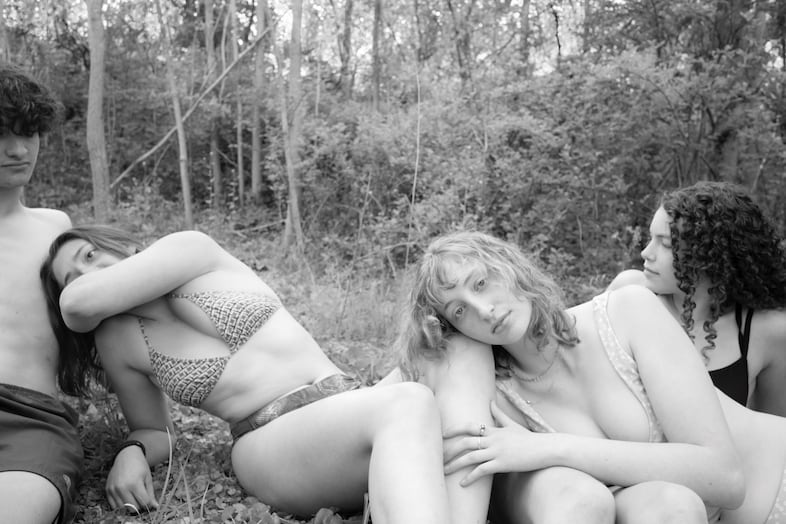
Set against the complicated economic backdrop of post-industrial America, Stein’s project tracks a geographic and social micro-ecosystem where divisions seemingly evaporate. Undocumented immigrants at risk of deportation, staunch political partisans, local students, and lifelong residents converge on a shaded sandbank beneath a frayed rope swing. Here, shielded by dense woods and an unauthorized footpath, they share a brief, luminous reprieve from the hyper-polarized voltage of contemporary American life.
Equal parts love letter to his partner and close collaborator, Andrea Orejarena, and an intimate chronicle of coming-of-age, Down by the Hudson upends traditional tropes of Rust Belt decline. Rather than focusing exclusively on blight, economic stagnation, or despair—narratives frequently stamped onto small-town America—Stein turns his lens toward a space that is working. He illustrates how radical forms of human connection, vulnerability, and collective joy can quietly take root in the margins.
Detailed Chronology
2013: The Discovery and the Spark
The origins of Down by the Hudson trace back to the autumn of 2013, when a young Caleb Stein relocated from his upbringing between London and New York to attend Vassar College in Poughkeepsie. It was during this transitional period that Stein fell in love twice: first with fellow Vassar student Andrea Orejarena, who would become his lifelong romantic partner and artistic collaborator, and subsequently with a geographical secret she revealed to him.
Tucked away on the outskirts of town behind a sprawling, nostalgic drive-in movie theater, the watering hole offered an immediate sanctuary. To reach the site, visitors had to navigate a physical labyrinth reminiscent of classic animation: ignoring a battery of warning signs, slipping quietly through a dense patch of riverside woods, and wading out toward a tree-shaded sandbank complete with an inviting rope swing.
"It instantly became the place we’d spend all our free time," Stein reflects. "I was fascinated very early on by the way it allowed people from all walks of life to come together, let their guard down, and cool off."
2014–2019: Refining the Lens and Building Trust
In its earliest iterations, Stein’s photographic output in Poughkeepsie was episodic, scattered, and searching. Raised between two sprawling metropolises, he felt an undeniable pull to document small-town life, yet his initial frames lacked a unifying anchor. That focus finally crystallized at the riverbank.
Recognizing the "joyfully illicit" character of the creek, Stein began returning each summer. He quickly realized that the site’s clandestine nature fundamentally altered human behavior.
"The Hudson Valley is filled with watering holes, but this one felt more like a secret," Stein notes. "I saw people behave differently there because they’re kind of sharing that secret."
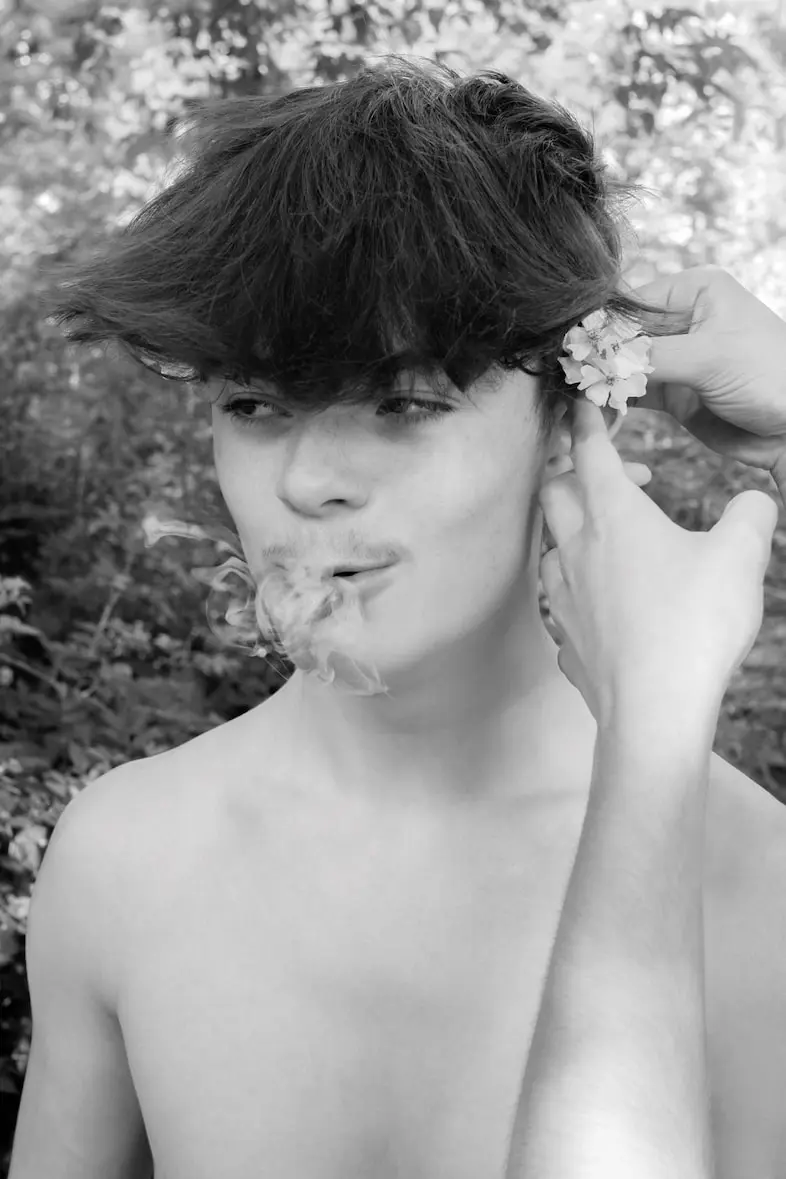
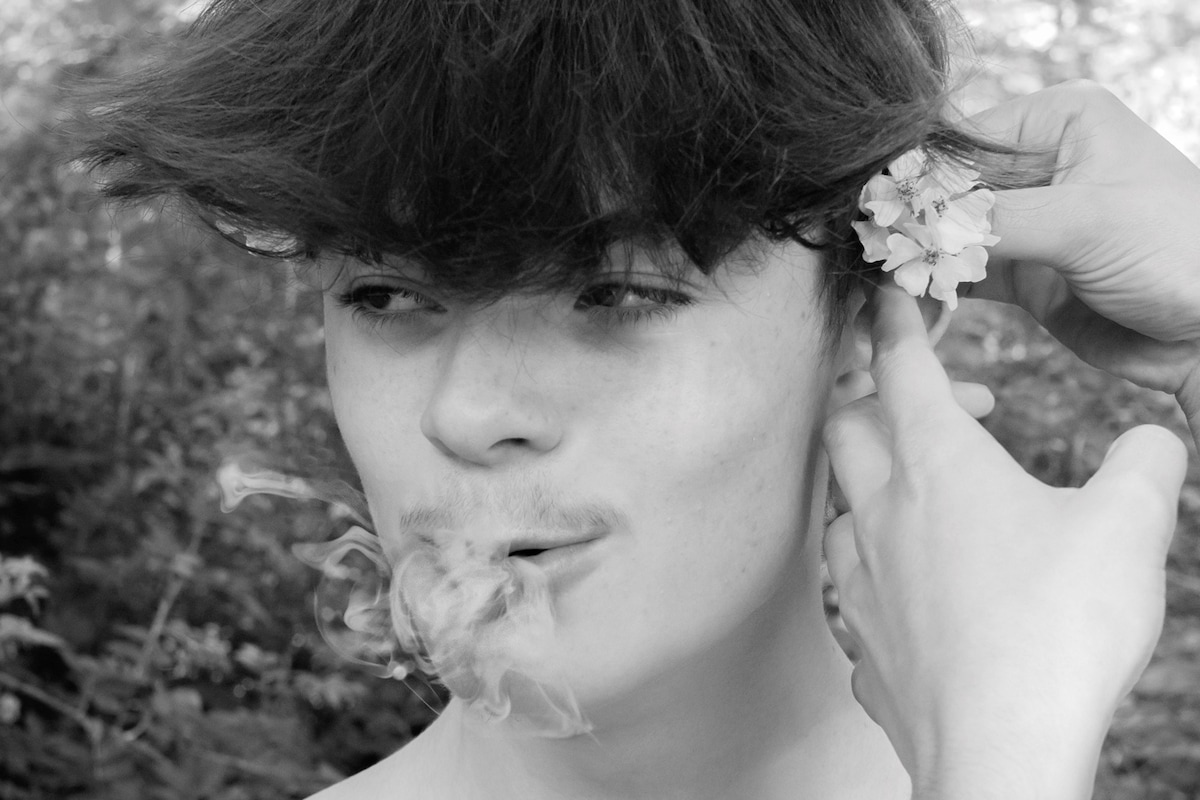
Eschewing a detached, fly-on-the-wall approach, Stein worked digitally, proactively sharing images on the back of his camera with his subjects. This methodology transformed photography from a purely extractive medium into an active, conversational collaboration. Whether capturing local teenagers play-fighting, young men shedding hyper-masculine bravado in favor of unexpected tenderness, or groups floating aimlessly in the current, Stein ensured that every frame was built on mutual trust.
2020–2025: Maturation and Sociopolitical Shifts
As the project extended past its fifth and then its eighth year, the world outside the tree line shifted dramatically. Poughkeepsie, historically defined by the boom and bust of industrial giants like IBM, was still reckoning with decades of deindustrialization. By the mid-2010s, local and presidential elections in the region had grown razor-thin.
"You could have fit the difference into a bar on a Saturday night," Stein observes, painting a picture of a community balanced on a ideological knife-edge.
Yet, down by the water, those intense political binaries dissolved. Stein documented a fragile, beautiful social harmony: undocumented individuals mingling alongside vocal supporters of Donald Trump, all seeking the same simple release from the summer heat.
Simultaneously, the project mirrored Stein’s personal evolution. What started as a collegiate exploration matured into an archive of adult life, culminating in his marriage to Orejarena. The passing years left physical and emotional traces on the subjects who grew up alongside the camera, cementing the work as a sprawling, episodic portrait of maturation.
2026: The Reckoning and Release
By 2026, the physical reality of the site began to shift. On a recent visit following Fourth of July celebrations, Stein found the access points locked down and the spot closed off by local law enforcement—a reminder of the fragility inherent in such unregulated spaces.
Yet, the culmination of the project through Palo Press and the upcoming exhibition at Palo Gallery provides its own form of closure. For Stein, publishing the book marks a vital psychological release:
"After years of gathering images, looking for the right pieces, holding it all together, it’s like I can finally exhale. I can let it go, let it float down the river."
Supporting Context & Metrics
The Socioeconomic Fabric of Poughkeepsie
To fully understand the gravity of Down by the Hudson, one must examine the economic landscape of the Hudson Valley. Poughkeepsie’s modern history is intrinsically tied to corporate manufacturing. For decades, IBM served as the lifeblood of the local economy, employing thousands of residents, funding civic infrastructure, and establishing a secure, middle-class identity for the region.
However, the early 1990s corporate downsizing gutted the local workforce. Thousands of high-paying jobs vanished nearly overnight, thrusting the city into a protracted era of economic transition, population decline, and municipal struggle. While nearby regions experienced waves of gentrification driven by Brooklyn-to-Upstate migration, older industrial corridors like Poughkeepsie continued to navigate the complex social scars of sudden deindustrialization.
Photographic Craft and Materiality
Stein’s technical choices reinforce the thematic weight of his project. Shooting entirely in black and white, he bypasses the literal hues of the landscape to focus intensely on texture, light, and gesture. Water acts as a dynamic visual and emotional protagonist throughout the monograph.
"When you’re in water, you have to breathe differently," Stein reflects. "It’s a complete reset. It’s like being suspended or held, in a way that is sort of addicting."
This tactile sense of suspension is mirrored in the physical production of the book itself. The accompanying essays are printed on textured Danshi Snow paper, whose fine grain mimics the rippling movement of the river, creating a synesthetic experience for the reader. The book is explicitly dedicated to Andrea Orejarena, functioning as an unapologetic love letter to both his partner and the landscape that bound their lives together.
Official Statements & Critical Perspectives
Caleb Stein’s artistic ethos challenges the prevailing pessimism often found in contemporary documentary photography focused on America’s working-class and post-industrial towns.
"Rather than documenting the struggles often associated with small-town America, it was much more challenging and perhaps more necessary to photograph something that was actually working," Stein explains when discussing his motivations. "There has to be a hyper-focus on something if you’re suggesting an alternative."
Art critics and curators have noted that Stein’s work avoids the traps of romanticized poverty porn or detached sociological study. Instead, his approach aligns with a filmmaker’s sensibility—patient, deeply observant, and reliant on prolonged immersion. By maintaining a twelve-year dialogue with a single plot of land, Stein elevates local folklore into universal human mythology.
The exhibition at Palo Gallery, opening on September 10, 2026, will showcase these nuanced silver-gelatin prints, offering urban audiences a portal into the complex social topography of the Hudson Valley.
Future Outlook
As Down by the Hudson enters the public sphere, its resonance extends far beyond the art market or regional New York history. In an era defined by extreme political polarization, institutional distrust, and digital isolation, Stein’s work provides a compelling visual blueprint for radical empathy.
The closure of the Poughkeepsie watering hole by local authorities underscores a modern tragedy: the systematic erasure of the "commons"—those unmonitored, non-commercial spaces where human beings can simply exist together without transaction or surveillance. Yet, by immortalizing the site in print, Stein ensures that the fleeting magic captured between 2013 and 2025 remains permanent.
Looking ahead, Down by the Hudson establishes Caleb Stein and Andrea Orejarena as vital voices in contemporary documentary arts. For Stein, though the physical riverbank may be harder to access now, the internal transformation is complete. The work is out in the world, cast adrift like a raft on the Hudson, ready to be discovered by a new audience seeking an antidote to our modern noise.