Executive Overview
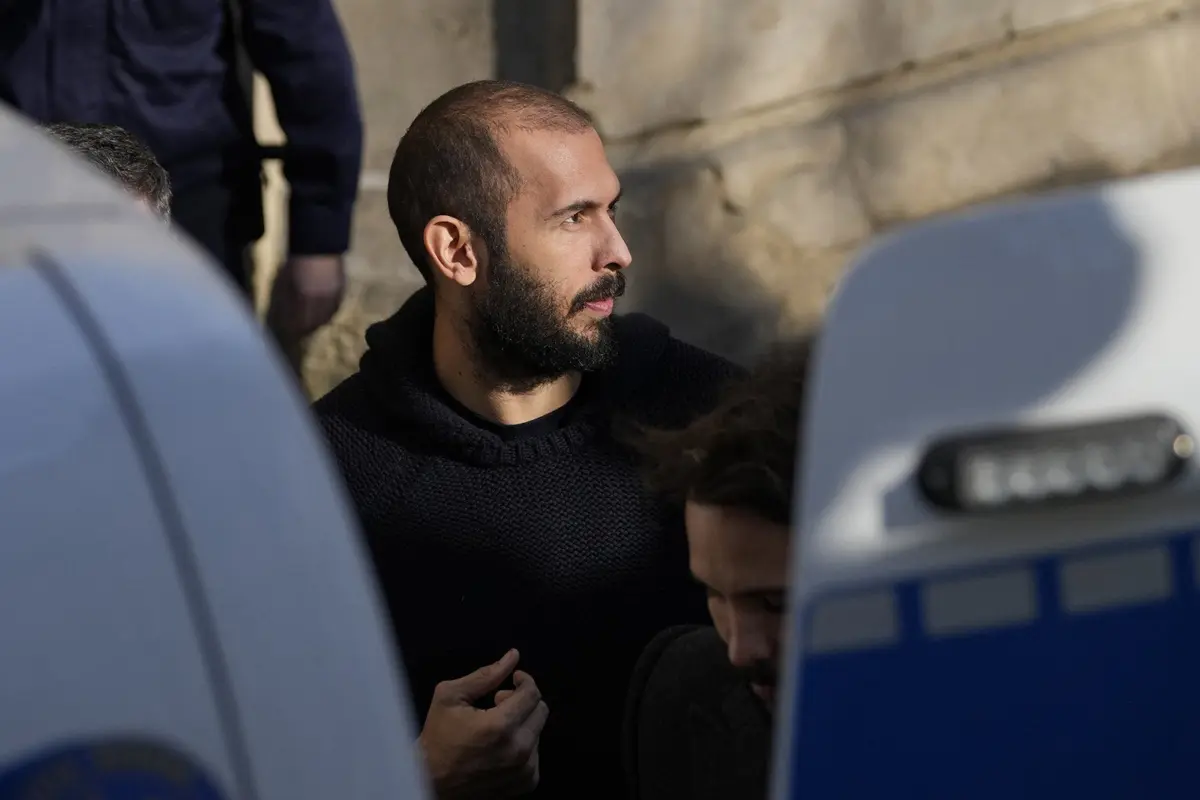
Controversial misogynistic influencer Andrew Tate, alongside his brother Tristan and two alleged accomplices, Georgiana Naghel and Luana Radu, transitioned from a high-security Bucharest detention facility to house arrest following a controversial appellate court ruling. Initially arrested on December 29 on grave suspicions of organized crime, human trafficking, and sexual assault, the siblings hailed the court’s decision as a major legal victory. However, confidential court documents, freedom of information requests, and insights from high-ranking insiders within the Romanian prosecutor’s office reveal a starkly different reality.
Far from helping their legal standing, the behavior exhibited by the Tate brothers and their inner circle during and after their months-long detention has severely exacerbated their legal jeopardy. Romanian judges, prosecutors, and legal scholars maintain that the defendants have orchestrated a dangerous web of obstructionist maneuvers. These include illicit plots to flee to the United Arab Emirates under the guise of fake medical treatments, coordinated intimidation campaigns targeting witnesses and victims, unauthorized access to classified police databases, and desperate attempts to leverage political figures.
This investigative report breaks down the compounding legal crises facing the Tate network. It examines how a mix of digital bravado, alleged witness tampering, and institutional arrogance may ultimately sabotage their defense when their highly anticipated trial commences.
Detailed Chronology of Events and Legal Escalations
The timeline of the Tate brothers’ detention in Romania is marked by an escalating cat-and-mouse game between the high-profile defendants and the nation’s judicial authorities. The chronological trajectory highlights how successive missteps by the influencers transformed a standard human trafficking investigation into a multifaceted multi-jurisdictional compliance nightmare.
Late December 2022: The Raid and Initial Arrest
- December 29, 2022: Romanian law enforcement authorities, acting on intelligence gathered by the Directorate for Investigating Organized Crime and Terrorism (DIICOT), raid the compound owned by Andrew and Tristan Tate in the Pipera district north of Bucharest.
- The brothers, alongside former police officer Luana Radu and associate Georgiana Naghel, are detained for 24 hours before being formally remanded into police custody for 30 days—a detention period repeatedly extended by judges citing the extreme risk of flight and witness interference.
January – February 2023: Conspiracies in Detention
- Jailhouse Wiretaps: As the brothers sit in the central arrest facility in Bucharest, jailhouse phone wiretaps capture Andrew Tate discussing strategies to evade the jurisdiction of Romanian authorities. Investigators discover plans for Andrew to fake or exaggerate medical emergencies to secure travel clearance to Dubai—a jurisdiction notoriously lacking an extradition treaty with Romania.
- The Medical Ruse: Representatives for the Tate brothers leak claims to British tabloids that a dark spot discovered on Andrew Tate’s lung during a medical checkup is "most likely a tumor." Andrew later pivots on social media, claiming the spot is merely "scarring from an old battle," as Romanian authorities officially deny his requests to travel abroad for medical care.
February 18 – 21, 2023: Judicial Rejections and Intimidation
- February 18, 2023: Pro-Tate online personality Sulaiman Ahmed tweets that he has traveled to Palm Beach, Florida—the hometown of a key witness in the case—for a "major story," stoking fears of coordinated witness harassment.
- February 21, 2023: A Bucharest court issues a scathing official summary refusing yet another bid for release. The presiding judge highlights "new reasons" for continued detention, explicitly citing that the accused represent a clear danger to public order, have plotted to flee the country, and are actively pressuring victims to alter their statements.
March 2023: Escalating Legal Maneuvers and Political Outreach
- December–March Intimidation Tactics: Court documents reveal that a US-based law firm representing the Tates previously sent a cease-and-desist letter to a key witness in Florida, demanding she retract her statements or face aggressive defamation litigation. Romanian prosecutors designate this letter as an overt act of witness intimidation.
- Mid-March: Prosecutors uncover wiretapped instructions where Andrew Tate allegedly directs an assistant to approach two radical, right-wing Romanian politicians—George Simion and Diana Șoșoacă—offering future political or financial rewards in exchange for public defense and institutional interference. Both politicians ultimately decline to intervene.
- March 24, 2024: Amid mounting regional scrutiny, Diana Șoșoacă is added to Ukraine’s national security sanctions list due to anti-Western stances and suspected alignment with foreign propaganda.
March 31, 2023: The Shift to House Arrest
- The Appellate Ruling: Two appeals court judges, described by legal observers as relatively new to the complexities of the case, overturn the lower court’s detention order and grant the Tates, Radu, and Naghel house arrest.
- The ruling sends shockwaves through legal circles. The Tates are transferred to their heavily fortified compound in suburban Bucharest, which immediately becomes the subject of 24/7 surveillance by local law enforcement to prevent any sudden escape attempts.
Supporting Context & Metrics
To fully understand the gravity of the Romanian state’s case against the Tate brothers, one must examine the institutional framework, the nature of the charges, and the quantitative scope of their digital reach versus their real-world liabilities.
The Charges and Legal Framework
Under Romanian criminal law, the offenses for which the Tates are investigated carry exceptionally severe penalties:
- Organized Crime Formation: Carries sentences of up to 15 years under Article 367 of the Romanian Criminal Code.
- Human Trafficking (including Trafficking of Minors): Carries penalties ranging from 5 to 20 years, depending on aggravating factors such as abuse of authority, coercion, and the number of victims.
- New Potential Charges: Legal experts confirm that acts of witness tampering, unauthorized database access, and sending aggressive cease-and-desist letters to overseas victims can trigger standalone criminal charges, effectively extending the length of potential prison sentences.
Digital Influence vs. Judicial Reality
The Tates leveraged an estimated combined following of tens of millions across major social media platforms (prior to widespread bans) to cultivate an "army of followers." Prosecutors allege that this decentralized digital ecosystem was weaponized against victims. Rather than acting as a neutral fan base, online supporters were allegedly nudged through dog-whistle tweets and coded language to harass, dox, and threaten women who cooperated with law enforcement.
Official Statements and Legal Expert Insights
The collision between modern internet celebrity culture and traditional European jurisprudence has generated extensive commentary from legal scholars, prosecutors, and defense representatives.
Prosecutors and Judicial Officers
An anonymous source within the Romanian prosecutor’s office did not mince words regarding the defendants’ behavior:
"The Tates have played an extremely dangerous game. From their tweets, it appears they are encouraging [harassment of victims]. Every aspect of the case that touches on the victims is very sensitive. The judicial bodies are noting every single infraction."
In the official court summary from February 21, the presiding judge explicitly captured the judicial frustration:
"The accused present a clear danger for public order, they made preparations to evade criminal investigation by leaving Romania, are trying to influence witnesses and are exerting pressure on the victims."
Legal Scholars and Defense Representatives
Mihai Mareș, a prominent criminal defense lawyer in Bucharest and a lecturer in law at the Alexandru Ioan Cuza University of Iași, warned that the Tates’ strategic miscalculations would leave a lasting negative impression on the bench:
"Any subsequent statements they may give will be viewed with a certain amount of skepticism by the judicial bodies… If the [cease-and-desist] notification concerned a withdrawal of the criminal complaint, it could lead to a widening of the criminal investigation scope under the aspect of a new crime — that of influencing statements."
Meanwhile, the Tates’ defense team has aggressively pushed back against the state’s narrative. Eugen Vidineac, lead defense attorney for the brothers, told local media:
"They have a home and children in Romania, they are under criminal investigation, there is no reason to run away."
Mateea Petrescu, spokesperson for the Tates, defended the communication regarding Dubai and the US legal actions:
"Regarding their departure from the country, the partially published wiretaps omitted the context, [namely] Andrew discussing leaving to Dubai for medical inquiries only in the case that his status allows it… [The cease-and-desist letter] was a LEGAL action in the USA. These suspicions are obsolete given that the judges from the appeals court decided to place them in house arrest."
Regarding Luana Radu’s alleged unlawful access to Ministry of Internal Affairs databases between April and December 2022, court documents note that such sophisticated breaches would have been impossible without institutional assistance, opening up further investigations into possible rogue insiders within Romanian law enforcement.
Future Outlook: What Lies Ahead for the Tate Trial
As the formal trial preparations enter their final stages, the legal landscape surrounding Andrew and Tristan Tate remains profoundly volatile.
- Trial Commencement: With pre-trial detention phases concluding and house arrest implemented, the formal criminal trial is expected to begin in late April. The composition of the trial panel will be critical, as defense teams and prosecutors prepare for intense evidentiary battles.
- Expansion of Indictments: Given the persistent findings regarding witness intimidation, the overseas cease-and-desist letters, and Luana Radu’s alleged police database infiltration, prosecutors maintain the legal prerogative to append new charges to the primary indictment. This could significantly increase the statutory minimum sentences if convictions are secured.
- The Trap of Narcissism: As one experienced Romanian justice system insider observed regarding Andrew Tate’s inability to cease provocative online posturing:
"I think Andrew Tate is not the most intelligent guy, but he probably can’t help himself."
This compulsive need for public spectacle, digital validation, and controversy—while perhaps profitable for online monetization—may ultimately prove to be the defining undoing of the Tate empire within a courtroom that values discretion, adherence to legal boundaries, and respect for institutional process above all else.