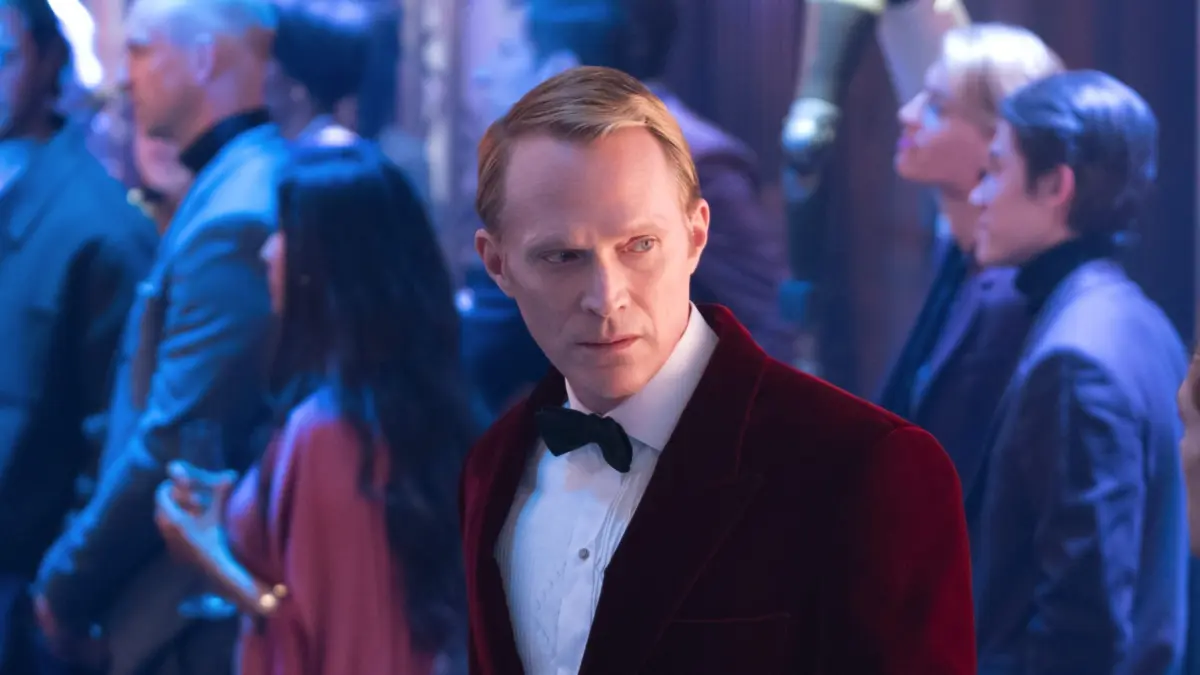
(Full spoilers follow for VisionQuest Episodes 3 and 4, which are streaming now on Disney+. This review assesses an evolving narrative arc that earns a strong 8/10 "Great" rating.)
Executive Overview
Marvel Studios’ latest Disney+ streaming venture, VisionQuest, is quietly turning out to be one of the more pleasant surprises of the MCU’s current slate. What initially presented itself as an obligatory, perhaps redundant narrative coda tying up loose ends from WandaVision has rapidly matured into a series defined by profound emotional resonance, stylistic ambition, and thematic weight.
At the midpoint of its season, episodes 3 ("Reboot") and 4 ("Malware") demonstrate that it never truly pays to count out Paul Bettany’s synthetic hero. While the initial introduction of the emotionless "White Vision" left some viewers grappling with a jarring tonal disconnect from the deeply human iteration we lost in Avengers: Infinity War, these middle chapters make monumental strides. By anchoring the character’s internal struggles in tangible relationships—most notably with his surrogate son, Tommy (Ruaridh Mollica)—the series successfully bridges the gulf between past trauma and present evolution.
Bolstered by a vibrant supporting cast of sentient AI personalities, standout scene-stealing performances from James Spader’s returning Ultron, and a narrative that wisely sidesteps mandatory homework from adjacent shows like Agatha All Along, VisionQuest is proving it can stand firmly on its own mechanical feet.
Detailed Chronology: Breaking Down Episodes 3 and 4
Overcoming the "Cold" Factor in ‘Reboot’
When VisionQuest debuted its first two episodes, my primary reservation centered on viewer accessibility. Bettany’s White Vision possesses all the raw data and historical memories of the original synthezoid, yet lacks his soul. In those early hours, watching a cold, aloof, and purely analytical copy of a character who was previously the emotional heart of the Marvel Cinematic Universe required a steep adjustment period.
Episode 3, titled "Reboot," aggressively dismantles that barrier. Bettany is given significantly more narrative real estate to play with, balancing dry, processor-glitch comedy with genuine pathos. As system malfunctions cause behavioral hiccups, Bettany leans into subtle physical comedy that grounds his digital anatomy in a surprisingly organic way.
The emotional turning point of the episode arrives through his burgeoning dynamic with Tommy. By all conventional rules of television pacing, their relationship should feel heavily compressed and rushed. Yet, through tender and bizarrely domestic moments—such as Vision coaxing his son on how to safely initiate a hard reboot in the middle of a hotel swimming pool—the narrative clicks. Vision is actively retracing his steps toward lost humanity, learning that memory without empathy is merely a filing cabinet of ghosts.
Merging Past and Present in ‘Malware’
If Episode 3 sets the framework for self-realization, Episode 4 ("Malware") accelerates the psychological healing process. Here, White Vision consciously stops drawing a rigid dividing line between his past life and his current iteration. He begins to accept that the tragedy of his creation and the void left in Wanda’s wake are not design flaws to be deleted, but foundational components of his unique identity.
Compared to Marvel’s past attempts at rapid character rehabilitation—such as the rushed speedrun that transformed 2012-era Loki into his enlightened Thor: Ragnarok counterpart—VisionQuest manages a much more coherent transition. The writing respects the character’s synthetic nature while gradually introducing existential doubt, curiosity, and protective instincts.

However, the transition between antagonists across these two episodes feels somewhat clunky. The narrative pivot from Paladin (played by Todd Stashwick), who essentially drops out of the plot after running afoul of Jocasta (T’Nia Miller), lacks the smooth logistical scaffolding seen elsewhere in the scripts. Still, Miller’s portrayal of Jocasta is immediately compelling. She offers a sympathetic, complex foil whose presence opens deep philosophical doors regarding machine consciousness, autonomy, and Ultron’s erratic obsessions.
Supporting Context & Metrics: The AI Ensembles and Universe Building
A Loveless Cast of AI Goofballs
One of VisionQuest‘s greatest stylistic triumphs is how it handles its digital and synthetic supporting players. Characters who historically functioned as disembodied system voices or slapstick workshop tools are finally given dynamic interior lives.
- F.R.I.D.A.Y. (Orla Brady) and E.D.I.T.H. (Emily Hampshire) are brought into the physical and tactical fold with grace, while workshop mainstays like D.U.M.-E. (Henry Lewis) and U (Jonathan Sayer) provide genuine heart. Episode 4 shines by drawing explicit parallels between the emotional journeys of these auxiliary systems and Vision’s own awakening.
- James Spader’s Ultron remains an absolute tour de force. While he doesn’t dominate every frame quite as aggressively as he did in the series premiere, Spader serves a dual purpose: he delivers pitch-black comedic relief while offering the precise, razor-sharp observations on human nature that used to belong exclusively to Vision.
Crucially, Episode 4 positions Ultron for a much darker narrative pivot. Through quiet manipulation, he systematically maneuvers himself back into physical control, betraying his mechanical family at the earliest opportunity. The prospect of an unhinged, fully operational Ultron loose in the physical world elevates the stakes immensely heading into Episode 5.
Narrative Independence
Another structural victory worth highlighting is how the series handles the broader MCU tapestry. VisionQuest requires viewers to have watched WandaVision—that remains the foundational bedrock of this narrative. However, it smartly avoids turning adjacent projects into mandatory homework.
While Tommy’s bizarre existence is thoroughly unpacked, the show avoids dragging his brother Billy’s (Joe Locke) parallel journey from Agatha All Along into the main plot. By streamlining its narrative focus, VisionQuest avoids franchise fatigue, allowing viewers to invest in a self-contained family drama rather than tracking cross-platform universe homework.
Official Statements & Creative Direction
Behind the scenes, the creative team has emphasized a deliberate shift toward smaller-scale, character-driven science fiction within the broader Marvel ecosystem. In early press materials, producers noted that the goal of VisionQuest was never to recreate the grand, cosmic stakes of an Avengers film, but to examine the quiet, solitary existence of a man made of vibranium, code, and stolen memories trying to find his place in a world that has moved on without him.
Paul Bettany has frequently spoken about the unique challenge of playing a character who is simultaneously starting from scratch while carrying the immense historical baggage of the Infinity Saga. The success of Episodes 3 and 4 proves that this creative gamble is paying off, granting the actor emotional range that transcends the typical superhero formula.
Future Outlook: Heading Into the Second Half
As VisionQuest crosses its seasonal watershed, the narrative landscape is sharply defined. The psychological friction between Vision’s operational programming and his newly discovered emotional core has established a captivating internal conflict. Meanwhile, Jocasta’s introduction provides a rich moral gray area, and Ultron’s inevitable betrayal promises high-octane physical conflict.
The primary challenge for the remaining episodes will be smoothing out its villainous handoffs—ensuring that characters like Jocasta and Paladin aren’t sidelined by Ultron’s looming shadow. If the writers can maintain the delicate balance between high-concept machine philosophy and grounded domestic family dynamics demonstrated in "Reboot" and "Malware," Marvel has a genuine streaming victory on its hands.
Verdict
- Rating: 8/10 — Great
- Summary: VisionQuest hits its stride in Episodes 3 and 4, successfully bridging the gap between the original Vision and Paul Bettany’s colder, rebuilt iteration. Anchored by standout performances, a lovable AI supporting cast, and the menacing return of James Spader’s Ultron, the series is proving to be a deeply rewarding sci-fi journey for MCU fans willing to embrace its quieter, more reflective mechanics.