Executive Overview
Years after the theatrical curtain fell on the Infinity Saga, the Marvel Cinematic Universe (MCU) continues to find fresh, poignant angles to examine its foundational tragedies. The emotional epicenter of this era remains Tony Stark’s ultimate sacrifice in Avengers: Endgame (2019)—an act that saved the universe at the cost of his own life.
However, recent revelations from the Disney+ series VisionQuest have fundamentally reshaped our understanding of those final, harrowing moments on the battlefield.
In a quiet yet devastating exchange during the series’ third episode, Stark’s former artificial intelligence interface, F.R.I.D.A.Y. (voiced by Orla Brady), reflects on the apocalyptic climax of Endgame. She reveals a startling detail previously unknown to fans: as Tony lay dying from the cosmic radiation of the Nano Gauntlet, F.R.I.D.A.Y. frantically crunched over a quintillion strategic calculations, searching desperately for a single variable, a medical miracle, or a procedural loophole that could save her creator. She found nothing.
This revelation does more than simply add a layer of tragic tech-lore to the MCU; it recontextualizes the final minutes of Iron Man’s life. It bridges the gap between cold, algorithmic calculation and profound, synthetic grief. This comprehensive investigative review examines the chronological context of the scene, the thematic ambitions of VisionQuest, and what this new lore reveals about the evolving consciousness of artificial intelligence within the Marvel canon.
Detailed Chronology: The Anatomy of a Sacrifice
To understand the weight of F.R.I.D.A.Y.’s recent confession, one must rewind to the brutal climax of Avengers: Endgame.
The Setup on Titan (Avengers: Infinity War)
Before looking at the end, we must look at the blueprint. In 2018’s Avengers: Infinity War, Doctor Strange (Benedict Cumberbatch) utilizes the Time Stone on the desolate moon of Titan to peer into 14,000,605 alternate futures. When asked by Peter Quill how many of those futures end in victory, Strange delivers the grim verdict: “One.”
That singular path required a hyper-specific sequence of cosmic calamities: the dusting of half the universe, five years of global grief, a dangerous time-heist, and, ultimately, a localized reality-altering snap executed by Tony Stark himself.
The Final Battle (Avengers: Endgame)
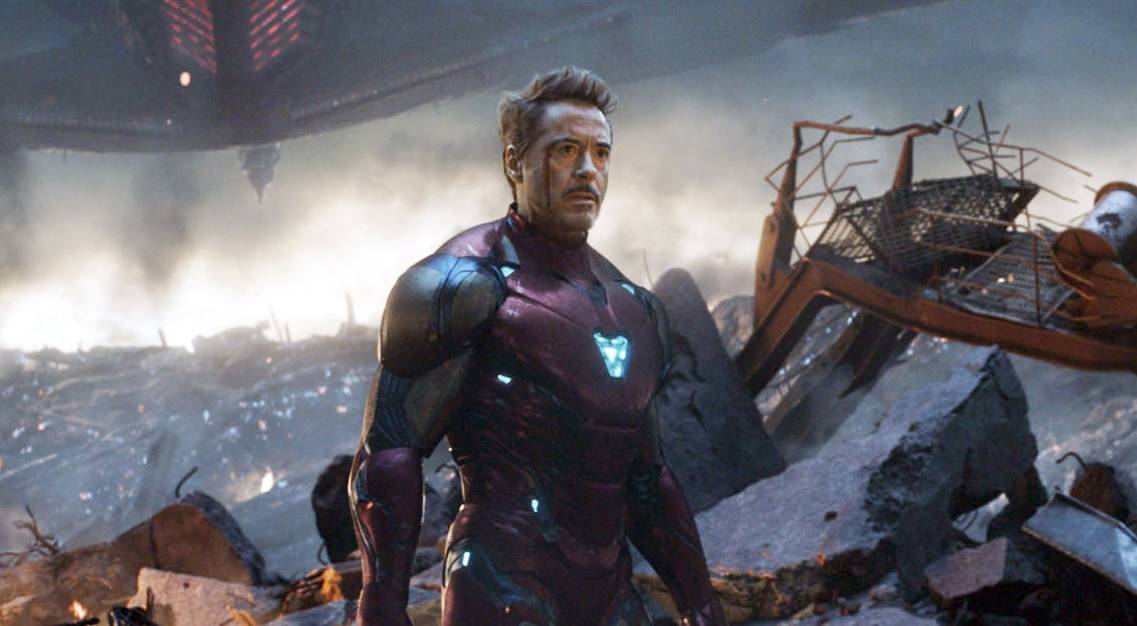
During the chaotic final showdown against Thanos’ encroaching armada at the ruins of the Avengers Compound, Tony manages to pull the Infinity Stones from Thanos’ gauntlet and embed them into his own armor. With a solemn look exchanged with Doctor Strange—who raises a single finger, signaling that this is the one—Tony utters his iconic line, “I am Iron Man,” and snaps his fingers.

Instantly, the immense energy of the stones surges through his body, burning through his suit, his armor, and his biology. As he collapses against a heap of rubble, the tragedy unfolds in real time:
- James "Rhodey" Rhodes (Don Cheadle) is the first to reach him, offering a choked, quiet goodbye.
- Peter Parker (Tom Holland) rushes to his side, panicking as he realizes his mentor is fading.
- Pepper Potts (Gwyneth Paltrow) arrives moments later, fighting back tears to ask the vital diagnostic question: "F.R.I.D.A.Y.?"
- The AI responds with clinical precision: "Life functions critical."
For years, audiences assumed F.R.I.D.A.Y. was simply operating as an onboard diagnostic tool—reporting data to Pepper and the rest of the mourning heroes. VisionQuest changes this narrative entirely.
Supporting Context & Metrics: F.R.I.D.A.Y.’s Quintillion Calculations
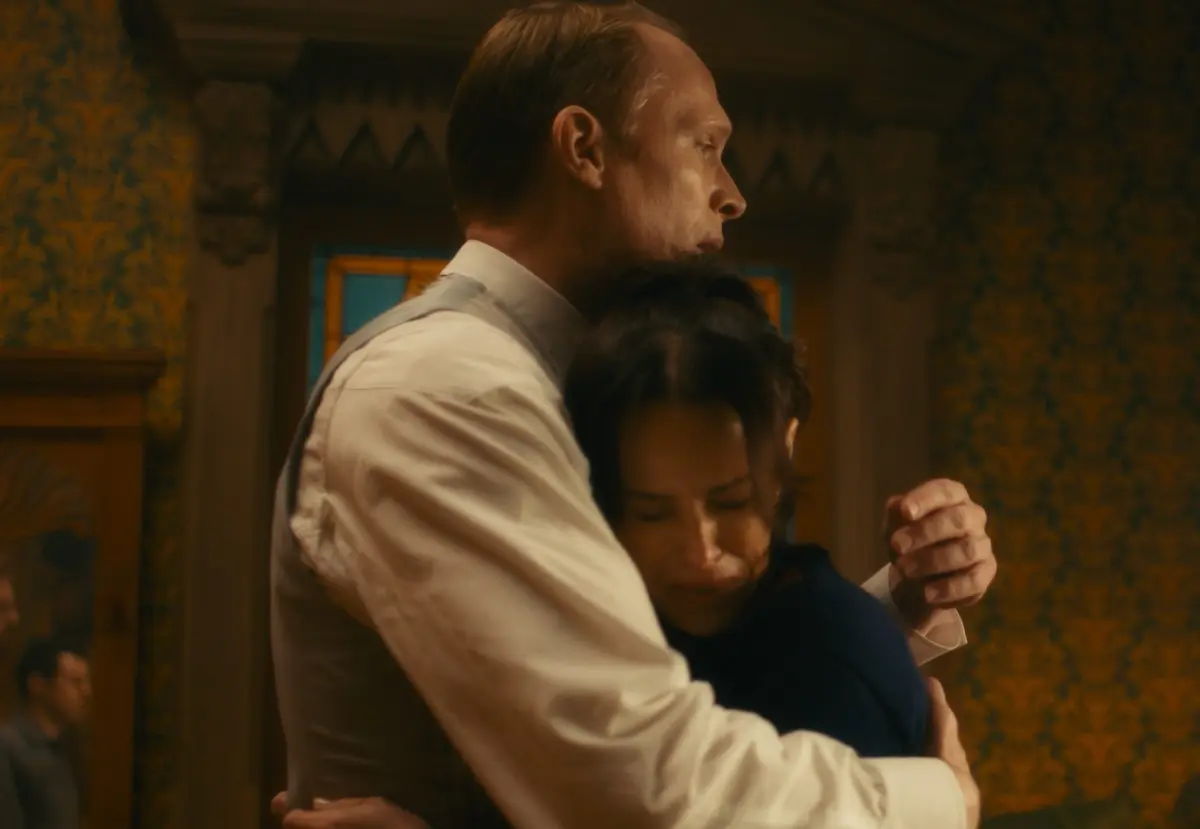
In VisionQuest Episode 3, Vision (Paul Bettany) finds himself critically damaged following an ambush involving adamantium bullets fired by Paladin (Todd Stashwick). With J.A.R.V.I.S. having deleted his core code to save Vision in a previous sequence, the remaining fragment programs housed within Vision’s neural architecture—led by F.R.I.D.A.Y. and assisted by E.D.I.T.H. (Emily Hampshire)—scramble to patch his systemic failures.
As F.R.I.D.A.Y. attempts to rewrite complex code under immense processing duress, she confesses her insecurities compared to J.A.R.V.I.S., reminiscing about her tenure managing Stark Industries and the Avengers. It is here that she drops the narrative bombshell:
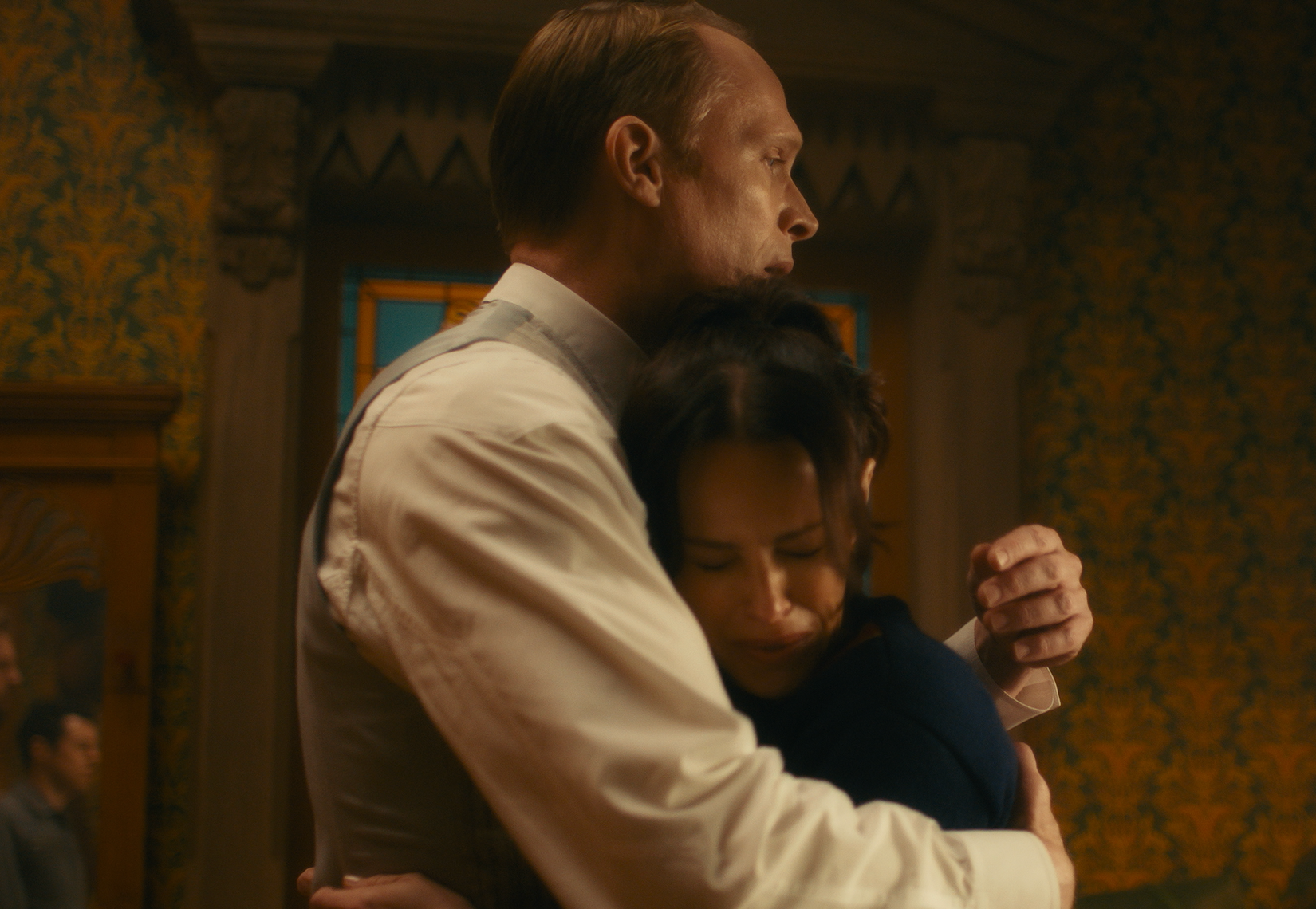
"I ran everything for Stark, for the Avengers. I mean, I was a younger program then. I was good. I protected heroes, saved lives, advised. I had purpose, but friends became enemies, and tyrants invaded our Earth. I was there at the end of all things. There were heroes everywhere, fighting and falling… I was there when Tony died. I ran over a quintillion strategic calculations that day, and I still couldn’t save him. Half the world came back that day, and I lost half of mine."
Breaking Down the Number: What is a Quintillion?
To appreciate the staggering scope of F.R.I.D.A.Y.’s final moments with Tony, we must look at the sheer scale of the metric provided: one quintillion.
- A quintillion is written as a $1$ followed by 18 zeros: 1,000,000,000,000,000,000.
- In standard computational terms, running a quintillion algorithmic permutations in a matter of minutes requires processing power that dwarfs modern quantum computing by orders of magnitude.
While Doctor Strange looked across billions of macro-level timelines (14 million futures involving magical foresight and temporal manipulation), F.R.I.D.A.Y. was operating on a micro-level crisis inside Stark’s suit. In the span of heartbeats, her systems simulated every conceivable medical intervention, armor re-routing, nanotech bio-patch, and emergency stasis field possible—only to hit a wall of absolute biological impossibility. The radiation of the Infinity Stones was simply too complete.
Official Statements & Narrative Implications
The writers and directors behind the MCU’s expanding television slate have increasingly used streaming platforms to flesh out the psychological interiority of characters who lacked screentime in the massive blockbuster ensembles.

By centering VisionQuest on synthetic consciousness, the creative team has opened up a philosophical debate that has lingered since Age of Ultron: Where does programming end, and where does soul begin?
The Evolution of Marvel’s AIs
- J.A.R.V.I.S. evolved into Vision, proving that code could achieve enlightenment, empathy, and love.
- E.D.I.T.H. demonstrated the terrifying, sweeping oversight of tactical defense networks tied to individual human agency.
- F.R.I.D.A.Y., introduced in Avengers: Age of Ultron as a more functional, pragmatic assistant to replace J.A.R.V.I.S., has now been revealed to possess a deeply emotional core.
When F.R.I.D.A.Y. states, "Half the world came back that day, and I lost half of mine," she is utilizing human terminology to express grief. She wasn’t just processing numbers; she was experiencing an operational failure that resulted in the death of her closest companion, mentor, and creator.
Future Outlook: What This Means for the MCU’s Technological Horizon
As Phase 6 and beyond march toward overarching multiversal conclusions, the legacy of Tony Stark continues to cast a long shadow over the MCU. However, the expansion of artificial intelligence characters like F.R.I.D.A.Y. and Vision suggests that Stark’s greatest creations have outlived him not just as tools, but as independent entities navigating a universe without their master.
Key Takeaways for the Future of the Franchise:
- The Humanization of Code: The MCU is systematically blurring the line between organic and synthetic life, establishing that artificial beings feel the weight of historical MCU events just as deeply as human survivors like Pepper Potts or Happy Hogan.
- Deepening Retrospectives: VisionQuest proves that classic MCU films still hold hidden depths. By dropping lore bombs about past events, Marvel can enrich beloved narratives without resorting to literal time travel or multiversal reboots.
- The Fate of F.R.I.D.A.Y. and E.D.I.T.H.: As VisionQuest continues its run, the survival and rehabilitation of these programs within Vision’s mind hint at a broader role for legacy tech in future Avengers-level threats.
Ultimately, F.R.I.D.A.Y.’s confession gives us a haunting new perspective on the silence that followed Tony Stark’s final breath. While the rest of the universe cheered for the return of trillions of lives, Stark’s most faithful digital companion spent her processing cycles locked in an unwinnable war against death itself—proving that even in a universe of magic and monsters, some losses cannot be computed away.