Executive Overview
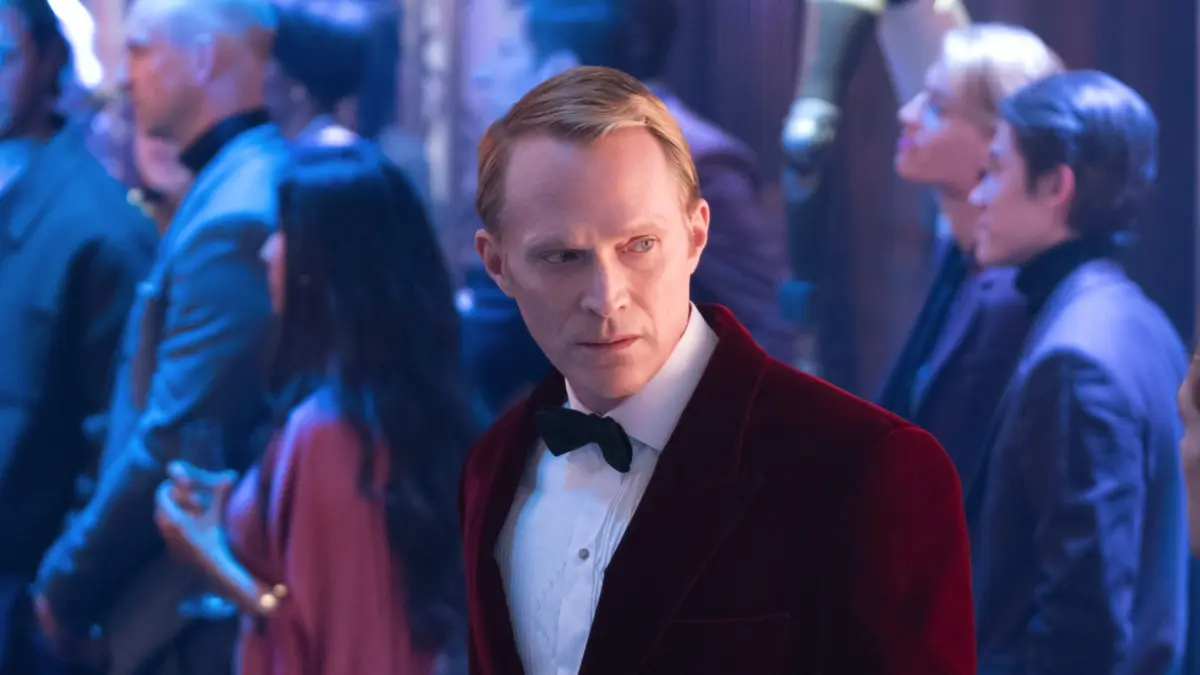
As Marvel Studios’ VisionQuest crosses the halfway mark of its current streaming run on Disney+, the series has pivoted from an ostensibly dispensable narrative epilogue into one of the most intellectually and emotionally resonant television outings within the modern Marvel Cinematic Universe (MCU). Following the events of WandaVision, Paul Bettany’s return as the synthetic Avenger initially sparked reasonable fan hesitation. Stripped of the original Mind Stone and left as a cold, emotionless iteration of his former self—frequently referred to as White Vision—the character risked feeling like an empty vessel incapable of carrying a flagship narrative.
However, with the release of Episodes 3 ("Reboot") and 4 ("Malware"), the creative team has dramatically course-corrected. These mid-season chapters inject the series with a profound sense of heart, depth, and structural confidence. Far from coasting on the coattails of its predecessor, VisionQuest is aggressively carving out its own thematic space. By exploring the agonizing chasm between synthetic logic and authentic human experience, the series successfully bridges the gap between the poignant, soulful hero of Avengers: Infinity War and the clinical, manufactured slate left behind at the conclusion of Westview. Earning a stellar 8/10 (“Great”) rating, the series proves that even in a post-Infinity Saga landscape saturated with multiverse fatigue, focused, character-driven storytelling can still flourish.
Detailed Chronology: Breaking Down Episodes 3 and 4
"Reboot" (Episode 3): Processing Vulnerability and Physical Comedy
Episode 3 wastes no time addressing the core mechanical and emotional limitations hindering White Vision. While Bettany’s early-season stoicism was necessary for establishing his baseline state, it risked alienating an audience accustomed to the character’s profound warmth. "Reboot" elegantly remedies this by introducing deliberate system malfunctions that afford Bettany rare opportunities for physical comedy, blending deadpan robotic delivery with genuine existential vulnerability.
The dramatic anchor of the episode rests on the rapidly accelerating bond between Vision and Tommy (Ruaridh Mollica). In lesser hands, a surrogate father-son relationship forged under such bizarre circumstances would feel hopelessly rushed. Yet, the writing and performances render it utterly compelling. The emotional high-water mark arrives when Vision—grappling with internal system corruption—instructs his young son on how to manually reboot him at the bottom of a hotel swimming pool. This striking visual metaphor acts as a literal and figurative cleansing, signaling that Vision is finally on the road to reclaiming the humanity that defined his original iteration.
Furthermore, Episode 3 deftly handles narrative pacing by keeping its expanding ensemble in check. The series continues to sidestep the trap of over-reliance on mandatory homework from adjacent properties. While grounding its narrative firmly in the aftermath of WandaVision, it wisely circumvents the need for viewers to deeply parse Billy’s parallel journey in Agatha All Along, allowing Tommy’s complex existence to stand independently and giving the series room to breathe on its own technical merits.
"Malware" (Episode 4): Crossing the Rubicon and the Return of Ultron
If Episode 3 is about internal diagnostics, Episode 4 ("Malware") is about external exposure and existential reckoning. In this chapter, White Vision explicitly stops drawing rigid boundaries between his past and present selves. The psychological friction that defined his early-season identity crisis begins to dissolve as he accepts that his memories, though synthetic, carry the emotional weight of lived experience.
Simultaneously, the supporting cast receives substantial structural elevation. The expanded artificial intelligence family—featuring F.R.I.D.A.Y. (Orla Brady), E.D.I.T.H. (Emily Hampshire), D.U.M.-E. (Henry Lewis), and U (Jonathan Sayer)—evolves past their historical utility as disembodied system voices or slapstick workshop tools. Episode 4 dedicates significant runtime to exploring their internal processing and structural anxieties, creating a poetic parallel to Vision’s own ongoing awakening.
At the center of this technological menagerie stands James Spader’s triumphant return as Ultron. While Spader’s vocal cameos served primarily as witty comedic relief and philosophical foil in the first two episodes, "Malware" lets the legendary homicidal AI take center stage. Displaying his trademark chilling charisma, Ultron manipulates his way into physical mobility, seizing control of a vehicle and predictably betraying his synthetic kin at the earliest tactical opportunity. The prospect of an unshackled Ultron operating freely in the physical world injects immense narrative momentum into the series heading into its critical fifth episode.

Supporting Context & Metrics: Navigating Pacing and Antagonist Transitions
Despite the surging momentum of Episodes 3 and 4, VisionQuest is not entirely immune to the structural growing pains typical of transitional television arcs. The most prominent friction point across these two chapters involves the handling of the series’ primary antagonists.
The transition from Paladin (Todd Stashwick), who anchored much of the early physical conflict, to Jocasta (T’Nia Miller) feels somewhat abrupt. Paladin’s narrative presence essentially evaporates after he runs afoul of Jocasta, creating a momentary narrative whiplash for viewers tracking the show’s geopolitical stakes. However, Miller’s portrayal of Jocasta quickly compensates for this clumsy handoff. She emerges as an instantly sympathetic and deeply layered figure, serving both as a formidable threat and as a fascinating psychological mirror—and object of fascination—for Ultron.
| Metric / Category | Evaluation | Notes |
|---|---|---|
| Narrative Cohesion | 8.5 / 10 | Successfully bridges WandaVision lore without demanding exhaustive franchise homework. |
| Character Growth | 9.0 / 10 | Paul Bettany bridges the emotional gap between White Vision and the original Avenger. |
| Antagonist Handling | 7.0 / 10 | The transition from Paladin to Jocasta feels clunky, though Miller’s performance redeems it. |
| Supporting Cast Impact | 9.0 / 10 | James Spader’s Ultron and the AI family elevate the stakes dramatically. |
| Overall Score | 8.0 / 10 | "Great" — A confident mid-season stride. |
Official Statements and Production Insights
Behind the scenes, the creative team has emphasized that VisionQuest was explicitly designed as an internal exploration of identity rather than an exposition-heavy bridge to future Avengers events. Showrunners and executive producers have repeatedly noted that Paul Bettany’s performance was calibrated to reflect the terrifying stillness of a sentient being waking up with a library of memories he cannot feel.
"We weren’t interested in simply handing him his old personality back," shared a production source close to the writers’ room. "The journey had to be earned. If he remembers loving Wanda, but feels nothing when he accesses those files, how does a machine learn to grieve? How does code transform into a soul?"
Furthermore, the return of James Spader as Ultron was treated as a top-priority asset for Marvel Studios, with writers carving out specific thematic parallels between Ultron’s resentment of humanity and White Vision’s quiet search for purpose.
Future Outlook: Heading into Episode 5 and Beyond
As VisionQuest prepares to cross the threshold into the second half of its season, the narrative table is set for high-stakes confrontation. The mechanical resurrection of Ultron into the physical world changes the entire calculus of the series. No longer confined to the digital periphery or functioning merely as an internal nagging voice in Vision’s processors, Ultron is once again a tangible, global threat with a deeply personal vendetta against his "family."
Concurrently, Vision’s emotional integration with Tommy and his growing alliance with Jocasta provide a solid counterweight to Ultron’s chaos. If the writers can maintain the delicate balance between high-concept sci-fi philosophy and grounded family dynamics displayed in Episodes 3 and 4, VisionQuest stands poised to finish its run not just as a pleasant surprise, but as an indispensable cornerstone of modern Marvel television. The machine is finally learning how to feel; now, it must learn how to survive.