Executive Overview
The contemporary digital landscape is saturated with discourse surrounding artificial intelligence. For many professionals across the technology sector—spanning software engineers, front-end developers, product managers, and UI/UX designers—this omnipresence has bred a distinct fatigue. Much of this exhaustion stems from the polarized extremes of the current dialogue: an uncritical, utopian techno-optimism on one side and a paralyzing, dystopian anxiety on the other. Rarely do discussions move past the superficial hype to offer actionable context, genuine workflow integration, or a clear-eyed evaluation of how machine learning can augment human creativity rather than displace it.
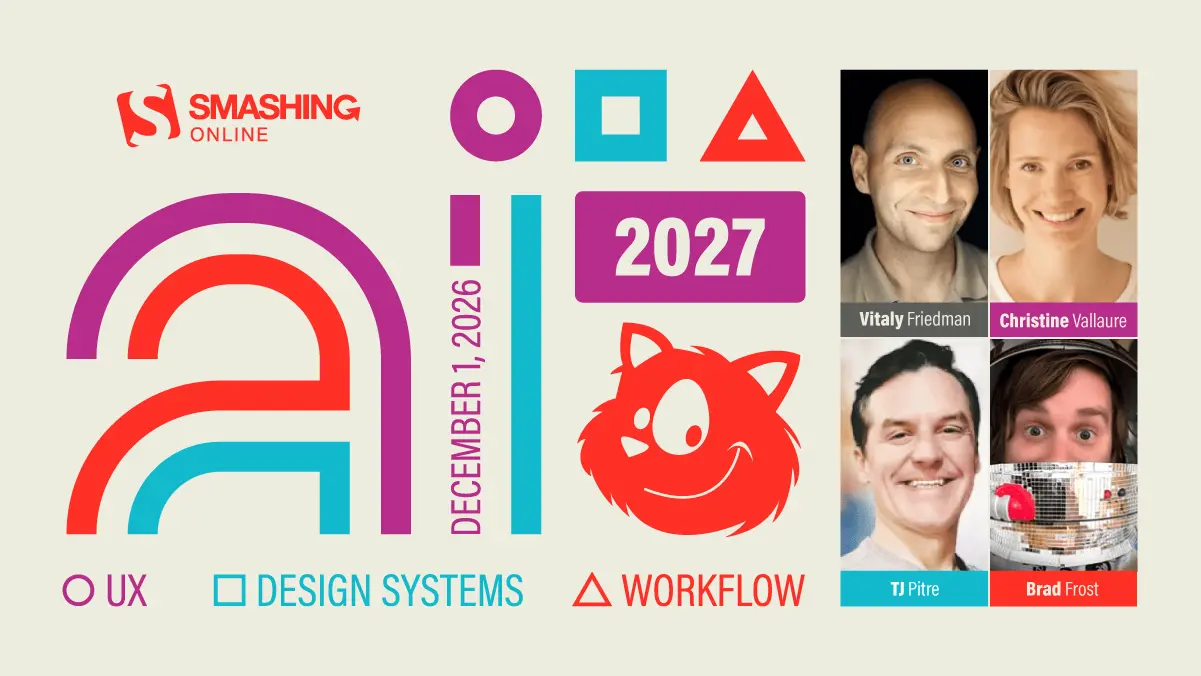
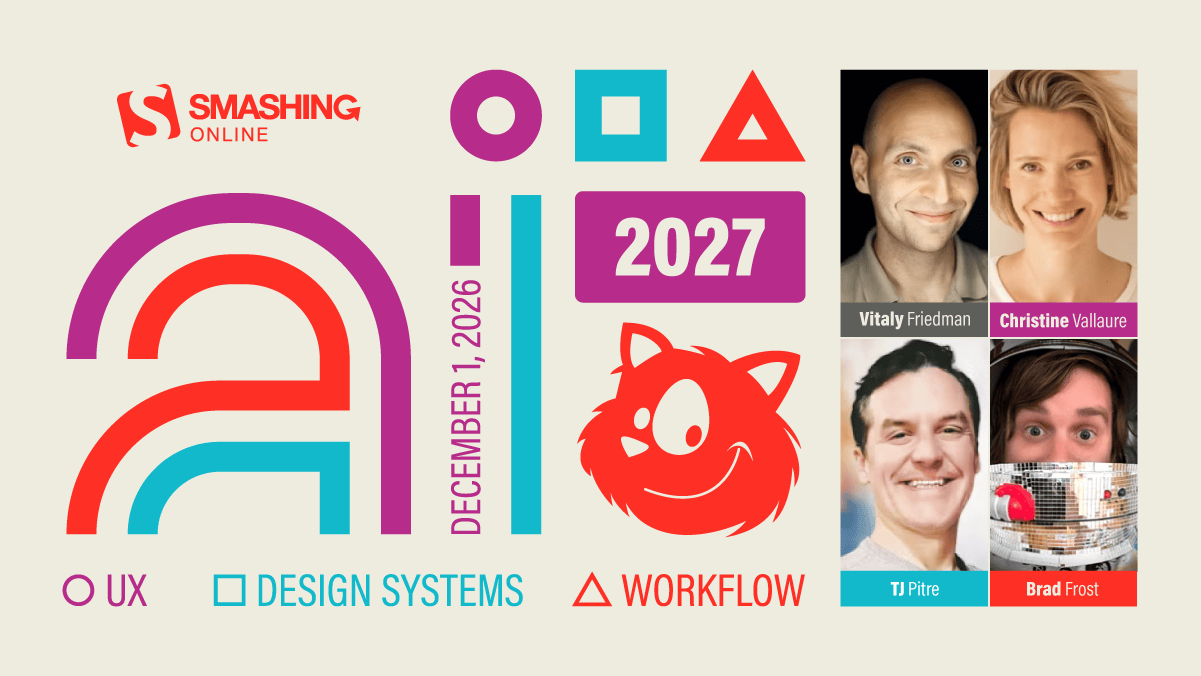
Amidst this deafening noise, a counter-narrative is beginning to take shape, championed by organizations known for their empirical rigor and practitioner-first mentality. Among them, Smashing Magazine and its associated conference series have consistently served as a reliable anchor for the web development and design communities. Eschewing flashy buzzwords in favor of grounded, case-driven analysis, Smashing is set to host a specialized live online event on December 1: the AI 2027 Conference.
Focusing explicitly on the intersection of artificial intelligence and design systems, this upcoming symposium promises to bypass the standard industry bluster. Instead, it convenes some of the most respected minds in digital craftsmanship—including industry heavyweights Brad Frost, Christine Vallaure, Vitaly Friedman, and TJ Pitre—to demonstrate empirical use cases. The objective is singular and pragmatic: to examine how artificial intelligence can be harnessed within professional workflows to refine, accelerate, and elevate human-centric design, ensuring that tools are built to support practitioners, not render them obsolete.
Detailed Chronology: The Evolution of AI in Modern Design Workflows
To understand the significance of targeted events like the AI 2027 Conference, one must examine the rapid trajectory of artificial intelligence within the software development and design ecosystem over the past half-decade.
Phase 1: The Experimental Horizon (2020–2022)
In the early days of modern generative AI and machine learning integration, the technology was largely viewed as a novelty by core design system teams. Early iterations of generative tools focused primarily on isolated tasks: generating placeholder imagery, auto-cropping, or basic text generation via early language models. Within design systems—which rely heavily on rigid consistency, atomic design principles, and predictable token structures—early AI tools were often perceived as disruptive rather than helpful. They lacked the contextual awareness required to respect existing component libraries, spacing variables, and brand guidelines, frequently producing erratic code and inconsistent UI components.
Phase 2: The Hype Cycle and Workflow Friction (2023–2024)
The release of advanced large language models (LLMs) and multimodal generative interfaces triggered a massive gold rush. Venture capital poured into AI-first design tools promising to "generate entire applications from a single prompt." While captivating to stakeholders, this wave of innovation introduced profound friction for working professionals. Front-end developers and designers found themselves inundated with unmaintainable code, bloated design files, and a deluge of marketing claims that did not align with daily realities.
This period cemented the "AI fatigue" currently felt across the industry. Teams were forced to spend valuable sprint cycles vetting unverified tools, managing security and intellectual property concerns, and cleaning up the technical debt left behind by automated systems that lacked systemic design context.
Phase 3: The Pragmatic Pivot and the Road to 2027 (Late 2024–Present)
As the dust settles, the industry is entering a critical maturation phase. Practitioners are shifting away from speculative general-purpose automation and toward specialized, workflow-integrated intelligence. The focus is no longer on replacing human designers and developers, but on deploying AI as a tireless assistant capable of handling tedious toil: synchronizing design tokens across disparate codebases, running automated accessibility audits against complex component trees, and drafting initial boilerplate code that adheres strictly to established design system guidelines.
The upcoming Smashing AI 2027 Conference arrives precisely at this inflection point. By gathering elite practitioners to demonstrate what works—and critically, what does not—the event aims to establish a verified blueprint for how design systems will evolve over the next three years, bridging the gap between theoretical capability and pragmatic execution.
Supporting Context & Metrics: The State of AI Fatigue and Design System Adoption
To contextualize the relevance of specialized educational events, it is necessary to examine the broader empirical landscape of artificial intelligence adoption within design and development teams. Recent industry data underscores a complex reality: while adoption rates are climbing, professional satisfaction with off-the-shelf AI tools remains mixed.
The Paradox of Adoption vs. Satisfaction
According to recent developer ecosystem surveys and UX industry benchmarks:
- High Experimentation, Low Integration: Approximately 78% of front-end developers and digital designers report experimenting with AI coding assistants or generative design plugins on a weekly basis. However, fewer than 34% report that these tools are deeply integrated into their core production design systems.
- The Cost of Context Switching: Industry professionals spend an estimated 15% to 20% of their working hours managing tooling friction—debugging AI-generated output, correcting stylistic drift in component libraries, and translating vague automated suggestions into production-ready code.
- The Promise of Efficiency: Conversely, teams that have successfully integrated narrow-purpose AI into structured design systems report a 25% reduction in time spent on repetitive documentation tasks and token management.
These metrics reveal a clear market gap: the industry does not suffer from a lack of tools, but from a profound deficit of contextual education. Practitioners do not need another keynote proclaiming that "AI is changing everything"; they require granular, peer-reviewed methodologies showing how to bend these technologies to fit rigorous architectural standards.
Official Statements and Expert Insights
The credibility of the AI 2027 Conference rests squarely on its speaker lineup—a curated group of industry veterans who have spent decades defining the architecture of modern web design and systems thinking.
The Practitioner’s Perspective
Unlike corporate tech vendors whose primary incentive is software sales, independent educators and design system architects approach artificial intelligence through the lens of maintainability, developer experience (DX), and user-centric quality.
- Brad Frost, globally recognized as the pioneer of Atomic Design and a leading authority on design systems, has consistently advocated for systems that scale human capability. His inclusion in the conference signals a deep dive into how atomic components and design tokens can be intelligently managed, queried, and expanded using machine learning models without sacrificing human oversight.
- Christine Vallaure, an expert in UI/UX design and design systems, brings a crucial focus on how visual languages and component governance interact with automated generation tools. Her work emphasizes maintaining brand integrity and accessibility standards in an automated environment.
- Vitaly Friedman, co-founder of Smashing Magazine, has built a career on cutting through industry hype to deliver actionable, battle-tested front-end techniques. Friedman’s editorial philosophy ensures that the conference will maintain a strict "no-fluff" policy, focusing entirely on practical implementation.
- TJ Pitre, known for his rigorous approach to modern web architecture and front-end engineering, rounds out the roster by connecting the dots between design system infrastructure and AI-assisted coding workflows.
The Core Philosophy: Augmentation over Replacement
In previewing the event’s themes, the overarching consensus among the speakers is clear: artificial intelligence must be treated as a junior collaborator rather than an autonomous decision-maker. Design systems inherently rely on human consensus, shared vocabulary, and cross-functional empathy—qualities that algorithms cannot replicate. By focusing the curriculum on targeted use cases—such as automated design token translation, regression detection in component updates, and intelligent documentation scaffolding—the event aims to empower professionals to reclaim their time for high-level problem solving.
Future Outlook: Where Design Systems and AI Converge
As we look toward 2027 and beyond, the relationship between artificial intelligence and digital product creation will continue to mature. Several key trends are projected to shape the landscape:
1. Deterministic Systems Meet Probabilistic Tools
Design systems are fundamentally deterministic: a specific token yields a specific visual output; a specific component prop yields a specific DOM structure. Artificial intelligence, by contrast, is inherently probabilistic. The future of design systems will rely on robust wrapper layers and rigorous testing pipelines that constrain AI output within strict deterministic boundaries, ensuring that automated generation never violates design system governance.
2. Hyper-Personalized Documentation and Onboarding
One of the most promising frontiers for AI within design systems is dynamic documentation. As codebases and component libraries grow, onboarding new developers and designers becomes increasingly difficult. Future AI agents integrated directly into design system repositories will be capable of serving as context-aware mentors, instantly generating custom code examples, explaining architectural decisions, and ensuring compliance with accessibility (a11y) standards tailored to the specific context of a team’s current sprint.
3. The Revaluation of Human Craft
Paradoxically, as automated tooling handles more of the mechanical toil—such as grid alignment, responsive scaling, and boilerplate generation—the value of human intuition, strategic empathy, and holistic systems thinking will increase. Events like the Smashing AI 2027 Conference are vital precisely because they prepare professionals for this shift, ensuring that designers and developers evolve from manual laborers into master system architects.
Event Registration and Community Access
For professionals eager to cut through the industry noise and gain actionable, peer-tested strategies for integrating AI into their daily workflows, the Smashing AI 2027 Conference takes place live online on December 1.
- Pricing & Discounts: Standard registration is priced at €50. Readers and community members can utilize the exclusive promotional code
AITRICKSCSSduring checkout at the official Smashing Conference Registration Portal to access special community rates. - Community Giveaway: To foster active engagement, two complimentary tickets have been made available for community members. These will be awarded to the first two individuals who leave a substantive comment on the original announcement post using a valid, reachable email address.
For further details, speaker breakdowns, and the full schedule of sessions, visit the official conference landing page.