Executive Overview
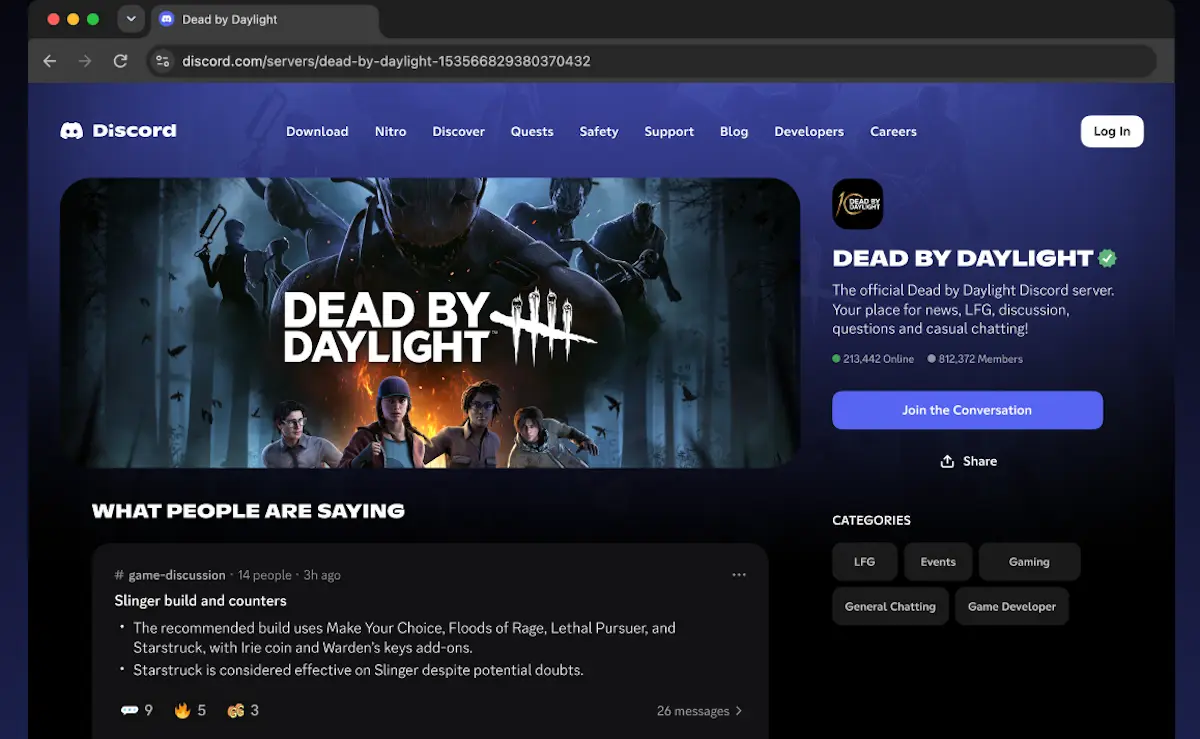
In a monumental shift for its platform architecture and content ecosystem, Discord has formally announced plans to make conversations hosted within its public communities searchable on the open internet. The strategic update targets "Discoverable Servers"—a subset of public Discord communities that server administrators have deliberately opted into the platform’s internal discovery catalog.
By taking conversations that were previously locked behind authentication walls and rendering them accessible to global search engines like Google and Bing, Discord is attempting to transform itself from a real-time chat application into an indexed repository of human knowledge. The primary objective, according to company disclosures, is to liberate high-value user discussions—ranging from intricate gaming walkthroughs and software debugging guides to niche academic and hobbyist technical support—and bring them to a broader online audience.
However, the initiative has ignited immediate pushback across the platform’s user base. The decision to expose conversational data to the broader web sits at the sensitive intersection of digital privacy, user consent, and the aggressive harvesting of public text for Artificial Intelligence (AI) model training. Critics argue that even within public channels, real-time community chat operates under a distinct social contract—one rooted in semi-ephemerality and contextual boundaries that are obliterated when indexed by search engine crawlers.
As Discord prepares to deploy these changes globally, the initiative highlights a growing tension across modern social platforms: the push to unlock proprietary text repositories for web discovery and potential monetization, set against the privacy expectations of digital communities accustomed to walled gardens.
Detailed Chronology & Technical Mechanics of the Rollout
The rollout of Discord’s web indexing infrastructure is designed as a phased deployment, gradually transitioning internal platform chat into publicly indexable web pages.
       [ Phase 1: November 16 ]                 [ Phase 2: Mid-December ]
  +---------------------------------+      +---------------------------------+
  | Web Page Generation             |      | Search Engine Indexing          |
  | - Standalone server landing     | ---> | - Google / Bing integration     |
  |   pages launched.               |      | - Public channel messages       |
  | - Automated AI-generated        |      |   appear in search results.     |
  |   discussion summaries.         |      | - Anonymized text display.      |
  +---------------------------------+      +---------------------------------+
Implementation Milestones
- Phase 1: Automated Web Page Summaries (November 16): Discord will automatically generate dedicated, web-accessible landing pages for every community designated as a Discoverable Server. These pages will display automated summaries of recent, high-activity discussions originating from public, un-gated channels.
- Phase 2: Global Search Engine Indexing (Mid-December): Selected individual messages and conversation threads from active public channels within Discoverable Servers will begin appearing directly in third-party search engine query results.
Architecture of Inclusion, Anonymization, and Opt-Out Controls
To mitigate potential regulatory friction and user backlash, Discord has built multi-layered control mechanisms into the indexing framework:
- Server Administrator Level: Server administrators retain ultimate control over whether their community participates. Admins must explicitly select which individual public channels are exposed to web crawlers and summary tools.
- Individual User Opt-Outs: Individual users can navigate to their personal user settings to disable the option allowing their public channel messages to be published or indexed on the web.
- Identity Stripping and Anonymization: Published messages displayed on web landing pages or indexed by external search engines will strip all direct identifiers. Usernames, display names, custom nicknames, and profile avatars will be omitted to decouple content from individual user profiles.
- Hard Exclusions: The indexing system completely excludes private servers, age-restricted channels, private text channels, Direct Messages (DMs), and Group Direct Messages (GDMs).
Geographic and Demographic Guardrails
Recognizing the stringent legal and regulatory environments governing data privacy across various global jurisdictions, Discord has introduced regional and age-based default configurations:
+-------------------------------------------------------------------------+
|                  DISCORD INDEXING DEFAULT STATUS MATRIX                  |
+------------------------------------+------------------------------------+
| Region / Demographic               | Default Indexing Status            |
+------------------------------------+------------------------------------+
| EU, UK, Canada, Brazil, AU, S.Korea| OFF (Requires Explicit Opt-In)     |
| Rest of World (Adult Accounts)     | ON  (Opt-Out Available)            |
| Teen / Minor Accounts (Global)     | OFF (Hard Excluded)                |
+------------------------------------+------------------------------------+- Default-OFF Jurisdictions: For users located in the European Union, the United Kingdom, Canada, Brazil, Australia, and South Korea, the feature to make messages discoverable is turned OFF by default. Users in these regions must actively opt-in to allow their public messages to be surfaced on the web.
- Demographic Exclusions: Teen accounts globally are excluded from message indexing by default, aligning with heightened child safety standards and regulatory scrutiny surrounding minor data processing.
Supporting Context & Scale Metrics
To understand the scope of Discord’s transition, it is necessary to examine the sheer volume of data locked within the platform’s public ecosystem.
+-------------------------------------------------------------------------+
|                        DISCORD ECOSYSTEM METRICS                        |
+------------------------------------+------------------------------------+
| Discoverable Servers Affected      | > 63,000 Public Communities        |
| Target Knowledge Vertical          | Gaming, Software Dev, Fandoms      |
| Architecture Model                 | Synchronous Chat -> Forum Hybrid   |
+------------------------------------+------------------------------------+
The Scale of Discoverable Servers
Discord hosts more than 63,000 Discoverable Servers. These communities represent large-scale hubs covering topics such as game development, competitive gaming strategies, open-source software projects, language acquisition, and specialized subcultures. Historically, these communities functioned like digital megacities, housing thousands—sometimes hundreds of thousands—of users who communicated concurrently across categorized channels.
The Death of the Open Web and the Rise of "Dark Social"
Over the past decade, a substantial portion of human technical discourse migrated away from open, searchable web forums (such as vBulletin, phpBB, and Usenet) and moved behind the authenticated boundaries of walled platforms like Discord, Slack, and Telegram.
This phenomenon—often categorized alongside "dark social"—created a paradoxical crisis for the open internet:
- Inaccessibility of Solutions: Highly technical troubleshooting steps, game patches, and creative solutions discussed daily inside public Discord channels were invisible to web crawlers.
- Redundant Problem-Solving: Web users searching for hyper-specific technical answers were frequently met with broken forum links or automated, low-quality content farms, while the definitive human-generated answer remained buried deep within a Discord server channel.
The "Site:Reddit" Effect and Search Quality
In recent years, major web search engine quality has faced criticism due to the influx of AI-generated content spam and search engine optimization (SEO) exploits. To bypass low-quality search results, millions of internet users adopted the habit of appending site:reddit.com or site:discord.com to search queries, specifically seeking real human experiences and peer-to-peer troubleshooting.
By formalizing a mechanism to index its public text, Discord is directly challenging platforms like Reddit and Stack Overflow. The platform is posturing to become a primary destination for organic search traffic, capturing high-intent web users at the moment they search for specialized knowledge.
Privacy Backlash, Context Collapse, and AI Scraping Concerns
Despite the platform’s assertion that this feature aims to highlight community value, the announcement has unleashed significant community backlash across Reddit, X (formerly Twitter), and Discord’s own feedback forums. The criticism centers around two primary dynamics: context collapse and unregulated AI model harvesting.

               PRIVACY & DATA RISKS IN PUBLIC INDEXING
                                  │
         ┌────────────────────────┴────────────────────────┐
         ▼                                                 ▼
  Context Collapse                                 AI Data Harvesting
  • Chat psychological dynamics vs.                • Unsanctioned web scraping
    permanent search indexing                       • Model training without consent
  • Anonymization bypass risks                      • Parallels to Reddit data licensing
The Psychological Illusion of Chat Ephemerality
The core source of user dissatisfaction stems from the concept of Context Collapse—a psychological phenomenon where an individual’s written communication, intended for a specific audience within a bounded environment, is suddenly exposed to a drastically different, unvetted audience.
+-------------------------------------------------------------------------+
|                    COMMUNICATION ENVIRONMENT CONTRAST                   |
+------------------------------------+------------------------------------+
| Traditional Public Forum (Reddit)  | Public Discord Server (Chat)       |
+------------------------------------+------------------------------------+
| Asynchronous posting               | Synchronous stream-of-consciousness |
| Explicit intent to publish to web  | Perceived intra-community dialog   |
| High archival visibility           | High temporal fluid dynamics       |
+------------------------------------+------------------------------------+
Even within a public Discord server with thousands of members, users generally perceive a text channel as a semi-ephemeral, fluid conversational space. Writing a quick response in a real-time chat stream feels fundamentally different from drafting a permanent post on an open web forum. Indexing those real-time streams into permanent, Google-searchable pages fundamentally shifts the nature of the space without explicit, proactive user confirmation in opt-out regions.
Furthermore, privacy researchers note that stripping usernames and avatars offers only partial protection. Unique writing styles, highly specific personal anecdotes, cross-referenced usernames mentioned within message text, and unique technical setups can allow third parties to re-identify anonymous authors—a concept known as de-anonymization via contextual reconstruction.
The Spectre of AI Training and Data Scraping
The second major driver of pushback is the growing anxiety surrounding Generative AI data harvesting.
       [ Public Discord Message ]
                   │
                   ▼
       [ Search Engine Indexing ]
                   │
         ┌─────────┴─────────┐
         ▼                   ▼
  [ Search Result ]   [ AI Scraper Bot ]
                             │
                             ▼
                  [ LLM Model Training ]
As artificial intelligence companies exhaust available open-web data to train large language models (LLMs), public discussion repositories have become prime real estate. The internet industry recently witnessed massive friction regarding data usage:
- The Reddit Precedent: Reddit faced immense user pushback and sub-reddit blackouts after monetizing its API access and signing multi-million dollar data-licensing deals with companies like Google and OpenAI to feed LLM training pipelines.
- The Discord AI Risk: Users fear that making Discord content accessible on the open web acts as an un-monetized backdoor for AI crawlers. Once content is indexed on a web page, automated web scrapers (such as Common Crawl, GPTBot, or ClaudeBot) can effortlessly ingest user discussions to train commercial LLMs without providing credit, compensation, or opt-out options to the content creators.
Official Statements & The Regulatory Landscape
Discord’s official documentation frames the update around discovery, creator empowerment, and community growth.
Discord’s Stated Position
According to Discord’s official blog release, the system is engineered to elevate the platform’s vibrant ecosystems:
"The aim is to help people find useful information that might otherwise remain buried in Discord conversations to a wider audience… By making some of these conversations searchable, Discord hopes to extend the reach of its communities beyond the platform itself."
Company leadership emphasizes that the architecture gives ultimate sovereignty to server administrators, who can tightly curate which channels are exposed, while providing personal opt-out toggles for privacy-conscious users.
Navigating the Global Regulatory Patchwork
The decision to enforce a strict Opt-In default in regions like the EU, UK, Canada, Brazil, Australia, and South Korea highlights the growing operational complexity of managing global digital platforms.
+-------------------------------------------------------------------------+
|                  REGULATORY DRIVERS FOR REGIONAL DEFAULTS               |
+---------------------+---------------------------------------------------+
| Jurisdiction        | Primary Regulatory Framework                      |
+---------------------+---------------------------------------------------+
| European Union      | GDPR (General Data Protection Regulation)         |
| United Kingdom      | UK GDPR / Data Protection Act 2018                |
| Canada              | PIPEDA (Personal Information Protection Act)      |
| Brazil              | LGPD (Lei Geral de Proteção de Dados)             |
| South Korea         | PIPA (Personal Information Protection Act)        |
+---------------------+---------------------------------------------------+- GDPR (European Union & UK): Under the General Data Protection Regulation, processing personal data—including user-generated text that could contain personal identifiers—requires a clear lawful basis. Article 6 (Consent) and Article 17 (Right to Erasure / "Right to be Forgotten") make opt-out data indexing legally risky. If a user deletes their Discord account or message, the platform must guarantee its removal from external web indexes, a task made immensely complex once third-party search engines cache the data.
- LGPD (Brazil) & PIPEDA (Canada): Similar stringent consent rules apply under Brazilian and Canadian privacy frameworks, compelling Discord to shield users in these jurisdictions from automatic inclusion.
- South Korea (PIPA): South Korea’s Personal Information Protection Commission enforces strict regulations regarding data processing transparency and data transfers, necessitating explicit opt-in mechanics.
Future Outlook & Industry Implications
As Discord moves toward full search engine integration by mid-December, the platform’s strategic shift will reverberate across the broader consumer tech landscape.
                             FUTURE OUTLOOK
                                   │
         ┌─────────────────────────┼─────────────────────────┐
         ▼                         ▼                         ▼
Commercial Strategy        Community Dynamics       Platform Architecture
• Organic Web Funnels      • Mass Server Relocations • End of Ephemeral Chat
• API Data Licensing       • Walled Garden Shifts     • Rise of Curated Web
  Opportunities              to Private Matrix/Signal   Forums
Strategic Monetization and Data Licensing
While Discord has not explicitly stated plans to sell its indexed data directly to AI developers, transforming chat logs into web pages lays the foundation for future commercial opportunities:
- Ad-Driven Web Traffic: Landing pages featuring AI summaries and public channel logs create vast new inventory for programmatic advertising, allowing Discord to monetize non-registered web visitors.
- Structured Data Licensing: By organizing unstructured chat streams into summarized, categorized web pages, Discord creates clean, structured datasets. In the long term, Discord could negotiate data licensing deals with search engines and AI labs similar to those executed by Reddit and Stack Overflow.
Long-Term Impact on Community Behavior
The initiative is likely to trigger a structural shift in how online communities govern their spaces:
- Migrating to Private Channels: Community managers seeking to protect their user base from index scrapers may shift conversations from public, un-gated channels to role-gated or private channels, effectively undermining Discord’s goal of expanded discoverability.
- Platform Fragmentation: Privacy-focused user groups may abandon Discord’s Discoverable Servers altogether, migrating back to fully self-hosted, encrypted, or non-indexed platforms such as Matrix, Revolt, Signal, or traditional private forums.
Conclusion
Discord’s push to bring public server conversations into search engine results marks a major transition in the lifecycle of the platform. By attempting to bridge the gap between real-time chat spaces and the searchable web, Discord is seeking to reclaim its place in the public internet ecosystem. However, navigating the balance between user privacy expectations, regulatory compliance, and the relentless appetite of AI scrapers will serve as a crucial test. Whether Discord can successfully open its content ecosystem without eroding the foundational trust of its user base remains the central question as December approaches.