In the sprawling, supernatural mythos of Buffy the Vampire Slayer, few television milestones carry as much weight, tonal shift, and narrative subversion as Season 2’s sixth episode, simply titled “Halloween.” Aired on October 27, 1997, on The WB network, this pivotal hour of television fundamentally recalibrated how audiences viewed the series—and, more importantly, how they viewed its central mentor figure, Rupert Giles.
Up until that fateful broadcast, Giles (portrayed with brilliant, tweed-clad precision by Anthony Head) functioned primarily as the archetypal fussy, bookish watcher. He was the moral compass, the exasperated librarian, the provider of exposition, and the steady adult anchor holding the volatile Scooby Gang together against the encroaching darkness of the Sunnydale Hellmouth.
However, “Halloween” shattered that mold completely. By thrusting the ordinary citizens of Sunnydale into a malevolent, magical prank orchestrated by a shadowy figure from Giles’s past, the episode exposed profound vulnerabilities within the teenage protagonists while ripping away the librarian’s respectable veneer. In a matter of brutal minutes, the series introduced a chilling, hidden moniker: Ripper. This feature-length look back explores how a standard monster-of-the-week premise transformed into a psychological character study, redefining Rupert Giles and leaving an indelible mark on television history.
Detailed Chronology: The Night the Costumes Came Alive
To fully appreciate the narrative genius of “Halloween,” one must trace the meticulous escalation of tension orchestrated by writer Carl Ellsworth and director Bruce Seth Green.
The Setup: Insecurities Incarnate
The premise of the episode subverts the traditional horror trope of Halloween night. As Buffy Summers sagely notes, Halloween is “like, dead for the undead,” a night when creatures of the night collectively roll their eyes at the amateurish clichés of human celebration and choose to stay indoors. Consequently, the true terrors of the evening do not slither out from ancient crypts; rather, they are conjured in a newly opened, sinister costume shop operated by Ethan Rayne (Robin Sachs), a charismatic chaos agent from Giles’s forgotten past.
Rayne invokes Janus, the two-faced Roman god of transitions and duality, casting a spell over the shop’s inventory. The magic is devious and psychologically targeted: anyone who purchases and wears a costume from the shop will slowly, inevitably transform into the literal essence of that character as midnight strikes.
Before the curse takes hold, the teenage members of the Scooby Gang are grappling with deeply rooted personal anxieties:
Buffy Summers (Sarah Michelle Gellar): Wracked with insecurity over her blossoming relationship with the brooding vampire Angel, Buffy spirals into self-doubt, worrying that her immortal beau secretly yearns for a refined, sophisticated noblewoman from his own distant past.
Xander Harris (Nicholas Brendon): Deeply humiliated after Buffy instinctively steps in to physically defend him from a local high school bully, Xander desperately desires to feel powerful, masculine, and capable of protecting others.
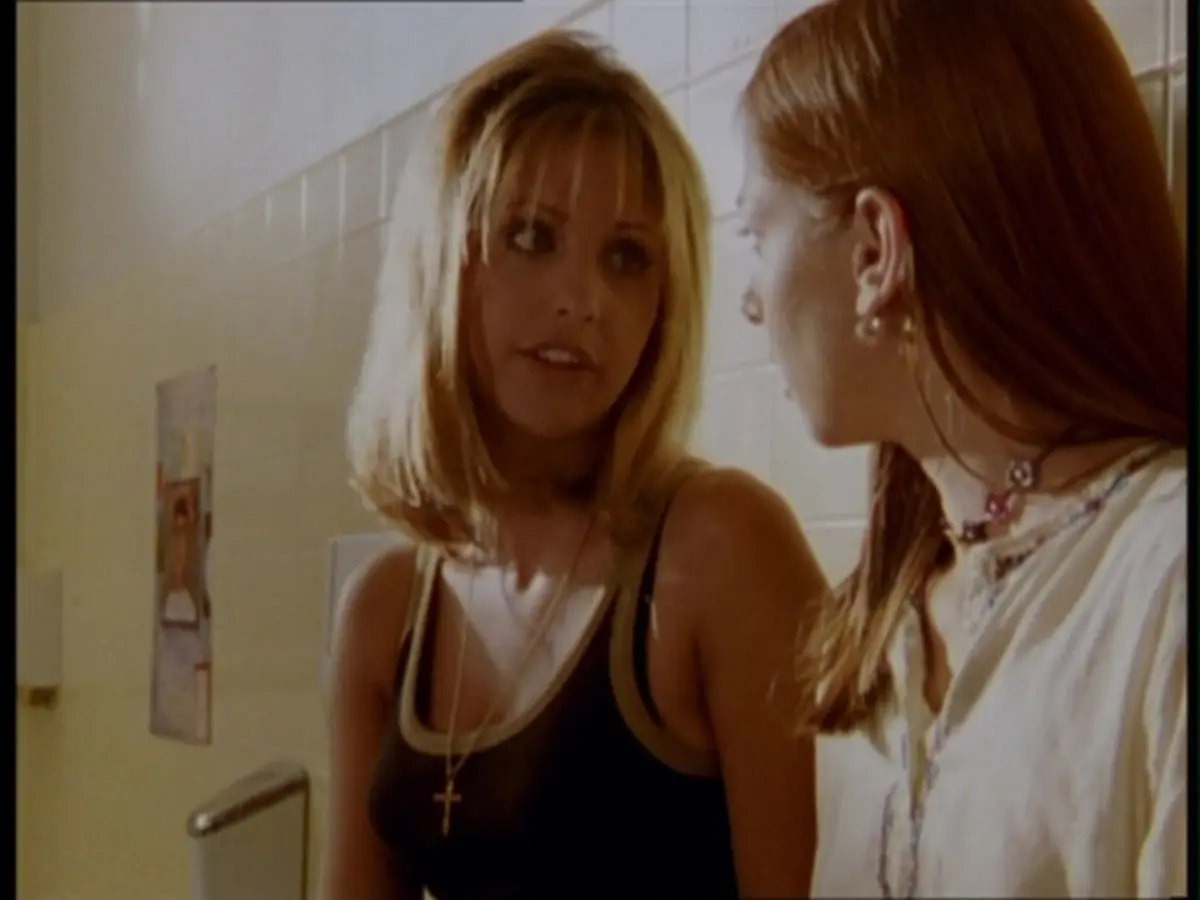
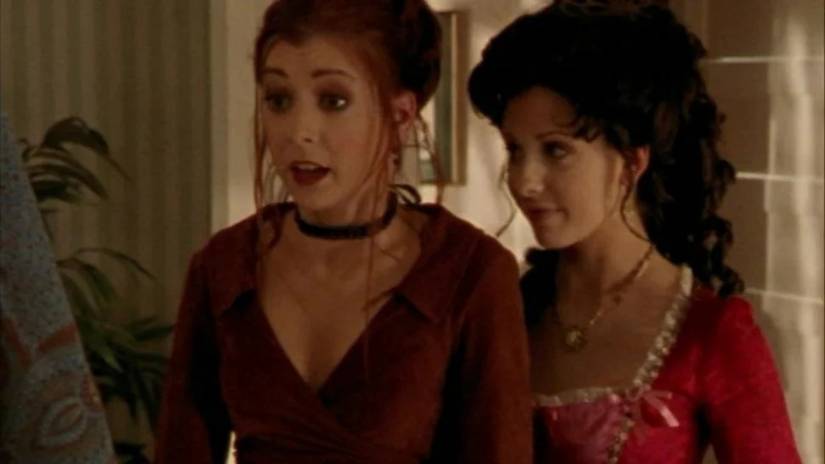
Willow Rosenberg (Alyson Hannigan): Struggling mightily to break out of her shell of crippling shyness, Willow is pushed by Buffy to embrace a daring persona, dressing in a provocative, body-hugging miniskirt and tight top, though she attempts to temper her anxiety at the last minute by throwing a plain white ghost sheet over the ensemble.
The Transformation and Chaos
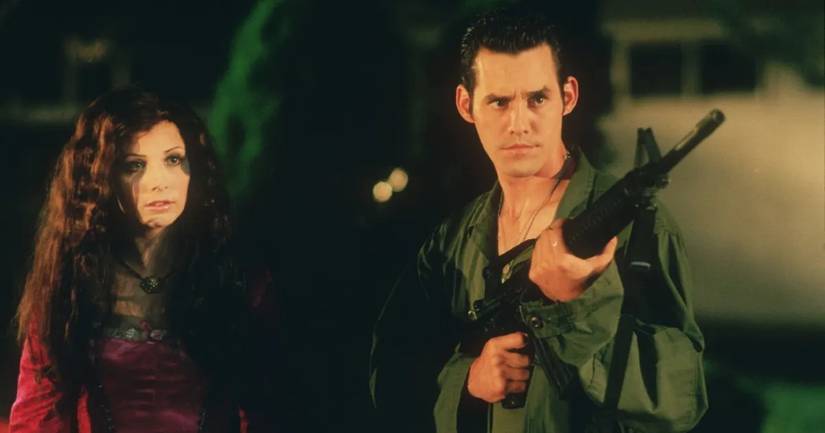
As the clock strikes twelve, the spell activates with horrifying efficiency. Buffy is physically and mentally stripped of her Slayer strength, devolving into a timid, helpless 18th-century noblewoman prone to fainting and hysterics. Xander transforms into a heavily armed, aggressively macho military soldier, though his personality remains comically mismatched with his lethal hardware. Willow, meanwhile, finds herself genuinely incorporeal—a floating, translucent ghost who can pass through solid objects.
With Buffy rendered completely incapacitated, the traditional power dynamic of the show undergoes a radical inversion. The teenagers can no longer rely on the Slayer to bail them out of danger. Instead, Willow must bravely shepherd the panicked group through the chaotic, monster-infested streets of Sunnydale, eventually guiding them to the safety of the school library and straight to Rupert Giles.
The Confrontation: The Birth of Ripper
Recognizing the esoteric signatures of the magic at play, Giles takes direct action, accompanying Willow to Ethan Rayne’s costume shop to locate the source of the curse. What follows is a startling sequence that forever alters the fabric of the series.
Upon confronting Ethan, any pretense of academic decorum instantly evaporates from Giles. The mild-mannered librarian aggressively corners his old acquaintance, pinning him against a wall and unleashing a cold, calculated, and terrifyingly efficient physical beating. Stunned by the sudden display of raw violence, Ethan drops a bombshell that echoes through the rest of the series: he addresses Giles by his old, discarded nickname—Ripper.
The revelation stuns the audience. The man who spends his days dusting off ancient tomes and wringing his hands over Buffy’s safety possesses a violent, lawless, and dark history. Ultimately, Giles manages to smash the stone statue of Janus powering the spell, breaking the curse, restoring Buffy and the others to their normal selves, and saving Sunnydale from permanent catastrophe—but the psychological Pandora’s box had already been opened.
Supporting Context & Metrics: Production, Reception, and Ratings
“Halloween” was much more than a narrative turning point for individual character arcs; it was a crucial inflection point for Buffy the Vampire Slayer as a commercial and critical property.
Airdate: October 27, 1997 (Season 2, Episode 6).
Direction & Writing: Directed by Bruce Seth Green; written by Carl Ellsworth.
Rating Milestone: Coming off a relatively rocky and experimental first season, Season 2 was tasked with solidifying the show’s identity and expanding its audience base. “Halloween” served as a massive ratings victory. The episode drew nearly 6 million viewers, marking a staggering increase of approximately one million households compared to the preceding episode.
Tonal Evolution: As the series’ very first holiday-themed episode, “Halloween” proved that Buffy could successfully juggle serialized character development, monster-of-the-week mechanics, and deep psychological metaphor. The insecurities physicalized by the costumes (Buffy’s fear of inadequacy, Xander’s toxic masculinity complex, Willow’s body image and visibility issues) established a gold standard for how the writers’ room would weaponize supernatural concepts against teenage emotional realism for years to come.
Official Statements and Archival Insights
The legacy of "Ripper" did not end in Season 2. The shadow of Giles’s past behavior would loom large over subsequent episodes, most notably in Season 2’s “The Dark Age,” where the consequences of his youth dabbling in dark magic return to physically and mentally assault his inner circle.
Reflecting on the character’s hidden depths, actor Anthony Head discussed the psychological underpinnings of his alter-ego in a retrospective interview. Head noted that the moniker "Ripper" serves as a permanent reminder that human beings are rarely ever just one thing.
"I don’t think we’ll ever really know [what Ripper precisely means]," Head remarked in a 2009 interview. "I think Ripper just means it’s the darker side of someone… that you never ever knew existed."
The concept of a darker past resonated so strongly with both the creative team and the fandom that, for years following the conclusion of Buffy the Vampire Slayer, Head and controversial series creator Joss Whedon actively discussed developing a spin-off television series tentatively titled Ripper. While the project ultimately never materialized into a full-fledged broadcast series, discussions surrounding it cemented the character’s complex mythology as one of the richest creations in modern fantasy television.
Future Outlook & Cultural Legacy
Looking back nearly three decades after its initial broadcast, “Halloween” remains a masterclass in television writing and character subversion. In an era dominated by reboots, legacy sequels, and the relentless recycling of nostalgic intellectual property ("zombie IP"), the restraint shown by keeping certain aspects of Giles’s past shrouded in mystery feels all the more commendable.
Fans never got the full, unvarnished television series dedicated entirely to Ripper, and in hindsight, that ambiguity works to the show’s distinct advantage. By leaving the darkest edges of Giles’s youth to the imagination—hinted at only through sudden bursts of terrifying competence, lingering trauma, and cryptic nicknames—Buffy the Vampire Slayer gifted television audiences one of its most layered, human, and enduring figures.
Ultimately, the scariest part of Sunnydale’s first televised Halloween night wasn’t a rampaging monster, a demonic god, or a cursed piece of plastic. It was the terrifying realization that the mild-mannered man guiding the hero had once been capable of walking willingly into the very darkness he now spent his life fighting against.