Published: November 2026
Author: Global Internet Culture Desk
Category: Digital Trends / Meme Analysis
Executive Overview
In the sprawling, hyper-accelerated ecosystem of modern internet culture, the intersection of gaming fandom, artificial intelligence, and raw parasocial irony frequently breeds bizarre phenomena. The latest export from the digital assembly line to capture the collective imagination of TikTok is the catchphrase "Permission to Cry, Soldier."
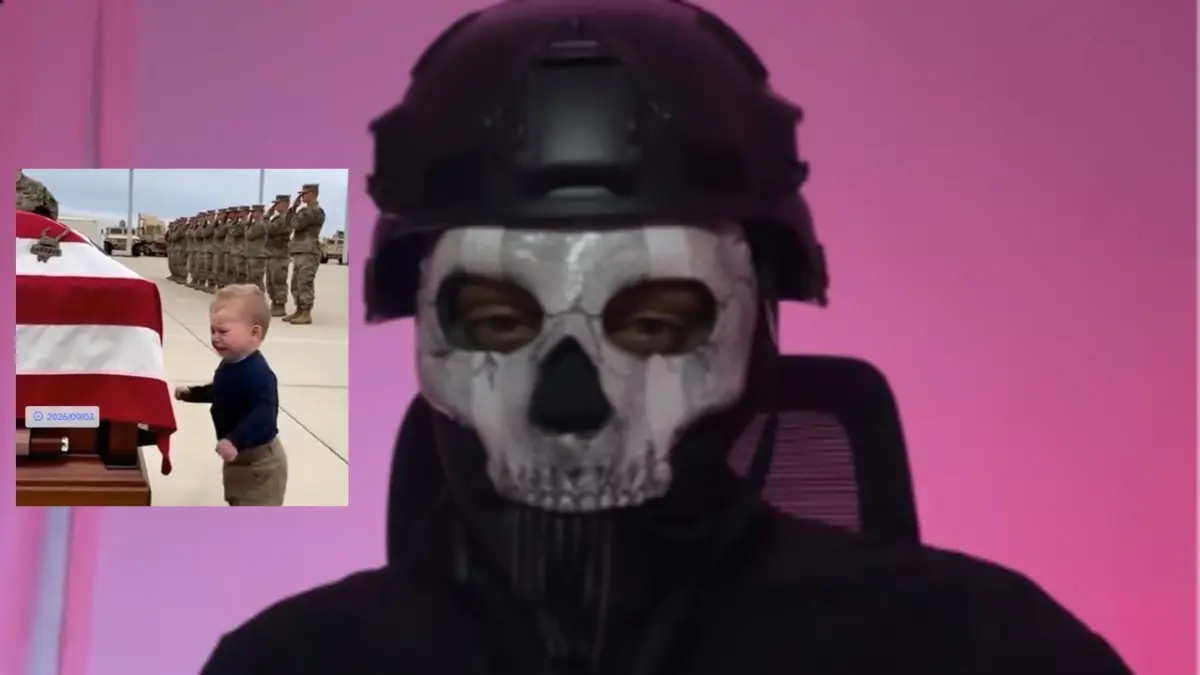
Rooted in the niche performance art of TikTok creator @ghostreactings—who dons the tactical mask of Lieutenant Simon "Ghost" Riley from the blockbuster franchise Call of Duty: Modern Warfare II—the trend has rapidly evolved from a peculiar corner of algorithmic video-watching into a cross-platform linguistic staple. Characterized by an unmistakable blend of melodramatic AI-generated tear-jerking content, stoic military cosplay, and deadpan audience participation, the phenomenon offers a fascinating case study in how modern audiences process synthetic emotionality.
What began as a low-key performance routine in March 2026 exploded by late October and early November of the same year. Creators across the platform began adopting the faux-authoritative persona of the stoic soldier granting emotional dispensation to his followers. This report provides an exhaustive, granular breakdown of the phenomenon, tracing its origins, the mechanics of its viral spread, the broader implications of AI-driven content loops, and what this meme says about the current state of digital empathy.
Detailed Chronology: From Cosplay Curiosities to Viral Phenomenon
To understand how "Permission to Cry, Soldier" became a household term for millions of Gen Z and Millennial internet users, one must retrace the precise timeline of its growth. The trajectory moves from solitary content creation to algorithmic amplification, eventually culminating in widespread parody.
Phase 1: Inception and the AI Cosplay Persona (March – August 2026)
In March 2026, a TikTok creator operating under the handle @ghostreactings launched a channel centered around a distinct conceptual premise. Dressed meticulously in the iconic skull-patterned balaclava and tactical gear of "Ghost" from Call of Duty: Modern Warfare II, the creator began publishing reaction videos.
However, these were not ordinary reaction clips. The videos heavily relied on synthetic media: many of the clips being reacted to were entirely AI-generated, and the creator’s voiceovers were synthesized or altered to match the gruff, commanding cadence expected of a hardened special-ops soldier.
Central to the channel’s growing appeal was a subtle interactive framing. Rather than simply watching sad, inspiring, or bizarre videos, the creator positioned himself as an authority figure overseeing his audience’s emotional responses. He would occasionally offer viewers "permission" to react in specific ways. This struck a chord with a segment of the audience looking for playful escapism, leading to a running joke in the comment sections where users would formally request authorization to feel specific emotions.
Phase 2: The Catalyst — The Coffin Video (September 3, 2026)
The turning point for the channel—and the genesis of the broader catchphrase—occurred on September 3, 2026. On this date, @ghostreactings published a reaction video targeting a quintessential piece of digital slop: an AI-generated video depicting a young child walking up to his deceased soldier father’s coffin, rendering a solemn military salute, and subsequently breaking down in tears.
The video tapped directly into an internet subgenre defined by hyper-sentimental, AI-rendered tragedy designed purely to farm engagement and elicit cheap emotional responses. Yet, the juxtaposition of the stoic, heavily armed Call of Duty character staring down at the digital grief proved uniquely potent.
Though the creator did not explicitly utter the exact phrase "Permission to cry, soldiers" within the audio of this specific video, the comment section flooded with users typing variants of the phrase, asking their digital commander if they were cleared to weep over the fabricated tragedy. Within two months, the video amassed over 2.8 million views, serving as the cultural epicenter for what was about to happen next.
Phase 3: Mainstream Explosion and Parody (Late October 2026)
By late October 2026, the meme broke containment from the comment sections of @ghostreactings and mutated into a platform-wide phenomenon. Creators across TikTok began producing dedicated skits, audio reenactments, and meta-commentary surrounding the "permission to cry" dynamic.
- October 28, 2026: TikToker @ada.gerry published a conceptual meme directly referencing the catchphrase. The video resonated deeply with the algorithm, pulling in over 590,000 views in under a week and establishing the phrase as a recognizable linguistic unit outside of the original creator’s immediate sphere.
- October 29, 2026: Well-known content creator @vexbolts released a high-production parody of Ghost Reactings’ content style. The satirical video captured the exact cadence, lighting, and synthetic nature of the original genre, rocketing past 1.7 million views in just six days and cementing the trend’s cultural footprint.
- October 31, 2026: In a shift toward absurdism typical of internet culture, TikToker @emc237000 posted an audio-based meme. The clip recorded an earnest comment left on the original "salute" video—wherein a user claimed they were weeping—intercut with the unmistakable acoustic backdrop of someone using a toilet and running water. The jarring juxtaposition earned over 683,000 views in four days, illustrating how quickly internet users subvert earnest sentimentality into toilet humor.
Supporting Context & Metrics: The Anatomy of an AI-Driven Meme
To fully appreciate the "Permission to Cry, Soldier" trend, one must analyze the structural forces driving it: the proliferation of AI-generated emotional bait and the psychology of gaming-adjacent parasocial relationships.
The Rise of Synthetic Melodrama
The foundational bedrock of @ghostreactings’ content is the AI-generated tearjerker. Over the past two years, platforms like TikTok have been flooded with automated or semi-automated channels churning out hyper-emotional, impossible scenarios: soldiers returning home to dogs that have aged decades, children building monuments out of trash, or orphans finding magical shelter.
These videos are designed to bypass critical thinking and trigger immediate, visceral empathetic responses. By inserting a fictional, hyper-masculine, video-game military icon into the viewing experience, creators like @ghostreactings introduced a layer of ironic detachment. The audience is invited to consume hyper-manipulative content under the ironic protection of a hardened soldier who dictates when emotional vulnerability is tactically permissible.
Quantitative Impact and Engagement Metrics
While search engine interest curves for specific catchphrases often spike sharply and recede just as fast, the engagement metrics across TikTok reveal a sustained wave of secondary and tertiary content creation:
- Primary Viewership: Individual foundational videos linked to the trend consistently cleared the 1 million to 2.8 million view threshold within weeks of publication.
- Velocity of Spread: The transition from a niche comment-section joke in September to multi-million-view parodies by late October highlights a rapid 60-day maturation cycle typical of top-tier TikTok memes.
- Remix Culture: The audio track and structural format of asking an authority figure for emotional clearance spawned dozens of derivative formats, ranging from workplace burnout parodies to academic exam anxiety skits.
Official Statements and Cultural Commentary
While major corporations and institutional bodies have largely remained silent on the phenomenon—recognizing it as an organic, grass-roots internet subculture—digital culture analysts and media theorists have begun dissecting its broader cultural meaning.
Dr. Aris Thorne, a researcher specializing in digital semiotics and modern internet folklore, notes that memes like "Permission to Cry, Soldier" reflect a coping mechanism for younger generations navigating a digitally saturated, highly automated reality:
"We are living through an era where the boundary between genuine human emotion and synthetic, algorithmically generated sentiment is completely blurred. When a user asks a fictional video game character for ‘permission to cry’ over an AI-generated orphan, they are performing a double-irony. They acknowledge that the stimulus is fake, they acknowledge that their commander is a cosplayer, yet they lean into the strict hierarchy of military stoicism as a humorous container for very real feelings of digital fatigue and generalized anxiety. It’s camp, it’s performance art, and it’s a way to reclaim control over what makes us feel."
Furthermore, community feedback across Reddit and X (formerly Twitter) suggests that the trend has fostered a strange form of digital camaraderie. By weaponizing the ultra-masculine archetype of the Call of Duty soldier—traditionally associated with stoicism, violence, and emotional suppression—to discuss crying over silly videos, users create a safe space wrapped in layers of irony where emotional vulnerability is paradoxically unlocked through military command.
Future Outlook: Where Does the Soldier Go From Here?
As the calendar turns past the initial viral wave of late October and November 2026, the longevity of "Permission to Cry, Soldier" faces the classic test of all internet phenomena: institutionalization versus burnout.
- Platform Saturation: Like many catchphrases born on TikTok, the risk of over-saturation is high. As mainstream brands and uninspired copycats attempt to latch onto the "soldier permits" format, the ironic edge that made the meme appealing risks being blunted.
- Evolution into Permanent Internet Lexicon: Even if the specific cosplay videos of @ghostreactings eventually cycle out of peak algorithmic favor, phrases like "permission to [verb]" directed at fictional or exaggerated authority figures have a strong historical precedent of sticking around in digital slang.
- The AI Content Backlash: As audiences grow increasingly fatigued by AI-generated emotional slop, creators who react to synthetic content may find themselves pivoting toward self-aware satires of the entire genre, embedding the meme even deeper into the DNA of internet surrealism.
Ultimately, "Permission to Cry, Soldier" stands as a testament to the unpredictable creativity of internet users. By taking corporate intellectual property (Call of Duty), merging it with the soulless machinery of AI content generation, and filtering it through layers of Gen Z irony, the internet successfully carved out a new, albeit absurd, space for communal empathy.